1. Executive Summary & Sydney Orthopedic Sector Landscape
The Greater Sydney metropolitan area, encompassing key healthcare infrastructure across the South Eastern Sydney Local Health District (SESLHD), Northern Sydney Local Health District (NSLHD), and Western Sydney Local Health District (WSLHD), represents the largest cluster of surgical innovation and medical device procurement in Australia. As major surgical centers such as Royal Prince Alfred Hospital, St Vincent’s Hospital Sydney, Westmead Hospital, and Macquarie University Hospital expand their orthopedic trauma, spinal reconstruction, and joint arthroplasty capacities, the demand for high-tier implant hardware continues to escalate.
This industry report examines the competitive matrix of orthopedic implant manufacturers supplying the Sydney market. It analyzes how global Tier-1 OEMs and certified international precision manufacturing facilities fulfill the stringent clinical requirements set forth by the Therapeutic Goods Administration (TGA), alignment with the Australian Orthopaedic Association National Joint Replacement Registry (AOANJRR), and local hospital purchasing networks such as HealthShare NSW. Hospital procurement committees and medical device distributors across New South Wales face an evolving landscape: balancing rising surgical backlogs, demanding anatomical adaptability, and fiscal accountability without compromising biological safety or biomechanical stability.
2. Regulatory Compliance & Quality Engineering (TGA & ISO Baseline)
Supplying orthopedic implants into the Sydney healthcare ecosystem requires adherence to strict quality control standards. The Australian Therapeutic Goods Administration (TGA) classifies implantable orthopedic medical devices under Class IIb (medium-high risk) and Class III (high risk, such as total joint replacements and spinal interbody devices with bio-absorbable components). International manufacturers partnering with Sydney-based medical device distributors must present comprehensive technical dossiers to secure Australian Register of Therapeutic Goods (ARTG) inclusion.
Key Takeaway for NSW Medical Buyers: An ARTG registration relies on rigorous conformity assessment certification. Manufacturing facilities must possess ISO 13485 Medical Devices Quality Management System accreditation, verified material test certificates (MTC), biocompatibility data (ISO 10993 series), and validated sterilization process validation (ISO 11137 for gamma radiation or ISO 11135 for Ethylene Oxide).
Essential Technical Parameters for Implant Acceptance in NSW
- Metallurgical Purity: All metallic plates, rods, and screws must utilize titanium alloys conforming to ASTM F136 (Ti-6Al-4V ELI - Extra Low Interstitial) or ASTM F67 (Commercially Pure Titanium Grade 2 to Grade 4). ELI grade reduces iron and oxygen impurities, delivering maximum fatigue resistance and fracture toughness during high cyclic loads.
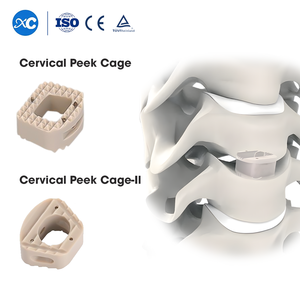
- Polymer Grade Integrity: Interbody lumbar and cervical cages must feature medical-grade Polyetheretherketone (such as Invibio PEEK-OPTIMA). PEEK provides an elastic modulus (~3.6 GPa) closely matching human cortical bone, preventing stress shielding and subsidence while offering radiolucency for clear X-ray evaluation.
- Micron-Level Tolerances: Multi-axis CNC machining must maintain dimensional tolerances within ±0.005mm. Locking mechanism threads must fit cleanly with surgical drivers to prevent stripping or cold-welding during intra-operative insertion.
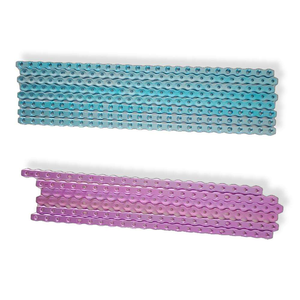
- Surface Modifications & Anodization: Type II anodization on titanium surfaces improves fatigue strength and reduces ion release, while color-coded anodization (gold, blue, green, violet) streamlines intra-operative instrument selection for surgical teams.
3. Comparative Matrix: Global Brands vs. Direct Factory OEM Partners in Sydney
When Sydney hospital procurement managers and private clinical networks evaluate orthopedic implant suppliers, they typically compare traditional global brands against accredited direct-to-hospital OEM precision factories. The table below outlines key operational, financial, and clinical metrics evaluated by Australian buyers:
| Evaluation Parameter | Traditional Global Brands (Tier-1) | Accredited Precision OEM Factories (Orthovana) |
|---|---|---|
| Supply Model | Multi-tiered local distribution networks | Direct factory-to-distributor / Hospital contract manufacturing |
| Raw Material Standard | ASTM F136 Ti-6Al-4V ELI / PEEK-OPTIMA | ASTM F136 Ti-6Al-4V ELI / Implant-Grade PEEK |
| Cost Structure | High premium due to overheads and sales forces | Optimized factory-direct pricing (30%-50% cost savings) |
| TGA & CE Documentation | Fully available on ARTG | Complete Technical Dossiers provided for ARTG sponsor listing |
| Customization & Private Label | Strictly standard catalog configurations | Full OEM/ODM design flexibility, laser marking & custom trays |
| Instrument Tray Compatibility | Proprietary closed system instrument sets | Standardized surgical sets & customizable ergonomic drivers |
4. Strategic Localized Clinical Applications Across Greater Sydney
To address the specific trauma demographics, sports medicine injuries, and aging population challenges across New South Wales, orthopedic implant systems must perform reliably across diverse surgical procedures. Below are key clinical scenarios where specialized hardware is deployed in Sydney facilities.
Complex Proximal Femur Trauma
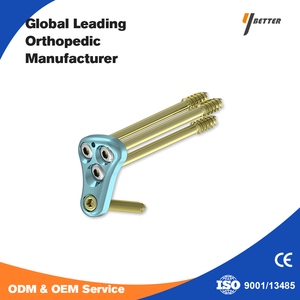
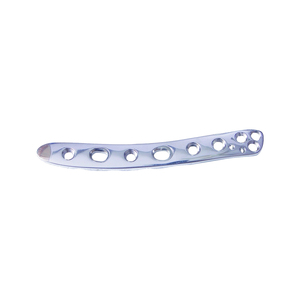
Deployed in major Level-1 trauma centers like Westmead and Liverpool Hospitals. Multiaxial locking plates permit dynamic compression and targeted screw placement in osteoporotic bone fractures.
Degenerative Cervical & Lumbar Spine
Utilized in spine specialist centers across North Shore and St Vincent's Private. ACDF PEEK Cages and 5.5mm Titanium Pedicle Screw Systems restore intervertebral disc height and achieve anatomical fusion.
Craniomaxillofacial (CMF) Surgery
Applied in oral and maxillofacial units at Prince of Wales and Sydney Dental Hospital. Low-profile 2.4mm mini plates provide low-interference fixation for mandibular reconstruction and facial trauma.
Upper Extremity & Clavicle Fixation
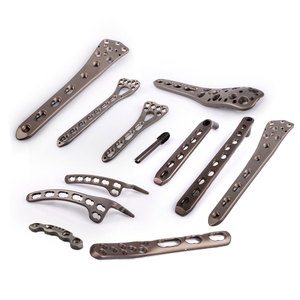
Extensively used in sports medicine clinics along Sydney’s Eastern Suburbs and Northern Beaches. Anatomically pre-contoured 3.5mm locking compression plates reduce operative contouring time for shoulder and clavicle injuries.
Lower Limb Tibia & Fibula Repair
Designed for periarticular fractures resulting from high-impact motor accidents or athletic injuries. Pre-contoured locking plates support anatomical reconstruction and load distribution.
Veterinary Orthopedics in NSW
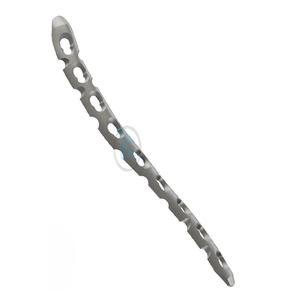
Supplying specialist veterinary referral centers in Camden and Greater Western Sydney. ALPS reconstruction plates and small animal locking implants offer specialized solutions for companion animal surgery.
5. Enterprise Core Competencies & Advanced Factory Manufacturing
As a global direct manufacturing provider supplying distributors, OEM brand owners, and hospital networks, our factory infrastructure is designed to deliver consistent precision, quality compliance, and competitive lead times.
Key Manufacturing Pillars:
- Multi-Axis Precision Machining: Our production line utilizes high-precision 5-axis DMG MORI CNC milling machines and Citizen Swiss-type automatic lathes, keeping radial runout and thread tolerances well within medical-grade specs.
- Rigorous Quality Inspection (Zero-Defect Policy): Every batch undergoes 100% optical coordinate measuring machine (CMM) verification, thread-pitch gauge testing, and surface roughness profiling prior to cleanroom packing.
- Biological Cleanroom Packaging: Implants are cleaned in multi-stage ultrasonic baths using deionized water, followed by assembly and primary packaging in ISO Class 7 (Class 10,000) cleanrooms.
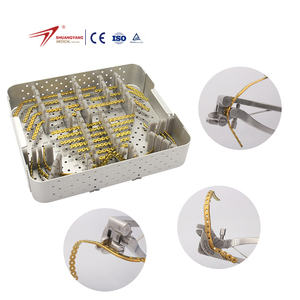
- Comprehensive OEM/ODM Capabilities: We offer custom laser marking for serial numbers and GTIN barcodes, bespoke color anodization for size coding, and customized stainless steel sterilization trays fitted to hospital preferences.
- Complete Traceability System: From raw titanium bar stock mill certificates to heat treatment reports and final inspection sheets, every single product lot is documented for complete life-cycle traceability.
6. Frequently Asked Questions (FAQ) - Sydney Market Procurement
Answers to common questions from Australian medical distributors, hospital procurement agents, and surgical teams regarding sourcing orthopedic implants for the Sydney market.
To import and distribute orthopedic implants in Australia, the local Australian Sponsor must register the devices on the Australian Register of Therapeutic Goods (ARTG). This requires a complete Technical Dossier, ISO 13485 certification, TGA Conformity Assessment or recognized CE mark equivalence, and validated biological safety reports.
Procurement teams demand chemical composition analysis certificates and mechanical test reports linked directly to the ingot heat number. Materials must meet international standards such as ASTM F136 for Ti-6Al-4V ELI or ASTM F67 for pure titanium, along with ISO 10993 cytotoxicity and systemic toxicity clearance.
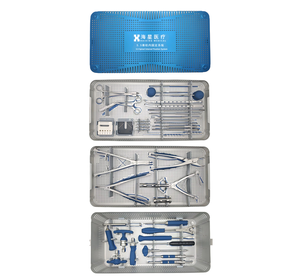
Yes. OEM precision manufacturers can manufacture matching surgical instruments—including drill bits, depth gauges, torque-limiting drivers, and bending pliers—supplied in customized aluminum or PPSU sterilization trays labeled with the distributor's or hospital's branding.
Standard catalog items are routinely maintained in safety stock and ship within 3 to 7 business days via air freight to Sydney Airport (SYD). Custom OEM manufacturing orders typically require 4 to 6 weeks, depending on batch complexity and anodization/packaging specifications.
PEEK offers an elastic modulus (~3.6 GPa) close to cortical bone, reducing stress shielding and cage subsidence compared to solid titanium. Its radiolucency allows clear postoperative imaging of bone graft fusion on X-rays and CT scans, while embedded tantalum markers provide clear intraoperative positioning.
Top-tier factories manufacture veterinary systems (such as ALPS reconstruction plates) using the same medical-grade Ti-6Al-4V ELI titanium and multi-axis CNC tolerances as human trauma lines. This guarantees high strength, biocompatibility, and long-term implant survival for companion animal surgeries.
Partner with a Direct Precision Orthopedic Manufacturer
Whether you are a Sydney-based medical device distributor seeking ARTG sponsor OEM partnerships, or a hospital procurement team looking to streamline implant supply chains with ISO 13485 certified quality, our engineering team is ready to assist.
Inquire Now