Featured Orthopedic Fixation Systems & Implants
Explore our certified range of trauma plates, titanium screws, cleanroom components, and specialized thoracic systems designed for international OEM distributors and surgical hospitals.
1. Macro Market Dynamics: Thoracic & Chest Wall Surgery in Spain
Spain represents one of Europe’s most advanced healthcare systems, characterized by a highly integrated dual-network model: the public Sistema Nacional de Salud (SNS) and a rapidly expanding network of private hospital groups (such as Quirónsalud, Vithas, and HM Hospitales). Thoracic surgery, specifically rigid surgical stabilization of rib fractures (SSRF) and sternal closure post-median sternotomy, has undergone a fundamental clinical shift across Autonomous Communities including Madrid, Catalonia, Andalusia, and the Basque Country.
Historically, rib fractures were managed conservatively via mechanical ventilation, pain control, and chest physiotherapy. However, extensive clinical trials conducted across European trauma centers have proven that early surgical fixation using pre-contoured anatomical titanium rib plates drastically reduces intensive care unit (ICU) length of stay, incidence of pneumonia, mechanical ventilation days, and long-term chest wall deformity. Concurrently, sternal dehiscence and nonunion following cardiac surgery require rigid internal fixation (RIF) over traditional wire osteosynthesis, creating a surge in demand for specialized rib and sternum fixation systems.
For Spanish medical device importers, distributors, and hospital procurement departments, sourcing high-grade thoracic implants requires strict compliance with the European Union Medical Device Regulation (EU MDR 2017/745) and registration with the Agencia Española de Medicamentos y Productos Sanitarios (AEMPS). Evaluating global factories versus localized stockists involves balancing technical compliance, manufacturing precision, supply stability, and cost structures.
2. Biomechanics & Material Science of Rib and Sternal Fixation Systems
The chest wall presents a dynamic physiological environment subjected to continuous cyclic strain from respiration, coughing, and physical torso movement. A clinically successful rib and sternum fixation system must balance mechanical rigidity with dynamic elasticity to facilitate bone healing while avoiding stress shielding or hardware pull-out.
Ti-6Al-4V ELI Alloy (ASTM F136)
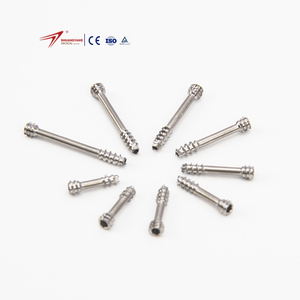
Plates and locking screws manufactured from Extra Low Interstitial Titanium Grade 5 offer optimal fatigue resistance and superior tensile strength (~860 MPa). The material’s modulus of elasticity (~110 GPa) closely mirrors cortical bone structure compared to stainless steel, minimizing stress shielding.
Low-Profile Contour Design
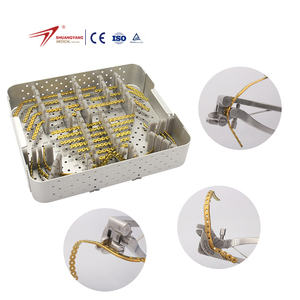
To minimize soft tissue irritation over thin subcutaneous chest walls, advanced rib plates feature a low-profile thickness (< 1.6 mm) with rounded plate edges. Pre-contoured anatomical shapes drastically reduce intraoperative bending requirements for thoracic surgeons.
Mono-locking & Variable Locking Screws
Threaded locking holes ensure fixed-angle stability, preventing screw back-out under cyclic respiratory loads. Bicortical locking screws create a rigid structural frame that redistributes kinetic forces evenly across fractured rib segments.
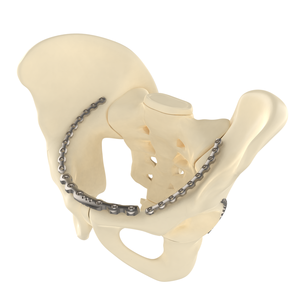
For sternal reconstruction, systems incorporate longitudinal sternal plates, star-shaped plates, and tension-band sternal clips. Sternal closure plates are specifically designed to withstand peak lateral forces during forced coughing (which can exceed 1,500 N of separation force), maintaining sternal alignment and facilitating rapid osseous integration.
3. Technical Comparison: Thoracic Fixation System Specifications
When Spanish procurement teams evaluate tenders (*licitaciones públicas*), technical compliance scores are awarded based on material specifications, biomechanical features, and sterilization compatibility. The matrix below outlines standard benchmark parameters across leading market specifications:
| Specification Parameter | Rib Fixation System | Sternum Fixation System | Reconstruction Plating System |
|---|---|---|---|
| Primary Material | Titanium Grade 5 (Ti-6Al-4V ELI) / CP Ti | Titanium Grade 5 / Implant-Grade PEEK | Ti-6Al-4V ELI / Stainless Steel 316L |
| Plate Thickness Range | 1.2 mm - 1.6 mm (Ultra Low-Profile) | 1.6 mm - 2.4 mm (Rigid Stability) | 2.0 mm - 2.8 mm (Heavy Reconstruction) |
| Screw Locking Mechanism | Threaded Locking (2.4mm / 2.7mm) | Threaded & Variable Angle Locking | Mono-Locking & Cannulated Compression |
| Anatomical Pre-contouring | Left/Right Specific Rib Shapes | Sternal Body & Manubrium Plates | Malleable / Straight & Curved Options |
| MRI Compatibility | MRI Conditional up to 3.0 Tesla | MRI Conditional up to 3.0 Tesla | Material Dependent (Titanium Preferred) |
| Regulatory Standards | EU MDR 2017/745, ISO 13485, CE | EU MDR 2017/745, ISO 13485, CE | EU MDR 2017/745, ISO 13485, CE |
4. Localized Surgical Applications across Spanish Healthcare Facilities
Understanding where thoracic fixation products are utilized in Spain enables distributors to tailor their inventory to hospital specializations:
Polytrauma Centers (Level I & II Hospitals)
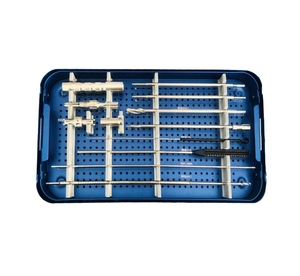
Major emergency hubs such as Hospital Universitario La Paz (Madrid), Hospital Clínic (Barcelona), and Hospital Virgen del Rocío (Seville) handle high-energy road accidents and industrial trauma. Demand centers on complete rib plating kits with drill guides, depth gauges, and flexible screwdrivers for difficult posterior rib fractures.
Cardiothoracic Surgery Units
Units managing high-risk cardiac surgery cases (obese patients, diabetic patients, elderly osteoporotic populations) utilize rigid sternal plating to prevent sternal dehiscence following median sternotomy. Rigid plates replace conventional wire suturing, preventing painful micro-motion.
Oncological Chest Wall Reconstruction
Specialized oncology institutes require custom anatomical reconstruction plates post-tumor resection (chondrosarcomas, chest wall sarcomas). These procedures demand malleable titanium mesh and wide-span rib bridging systems packaged in customizable sterilization trays.
5. Factory Excellence: Direct Manufacturing Advantages (Orthovana Medical)
Sourcing directly from advanced orthopedic implant manufacturers like Orthovana Medical Co., Ltd. gives Spanish distributors and global OEM partners a distinct competitive edge. By controlling the entire manufacturing chain—from raw bar stock processing to final cleanroom packaging—factories eliminate unnecessary intermediary markups while maintaining rigorous quality control.
Orthovana Medical operates modern CNC multi-axis sliding-head machining centers, high-precision surface passivation lines, and automated optical inspection systems. Key operational highlights include:
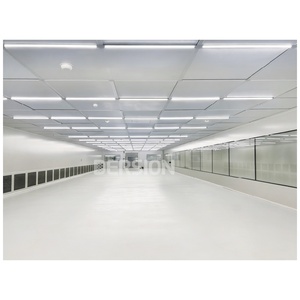
- 100,000 Class Cleanroom Packaging: Implants are washed using multi-stage ultrasonic aqueous cleaning systems and packed inside ISO Class 8 cleanrooms to guarantee low bioburden levels prior to sterilization.
- Complete Batch Traceability: Every batch of Ti-6Al-4V ELI or PEEK material is accompanied by raw material mill test reports (MTR), heat numbers, and step-by-step in-process inspection records.
- OEM & Private Label Packaging: Fully customized laser marking (lot numbers, matrix codes, distributor logos), custom sterilization containers, and localized instruction for use (IFU) booklets translated into Spanish.
- Comprehensive Technical Documentation (STED): Direct access to technical files, design history files (DHF), biocompatibility test reports (ISO 10993), and risk management files (ISO 14971) simplifies AEMPS registration and hospital tender submissions.
6. Frequently Asked Questions (FAQ) for Sourcing in Spain
Addressing common regulatory, commercial, and technical questions encountered by Spanish medical device procurement managers:
What specific documentation is required to import rib and sternum implants into Spain?
To import orthopedic trauma implants into Spain, the importer must possess an Importer License granted by the AEMPS (Agencia Española de Medicamentos y Productos Sanitarios). Products must carry CE Marking under EU MDR 2017/745, backed by an EU Declaration of Conformity, ISO 13485 certification, biocompatibility reports (ISO 10993), and full Spanish language labeling and Instructions for Use (IFU).
How do pre-contoured rib plates compare with malleable titanium plates during surgery?
Pre-contoured plates are engineered using 3D anatomical datasets to fit typical rib curvature (3rd to 9th ribs), significantly shortening operative time and reducing metal fatigue caused by manual bending. Malleable plates, however, provide essential versatility for atypical fractures, severe chest wall deformities, or oncological reconstruction.
Can Spanish distributors order custom instrument sets and sterilization trays?
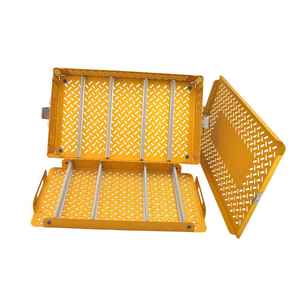
Yes. Factory-direct suppliers provide matching surgical instrument sets—including drill guides, torque-limiting screwdrivers, plate benders, depth gauges, and bone holding forceps—housed in autoclavable aluminum sterilization boxes. Custom tray layouts and laser-etched inventory codes are available upon request.
What is the typical lead time for direct export shipments to ports in Spain?
Standard manufacturing lead times for stocked titanium systems range between 2 to 4 weeks. Express air freight shipments to major Spanish hubs (Madrid-Barajas MAD, Barcelona-El Prat BCN) typically take 3 to 7 business days, while sea freight to ports like Valencia or Barcelona takes approximately 22 to 30 days.
Are titanium rib and sternum plates compatible with postoperative 3.0T MRI scans?
Yes. Implants crafted from implant-grade Titanium Alloy (Ti-6Al-4V ELI) are non-ferromagnetic. They are classified as MRI Conditional up to 3.0 Tesla, minimizing metallic artifact interference during postoperative thoracic imaging.