Featured Orthopedic Implants & Instrument Kits
Export-grade surgical implants manufactured from Ti-6Al-4V ELI (ASTM F136) and PEEK-OPTIMA, designed for immediate deployment across Osaka's regional trauma centers and orthomedical importers.
Empowering Osaka’s Orthopedic Supply Chain: Sourcing High-Yield Trauma & Spinal Implants from Certified Export Factories
As Japan’s second-largest economic center and a major medical hub in the Kansai region, Osaka presents a sophisticated orthopedic procurement environment characterized by extreme demographic aging, high clinical standards, and stringent compliance overseen by the Pharmaceuticals and Medical Devices Agency (PMDA).
SEO & Procurement Insights: Japan’s elderly population (aged 65 and older) comprises over 29.1% of the total demographic, driving unprecedented surgical demand for proximal femoral nails (PFNA), interbody spine cages, variable-angle locking plates, and joint reconstruction devices across Osaka Prefecture’s 500+ acute care hospitals and specialized orthopedic clinics.
For medical device importers, regional distributors, and hospital procurement teams operating in Osaka, establishing direct, resilient supply chains with ISO 13485-certified export manufacturers is no longer merely a cost-reduction strategy—it is an operational imperative. This whitepaper analyzes the structural dynamics of the Osaka orthopedic market, detailing localized application scenarios, material engineering specifications (ASTM F136 Titanium vs. Implant-Grade PEEK), regulatory alignment methodologies, and factory OEM capabilities essential for sustained clinical and commercial success.
Tailored Orthopedic Implant Deployments across Osaka’s Healthcare Network
Matching specialized implant design features to the precise clinical surgical workflows of Kansai's leading trauma institutions and municipal hospitals.
1. Geriatric Osteoporotic Fracture Fixation (Femoral & Humeral Trauma)
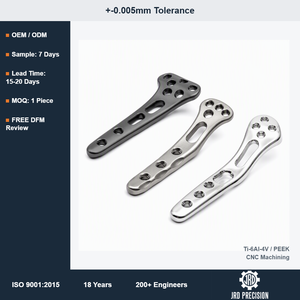
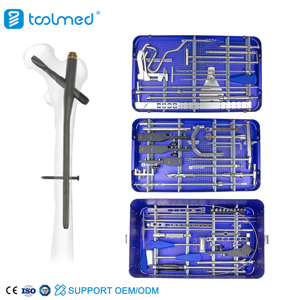
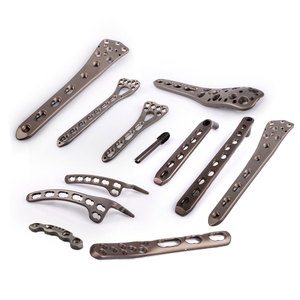
In Osaka’s suburban and metropolitan hospitals (e.g., around Umeda, Namba, and Sakai), orthopedic surgeons encounter an extraordinary ratio of osteoporotic fragility fractures. Proximal Femoral Nail Antirotation (PFNA) systems and Variable Angle Locking Compression Plates (LCP) engineered by our factories feature optimized helical blade compaction and anatomical shaft contouring. This prevents cut-out in soft cancellous bone, significantly shortening operation times in emergency surgical suites.
2. Cervical & Lumbar Spinal Fusion (MIS & Motion Preservation)
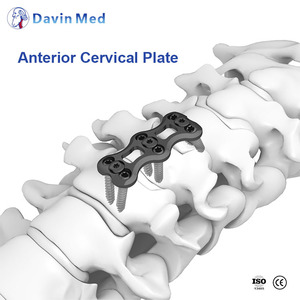
Osaka University Hospital and affiliated spine care institutes demand zero-profile anterior cervical plates and PEEK interbody fusion cages (TLIF/PLIF). Radiolucent PEEK implants with integrated tantalum radiopaque markers allow post-operative CT and MRI artifact-free imaging. The low modulus of elasticity matching natural human cortical bone eliminates stress shielding, fostering superior osseointegration among Japanese adult patients suffering from degenerative disc disease.
3. Cranio-Maxillofacial (CMF) & Reconstruction Surgery
Micro and mini plating systems (1.5mm to 2.4mm profiles) engineered via 5-axis CNC titanium cutting provide sub-millimeter precision for midface, orbital floor, and mandibular reconstructions. Low-profile plate geometry ensures minimal intraoperative tactile prominence under delicate facial tissue, meeting the meticulous standards required by Japanese plastic and oral-maxillofacial surgeons.
4. Specialized Veterinary Orthopedic Trauma Centers
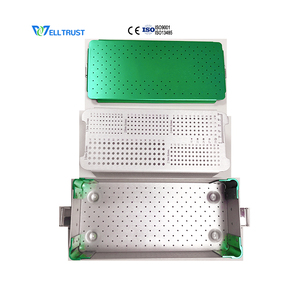
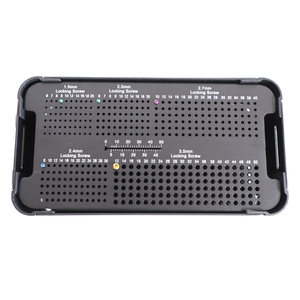
Osaka boasts one of Asia's most dense concentrations of advanced veterinary referral hospitals. Our dedicated veterinary orthopedic product lines—including micro-locking plates (1.5/2.0/2.4/2.7/3.5mm), TPLO plates, cannulated screws, and compact aluminum sterilization boxes—equip veterinary surgeons with human-grade titanium implants customized for companion animal limb alignment and fracture fixation.
Key Technological & Regulatory Trends Reshaping Osaka’s Medical Device Imports
Navigating the intersection of Japanese PMDA compliance, advanced manufacturing technologies, and supply chain digitalization.
Trend 01
Rigorous PMDA Compliance & Shonin/Ninshin Registration
Importers in Osaka require exhaustive technical documentation (STED), bio-compatibility validation (ISO 10993), and lot-level raw material certificates. Exporting factories must provide certified master files to streamline the Ministry of Health, Labour and Welfare (MHLW) product registration process.
Trend 02
Sub-Micron Machining & Advanced Surface Anodization
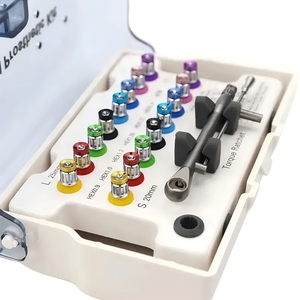
Japanese surgical staff expect flawless fit and finish. Machining tolerances of ±0.005mm achieved via Swiss-type 5-axis CNC equipment eliminate thread galling between locking screws and plate holes, while Type II anodization provides distinct color coding for rapid size identification in OR environments.
Trend 03
Integration with Digital CAD/CAM Libraries
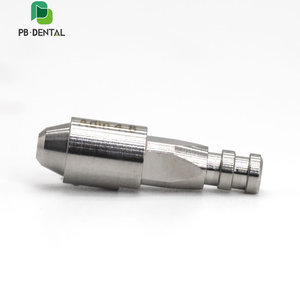
Modern surgical planning in Osaka increasingly relies on pre-operative 3D modeling. Our digital libraries—compatible with major dental and orthopedic CAD systems (e.g., Adin compatible analogs)—enable Japanese clinicians to perform virtual fracture reduction and patient-specific implant bending prior to incision.
Why Global Importers & Osaka Medical Suppliers Partner with Our Factory
We combine state-of-the-art metallurgy, ultra-precision machining, and systematic quality assurance to deliver surgical solutions that surpass international standards.
Traceable Medical Materials
Every batch of bar stock utilizes certified Ti-6Al-4V ELI (ASTM F136) or Commercially Pure Titanium (ASTM F67) imported from top-tier melt suppliers. Full mill test certificates (MTC) and chemical composition analyses accompany every batch shipment to Osaka Port or Kansai International Airport (KIX).
Coordinate Measuring Machine (CMM) QC
Our quality control laboratory operates automated Zeiss CMMs, optical shadowgraphs, and thread pitch gauge verification stations. Every lot undergoes 100% critical dimension inspection to guarantee absolute thread pitch uniformity and contour fidelity.