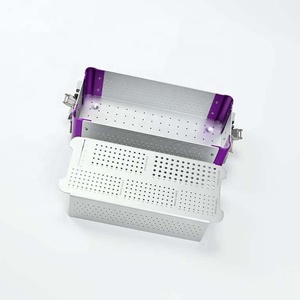
Surgical Grade Portfolio
Featured Implant Systems & Surgical Instrumentation
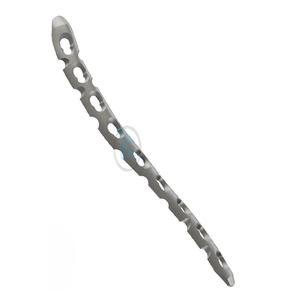
ISO Certified Top Selling Superior Anterior Clavicle Plate Orthopedic Implant 3.5mm Locking Compression for Orthopedic Surgery
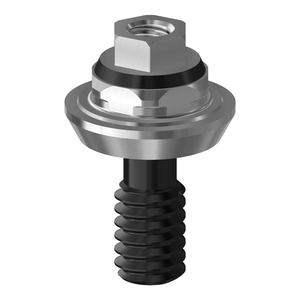
Dental Implant Compatible Parts Internal Connection Titanium Healing Abutment Scan Post Crown Restoration Multi-Platform
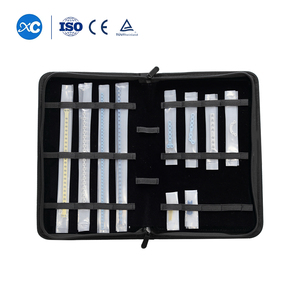
High Quality XC Medico Pet Orthopedic Implant AO/Stem System Sample Pack Stainless Steel Ti CE Certified Class III Model
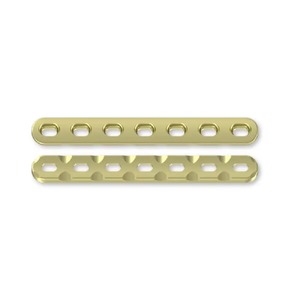
Titanium Orthopedic Implant – Manufacturer Direct, Limited Compression Surgical Implant & Interventional Material CE Certified
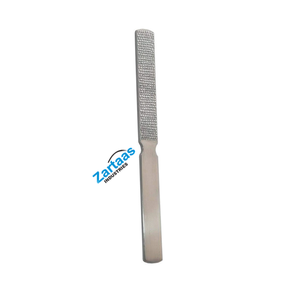
Stainless Steel Bone File and Raspatories 20mm 22cm Orthopedic Instruments Grade CE Certified Class I Surgical Instruments
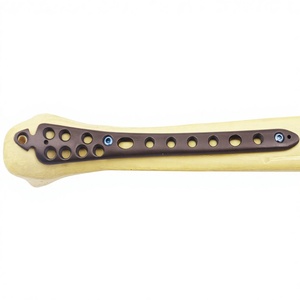
Orthopedic Titanium Trauma Implant Distal Tibial Medial Locking Plate Bone Fracture Internal Fixation Medical CE ISO Certified
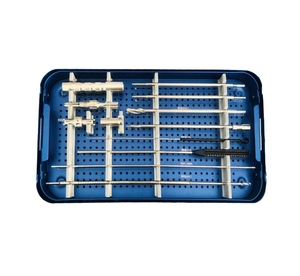
Orthopedic Plate Titanium Orthopedic Implant Bone Implant Orthopedic Instrument for Femoral Neck Surgery
Orthopaedic Implant Manufacturing Standardizations & Supply Chain Resilience for the Philippine Healthcare Sector
The Republic of the Philippines presents a rapidly accelerating demand for high-grade orthopedic trauma devices, reconstructive joint systems, and spinal internal fixation hardware. Driven by expanding healthcare infrastructure under the Universal Health Care (UHC) Act (Republic Act No. 11223), increased PhilHealth coverage, and a high incidence of orthopedic trauma resulting from road traffic accidents and industrial expansion, Philippine healthcare providers require stable, direct-from-factory manufacturing partners. As a premier orthopaedic implant manufacturer, factory, and direct exporter serving the Philippines market, we bridge the critical gap between high-precision Swiss-type CNC engineering and local clinical accessibility across Luzon, the Visayas, and Mindanao.
1. The Epidemiological Landscape & Clinical Demand in the Philippines
Orthopedic surgery in the Philippines operates at the intersection of acute trauma management and reconstructive care for degenerative skeletal disorders. Trauma centers in major urban agglomerations—such as the Metro Manila region (including the Philippine General Hospital, National Orthopedic Center in Banawe, Quezon City), Metro Cebu, and Metro Davao—face continuous inflows of complex fractures. According to data from the Department of Health (DOH) and the Metro Manila Accident Recording and Analysis System (MMARAS), vehicular collisions involving two-wheeled transport comprise over 65% of recorded road trauma, yielding a high prevalence of periarticular fractures, comminuted distal tibial lesions, clavicular disruptions, and femoral shaft fractures.
Consequently, Philippine orthopedic surgeons demand anatomically pre-contoured locking compression plate (LCP) systems, intramedullary gamma nails, and low-profile mini-fragment hardware that minimize intraoperative bending time while maintaining rigid mechanical stability. Furthermore, in rural provincial hospitals (Level 1 and Level 2 facilities), surgeon preference has shifted decisively toward standardized hex and Torx star-drive screw interfaces that mitigate the risk of screw-head stripping during emergency internal fixation procedures.
Anatomical Contour Alignment
Plates are engineered using 3D bone scan databases to fit Asian patient skeletal morphology, dramatically reducing surgical operative duration.
Biocompatible Metallurgy
Machined strictly from Titanium Ti-6Al-4V ELI (ASTM F136) and Commercially Pure Titanium (ASTM F67) for optimal osseointegration and MRI safety.
Double-Sterile Barrier Packaging
Tyvek packaging validated for tropical humidity conditions ensures 5-year shelf-life integrity across insular supply chains.
2. Regulatory Compliance & Importation Protocols: FDA Philippines (CDRRHR) Alignment
Exporting medical devices to the Philippines requires rigorous adherence to the guidelines established by the Food and Drug Administration (FDA) of the Philippines, specifically under the Center for Device Regulation, Radiation Health, and Research (CDRRHR). Philippine medical importers and regional distributors must secure a Certificate of Product Registration (CPR) or Certificate of Medical Device Registration (CMDR) for Class B, Class C, and Class D orthopedic medical devices before market commercialization.
As a seasoned direct factory exporter, our facility provides our Philippine partners with an exhaustive regulatory dossier designed to streamline the CPR registration workflow. Every product export manifest includes:
- ISO 13485:2016 Certified Quality Management System Documentation: Full audit transparency covering implant design, cleanroom packaging, and EO sterilization cycles.
- Certificate of Free Sale (CFS): Officially legalized and apostilled documentation verifying unrestricted global distribution.
- Raw Material Mill Test Reports (MTR): Complete chemical analysis and mechanical property validation verifying compliance with ASTM F136 (Ti-6Al-4V ELI) and ASTM F67 specifications.
- Biocompatibility Evaluation Reports: Testing conducted in accordance with ISO 10993 standards (Cytotoxicity, Sensitization, Systemic Toxicity, and Hemocompatibility).
- Instructions for Use (IFU) & Multi-language Surgical Technique Manuals: Tailored documentation formatted to assist hospital nursing staff and operating theater technicians.
3. Materials Science & Engineering Specifications
Internal fixation devices must withstand rigorous biomechanical forces, including cyclical axial loading, torsional shear, and bending moments. Our manufacturing processes utilize high-precision multi-axis Swiss CNC turning and 5-axis milling centers to ensure micro-inch dimensional accuracy.
| Implant Classification | Primary Alloy Material | ASTM / ISO Standard | Mechanical Yield Strength | Clinical Application |
|---|---|---|---|---|
| Locking Compression Plates (LCP) | Ti-6Al-4V ELI (Grade 23) | ASTM F136 / ISO 5832-3 | ≥ 795 MPa | Diaphyseal & Metaphyseal Fracture Fixation |
| Maxillofacial Micro Plates | Commercially Pure Titanium (Grade 2/4) | ASTM F67 / ISO 5832-2 | 275 - 483 MPa | Craniomaxillofacial & Reconstruction Surgery |
| Spinal Pedicle Screws & Rods | Ti-6Al-4V ELI / Anodized Surface | ASTM F136 | ≥ 860 MPa | Thoracolumbar Deformity & Degenerative Fusion |
| Interbody Fusion Cages | PEEK Optima & Tantalum Markers | ASTM F2026 | Flexural Modulus ~3.5 GPa | Cervical (ACDF) & Lumbar (TLIF/PLIF) Fusion |
| Veterinary & Small Fragment Screws | 316L Stainless Steel / Titanium | ASTM F138 / ASTM F136 | ≥ 690 MPa | Veterinary Orthopedics & Small Animal Fixation |
4. Archipelago Logistics & Distributor OEM Solutions for the Philippines
Logistical distribution within the Philippine archipelago—spanning over 7,000 islands categorized into Luzon, Visayas, and Mindanao—demands robust, shock-resistant, and moisture-impermeable export packaging. Freight routed through the Port of Manila (South/North Harbor), Ninoy Aquino International Airport (NAIA), Mactan-Cebu International Airport, or the Port of Davao requires sealed secondary protective packaging to withstand elevated humidity and ambient temperature fluctuations.
We empower local Philippine medical distributors through customizable B2B cooperation frameworks, including OEM private-labeling, custom laser marking of distributor logos, localized surgical tray configuration, and tender-ready stock buffer allocations. By maintaining consignment-ready inventory reserve strategies in our factory warehouses, we guarantee rapid production turnaround and priority air-freight dispatch to keep Philippine hospital consignment shelves fully stocked.
Factory Capabilities
Why Philippine Medical Buyers Partner Directly With Our Factory
Modern procurement directors and hospital purchasing committees look beyond low-cost manufacturing; they require verifiable quality systems, low defect rates, and comprehensive post-market support. Here is how our production infrastructure serves your commercial growth:
Swiss CNC Precision
Engineered using Tornos and Citizen CNC lathes maintaining tolerances down to ±0.005mm, ensuring smooth thread engagement during surgery.
Type II Hard Anodization
Color-coded anodic oxidation enhances surface fatigue resistance, reduces fretting corrosion, and provides immediate size identification in theatre.
Complete Instrument Kits
Every plate and spinal family is paired with matching, color-coded instrument sets, drill guides, and custom aluminum sterilization boxes.
Full Batch Traceability
100% of implants are laser-etched with unique Lot numbers and UDI barcodes, ensuring complete origin tracing from raw titanium ingot to patient implantation.
Surgeon Training Support
We provide physical demonstration models, sawbone test kits, and digital surgical technique guides to support clinical educational workshops across the Philippines.
Frequently Asked Questions
Sourcing Orthopaedic Implants for the Philippines: Buyer FAQ
Answers to common regulatory, technical, and procurement inquiries from Philippine hospital purchasing directors, medical distributors, and government tender agents.
How do your implants comply with FDA Philippines CDRRHR registration requirements?
We supply a complete regulatory dossier for every product line, including ISO 13485:2016 certificates, legalized Certificates of Free Sale (CFS), ASTM raw material test reports, biocompatibility test results (ISO 10993), and validated sterilization reports. This documentation allows your regulatory team to seamlessly apply for a Certificate of Product Registration (CPR) or Certificate of Medical Device Registration (CMDR) with the FDA Philippines.
What are the primary metallic alloys used in your trauma locking plates and screws?
Our trauma locking plates and cannulated screws are manufactured from medical-grade Titanium Alloy Ti-6Al-4V ELI (Extra Low Interstitial) conforming to ASTM F136 / ISO 5832-3, as well as Commercially Pure Titanium (CP Grade 2 / Grade 4) per ASTM F67. For specific market segments, we also offer high-durability 316L Stainless Steel (ASTM F138) implant variants.
Can you provide customized OEM packaging and branding for Philippine medical distributors?
Yes. We offer complete OEM and ODM private-label solutions. We can laser-etch your company logo, customized reference codes, and localized barcode data directly onto the implants and sterilization trays. Additionally, we provide customized Tyvek double-sterile pouching and branded outer box packaging matching your local brand guidelines.
What is the standard lead time for air freight delivery to Manila, Cebu, or Davao?
For standard catalogue items held in factory stock, orders are dispatched via express air courier (DHL/FedEx/UPS) within 3 to 5 business days, reaching Manila (NAIA) or Cebu within 3 to 4 transit days. For custom bulk production or OEM orders, production lead times typically range from 15 to 30 days depending on order complexity and surface treatment specifications.
Do you supply matching surgical instrument sets and sterilization trays with implant shipments?
Absolutly. Every implant family—including 2.4mm/2.7mm/3.5mm/5.0mm locking plate systems, spinal pedicle screw lines, and intramedullary nails—is supported by dedicated, ergonomic instrument sets. Sets include calibrated torque drivers, depth gauges, drill bits, sleeve guides, and autoclavable hard-anodized aluminum sterilization cases.
How do your factory-direct prices support PhilHealth case-rate reimbursement structures?
By eliminating third-party trading intermediaries and supplying directly from our manufacturing facilities, we significantly lower unit purchasing costs for Philippine distributors and hospitals. This cost optimization enables healthcare providers to offer high-tier titanium implants within PhilHealth Z-Benefit and standard case-rate reimbursement caps without compromising clinical quality.