Featured Orthopedic Systems for CDMX Surgical Procurement
Manufactured to ISO 13485 and ASTM standards. Fully document-backed for Mexican Sanitary Registration (Registro Sanitario COFEPRIS).
Navigating COFEPRIS Medical Device Registration for Orthopedic Implants in Mexico City
An authoritative guide for medical device importers, stocking distributors, and hospital procurement officers operating within the CDMX regional market.
1. The Regulatory Landscape: COFEPRIS Approval Architecture
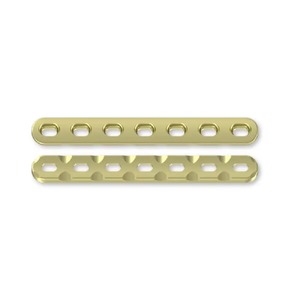
The Federal Commission for the Protection against Sanitary Risks (COFEPRIS - Comisión Federal para la Protección contra Riesgos Sanitarios) enforces rigorous evaluation criteria for surgical implants entering the Mexican market. Under the General Health Law (Ley General de Salud), orthopedic devices—ranging from trauma locking compression plates (LCP) and intramedullary nails to spinal pedicle screws and PEEK fusion cages—are designated as Class II or Class III medical devices due to their long-term contact with human bone structure and structural load-bearing role.
For international manufacturers seeking a robust commercial footprint in Mexico City, obtaining a Sanitary Registry (Registro Sanitario) requires submission of a comprehensive technical dossier. As an established OEM/ODM manufacturer, Orthovana Medical equips local distributors and legal registration holders (Titular del Registro Sanitario) with complete, audit-ready technical files. Our technical documentation conforms strictly to international harmonized dossiers (STED framework) and Mexican Official Standards:
- NOM-241-SSA1-2021: Good Manufacturing Practices for Medical Devices (GMP audit verification and cleanroom environmental controls).
- NOM-137-SSA1-2008: Medical Device Labeling requirements, specifying Spanish language translation, lot identification, and local distributor registration codes.
- NOM-240-SSA1-2012: Installation and Operation of Medical Device Vigilance (Tecnovigilancia), tracking post-market performance across CDMX hospitals.
- Biocompatibility Dossier per ISO 10993: Including cytotoxicity, systemic toxicity, sensitization, and genotoxicity validation.
- Mechanical Evaluation per ASTM F382 / ASTM F1264: Dynamic fatigue strength data proving load endurance beyond 5,000,000 cycles.
2. Registration Pathways: Standard Route vs. Equivalence Agreements
Distributors in Mexico City can leverage two primary regulatory approval pathways when introducing our orthopedic implant lines:
A. The Standard Evaluation Path: Requires full technical submission directly to the COFEPRIS New Products Committee (Comité de Productos Nuevos). This route demands extensive physical testing reports, raw material origin verification (mill certs per ASTM F136 / ASTM F67), sterilization validation (ISO 11137 / ISO 11135), and clinical history data. Orthovana provides full factory authorization letters and authenticated Certificate of Free Sale (CFS / CLV) apostilled by foreign government bodies.
B. Equivalence Agreement Pathways (Acuerdos de Equivalencia): For products possessing prior clearance from the US FDA (510k/PMA) or Health Canada, streamlined review timelines apply. Our engineering team assists CDMX distributors in compiling side-by-side predicate equivalence documentation, significantly compressing time-to-market from 18-24 months down to 6-9 months.
Deploying Orthopedic Implants in Mexico City's Hospital Systems
Tailored solutions matching the operational demands of CDMX’s vast public health institutions and elite private surgical centers.
Public Health Tenders (IMSS, ISSSTE, PEMEX)
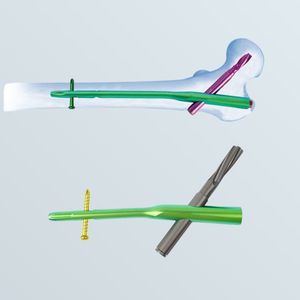
The public sector represents over 70% of surgical procedures in Mexico City, managed by major hubs like Centro Médico Nacional Siglo XXI (IMSS) and Centro Médico Nacional La Raza. These high-volume trauma facilities require standardized, high-durability locking compression plate (LCP) sets, PFNA femoral nails, and robust cannulated screws that withstand intense surgical throughput while remaining cost-effective under public budget frameworks (LAASSP bidding rules).
Private Healthcare Networks (Ángeles, ABC, Star Médica)
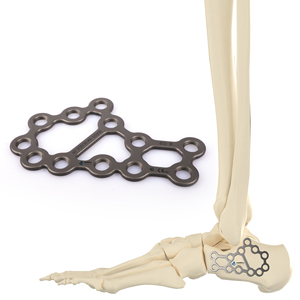
Premier private hospital chains in CDMX—such as Centro Médico ABC Santa Fe/Observatorio and Hospital Ángeles Santa Fe—demand premium-tier surgical ergonomics and advanced materials. Our anatomical titanium plates with low-profile countersunk screw heads, PEEK-OPTIMA spinal cages, and 2.4mm CMF maxillofacial systems provide surgeons with the tactile feedback and biomechanical stability required for complex elective reconstructive surgeries.
Metropolitan Trauma & Emergency Surgery
Mexico City's dense metropolitan population faces significant traffic, occupational, and geriatric trauma cases. High-energy vehicular trauma requires rapid, versatile external fixation systems and trauma nails. Concurrently, an aging demographic in urban centers fuels demand for subtrochanteric fracture care (PFNA) and osteoporotic fracture fixation using variable-angle locking plates that prevent screw pull-out in compromised bone quality.
Localized Trends Driving Orthopedic Supply Chains in Mexico City
Understanding how nearshoring, regulatory digitalization, and clinical preferences are transforming CDMX medical device procurement.
1. Decoupling & Nearshoring Logistics
Mexico's emergence as a global nearshoring powerhouse has led CDMX healthcare distributors to shorten their supply chains. Rather than facing unpredictable lead times from distant agents, distributors are establishing direct OEM manufacturing partnerships. Orthovana’s batch-controlled production ensures consistent stock replenishment for fast-moving trauma sizes directly into Benito Juárez International Airport (AICM) and AIFA logistics hubs.
2. Transition to Modular & Color-Coded Trays
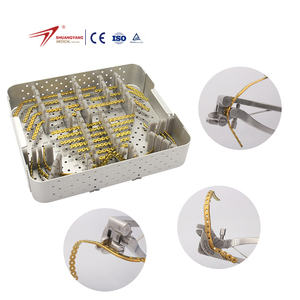
Surgical sterilization units (CEYE - Central de Equipos y Esterilización) across CDMX hospitals are standardizing on anodized, modular instrument trays. Color-coded implants (gold, blue, green anodization) match surgical drills and taps, reducing intra-operative error rates, accelerating instrument turn-around times, and minimizing operating room occupancy costs.
3. Digital COFEPRIS Platform (DIGIPRIS)
With the rollout of DIGIPRIS by Mexican health authorities, electronic submission of medical device dossiers has become standard. This shift requires digital-native documentation: high-resolution CAD renderings, electronic IFUs, and verified PDF material certificates. Our technical department supplies fully indexed digital dossiers ready for direct upload into the DIGIPRIS portal.
Biomaterial Integrity & Engineering Superiority
How Orthovana Medical ensures zero-defect quality across trauma, spine, and CMF product lines.
| Implant System Family | Raw Material Specification | Machining & Tolerance Standard | Surface Finishing & Anodization | Clinical Biomechanical Target |
|---|---|---|---|---|
| Trauma Locking Compression Plates (LCP) | Ti-6Al-4V ELI (ASTM F136) / CP Titanium (ASTM F67) | 5-Axis Swiss CNC Precision (±0.005mm tolerance) | Type II Hard Anodization & Electrolyte Color Coding | Combines rigid fracture stability with reduced periosteal damage. |
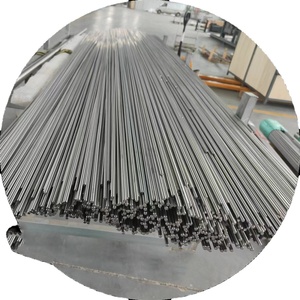
| PFNA Intramedullary Femoral Nails | High-Strength Titanium Alloy (Ti-6Al-4V ELI) | Multi-axis deep-hole gun drilling & thread milling | Micro-bead blasted matte finish to prevent reflection | Prevents rotational displacement in intertrochanteric fractures. |
| Spinal Pedicle Screws & PEEK Cages | Medical-Grade Titanium & PEEK-OPTIMA Polymer | Sub-micron thread profile turning & micro-grooving | Radiographic marker integration & plasma etching | Matches cortical bone elastic modulus to eliminate stress-shielding. |
| 2.4mm CMF Maxillofacial Sets | Commercially Pure Titanium Grade 2 & Grade 4 | Ultra-low profile stamping & wire EDM contouring | Biocompatible electrolytic color coding (Blue/Pink/Gold) | Provides micro-fixation for delicate facial bone reconstruction. |
Swiss 5-Axis CNC Precision
Our state-of-the-art manufacturing facility houses advanced Swiss Citizen CNC lathes and DMG MORI 5-axis machining centers. This guarantees that complex locking thread geometries and variable-angle screw holes are produced with absolute repeatable accuracy, eliminating cold-welding or cross-threading issues during surgical implantation.
Complete Lot-Level Traceability
Every individual screw, plate, and nail manufactured by Orthovana carries a permanent laser-etched lot code. This enables 100% material traceability from the original titanium billet raw mill cert (ASTM F136) down to the final sterile pouch delivered to hospital operating rooms in Mexico City.
Surgical-Ready Instrument Sets
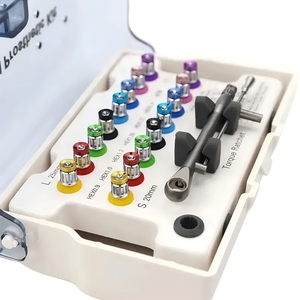
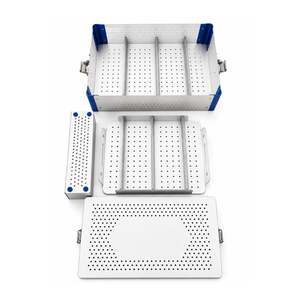
Implants represent only half of the surgical equation. Orthovana supplies completely matched surgical instrument kits—including custom drill guides, depth gauges, torque-limiting drivers, and PPSU/Aluminum sterilization containers (AI-DHS type)—ensuring seamless handling for CDMX surgical teams.
Frequently Asked Questions: Sourcing & Registering Orthopedic Implants in Mexico City
Direct technical answers for CDMX regulatory directors, procurement heads, and medical device distributors.
What specific documents does Orthovana supply to support COFEPRIS Sanitary Registration in Mexico?
We provide complete technical registration dossiers formatted for COFEPRIS evaluation. This includes: ISO 13485:2016 certification, Certificate of Free Sale (CFS) apostilled by the relevant government authority, ISO 10993 biocompatibility test reports, mechanical fatigue test reports (ASTM F382/F1264), chemical composition certificates per ASTM F136/F67, sterilization validation reports (ISO 11137), risk analysis per ISO 14971, and fully editable artwork for Spanish labeling compliance (NOM-137-SSA1-2008).
How does Orthovana assist CDMX distributors who do not yet hold a COFEPRIS Sanitary Registry?
For companies establishing their medical device importing business in Mexico City, we can connect you with accredited local regulatory consultancy partners (Gestores Regulatorios) in CDMX. We supply all factory documentation directly to your designated Sanitary Registry Holder (Titular del Registro Sanitario) or third-party logistics provider (3PL) holding a valid COFEPRIS Operating Notice (Aviso de Funcionamiento) and Warehouse Good Storage Practices license.
What are the customs clearing requirements for orthopedic shipments arriving in Mexico City?
Shipments dispatched to Benito Juárez International Airport (AICM) or Felipe Ángeles International Airport (AIFA) require custom clearance through an authorized Mexican Customs Broker (Agente Aduanal). The shipment must be accompanied by the original Commercial Invoice, Packing List with detailed Lot numbers, Certificate of Analysis/Quality per batch, Certificate of Origin, and a copy of the valid COFEPRIS Sanitary Registration permit matching the imported product codes.
Are Orthovana's implants compatible with standard surgical instrument sets in Mexican public hospitals?
Yes. Our implants utilize standardized screw hex/torx drives and standardized plate contours that align with global surgical standards. Furthermore, we supply complete, matched instrument sets with color-coded handles and quick-coupling connectors (AO type) so local hospital staff in IMSS or ISSSTE facilities require zero retraining.
Do you support private-label (OEM/ODM) branding for established Mexican medical device suppliers?
Yes. We support custom laser marking (adding your brand logo, specific catalog numbering, and lot identifiers), customized box packaging, and tailored sterilization pouch labeling according to your brand guidelines, while maintaining full compliance with NOM-241 and NOM-137 standards.
What is the typical production and shipping lead time for order fulfillment to CDMX?
Standard catalog items maintained in our safety stock can be dispatched within 7–10 working days. For bulk production orders, manufacturing lead times typically range from 20 to 35 days depending on batch volume. Air freight from our facility directly to CDMX (AICM/AIFA) generally takes 3–5 transit days, ensuring reliable inventory replenishment for fast-moving trauma lines.
Expand Your Orthopedic Portfolio in Mexico City Today
Partner with an ISO 13485-certified manufacturer equipped to power your COFEPRIS registration, supply chain security, and clinical tenders across CDMX public and private hospital networks.