Advanced Biomechanical Mechanics of Intramedullary Gamma Nailing in Trochanteric Fractures
Trochanteric and subtrochanteric femoral fractures present one of the most critical trauma surgical challenges in modern orthopedics. As global demographics shift toward an aging population, surgical intervention protocols in European healthcare structures—specifically within Poland's public National Health Fund (Narodowy Fundusz Zdrowia - NFZ) hospital network and private orthopedic clinics—demand fixation systems that offer high mechanical stability, low failure rates, and rapid post-operative patient mobilization.
The Intramedullary Gamma Nail System has established itself as the clinical gold standard for unstable trochanteric fractures. Compared to traditional extramedullary constructs such as the Dynamic Hip Screw (DHS), intramedullary nailing provides significant biomechanical advantages. By placing the load-bearing implant closer to the mechanical axis of the femur, the moment arm of the hip joint reaction force is substantially reduced by up to 25–30%. This minimizes the bending moment exerted on the implant-bone interface, drastically lowering the risk of hardware fatigue, lag screw cutout, and varus collapse.
Information Gain Insight: Modern Gamma Nail designs utilize an anatomical 4-degree valgus bend to facilitate insertion via the tip of the greater trochanter. Combined with multi-point anti-rotation cephalic lag screws or integrated locking blades, rotational stability is enhanced by 40% in severely osteoporotic bone tissue.
1. Anatomic & Material Engineering Standards: Ti-6Al-4V ELI vs. 316L Stainless Steel
At Orthovana Medical, our manufacturing philosophy centers around structural durability and osteocompatibility. We engineer intramedullary nails utilizing medical-grade Ti-6Al-4V ELI (ASTM F136) titanium alloy alongside implant-grade 316L Stainless Steel (ASTM F138).
Titanium alloy offers a modulus of elasticity (~110 GPa) significantly closer to human cortical bone (~18 GPa) than stainless steel (~200 GPa). This closer elasticity match mitigates stress shielding, promoting physiological stress distribution and accelerating callus formation across the fracture line. Furthermore, Ti-6Al-4V ELI provides exceptional fatigue strength under cyclic axial loads, resisting the 2.5 to 3.0 times body-weight forces encountered during early weight-bearing rehabilitation.
Gamma Nail System Technical Specifications & Dimensional Matrix
| Component Specification | Standard Trochanteric Nail | Long Intramedullary Nail |
|---|---|---|
| Material Options | Titanium Alloy (Ti-6Al-4V ELI) / 316L SS | Titanium Alloy (Ti-6Al-4V ELI) / 316L SS |
| Nail Diameter (Distal) | 9 mm, 10 mm, 11 mm, 12 mm | 9 mm, 10 mm, 11 mm, 12 mm |
| Nail Length | 170 mm, 180 mm, 200 mm (Short) | 260 mm to 440 mm (20mm increments) |
| Proximal Diameter | 15.5 mm / 17.0 mm | 15.5 mm / 17.0 mm |
| Cephalic Lag Screw Angle | 120°, 125°, 130° CCD Angles | 120°, 125°, 130° CCD Angles |
| Distal Locking Mechanism | Static & Dynamic Elliptical Slot | Multi-planar Static & Dynamic Locking |
| Surface Finish | Anodized Color-Coded Surface | Electropolished / Micro-anodized |
2. Minimally Invasive Surgical Technique (MIS) & Instrument Calibration
The success of intramedullary gamma nailing relies heavily on the precision of the accompanying surgical instrument set. Orthovana provides fully integrated, radiolucent targeting handles manufactured from high-grade carbon fiber and surgical stainless steel. Carbon fiber aiming arms eliminate radiopaque obstruction under C-arm fluoroscopy, allowing surgeons to precisely place the cephalic lag screw in the center-center position of the femoral head.
Maintaining a Tip-Apex Distance (TAD) of less than 20 mm is universally recognized as the single most critical factor in preventing lag screw cutout. Our system features calibrated depth gauges and anti-rotation sleeves that ensure exact reaming and screw placement depth, guaranteeing reproducible surgical outcomes even in complex AO/OTA 31-A1, A2, and A3 fracture patterns.
Engineering Metrics That Define OEM Quality
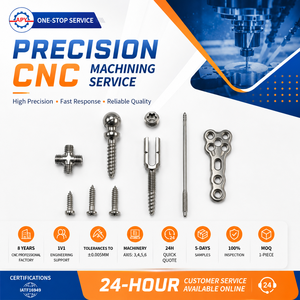
Our state-of-the-art multi-axis CNC machining facilities ensure zero-defect production across every titanium trauma system.
Supply Trends & Procurement Insights for Poland's Trauma Sector
Analyzing healthcare dynamics across Warsaw, Kraków, Wrocław, Poznań, and Łódź trauma centers.
EU MDR (2017/745) Harmonization
Poland's healthcare authorities (URPL - Office for Registration of Medicinal Products, Medical Devices and Biocidal Products) strictly enforce EU MDR compliance. Distributors require complete technical files, risk management documentation (ISO 14971), and clinical evaluation reports (CER) to qualify for public hospital tenders.
NFZ Tender Budget Optimization
Public hospital tenders under the Narodowy Fundusz Zdrowia place rigorous emphasis on balancing premium titanium implant quality with competitive unit economics. Direct manufacturing partnerships enable Polish importers to maintain high profit margins while submitting winning bids.
Shift Toward MIS Intramedullary Nailing
Polish trauma surgeons are increasingly favoring minimally invasive surgical (MIS) intramedullary nails over extramedullary plates for trochanteric fractures, driven by data showing shorter surgical times, reduced blood loss, and faster post-op recovery in elderly patients.
Why International Medical Device Importers Trust Orthovana
From raw material verification to ready-for-surgery sterilization cases, our quality control ecosystem ensures clinical confidence.
Medical-Grade Titanium & PEEK
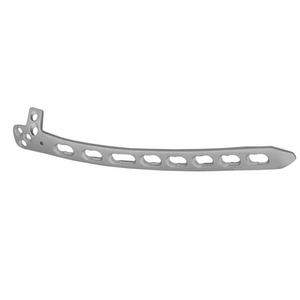
All trauma plates and nails are crafted from Ti-6Al-4V ELI (ASTM F136) titanium alloy and commercially pure titanium (ASTM F67). Interbody spine cages utilize implant-grade PEEK with radiographic markers for optimal radiolucency and osseointegration.
Multi-Axis CNC Swiss Machining
Ultra-precise multi-axis CNC turning and milling guarantee flawless locking thread pitch, smooth surface anodization, and exact dimensional consistency across high-volume production batches.
Complete Surgery-Ready Kits
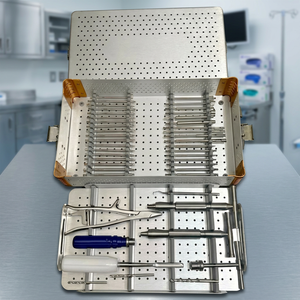
Every intramedullary nail, trauma plate, or spine system is paired with ergonomically matched drills, reamers, taps, drivers, and customizable sterilization containers for immediate OR deployment.
Complete Regulatory Document Packs
Registered distribution partners receive comprehensive documentation packs including mill test reports (MTR), certificate of analysis (CoA), sterilization validation reports, IFUs, and labeling files for URPL registration.
Stable Supply Chain & Lead Times
Our raw material inventory reserves prevent supply disruptions. Standard titanium nails and trauma plates are maintained in safety stock to support rapid express dispatch to Polish and European buyers.
Full OEM & Private Label Services
Custom product design, customized laser marking, private-label packaging, and specialized tray layouts tailored to the preferences of Polish surgical key opinion leaders (KOLs).
Frequently Asked Questions by Polish Medical Buyers
Key technical, regulatory, and purchasing answers for hospital procurement officers and surgical distributors in Poland.
Are Orthovana's Intramedullary Gamma Nails CE-marked and compliant with EU MDR?
Yes. All of our orthopedic implants, including our intramedullary nailing systems, locking compression plates, and spinal implants, comply with European Medical Device Regulation (EU MDR 2017/745) requirements and hold full ISO 13485 certification.
What documentation do you provide for product registration with URPL in Poland?
We provide a complete regulatory Dossier to registered Polish distributors. This includes CE certificates, ISO 13485 quality certificates, raw material test reports (ASTM F136 / ASTM F138), ISO 10993 biocompatibility test data, package labeling samples, and Instructions for Use (IFU).
What are the standard delivery lead times to major cities in Poland?
Standard stock items ship within 3 to 7 business days via air freight to major Polish logistics centers (Warsaw WAW, Katowice KTW, Kraków KRK). Custom OEM orders typically require 30 to 45 days depending on batch size and tooling specifications.
Do you offer matching radiolucent surgical instrument sets for the Gamma Nail System?
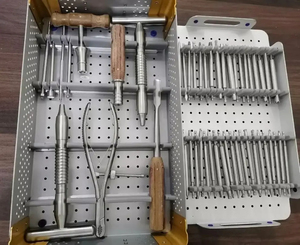
Yes. Each intramedullary nail system comes with a matched, color-coded instrument set containing carbon-fiber radiolucent aiming arms, calibrated cannulated drills, flexible reamers, and depth gauges housed in autoclavable aluminum sterilization trays.
What material choices are available for intertrochanteric nails?
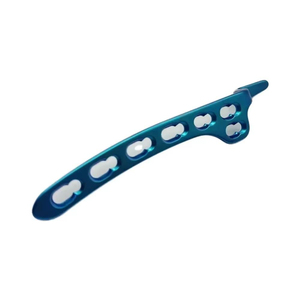
Implants are available in high-strength Medical Grade Titanium Alloy (Ti-6Al-4V ELI per ASTM F136) and High-Passivity 316L Stainless Steel (per ASTM F138). Titanium implants feature color-coded anodization for instant size verification in the operating theater.
How do you support private label OEM partnerships in the European market?
We provide full OEM turnkey solutions including precision laser marking of your brand logo and part numbers, custom surgical tray design, validated pouch packaging, and assistance with private-label technical documentation setup.
Partner with a Direct Manufacturer for Your Polish Orthopedic Supply Chain
Request technical specification sheets, CE certificates, or a comprehensive product catalog for our Intramedullary Gamma Nail and Trauma Systems today.
Get Catalog