Elevating Surgical Outcomes Across Iraq with FDA 510(k) Cleared Implant Systems
Iraq’s healthcare system is undergoing a profound structural transformation. From the major medical hubs in Baghdad, Erbil, Basra, and Najaf to regional clinical centers in Sulaymaniyah and Mosul, there is an escalating demand for international-standard surgical devices. As an authoritative, export-oriented manufacturer, we supply high-precision, FDA 510(k) cleared titanium and PEEK orthopedic implants engineered specifically for severe traumatic injuries, degenerative bone conditions, and complex reconstructive surgeries.
Meeting Iraqi Regulatory Standards & KIMADIA Technical Specifications
Navigating the medical device procurement environment in Iraq requires absolute compliance with both the State Company for Marketing Drugs and Medical Appliances (KIMADIA) under the Iraqi Ministry of Health (MOH) and Kurdistan Regional Government (KRG) Health Directorates. Iraqi tenders prioritized implants with rigorous regulatory validation to eliminate surgical complications, revision rates, and material fatigue.
Our export operations provide a seamless bridge between Western regulatory rigor and Iraqi clinical needs. Every single plate, screw, cage, and intramedullary nail is supported by full legalizations, Certificate of Free Sale (CFS), ISO 13485 accreditation, and complete metallurgical analysis testing reports (ASTM F136 / ASTM F67).
Featured FDA 510(k) Cleared Orthopedic & Surgical Solutions
Precision-machined trauma plates, bone screws, and reconstructive mesh designed for rapid bone union and intra-operative versatility.
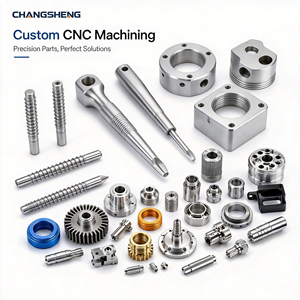
High Precision CNC Machining Custom Parts OEM Manufacturing Medical Surgical Tools Orthopedic Implants Medical Stainless Steel
Send an Inquiry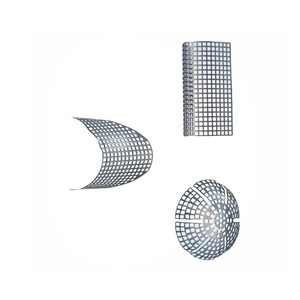
Competitive Price Titanium Alloy Material MESH Orthopedic Implants for Hospital
Send an Inquiry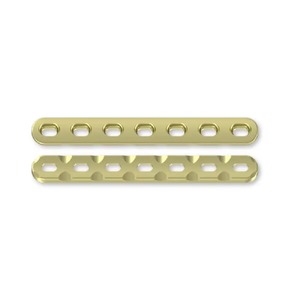
Titanium Orthopedic Implant – Manufacturer Direct, Limited Compression Surgical Implant & Interventional Material CE Certified
Send an Inquiry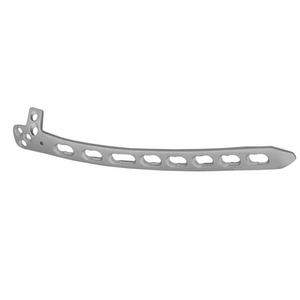
Premium Orthopedic Implants Stainless Steel and Titanium Surgical Implant Solutions
Send an Inquiry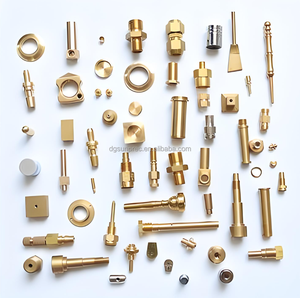
5 Axis CNC Machining Titanium CNC Parts OEM High Precision Manufacturing Service
Send an Inquiry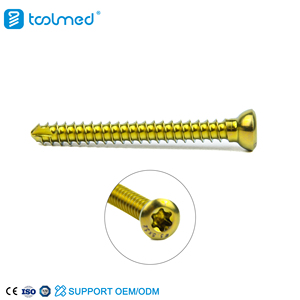
3.5mm Titanium Cortical Screw For Orthopedic Implants
Send an Inquiry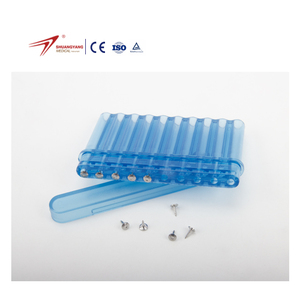
Shuangyang Orthopedic Implant Titanium Alloy Screw Gbr Membrane Bone Tack System Dental Hospital Use CEISO Certified 1 Year
Send an Inquiry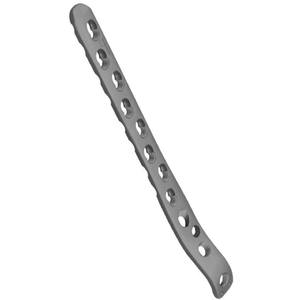
Titanium Orthopedic Implant – Manufacturer Direct, Limited Compression Surgical Implant
Send an InquiryState-of-the-Art Machining, Metallurgical Integrity & QC Assurance
We combine medical-grade materials science with multi-axis Swiss CNC machining to deliver uncompromised anatomical fit and structural endurance.
Medical-Grade Titanium (ASTM F136 / ASTM F67) & PEEK-OPTIMA®
Plates and bone screws are crafted exclusively from certified Ti-6Al-4V ELI (Extra Low Interstitial) titanium alloy per ASTM F136 and commercially pure titanium per ASTM F67. This guarantees maximum fatigue resistance, supreme biocompatibility, and optimal MRI conditionally. Interbody fusion cages are manufactured using implant-grade PEEK (Polyetheretherketone), offering an elastic modulus closely matching natural human cortical bone to reduce stress shielding and accelerate bone graft fusion.
5-Axis Swiss CNC Precision
High-precision 5-axis CNC turning and milling ensure micro-inch dimensional accuracy, flawless locking thread engagement, and smooth anatomical contours that eliminate soft-tissue irritation.
Rigorous 100% Quality Auditing
Every production lot undergoes rigorous coordinate measuring machine (CMM) testing, optical thread gauging, and destructive mechanical testing according to ASTM F382 and ASTM F543 standards.
Complete Surgical Instrument Kits
We supply ergonomic, color-coded, surgical-grade stainless steel instrument sets paired with autoclavable sterilization trays for immediate operating theatre deployment.
Complete Regulatory Dossiers
Includes FDA 510(k) summary letters, CE certificates, ISO 13485 audit dossiers, material heat certificates, and step-by-step Surgical Technique Manuals for clinical teams.
Addressing Clinical & Surgical Demands in Iraqi Hospitals
Our FDA 510(k) cleared implants are actively configured to handle complex clinical scenarios encountered in public and private medical facilities across Iraq.
Complex Limb Reconstruction in Baghdad & Mosul
Trauma centers such as Baghdad Medical City and hospitals in Mosul handle high volumes of complex periarticular fractures, segmental bone defects, and non-union cases resulting from vehicular collisions and blast injuries. Our Variable Angle Locking Compression Plate (LCP) System allows surgeons up to 15° of axial screw angulation, enabling secure fixation in comminuted osteoporotic bone fragments and severe metaphyseal fractures.
Degenerative & Traumatic Spine Care in Erbil & Sulaymaniyah
Surgeons in northern Iraq's growing orthopedic hubs utilize our Thoracolumbar Pedicle Screw System and PEEK Interbody Fusion Cages (TLIF/PLIF). Featuring low-profile top-loading polyaxial screws with friction-head technology, these implants ensure biomechanical stiffness for lumbar spondylolisthesis, vertebral burst fractures, and degenerative disc stabilization.
Reconstructive Maxillofacial Surgery in Najaf & Basra
Mandibular fractures, pan-facial trauma, and orthognathic alignment require low-profile micro and mini plating systems. Our 1.5mm / 2.0mm Titanium CMF Fixation Systems feature bendable anatomical plates and self-tapping screws that provide rigid internal fixation without visual skin contouring, ideal for specialized maxillofacial units in Basra and Najaf.
Hand, Wrist & Ankle Arthroscopy in Private Clinics
Private surgical centers throughout Iraq require versatile cannulated compression screw systems (2.4mm / 3.0mm / 4.0mm) for scaphoid fractures, distal radius plating, and metatarsal osteotomies. These implants feature headless design options for intra-articular insertion, minimizing soft-tissue irritation and ensuring rapid post-operative patient mobilization.
Iraq Orthopedic Market Trends & Procurement Insights
1. Modernization of Public Hospital Tenders
The Ministry of Health of Iraq is undergoing a systematic push to upgrade public healthcare infrastructure. KIMADIA tenders increasingly specify FDA 510(k) clearance or European CE marking as mandatory pre-requisites for bidding. Distributors supplying public sector facilities must partner with manufacturers capable of delivering batch-level certification dossiers and legalised Certificate of Origin (COO) documents verified by Iraqi embassies abroad.
2. Rapid Expansion of Private Healthcare Hubs
Cities like Erbil and Baghdad have seen a surge in private orthopedic hospitals catering to patients seeking advanced surgeries domestically rather than traveling abroad. Private sector buyers demand high-spec locking plates, minimally invasive spine surgery (MISS) kits, and immediate stock availability with fast turnaround shipping via air freight into Erbil International Airport (EBL) or Baghdad International Airport (BGW).
3. Transition to Anatomical & Minimally Invasive Implants
Iraqi orthopedic surgeons are shifting away from traditional non-locking reconstruction plates toward pre-contoured anatomical locking systems. Pre-shaped distal tibia, proximal humerus, and distal radius plates save critical operative time under anesthesia and lower intra-operative blood loss—factors vital for improving overall patient survival rates in severe trauma care.
Frequently Asked Questions for Importing to Iraq
Addressing regulatory paperwork, shipping logistics, OEM options, and tender support for Iraqi healthcare buyers.
How do your FDA 510(k) cleared implants comply with Iraqi MOH and KIMADIA procurement rules?
What materials are used for your trauma, spinal, and maxillofacial implant ranges?
What are the shipping routes and lead times for medical shipments to Baghdad, Erbil, or Basra?
Do you provide matching surgical instrument sets and sterilization trays for Iraqi hospitals?
Can Iraqi distributors request OEM customization or private labeling?
Partner with a Trusted FDA 510(k) Implants Supplier for Iraq
Whether you are bidding on upcoming KIMADIA public MOH tenders or expanding your distribution network in Baghdad, Erbil, Basra, or Najaf, our team provides instant pricing, regulatory support, and sample kits.