Executive Summary: Elevating Orthopedic Implant Procurement in Berlin & Brandenburg
The healthcare ecosystem in the Berlin-Brandenburg metropolitan region represents one of Europe's most technologically advanced medical hubs. Home to world-renowned university hospitals like Charité – Universitätsmedizin Berlin, specialized traumatology centers, and an expansive network of private orthopedic clinics, Berlin demands surgical implants that meet the absolute highest thresholds of biomechanical stability, material purity, and regulatory compliance. As global supply chains adjust to strict European mandates, hospital procurement directors and B2B medical device distributors across Germany are actively seeking accredited manufacturers who can provide both standardized trauma solutions and highly personalized, patient-specific orthopedic implants.
This comprehensive industry report examines the technical, metallurgical, and regulatory requirements necessary to supply custom orthopedic implants and high-precision trauma hardware to the Berlin market. By combining state-of-the-art subtractive multi-axis CNC machining, additive 3D titanium printing, and rigorous metallurgical quality controls compliant with DIN EN ISO 13485 and EU Regulation 2017/745 (MDR), our manufacturing infrastructure bridges the gap between cost-efficiency and uncompromising German clinical standards.
Metallurgical Standards & Precision Manufacturing Specifications
In orthopedic reconstructive surgery, long-term implant survival depends on biomaterial integrity and fatigue resistance. Implants exported to the German market undergo multi-stage metallurgical validation to ensure bio-inert performance and optimal osteointegration.
Medical-Grade Titanium Alloy
Machined exclusively from premium Ti-6Al-4V ELI (Extra Low Interstitial) complying with ASTM F136 and ISO 5832-3. Offers superior tensile yield strength (>860 MPa), optimal fatigue resistance for load-bearing skeletal structures, and MRI-conditional biocompatibility.
Radiolucent PEEK Polymers
Interbody spinal fusion cages utilize implant-grade PEEK-OPTIMA®. With a elastic modulus (3.6 GPa) closely matching human cortical bone, stress shielding is minimized. Integrated radio-opaque Tantalum markers allow precise intra-operative fluoroscopic visualization.
Electrochemical Anodization
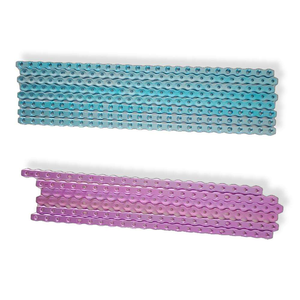
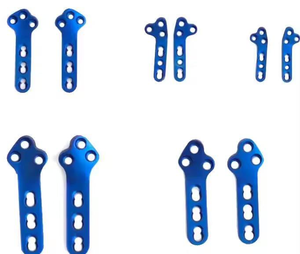
Type II electrochemical surface anodization produces a dense titanium oxide layer that increases corrosion resistance while preventing ion release. Color-coded implant surfacing assists surgical staff in immediate intra-operative screw diameter and plate selection.
Targeted Clinical Application Scenarios in Berlin Healthcare Facilities
Different clinical disciplines within Berlin’s major hospitals require customized fixation systems tailored to specific patient demographics, trauma patterns, and reconstructive protocols.
1. Complex Trauma & Revision Surgery (Charité & BG Klinikum Standards)
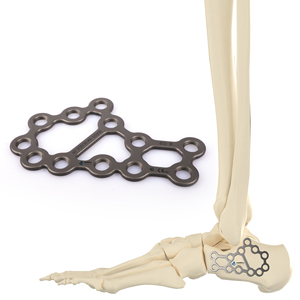
High-velocity polytrauma cases resulting from industrial, vehicular, or athletic injuries require stable internal fixation. Our Variable Angle (VA) Titanium Locking Compression Plates enable surgeons to angle screws up to 15° off-axis. This flexibility is vital in juxta-articular fracture management, osteoporotic bone fixation, and complex calcaneal reconstructive procedures commonly managed in Berlin's level-1 trauma units.
2. Spinal Reconstruction & Degenerative Pathology
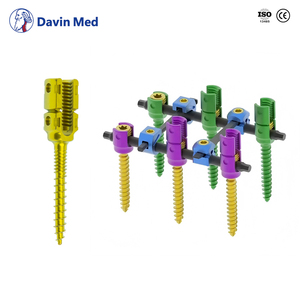
With Brandenburg's shifting demographics toward an aging population, surgical intervention for degenerative disc disease, spinal stenosis, and spondylolisthesis has expanded. Our Monoaxial and Polyaxial Pedicle Screw Spinal Fixation Systems, paired with specialized TLIF and PLIF PEEK Cages, deliver immediate 3D segmental stabilization while maintaining lumbar lordosis and promoting rapid bone graft fusion.
3. Patient-Specific Craniomaxillofacial (CMF) & Mandibular Reconstruction
For oncological resection or severe facial trauma, generic off-the-shelf plates often fail to restore pre-morbid facial contours. Utilizing patient high-resolution CT DICOM datasets, we export customized low-profile 1.5mm/2.0mm micro and mini titanium plates. These custom-milled CMF systems reduce intra-operative bending time and lower the incidence of hardware prominent-edge irritation.
4. Specialized Small Animal & Veterinary Orthopedics in Berlin
Berlin hosts a dense population of veterinary hospitals and university-affiliated animal clinics requiring specialized orthopedic systems. Our Veterinary ALPS Reconstruction Bone Plates and complete 1.5mm to 3.5mm implant kits provide biological internal fixation for canine and feline fracture repair, TPLO surgeries, and joint arthrodesis.
Key Orthopedic Market Trends Across Germany & Central Europe
Understanding the macro trends within the German healthcare sector is critical for B2B medical buyers and hospital purchasing consortiums (Einkaufsgemeinschaften). The following factors are actively reshaping implant sourcing in Berlin:
EU MDR 2017/745 Compliance Shift
The full implementation of EU MDR has caused supply bottlenecks across Europe as older legacy products lose certification. German buyers are prioritizing manufacturers who provide robust Technical Dossiers, comprehensive clinical evaluation reports (CER), and UDI (Unique Device Identification) readiness.
Additive Manufacturing & PSI
The adoption of Patient-Specific Implants (PSI) created via Selective Laser Melting (SLM) or Electron Beam Melting (EBM) is accelerating in Berlin. 3D-printed porous titanium scaffolds allow cellular ingrowth superior to traditional smooth-surfaced implants.
Inventory Optimization & Kits
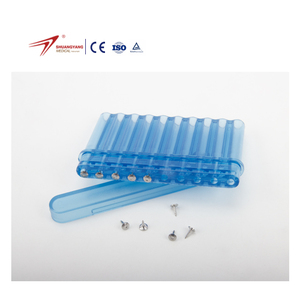
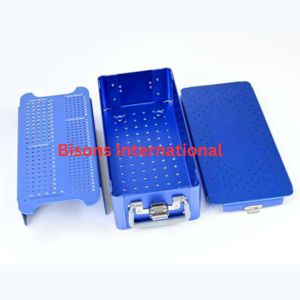
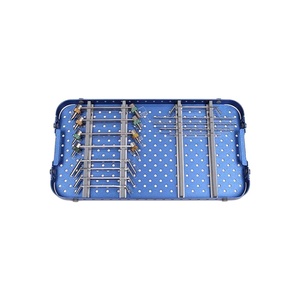
Hospitals are moving away from piecemeal ordering toward standardized, color-coded modular instrument tray systems. Complete sterile-ready kits decrease operating room setup time and streamline central sterile services department (ZSVA) reprocessing workflows.
Why European Distributors & Berlin Hospitals Partner With Us
As an established custom orthopedic implant manufacturer and exporter, our facility integrates raw material verification, high-speed multi-axis CNC machining, and comprehensive quality assurance protocols to support international medical device distributors and OEM partners.
Sub-Micron Machining Precision
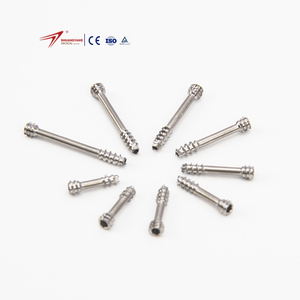
Utilizing Swiss-type automatic lathes and 5-axis CNC machining centers, bone screw threads and plate locking mechanisms are executed within sub-micron tolerances, ensuring zero cross-threading during surgical implantation.
End-to-End Lot Traceability
Every single plate, screw, and cage is marked with high-precision fiber laser micro-etching detailing batch numbers and QR codes. Raw material mill test certificates (MTC) are linked directly to every shipped production lot.
Complete OEM / Private Label Services
We support European partners with private-label laser marking, custom sterilization tray layout configurations, and localized German-language packaging insert documentation to fast-track regional market introduction.
Frequently Asked Questions for Berlin Medical Procurement Teams
Partner with a Trusted Custom Orthopedic Implant Manufacturer
Expand your orthopedic product portfolio in Berlin and across Europe. Access CE-ready technical files, sub-micron titanium manufacturing, and dedicated OEM export support.