Certified OEM/ODM Orthopedic Implant Solutions
High-precision orthopedic trauma plates, bone screws, spinal fixation systems, maxillofacial implants, and bio-compatible PEEK interbody fusion devices featuring laser-engraved UDI DataMatrix codes.
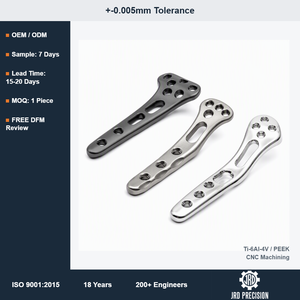
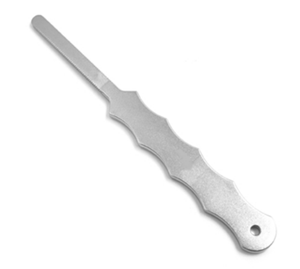
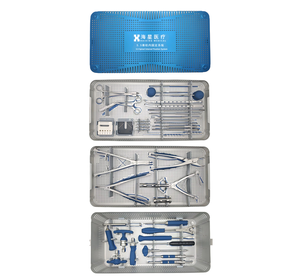
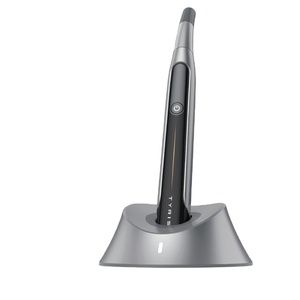
Precision Manufacturing Metrics & Quality Thresholds
Engineered to meet stringent international quality requirements for Class IIb and Class III surgical implants.
Custom OEM UDI Marking Orthopedic Implants: Technical Whitepaper for Portuguese Healthcare Importers
The European Union Medical Device Regulation (EU MDR 2017/745) and Portugal’s National Authority of Medicines and Health Products (Infarmed - Autoridade Nacional do Medicamento e Produtos de Saúde I.P.) have established strict regulatory protocols requiring comprehensive Unique Device Identification (UDI) for all Class IIb and Class III orthopedic devices. As a premier original equipment manufacturer (OEM) and global exporter specializing in medical-grade titanium and bio-polymer orthopedic implants, our manufacturing facility provides end-to-end custom production integrated with direct fiber laser UDI marking, full batch traceability, and specialized packaging engineered specifically for medical device distributors, public hospital networks, and private healthcare organizations operating throughout Portugal.
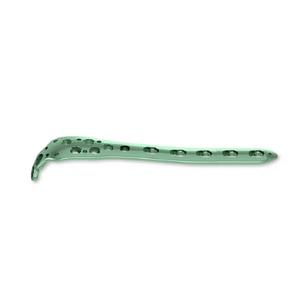
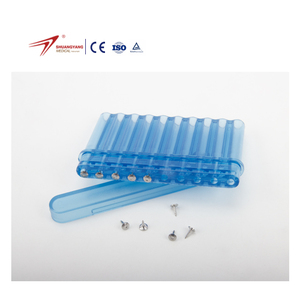
Sourcing high-grade titanium trauma plates, intramedullary nails, spinal pedicle screw systems, cranio-maxillofacial (CMF) reconstruction plates, and dental/GBR bone tack systems requires absolute material integrity and dimensional precision. By leveraging multi-axis CNC Swiss micro-machining technology alongside advanced coordinate measuring machine (CMM) quality control, we provide Portuguese procurement managers and hospital logistics directors with reliable, high-margin, fully certified OEM implant solutions.
1. Direct UDI Laser Marking & Regulatory Compliance for the Portuguese Market
Under EU MDR regulations, every implantable medical device placed on the market within EU member states must carry a unique UDI code consisting of two distinct components: the UDI-DI (Device Identifier) and the UDI-PI (Production Identifier). For orthopedic implants subjected to physiological fluid environments and mechanical friction, maintaining physical identifier legibility without compromising material corrosion resistance is a paramount engineering challenge.
- Non-Disruptive Fiber Laser Engraving: We utilize high-precision 1064nm pulse-frequency fiber lasers that alter the oxide layer thickness of titanium alloys (Ti-6Al-4V ELI / ASTM F136) to create high-contrast GS1 2D DataMatrix codes without creating micro-cracks or heat-affected zones (HAZ).
- Corrosion Resistance & Passivation: Laser-marked implants undergo specialized nitric/citric acid passivation according to ASTM F86 standards. This guarantees that the protective surface layer of titanium oxide ($TiO_2$) remains intact, preventing ion leakage or localized pitting corrosion when implanted.
- Infarmed Traceability Integration: Our UDI DataMatrix markings directly sync with EUDAMED and Portuguese national registry databases, allowing seamless scanning from hospital reception warehouses in Lisbon, Porto, and Coimbra down to surgical theater operating rooms.
2. Material Performance & Engineering Specifications
Selecting appropriate raw materials is essential to match human skeletal biomechanics. Below is an engineering overview comparing our core material matrices utilized in orthopedic and dental OEM production:
| Material Specification | Standard Reference | Tensile Strength (MPa) | Yield Strength (MPa) | Clinical Application Scenarios |
|---|---|---|---|---|
| Titanium Ti-6Al-4V ELI | ASTM F136 / ISO 5832-3 | ≥ 860 MPa | ≥ 795 MPa | Trauma locking plates, pedicle screws, CMF reconstruction, cannulated screws |
| Commercially Pure Titanium (Gr 4) | ASTM F67 / ISO 5832-2 | ≥ 550 MPa | ≥ 480 MPa | Cranio-maxillofacial mini plates, dental membrane tacks, contoured mesh |
| Implant-Grade PEEK-OPTIMA | ASTM F2026 | ≥ 95 MPa | ≥ 90 MPa | Interbody spinal fusion cages (TLIF, PLIF, ACIF) with Tantalum markers |
| Surgical Stainless Steel 316L | ASTM F138 / ISO 5832-1 | ≥ 690 MPa | ≥ 460 MPa | Veterinary flat bone files, temporary fixation pins, trial instruments |
3. Localization & Application Scenarios Across Portugal Healthcare Networks
Portugal’s healthcare system operates through a dual architecture comprising the public health sector (SNS - Serviço Nacional de Saúde) and rapidly expanding private clinical groups such as CUF Saúde, Luz Saúde, and Hospital Lusíadas. Our custom OEM UDI marking manufacturing services serve diverse clinical applications tailored to regional demands:
- Metropolitan Emergency Trauma Hubs: Major university hospitals in Lisbon (Hospital de Santa Maria, Hospital de São José), Porto (Hospital de São João), and Coimbra (CHUC) handle high-energy trauma cases requiring high-strength anatomical locking compression plates (LCP) and titanium spinal internal fixation systems (such as our 5.5mm pedicle screw systems). Pre-marked UDI codes accelerate surgical inventory turnaround.
- Orthognathic & Maxillofacial Units: Specialized surgical centers across Portugal utilize our micro (1.5mm/2.0mm) and reconstruction (2.4mm) CMF titanium plate sets for jaw alignment, facial trauma, and oncological bone reconstruction.
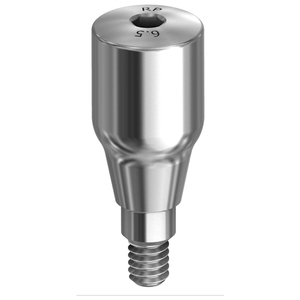
- Dental Implantology & Guided Bone Regeneration (GBR): Private dental clinics in regions like Algarve, Braga, and Aveiro rely on precision-machined GBR membrane bone tack systems and 0/15/25 degree prosthetic abutments engineered with Morse taper conical connections for maximum stability.
- Veterinary Surgical Centers: With high companion animal ownership in Sintra, Cascais, and Vila Nova de Gaia, specialized veterinary hospitals require multi-faced flat bone files and pet-specific stainless steel plating kits for complex animal fracture repairs.
4. Sourcing Dynamics & Regional Market Advantages for Portuguese Exporters & Distributors
Importing directly from an ISO 13485 certified manufacturer equipped with 5-axis CNC machining centers delivers substantial operational advantages to Portuguese medical device supply chain partners:
Supply Chain Security & Cost Efficiency: Traditional European brand distribution channels impose high markups. By establishing direct OEM contract manufacturing partnerships, Portuguese distributors can reduce unit acquisition costs by 30% to 45% while retaining full technical compliance, custom branding, and localized packaging in Portuguese (IFUs and sterile pouch labeling).
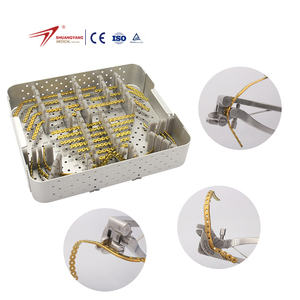
Complete Surgical Instrument Kit Matching: Implants are only as effective as the instruments used to place them. We design, machine, and assemble matched stainless steel surgical instrument trays, drill bits, taps, and torque wrenches packed in anodized aluminum sterilization containers. This guarantees smooth surgical workflow and eliminates driver-screw stripping during screw insertion.
Why Medical Procurement Leaders Partner With Us
Combining certified materials science, multi-axis machining expertise, and strict quality verification.
5-Axis CNC Precision
Complex anatomical geometries, locking thread contours, and internal hex connections machined with repeatable tolerances down to ±0.005mm.
Automated UDI Marking
High-contrast, non-corrosive fiber laser DataMatrix codes applied in-line to comply with EU MDR EUDAMED and Portuguese Infarmed requirements.
100% CMM Verification
Every production lot undergoes 3D Coordinate Measuring Machine inspection, optical surface analysis, and material chemical analysis.
OEM / Private Label Solutions
Full customization of plate shapes, screw pitches, color anodization coding, custom laser logo etching, and sterile packaging options.
Cleanroom Packaging
Class 10,000 (ISO Class 7) cleanroom cleaning, double-pouch sterile barrier sealing, and gamma/EtO sterilization compatibility.
Fast EU Logistics
Streamlined air and sea freight logistics directly servicing Portuguese major ports and distribution hubs in Lisbon, Leixões, and Faro.
Procurement FAQ for Portuguese Importers & Distributors
Clear answers regarding compliance, production lead times, laser marking, and OEM cooperation.
Partner With a Leading OEM Orthopedic Implant Factory
Elevate your product portfolio in Portugal with EU MDR compliant, UDI-marked titanium implants, custom instrument sets, and full engineering support. Request your technical dossier and competitive factory quote today.