1. Executive Overview: Bridging China Wholesale Manufacturing with Seattle Healthcare Demand
The Pacific Northwest, anchored by Seattle, Washington, represents one of North America's most sophisticated clinical ecosystems for orthopedic surgery, trauma recovery, and bio-engineering innovation. Home to renowned institutions like Harborview Medical Center—the region's premier Level I adult and pediatric trauma center—alongside Swedish Orthopedic Institute and UW Medicine, Seattle surgical teams demand uncompromised biomechanical stability, immediate implant integration, and rigorous biocompatibility compliance from every vendor.
For medical device distributors, group purchasing organizations (GPOs), and OEM brand owners based in Seattle, sourcing high-volume orthopedic trauma hardware, spinal interbody fusion cages, and maxillofacial plating systems from top-tier Chinese manufacturers offers an unparalleled economic edge. However, navigating US FDA compliance, ISO 10993 biological evaluation standards, and bulk logistics requires a detailed technical understanding of biological safety metrics, material selection, and rigorous quality control architectures.
As a specialized China wholesale orthopedic implant manufacturer supplying global procurement buyers and Seattle distributors, our operations are engineered around direct compliance with international regulatory frameworks. By harmonizing precision 5-axis CNC multi-axis Swiss machining with comprehensive biological evaluation protocols, we bridge the gap between low-cost, high-capacity manufacturing and strict Western healthcare compliance.
2. Technical Biocompatibility Testing Matrix for Implants Destined for Seattle Markets
To successfully import and market permanently implantable orthopedic hardware into the United States, manufacturers and Seattle distributors must present a comprehensive Biological Evaluation Plan (BEP) and Report (BER) adhering strictly to ISO 10993 and FDA guidance documents. Below is the multi-stage testing architecture executed across all our batch runs:
ISO 10993-5: In Vitro Cytotoxicity Evaluation
Assesses whether chemical leachables from titanium (Ti-6Al-4V ELI per ASTM F136) or PEEK (per ASTM F2026) inhibit cell growth or destroy mammalian fibroblasts. Tests utilize L929 mouse fibroblast cell lines via MTT or Neutral Red Uptake assays. A cell viability rate exceeding 70% is mandatory for batch clearance.
ISO 10993-10: Irritation & Skin Sensitization Testing
Evaluates potential allergic contact dermatitis and localized tissue reactivity. Using the Guinea Pig Maximization Test (GPMT) or Murine Local Lymph Node Assay (LLNA), extract fluids (polar saline and non-polar cottonseed oil) are verified to ensure zero sensitization response in musculoskeletal tissue environments.
ISO 10993-11: Systemic Toxicity & Pyrogenicity Assessment
Ensures that systemic exposure to material extracts causes no acute, subchronic, or chronic adverse physiological effects. Material-mediated pyrogenicity testing guarantees that our ultra-clean post-machining passivation processes remove all endotoxins (<0.25 EU/mL threshold).
ISO 10993-18: Chemical Characterization & Extractables/Leachables (E&L)
High-resolution analytical chemistry via ICP-MS (Inductively Coupled Plasma Mass Spectrometry) and GC-MS identifies micro-trace elements. This prevents heavy metal contamination (such as unwanted nickel or vanadium excess) from entering human physiological systems.
Biocompatibility Protocols & Metallurgical Benchmarks
Comparing raw material properties and biological performance standards for OEM orthopedic devices supplied to Seattle healthcare facilities:
| Material / Implant Type | Biocompatibility Standard | Yield Strength (MPa) | Corrosion Resistance | Primary Clinical Application |
|---|---|---|---|---|
| Ti-6Al-4V ELI (ASTM F136) | ISO 10993-5, 6, 10, 11 | ≥ 795 MPa | Ultra-High (Passive TiO2 layer) | Trauma Plates, Locking Screws, Pedicle Screws |
| Commercially Pure Ti (ASTM F67) | ISO 10993-5, 6, 10, 11 | 240 - 550 MPa | Superior Osseointegration | Maxillofacial Reconstruction, CMF Mini-plates |
| PEEK Optima (ASTM F2026) | ISO 10993-3, 5, 10, 18 | 110 - 130 MPa | Chemically Inert (Radiolucent) | Spinal Interbody Cages (TLIF, PLIF, Cervical) |
| 316L Stainless Steel (ASTM F138) | ISO 10993-5, 10, 11 | ≥ 690 MPa | High (Pitting Resistant) | Temporary Fracture Fixation & Veterinary Systems |
3. Metallurgical Integrity & Surface Passivation Science
Biocompatibility extends beyond intrinsic raw material purity. During high-speed CNC milling and Swiss lathe turning, orthopedic hardware comes into contact with cutting fluids and mechanical micro-burrs. If unaddressed, surface contaminants compromise tissue attachment and lead to localized corrosion or inflammatory responses in patients.
ASTM F86 Chemical Passivation Protocols
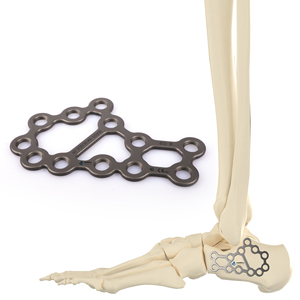
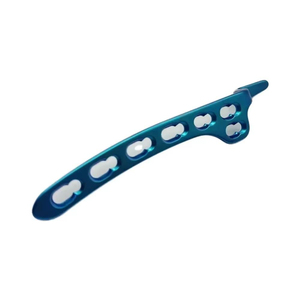
Our manufacturing facility applies rigorous ASTM F86 passivation treatments to all titanium and stainless steel locking compression plates, calcaneal plates, and cannulated screws prior to cleanroom packing:
- Ultrasonic Multi-Stage Degreasing: Removes all organic machining coolants using non-ionic surfactant baths.
- Nitric Acid / Citric Acid Bath Immersion: Removes free iron particles from the material surface, accelerating the natural formation of a continuous, chemically inert Titanium Dioxide (TiO2) protective oxide film.
- Electrolytic Color Anodization (Type II / Type III): Provides vital optical color coding for surgeons in Seattle operating rooms while sealing surface micro-porosity to prevent ion leaching.
PEEK Interbody Fusion Cage Engineering
Polyetheretherketone (PEEK) implants manufactured for spinal procedures in Seattle feature an elastic modulus (3.6 GPa) closely matching human cancellous bone. This minimizes stress shielding. Biocompatibility testing guarantees zero chemical degradation after thousands of high-load spinal flexion cycles.
4. Seattle Localized Regulatory Compliance & Supply Chain Architecture
Securing a smooth, legal, and rapid supply chain between China factories and Seattle receiving hubs requires comprehensive documentation. Medical distributors servicing Swedish Medical Center, UW Medicine, or regional orthopedic clinics require end-to-end trace-level assurance.
FDA 510(k) & Device Master File (DMF)
We supply comprehensive technical dossiers, raw material mill certificates, and ISO 10993 testing reports to support Seattle OEM partners during FDA 510(k) submission processes.
Port of Seattle & Air Logistics
Strategically situated for direct maritime freight to the Port of Seattle or express air transport via Seattle-Tacoma International Airport (SEA), ensuring emergency trauma replenishment within days.
100% Lot-Level Traceability
Every titanium bone plate, locking screw, or PEEK cage is laser-etched with unique batch codes, catalog numbers, and material heat numbers, meeting FDA UDI rules.
5. Why Leading Seattle Procurement Managers Partner With Us
As a leading Chinese wholesale manufacturer specializing in trauma, spine, and CMF devices, we bring significant structural advantages to international purchasing teams:
Advanced Multi-Axis Swiss CNC Machining
Equipped with top-tier Citizen and Star Swiss lathes, DMG Mori 5-axis machining centers, and Brother high-speed drilling systems, we hold dimensional tolerances down to ±0.005mm.
Complete Surgery-Ready Instrument Sets
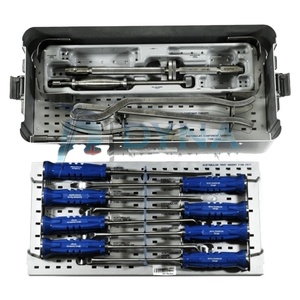
Every plating, spinal, or intramedullary system is supplied with ergonomically matched drill bits, depth gauges, torque limiters, and aluminum sterilization trays designed for hospital autoclaves.
ISO 13485 Certified Cleanroom Packaging
Products can be supplied clean-packaged or in ISO Class 7 cleanrooms with sterile barrier Tyvek pouching validated under ISO 11607 protocols.
6. Frequently Asked Questions (FAQ) for Seattle Buyers
Partner with a Certified China Wholesale Orthopedic Manufacturer for Seattle
Expand your orthopedic product portfolio with premium, ISO 10993 biocompatibility tested titanium implants, PEEK fusion cages, and surgical instruments tailored for North American healthcare buyers.
Contact Us