Precision Surgical Fixation Hardware & Titanium Systems
Certified high-precision orthopedic implants manufactured to ISO 13485 and ASTM standards for trauma, spine, joint, and reconstruction procedures across US and international markets.
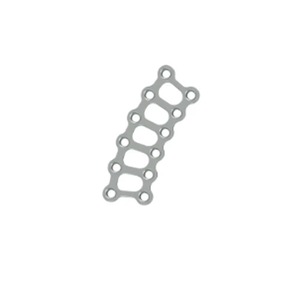
Wholesale Orthopedic Implants Export Quality Surgical Implant Manufacturer
Medical-grade titanium locking plate and screw systems designed for comprehensive trauma fracture stabilization and rigid bone internal fixation.
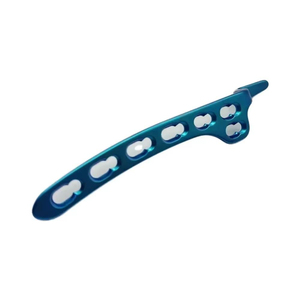
Orthopedic Bone Implant Components for Surgical Fracture Stabilization
Comprehensive collection of fixation hardware components including cortical screws, locking washers, and modular internal constructs.
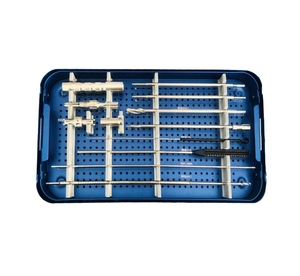
Titanium Implant & Instrument Set for Femoral Neck Surgery
Anatomically contoured proximal femur plates and cannulated compression screws optimized for osteoporotic bone density and neck fracture angles.
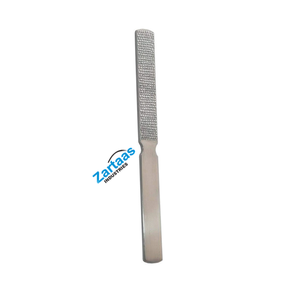
Stainless Steel Bone File & Raspatories (20mm, 22cm) Class I
Surgical grade 316L stainless steel instruments engineered for subperiosteal elevation, bone smoothing, and precise intra-operative shaping.
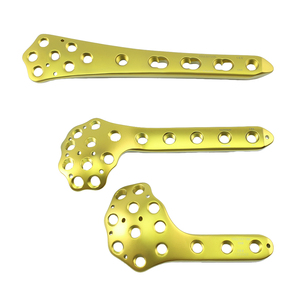
CE Certified Titanium Distal Lateral Femur LISS Locking System
Low-profile, minimally invasive plate geometry designed for percutaneous insertion, preserving periosteal blood supply in complex supracondylar fractures.
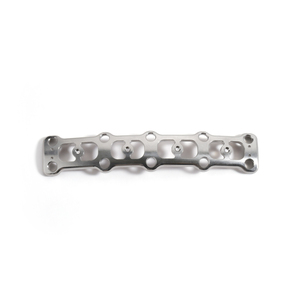
Orthopedic 3D CNC Titanium Alloy Stud (TC4 / Ti-6Al-4V)
Micro-machined structural titanium anchors engineered for load-bearing implant assemblies, custom bone integration, and orthopedic joint robotics.
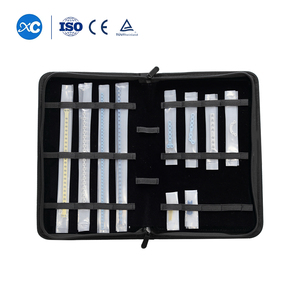
AO/Stem System Orthopedic Implant Pack (Class III Stainless/Ti)
Versatile small-fragment and veterinary/pet orthopedic fixation collection manufactured with precise thread pitch and high fatigue endurance limit.
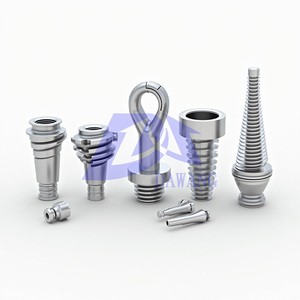
High Precision CNC Machined Implants for Knee, Hip & Spine
Ultra-tight tolerance medical components including spinal pedicle screw anchors, joint reconstructive studs, and interbody cage structural pins.
1. Executive Summary & Global Supply Chain Dynamics: China Manufacturing vs. United States Factories
The global market for orthopedic implants—spanning trauma fixation plates, spinal pedicle screw systems, craniomaxillofacial (CMF) hardware, and total joint replacement components—is undergoing a profound structural shift. United States healthcare buyers, including hospital networks, Group Purchasing Organizations (GPOs), Surgery Center Development Companies, and Ambulatory Surgical Centers (ASCs), face mounting margin pressures driven by Medicare reimbursement adjustments, bundled payment models, and rising inventory holding costs.
Historically, the U.S. orthopedic ecosystem relied almost exclusively on domestic Original Equipment Manufacturers (OEMs) located in prominent biomedical manufacturing clusters such as Warsaw (Indiana), Memphis (Tennessee), and Minneapolis (Minnesota). While American factories excel in high-end design, rapid clinical iteration, and local surgeon consulting, their capital expenditure structures, high overhead, and lengthy lead times create major cost barriers for standardized trauma and routine spinal hardware.
For U.S. distributors, private-label brand owners, and OEM partners, establishing direct contracts with top China orthopedic factories represents an unprecedented opportunity to regain gross margin without sacrificing surgical safety, clinical efficacy, or regulatory compliance. This white paper analyzes the technical, operational, and regulatory parameters required to successfully evaluate, audit, and integrate top Chinese manufacturing partners into the North American medical device supply chain.
Core OEM & Distributor Capabilities
How leading China orthopedic manufacturers engineered high-precision production to satisfy rigorous Western surgical and regulatory mandates.
Biocompatible Metallurgy
Exclusively sourcing certified Ti-6Al-4V ELI (ASTM F136), Commercially Pure Titanium Grade 2/4 (ASTM F67), and PEEK-OPTIMA™ polymers. Full mill test report traceability accompanying every single raw material ingot.
Multi-Axis Swiss Machining
High-speed 5-axis and 9-axis Citizen and Star CNC sliding-head lathes capable of complex anatomical plate contouring, micro-cannulated screw drilling, and precision spinal thread forms.
ISO 13485 Quality Audit
Comprehensive quality management systems certified for medical device manufacture. Integrated CMM optical scanning, torque-to-failure testing, and 100% thread gauge verification per batch.
Complete Surgical Instrumentation
Supplying surgery-ready kits: color-coded anodized aluminum graphic cases, quick-coupling silicone handles, tungsten-carbide drills, depth gauges, and bending irons customized to implant sets.
FDA & Technical File Dossiers
Full regulatory submission assistance: Device Master Files (DMF), bio-compatibility reports (ISO 10993), mechanical fatigue testing data (ASTM F382/F543), and cleanroom packaging validation.
Agile OEM & Private-Label Delivery
Flexible order quantities, fiber-laser marking for lot and catalog numbering, sterile pouch packaging, and reliable safety-stock warehousing programs for U.S. distributor networks.
Comparative Analysis: United States Local Factories vs. Top Chinese OEM Manufacturers
To make an informed procurement decision, hospital supply chain executives and device distributors must evaluate direct technical parameters rather than relying on regional brand perception. Below is an operational comparison between domestic U.S. contract plants and accredited Chinese orthopedic implant factories:
| Evaluation Parameter | United States Local Factories | Top China OEM Factories (Orthovana) | Strategic Impact for U.S. Distributors |
|---|---|---|---|
| Raw Material Specification | ASTM F136 Ti-6Al-4V ELI / PEEK | ASTM F136 Ti-6Al-4V ELI / PEEK-OPTIMA™ | 100% Identical Mechanical Strength & Biocompatibility |
| Machining Equipment | 5-Axis Haas / Mori Seiki CNC | 5-Axis / 9-Axis Citizen Swiss Lathes | Equal Precision Micro-tolerance fitting (±0.005mm) |
| Unit Production Cost | High (U.S. Labor + Domestic Overhead) | Optimized (Efficient Ecosystem & Scale) | 40% - 60% Margin Expansion for Distributors |
| Customization & Laser Etching | High Minimum Order Quantity (MOQ) | Agile Small-Batch OEM & Custom Etching | Flexible Stocking for Regional US Brands |
| Quality System Certification | FDA Registered / ISO 13485 | ISO 13485 / CE Certified / FDA Ready | Seamless Compliance for 510(k) Submissions |
| Lead Times for Bulk Orders | 12 - 20 Weeks (Backlog heavy) | 4 - 8 Weeks (Dedicated Export Lines) | Accelerated Inventory Turnover |
2. Localized Application Scenarios in United States Clinical Environments
Understanding how orthopedic implants are utilized within the U.S. clinical ecosystem is essential for distributors aligning their product portfolios with surgeon demands. The U.S. care delivery model is split across distinct facilities, each with unique operational purchasing drivers:
A. Level I & Level II Trauma Centers (High-Volume Emergency Fixation)
U.S. Level I trauma hospitals require immediate availability of locking compression plate (LCP) systems, intramedullary nails, and external fixation constructs capable of handling severe polytrauma, distal femoral supracondylar fractures, and complex tibial plateau disruptions. Implants must feature low-profile plate borders to minimize soft-tissue irritation, combined with variable-angle locking holes that give trauma surgeons intra-operative freedom to anchor screws around comminuted articular fragments. Complete surgical sets containing standardized drill bits and color-coded guides are mandatory for rapid operating room setup during midnight emergency cases.
B. Ambulatory Surgical Centers (ASCs) & Outpatient Spine Clinics
The rapid migration of elective spinal surgeries—such as single-level Anterior Cervical Discectomy and Fusion (ACDF) and Transforaminal Lumbar Interbody Fusion (TLIF)—from acute hospitals to U.S. ASCs has revolutionized purchasing dynamics. ASC administrators seek cost-effective spinal fusion implants, including Radiolucent PEEK Lumbar Cages and low-profile Cervical Plates with dual-locking mechanisms to prevent screw back-out.
Because ASCs operate on fixed per-procedure reimbursements, sourcing high-grade PEEK cages (equipped with tantalum radiopaque markers for fluoroscopic positioning) directly from top China factories allows ASC networks to significantly reduce direct construct cost while maintaining identical fusion efficacy.
C. Podiatric, Hand, and Craniomaxillofacial (CMF) Specialty Practices
Small fragment systems (1.5mm, 2.0mm, and 2.4mm titanium mini-plates) are workhorses for specialized outpatient foot/ankle and hand surgery centers across the United States. High-precision 3D CNC machining ensures micro-plates fit delicate bone structures—such as distal radius fractures, metacarpal non-unions, and midface facial trauma—without requiring excessive intra-operative bending that could compromise structural fatigue life.
3. Localized Development Trends & US Regulatory Compliance (FDA 510k & ISO Standards)
Navigating the United States medical device market requires a thorough understanding of localized regulatory pathways and commercial trends shaping the decade ahead:
1. Value-Based Care & Direct-to-Hospital Supply
U.S. healthcare providers are moving away from sole-source reliance on expensive tier-1 global brands. Hospital networks are establishing "reps-less" or private-label models, procuring equivalent FDA-cleared implants directly from specialized distributors to cut inventory margins by up to 50%.
2. FDA 510(k) Premarket Notification Requirements
For an orthopedic implant manufactured in China to be distributed in the U.S., it must demonstrate Substantial Equivalence (SE) to a legally marketed predicate device. This mandates rigorous mechanical testing according to ASTM standards: ASTM F382 for metallic bone plates, ASTM F543 for bone screws, and ASTM F2077 / F2267 for interbody fusion cages.
3. Surface Engineering & Additive Manufacturing
The industry is shifting rapidly toward porous titanium coatings, Type II color anodization for friction reduction, and 3D-printed porous lattice structures that mimic trabecular bone structure to promote rapid osseointegration and long-term secondary stability.
4. Complete Traceability & UDI Compliance
The U.S. FDA mandates Unique Device Identification (UDI) laser marking on all solid surgical implants. Leading Chinese exporters provide direct GS1-compliant 2D DataMatrix laser etching, ensuring seamless hospital inventory scanning and barcode registration.
4. Frequently Asked Questions (FAQ) for U.S. Procurement & Distributors
Addressing common technical, legal, and logistical inquiries from international procurement officers evaluating China top orthopedic implant factories:
All titanium plates and screws are machined from certified Ti-6Al-4V ELI (Extra Low Interstitial) alloy conforming to ASTM F136 or Commercially Pure Titanium per ASTM F67. Interbody spine fusion cages utilize medical-grade PEEK-OPTIMA™ conforming to ASTM F2026, embedded with radiopaque Tantalum markers per ASTM F560 for radiographic visualization. Mill test reports and chemical certificates accompany every raw material batch.
Leading Chinese export factories supply complete Technical Dossiers containing ISO 13485 quality system certificates, Device Master Files (DMF), CAD drawing specs, validated sterilization protocols (ISO 11137 / ISO 11135), cytotoxicity testing (ISO 10993-5), and mechanical axial fatigue data (ASTM F382/F543/F2077). This technical package drastically simplifies the 510(k) submission process for U.S. importers.
Yes. Every plating system (Trauma, Spine, CMF, Mini-fragment) can be configured with matching surgical instrument trays. Instrument sets feature ergonomic silicone quick-coupling handles, depth gauges, self-holding screwdrivers, bending pliers, and hard-anodized sterilization storage boxes designed for standard steam autoclave reprocessing.
Factories offer full OEM/ODM services including direct fiber-laser marking for your company brand logo, catalog part number, and GS1-compliant UDI DataMatrix barcodes. Packaging can be delivered as non-sterile bulk units or fully validated sterile double-blister Tyvek® pouches ready for hospital shelf storage.
For standard catalog hardware items (e.g., standard cortical screws, trauma locking plates), lead times range between 2 to 4 weeks. Custom OEM production runs typically require 6 to 8 weeks including raw material validation and CMM inspection. MOQs are structured flexibly to enable distributor market trials without tying up excessive working capital.
Every batch undergoes rigorous quality control using multi-sensor CNC optical measuring machines, laser profile scanners, and GO/NO-GO thread gauges. Locking mechanisms are tested for cross-threading resistance and torque-to-failure limits to ensure predictable tactile feel during surgical screw insertion.