Industry Whitepaper: The Strategic Landscape of Chinese FDA-Approved Orthopedic Implants in Russia
An authoritative evaluation of cross-border medical device manufacturing, regulatory alignment under Roszdravnadzor & EAEU standards, and advanced titanium metallurgy.
The demand for premium-grade medical devices across the Russian Federation’s federal healthcare institutions, regional trauma centers, and private surgical hospitals has undergone a profound paradigm shift. Russian healthcare distributors and municipal procurement directors are increasingly prioritizing direct supply chains with specialized Chinese manufacturing hubs. As a recognized leader in precision orthopedics, Orthovana Medical (incorporating specialized manufacturing expertise from established brands such as Shuangyang and BISONS) stands at the forefront of this industrial transformation, supplying FDA-approved, CE-certified, and ISO 13485-compliant orthopedic implant systems.
Navigating the technical requirements of the Russian orthopedic market demands more than standard export capabilities. It requires absolute material integrity, zero-defect Swiss multi-axis CNC machining, complete metallurgical documentation, and seamless regulatory dossier synchronization with Roszdravnadzor (Federal Service for Surveillance in Healthcare) guidelines. This comprehensive whitepaper explores how advanced Chinese orthopedic manufacturing fulfills the rigorous mechanical, biological, and logistic criteria established by modern Russian surgical facilities.
1. Advanced Metallurgy & Biocompatibility Engineering
Surgical outcomes depend fundamentally on material properties. Implants intended for long-term load-bearing stabilization must possess high fatigue strength, resistance to micro-fretting corrosion, and an elastic modulus that minimizes stress shielding. China’s premier orthopedic manufacturing facilities utilize raw materials imported from certified global suppliers or high-purity domestic titanium mills that strictly comply with international standards.
| Material Spec | Composition | Tensile Strength (MPa) | Primary Clinical Application | Radiolucency & MRI Safety |
|---|---|---|---|---|
| Ti-6Al-4V ELI (ASTM F136) | Titanium-Aluminum-Vanadium (Extra Low Interstitial) | ≥ 860 MPa | Spinal Pedicle Screws, Locking Compression Plates, Intramedullary Nails | MRI Conditional (Minimal artifacting) |
| CP Titanium (ASTM F67) | Commercially Pure Titanium (Grade 1 - 4) | 240 - 550 MPa | Maxillofacial Reconstruction, Cranial Mesh, Dental Tack Systems | MRI Conditional |
| Implant-Grade PEEK | Polyether Ether Ketone with Radiographic Markers | 90 - 120 MPa | TLIF / PLIF / Cervical Interbody Fusion Cages | 100% Radiolucent (X-ray transparent) |
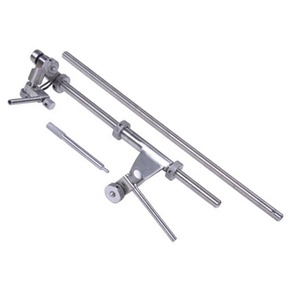
| 316L Stainless Steel (ASTM F138) | Chromium-Nickel-Molybdenum Austenitic Steel | ≥ 860 MPa | External Distractors, Surgical Instruments, Sterilization Trays | Non-magnetic Autoclavable |
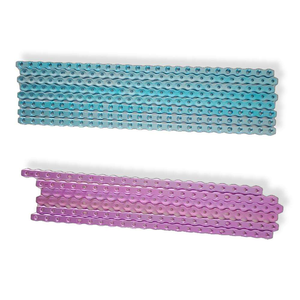
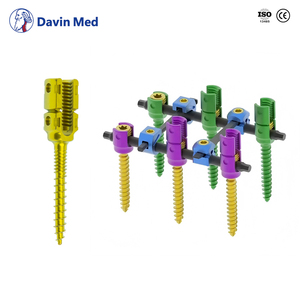
By implementing strict microstructural grain size verification and automated anodization processes, implants receive precise color-coding (e.g., gold for 3.5mm systems, blue for 4.5mm systems, green for 5.0mm variable-angle systems). This color standardization streamlines intraoperative workflows for Russian orthopedic surgeons, significantly reducing operating room assembly times.
Multi-Axis CNC Precision
Sub-micron tolerance cutting on Citizen and Star Swiss-type lathes ensures smooth thread engagement and flawless locking plate mechanism integrity.
100% Batch Traceability
Every bone screw and locking plate is laser-etched with a unique lot number, connecting it directly to raw material heat certificates and CMM inspection reports.
Complete Instrument Sets
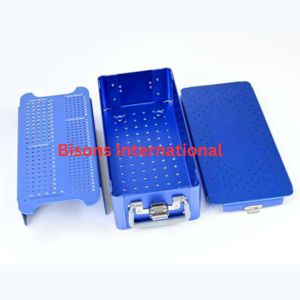
All fixation ranges are supplied alongside customized ergonomic instruments housed in autoclavable stainless steel or aluminum sterilization boxes.
2. Localized Application Scenarios Across Russian Medical Networks
Healthcare delivery in Russia spans vast geographical distances—from major metropolitan clinical centers in Moscow and Saint Petersburg to regional trauma units in Siberia and the Far East. Different clinical environments require tailored implant configurations, supply volumes, and packaging protocols.
Metropolitan Level-1 Trauma Centers
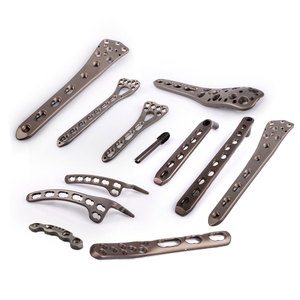
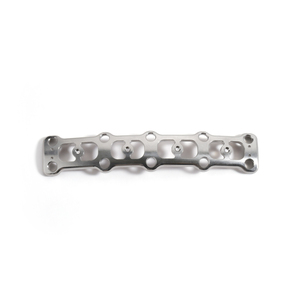
High-volume emergency hospitals in Moscow, Novosibirsk, and Yekaterinburg require rapid-replenishment inventory of anatomical locking plates (proximal humerus, distal radius, proximal tibia) alongside pre-sterilized modular screw packs.
Specialized Vertebrology Institutes
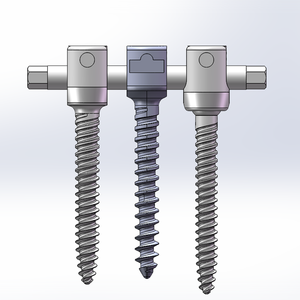
Spinal surgery departments demand low-profile monoaxial and polyaxial pedicle screw systems, titanium mesh cages, and PEEK interbody fusion cages designed for complex degenerative disc procedures and spinal deformity corrections.
Maxillofacial & Dental Surgery Clinics
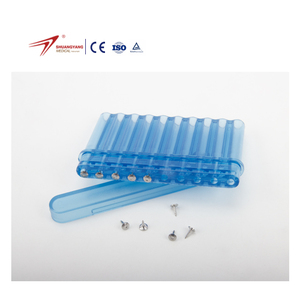
Craniomaxillofacial (CMF) specialists utilize micro and mini plating systems (1.5mm to 2.0mm) alongside GBR membrane bone tack systems (such as the Shuangyang series) for targeted facial reconstruction and bone graft stabilization.
Veterinary Surgical Hospitals
Rapidly expanding veterinary networks in Russia require specialized Small Animal Orthopedic Implants, such as Veterinary ALPS Reconstruction Bone Plates, engineered for canine and feline fracture management.
Regional Tenders & Municipal Hospital Procurement
State-funded procurement contracts demand fully documented, budget-efficient, FDA/CE-equivalent trauma hardware packed with dual Russian-language technical labeling, batch certificates, and sterilizer-compatible delivery trays (such as BISONS stainless steel boxes).
3. Emerging Trends in Russian Medical Device Procurement (2025–2030)
The Russian medical device market is experiencing structural reorganization driven by three key trends:
- Accelerated Eurasian Economic Union (EAEU) Harmonization: Medical device registrations are increasingly executed under the unified EAEU framework. Chinese manufacturers with FDA and ISO 13485 baseline approvals enjoy accelerated testing cycles during EAEU technical and toxicological evaluations.
- Direct B2B OEM & Private Label Collaborations: Major Russian distributors are shifting away from third-party resellers, choosing instead to establish direct OEM partnerships with Chinese factories. Laser-marking local brand names and Russian product codes directly onto implants streamline market entry.
- Expansion of Financial & Logistics Channels: Direct settlement mechanisms utilizing the Chinese Yuan (RMB) and Russian Ruble (RUB), combined with fast overland rail routes (via Manchuria/Zabaikalsk or direct Moscow container trains), have reduced shipping transit times to under 14 days.
4. Enterprise Manufacturing Strengths: Quality Assurance & OEM Expertise
Our integrated production facilities encompass over 25,000 square meters of state-of-the-art manufacturing space, featuring Class 100,000 cleanrooms, 5-axis CNC machining centers, and automated optical inspection equipment. By unifying product engineering across trauma, spine, CMF, and veterinary lines, we supply over 60 international territories with hospital-ready implants.
Regulatory Support Pack
We supply complete Technical Files, Toxicological Testing Reports, Biocompatibility Dossiers (ISO 10993), and ISO 13485 Certificates required for Roszdravnadzor submission.
Sub-Micron Quality Control
Coordinate Measuring Machines (CMM) and optical micro-comparators verify thread pitches, locking taper angles, and plate curvature prior to ultrasonic cleaning.
OEM & Custom Instrumentation
From custom-branded sterilization boxes to tailored drill guides, we support Russian partners in establishing proprietary medical device brands.