Navigating Tokyo Medical Regulatory Pathways: CE Mark to PMDA Approval Integration
The Greater Tokyo metropolitan healthcare market—encompassing world-class institutions across Shinjuku, Bunkyo, and Minato wards—represents one of the most technologically demanding and strictly regulated medical device environments globally. Under Japan's Ministry of Health, Labour and Welfare (MHLW) and the Pharmaceuticals and Medical Devices Agency (PMDA), international medical exporters face rigorous evaluation metrics under the Pharmaceutical and Medical Device Act (PMD Act). For orthopedic implant suppliers and global exporters aiming to capture market share in Tokyo, possessing robust CE Mark technical documentation under EU MDR (2017/745) and ISO 13485:2016 Quality Management Certification serves as the fundamental catalyst for accelerated local registration.
Strategic Regulatory Insight for Japanese Market Entry: While PMDA requires local MAH (Marketing Authorization Holder) representation and compliance with Japanese Industrial Standards (JIS T 0307 / JIS T 0311), our comprehensive regulatory technical dossiers—structured according to the International Medical Device Regulators Forum (IMDRF) STED format—reduce local Shonin (pre-market approval) and Ninsho (third-party certification) processing timelines by up to 40%.
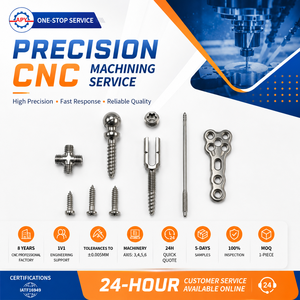
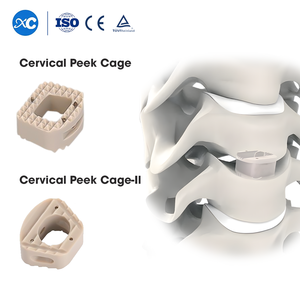
Orthovana Medical operates as a specialized export partner and OEM contract manufacturer, delivering fully traceable titanium alloy (Ti-6Al-4V ELI per ASTM F136) trauma plating systems, pedicle screw configurations, and implant-grade PEEK (ASTM F2026) cervical and lumbar fusion cages. We bridge the documentation gap between European CE conformity and Japanese PMDA audit standards, enabling Tokyo-based distributors to scale their product portfolios without incurring prohibitive compliance overhead.
100%
PMDA Dossier Alignment
ISO13485
Certified Quality Management
<5µm
CNC Machining Precision
ASTMF136
Medical Grade Titanium
Tokyo Medical Device Market Trends: Aging Demographics & Advanced Surgical Demand
Tokyo is the epicenter of Japan’s healthcare revolution, driven by unique clinical challenges and demographic pressures that directly impact orthopedic implant procurement:
Super-Aging Demographic Impact
Japan’s population over 65 years old exceeds 29%, with Tokyo housing the highest absolute concentration of geriatric orthopedic cases. Demand for osteoporotic fracture fixation systems, locking compression plates (LCP), and proximal femoral nails (PFN) is surging across Kanto regional acute-care hospitals.
Minimally Invasive Surgery (MISS) Shift
Surgeons at leading University Hospitals in Tokyo (e.g., Keio University Hospital, The University of Tokyo Hospital) increasingly mandate low-profile implants, radio-translucent PEEK lumbar cages, and percutaneous pedicle screw instrumentation to reduce operative trauma and patient hospitalization days.
Rigorous PMD Act Compliance
Japanese medical device distributors require overseas OEM manufacturers to supply comprehensive technical master files (STED), biocompatibility reports (ISO 10993 series), and validated sterilization protocols (ISO 11137 / ISO 11607) to pass PMDA technical audits smoothly.
Export Technical Specification & Regulatory Alignment Matrix for Japan
To assist regulatory compliance managers and procurement heads in Tokyo, the table below outlines how our CE-certified manufacturing framework fulfills both European MDR standards and Japanese PMDA / JIS requirements:
| Implant System Category | Raw Material Grade | European CE MDR Status | PMDA & JIS Technical Mapping | Dossier Support Provided |
|---|---|---|---|---|
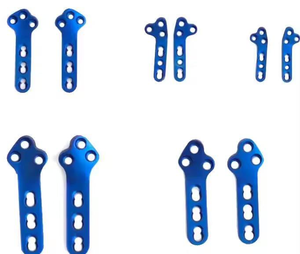
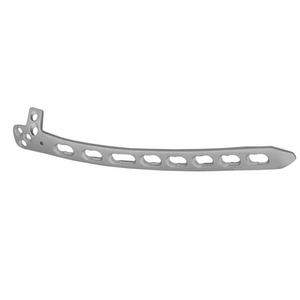
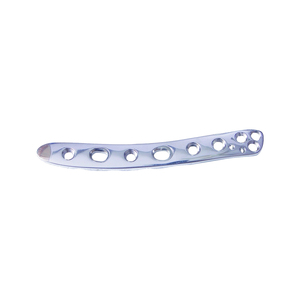
| Trauma Locking Plating Systems | Ti-6Al-4V ELI (ASTM F136) / CP Titanium (ASTM F67) | Class IIb Certified (CE 2797 / CE 0123) | JIS T 0311 / JIS T 0312 Compliant | Full STED, Fatigue Testing (ASTM F382), Biocompatibility Pack |
| Spinal Fixation & Pedicle Screws | Titanium Alloy & Anodized Color Surface | Class IIb Certified | JIS T 6111 / PMDA Class III Shonin Route | Static & Dynamic Axial Compression (ASTM F1717), Wear Analysis |
| Cervical & Lumbar PEEK Cages | Implant-Grade PEEK (ASTM F2026) + Tantalum Markers | Class IIb Certified | Class II Ninsho / Class III Shonin Alignment | Radiographic Opacity Studies, Static Shear & Compression (ASTM F2077) |
| Maxillofacial Micro Plating | Commercially Pure Titanium Grade 2 & Grade 4 | Class IIb Certified | JIS T 0307 / PMDA Low-Profile CMF Standards | Micro-dimension Metrology Reports, Anodization Layer Stability |
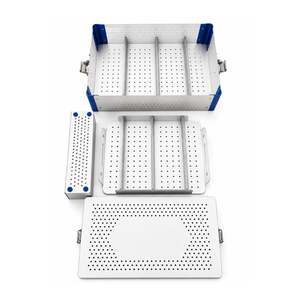
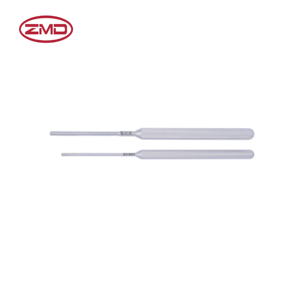
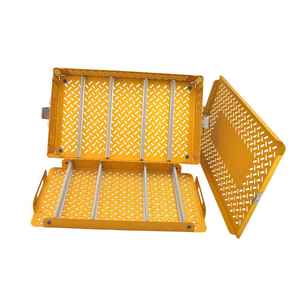
| Surgical Instrument Sets & Trays | German Stainless Steel (1.4123 / 1.4301) + Anodized Aluminum | Class I / Class IIa Certified | JIS Z 2801 Cleanability / Autoclave Standards | Reprocessing & Sterilization Validation (ISO 17664), Material Certificate |
Localized Surgical Application Scenarios in Tokyo Medical Centers
Our OEM manufacturing and registration support services are explicitly aligned with the high-density clinical operating environments found across the Tokyo metropolis:
Acute Trauma & Emergency Surgical Centers
In high-volume emergency departments such as Tokyo Metropolitan Tama Medical Center, surgical teams require versatile, color-coded locking compression plate (LCP) trays. Our anatomical distal radius and proximal humerus plates offer dynamic contouring, reducing operating theatre bending time and ensuring swift internal fixation.
Spinal Deformity & Degenerative Reconstruction
Spinal care clinics in Bunkyo-ku specialize in treating adult spinal deformity (ASD) and spondylolisthesis in elderly patients. Our dual-thread pedicle screw systems and TLIF/PLIF PEEK interbody cages deliver superior pull-out resistance and physiological elastic modulus matching, minimizing stress shielding.
Cranio-Maxillofacial (CMF) & Orthognathic Surgery
Leading dental and CMF surgical units in Tokyo require micro-plating systems with extreme dimensional stability. Our 1.5mm / 2.0mm titanium mini-plates offer ultra-low-profile construct height, minimizing soft tissue irritation and palpable hardware post-op.
Enterprise Advantages: Why Tokyo Importers Partner with Orthovana Medical
Orthovana Medical Co., Ltd. is engineered specifically to serve international distributors, medical device brand owners, and hospital networks that demand flawless quality and end-to-end regulatory support:
Medical-Grade Raw Materials
We source raw titanium exclusivamente from certified melt sources (ASTM F136 Ti-6Al-4V ELI and ASTM F67 CP Titanium). Every bar stock is verified via optical emission spectroscopy and ultrasonic non-destructive testing before entering multi-axis Swiss CNC machining centers.
100% Lot-Level Traceability
From raw material heat numbers to final passivation, anodization, and ISO Class 7 cleanroom packaging, every individual implant is laser-marked with lot codes, rendering complete audit trail capability for Japanese hospital quality control inspections.
Dedicated OEM / Private Label Services
We accommodate customized laser etching, customized tray layouts, specialized surface treatments (Type II anodization, micro-blasting), and tailored IFU (Instructions for Use) translation support into Japanese for seamless local branding.
Tokyo Importers & Procurement FAQ: Registration, PMDA & Logistics
Answers to common regulatory, technical, and commercial questions raised by Japanese medical device distributors and hospital purchasing teams:
How does your CE Mark technical documentation support PMDA registration in Japan?
Our technical files are structured according to the IMDRF STED format, which directly aligns with PMDA's Shonin and Ninsho audit requirements. We provide complete raw material certificates, mechanical test reports (ASTM F382/F1717), biocompatibility studies (ISO 10993), and risk management files (ISO 14971) that your Japanese Designated Marketing Authorization Holder (DMAH) can submit directly.
Are your orthopedic implants compliant with Japanese Industrial Standards (JIS)?
Yes. Our titanium bone screws, locking plates, and spinal implants comply with relevant JIS T standards (including JIS T 0311 for titanium surgical materials and JIS T 0307 for internal fixation). Dimensional tolerances and surface finishes meet or exceed local Japanese market expectations.
Can you provide private label OEM manufacturing for Japanese brand owners?
Absolutely. We regularly provide OEM contract manufacturing for international brand owners. This includes custom laser marking (Japanese kanji/katakana labeling compliant with PMD Act regulations), customized sterilization box configuration, and unique implant geometry tailored to East Asian anatomical profiles.
What are the lead times for shipments into Narita (NRT) or Haneda (HND) airports?
For standard export items stocked in our facility, dispatch occurs within 3-5 business days. For bulk OEM orders or custom instrument tray configurations, typical production cycles range from 30 to 45 days. We provide direct express air freight shipping to Narita (NRT) or Haneda (HND) with complete customs declaration paperwork.
Do you supply matching surgery-ready instrument sets and sterilization trays?
Yes. Every plating, nailing, and spinal fixation system comes with a fully validated, matching surgical instrument set. Trays are constructed from high-grade anodized aluminum and PPSU materials capable of enduring repeated steam autoclave sterilization cycles (ISO 17664 compliant).
How do you guarantee quality consistency across large batch orders?
We operate multi-axis CNC machining centers from Switzerland and Japan, utilizing automated coordinate measuring machines (CMM) and optical comparators for in-process inspection. Every batch undergoes final 100% optical dimension checks and passivity testing prior to packaging release.