Featured Orthopedic & Surgical Implant Systems
Factory-direct medical devices rigorously manufactured for high-demand trauma centers, clinical institutions, and veterinary surgical facilities in Kenya.
Navigating Kenya's Orthopedic Trauma Landscape: Clinical Demand & Sourcing Realities
The healthcare sector in Kenya, particularly across regional healthcare hubs like Nairobi, Mombasa, Kisumu, and Eldoret, is undergoing an unprecedented structural expansion. Driven by government initiatives such as Universal Health Coverage (UHC), public investments in County Referral Hospitals (Level 4, 5, and 6 institutions like Kenyatta National Hospital and Moi Teaching and Referral Hospital), and a thriving private medical sector, the demand for high-grade orthopedic medical devices has increased exponentially. Trauma surgery in East Africa presents distinct clinical requirements, largely influenced by high incidence rates of road traffic accidents (notably commercial motorcycle or boda-boda collisions), industrial construction site injuries, and degenerative musculoskeletal disorders among an aging demographic.
For medical device importers, surgical equipment distributors, and hospital procurement committees in Kenya, securing a consistent supply of CE Certified and ISO 13485:2016 compliant orthopedic implants is no longer merely a regulatory requirement—it is a core strategic objective. Given the stringent oversight established by Kenya's Pharmacy and Poisons Board (PPB), healthcare institutions must source implants that provide total material traceability, proven fatigue strength, and complete instrument compatibility, all while maintaining cost viability for local patient demographics.
Manufacturing Excellence: Metallurgy, Machining & E-E-A-T Quality Management
Engineered to exact biomechanical tolerances for maximum osseointegration and primary surgical stability.
Implant-Grade Titanium Alloys
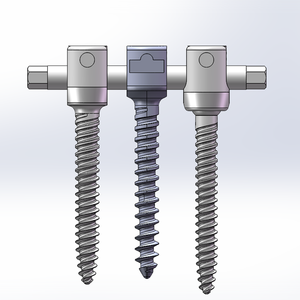
All bone plates, cannulated compression screws, and spinal rods are precision-machined from medical-grade Titanium Alloy (Ti-6Al-4V ELI conforming to ASTM F136) and Commercially Pure Titanium (ASTM F67). Materials are bio-inert, MRI-conditional, and exhibit superior corrosion resistance with high fatigue strength.
Sub-Micron CNC Machining
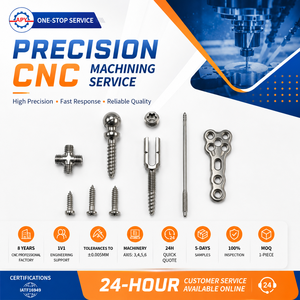
Utilizing Swiss-type 5-axis CNC automatic lathes and high-precision milling centers, our factory achieves micron-level threading accuracy. This prevents dynamic screw stripping, cross-threading, or lock-up during intra-operative insertion into anatomical bone structures.
Radiolucent PEEK Technology
Our interbody lumbar (TLIF, PLIF) and cervical fusion cages utilize medical-grade PEEK (Polyetheretherketone). Featuring an elastic modulus similar to natural cortical bone, our PEEK cages minimize stress shielding while integrated Tantalum markers ensure crystal-clear radiographic visualization under fluoroscopy.
Technical Standards & Quality Compliance Parameters
| Product System | Primary Material Specification | Manufacturing Standard | Regulatory Certification | Clinical Application in Kenya |
|---|---|---|---|---|
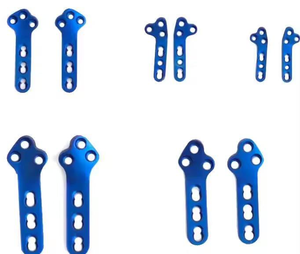
| Trauma Locking Plate System | Ti-6Al-4V ELI (ASTM F136 / ISO 5832-3) | ISO 13485:2016 / Multi-Axis CNC | CE Marked / PPB Ready Dossier | Distal Femur, Proximal Tibia, Humerus Trauma |
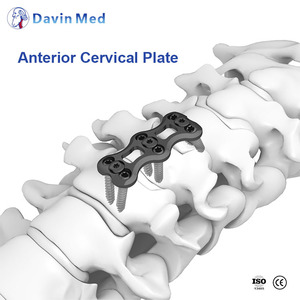
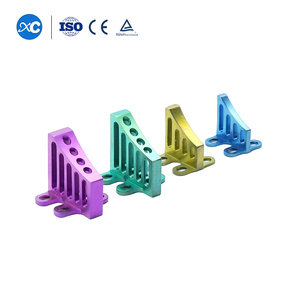
| Anterior Cervical Plate (ACP) | Titanium Alloy / Type II Anodized Surface | ASTM F1717 Static & Fatigue Tested | CE Certificate / ISO 13485 | Cervical Spine Trauma & Fusion Surgery |
| CoxII Intramedullary Spinal Nails | High-Fatigue Strength Titanium Alloy | ASTM F1264 Biomechanical Specs | CE Marked / Full Lot Traceability | Subtrochanteric & Femoral Shaft Fractures |
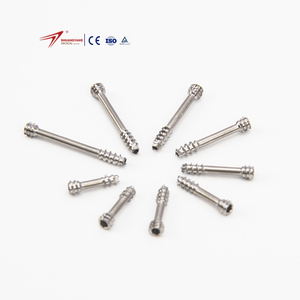
| Cannulated Herbert Screws | Commercially Pure Ti / Ti-6Al-4V ELI | Micro-Thread CNC Threading | CE Certificate / ISO 13485 | Scaphoid, Intra-articular & Small Fractures |
| Veterinary Orthopedic TTA Sets | Medical Titanium & Stainless Steel | Precision Stamping & Milling | CE Compliant / ISO 13485 | Small & Large Animal Fracture Management |
Localized Application Scenarios Across Kenyan Healthcare Facilities
Tailoring surgical hardware configurations to meet real-world surgical workflows in East Africa.
1. Level 5 & Level 6 Public Referral Hospitals
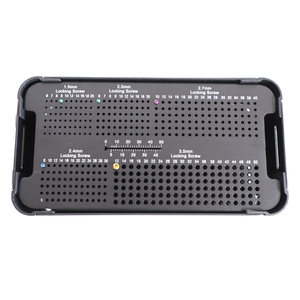
Major public institutions require heavy-duty, high-versatility trauma systems capable of managing complex comminuted fractures caused by high-velocity trauma. Our Anatomical Locking Compression Plate (LCP) systems feature variable-angle locking holes, enabling surgeons to achieve optimal screw trajectory even in severe metaphyseal bone loss or osteoporotic bone tissue. Furthermore, standardizing drill bit sizes across plate families reduces instrument turnover times in busy surgical theatres.
2. Private Surgical Centers & Teaching Hospitals
Leading private health centers demand low-profile implants that minimize soft tissue irritation, reduce post-operative pain, and accelerate patient rehabilitation. Our Anterior Cervical Plating Systems and PEEK Interbody Fusion Cages feature ultra-thin plate profiles (less than 2.0mm thickness) with integrated dual-locking anti-backout mechanisms, preventing screw loosening and secondary dysphagia.
3. Specialized Veterinary Surgical Clinics
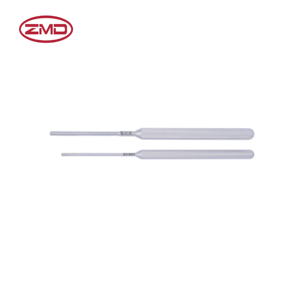
Kenya's agricultural, wildlife conservation, and urban veterinary clinic sectors require robust orthopedic solutions for canine, feline, and equine trauma management. Our specialized veterinary locking plates, TTA (Tibial Tuberosity Advancement) instruments, and pulley files allow veterinary orthopedic surgeons to execute precise bone alignment, rigid internal fixation, and rapid bone healing in animal trauma repair.
Macro Trends & Regulatory Directives Shaping Kenya's Orthopedic Market
Success in importing medical devices into Kenya depends on a thorough understanding of local regulatory frameworks and market dynamics:
1. Pharmacy and Poisons Board (PPB) Strict Compliance: The PPB has intensified regulatory oversight regarding imported medical devices under the Health Act. Importers and local distributors must present exhaustive technical dossiers, including ISO 13485:2016 certificates, CE Certificates of Conformity (MDR 2017/745 standards), Material Test Reports (MTR), and biocompatibility evaluation studies. As a direct factory manufacturer, we provide complete submission-ready regulatory documentation packs for seamless registration.
2. Universal Health Coverage (UHC) & Decentralized Healthcare: County governments across Kenya are equipping regional hospitals with specialized orthopedic surgical capacity to reduce transfer delays to Nairobi. This decentralized demand favors suppliers who can provide complete, standardized "Surgery-Ready" sets—combining implant implants, matched instrumentation sets, and autoclavable sterilization trays in a single cost-effective consignment.
3. Focus on Total Cost of Ownership (TCO): Premium European or American orthopedic brands often incur unsustainable price markups, rendering them inaccessible for mainstream public hospital tenders. Conversely, uncertified low-tier imports present high failure rates and legal liabilities. Our factory bridges this gap by delivering OEM European-grade quality control, raw materials sourced exclusively from audited mills, and competitive factory-direct pricing tailored for East African tender economics.
Frequently Asked Questions (FAQ) for Kenyan Importers & Distributors
Addressing technical, regulatory, and logistics queries for procurement officers in East Africa.
Partner with a Trusted OEM Orthopedic Implants Manufacturer
Expand your product distribution across Kenya and East Africa. Contact our international engineering & sales team today to request complete catalogues, technical dossiers, sample evaluation kits, and factory-direct price lists.
Inquire Now