Featured Orthopedic Systems & Technical Dossier Packages
Every product listed below is available with a comprehensive, audit-ready Technical Documentation Package (TDP) including Material Test Reports (MTR), ISO 10993 Biocompatibility Data, Mechanical Test Protocols, and CE/FDA registration-ready files.
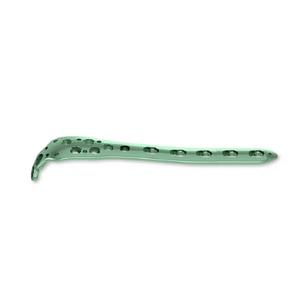
Medical Orthopedic Implants Premium Quality Professional Stainless Steel Material
- Material: 316LVM Medical Stainless Steel
- Complete DHF & DMR Dossier Included
- Anatomical Low-Profile Design
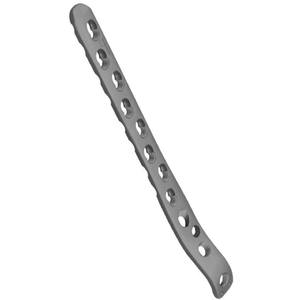
Titanium Orthopedic Implant – Manufacturer Direct, Limited Compression System
- Material: Ti-6Al-4V ELI (ASTM F136)
- Limited Compression Geometry
- Full Lot-Level Traceability Pack
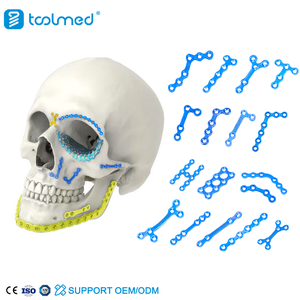
CMF Maxillofacial Titanium 2.0mm Rectangle Craniomaxillofacial Locking System
- Ultra Low-Profile 2.0mm Locking
- Commercially Pure Ti (ASTM F67)
- Sterilization Validation Protocols
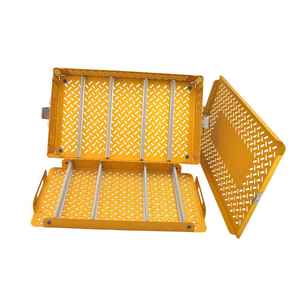
Surgical Instruments Sterilization Box for Orthopaedic Implants & Cortical Screws
- Anodized Aluminum & Radel Trays
- ISO 17664 Autoclave Validated
- Modular Surgical Kit Layout
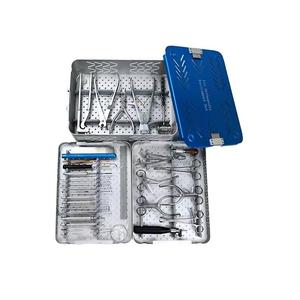
Veterinary Orthopedic Implants & Complete Instrument Kit Solutions
- Micro to Large Animal Systems
- Micro-Machined Screw Threads
- OEM Private-Label Packets
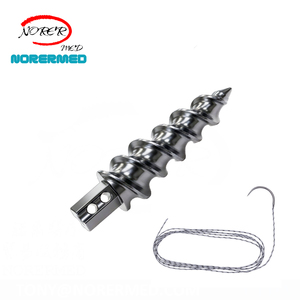
CNC Machined Titanium Suture Anchor Screw for Rotator Cuff Repair
- Multi-Axis CNC Precision Thread
- Ti-6Al-4V ELI Medical Grade
- Pull-Out Force Testing Reports
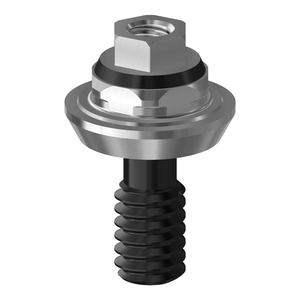
Dental Implant Compatible Parts Titanium Healing Abutment & Scan Post
- Micron-Level Tolerance Fit
- Multi-Platform Interface Fit
- Digital CAD/CAM Library Data
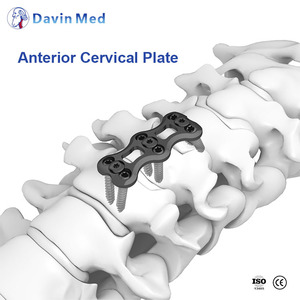
Anterior Cervical Plate System Titanium Alloy Spine Fixation Implants
- Cervical Fusion & Locking Mechanism
- ASTM F1717 Dynamic Fatigue Tested
- EU MDR 2017/745 Technical File
Why Leading Global Distributors Sourcing Orthopedic Documentation Packages Trust Us
In the modern B2B medical device ecosystem, procuring implants is only 50% of the equation; the remaining 50% relies entirely on audit-ready technical documentation, regulatory file integrity, and structural compliance.
Turnkey Technical Documentation Packets (TDP) for Global Registration
We eliminate regulatory bottlenecks for importers, stocking distributors, and OEM brands. Every shipment of trauma plates, pedicle screws, CMF systems, or PEEK cages is paired with a ready-to-submit regulatory documentation folder structured according to STED (Summary Technical Documentation) guidelines and EU MDR 2017/745 Annex II/III mandates.
Implant-Grade Raw Material Integrity
Zero material compromises. We strictly machine from raw titanium bar stock complying with ASTM F136 (Ti-6Al-4V ELI) and ASTM F67 (Unalloyed Titanium), alongside implant-grade PEEK (ASTM F2026). Each batch comes with raw material Mill Test Reports (MTR) with heat-number mapping.
Micron-Precision CNC Machining
Utilizing Swiss-type multi-axis CNC turning centers and 5-axis high-speed milling machines, we maintain strict dimensional tolerances (±0.005mm). Locking threads fit seamlessly with corresponding screwdrivers, preventing intra-operative thread stripping.
Biocompatibility & Cleanroom Cleaning
All finished implants undergo automated ultrasonic cleaning, passivation according to ASTM F86, and bioburden evaluation. Biocompatibility testing conforms to ISO 10993-1, including cytotoxicity, systemic toxicity, and sensitization protocols.
Full UDI Laser Marking & Serialization
To meet FDA GUDID and EU EUDAMED requirements, our factories implement direct part marking (DPM) using fiber-laser technology for 2D DataMatrix Unique Device Identification (UDI) codes, lot numbers, and dimensional callouts.
Anatomy of an Audit-Ready Orthopedic Implant Documentation Package
Navigating international medical device registration requires deep technical transparency. Below is an exhaustive breakdown of what professional OEM/ODM manufacturers provide inside a comprehensive Orthopedic Implant Documentation Packet (TDP).
| Dossier Module | Regulatory Standard / Guideline | Required Technical Content & Verification Documents | Impact on Import Clearance & Audits |
|---|---|---|---|
| 1. Material Characterization | ASTM F136 / ASTM F67 / ASTM F2026 / ISO 5832-3 | Chemical composition analysis, tensile testing, elongation, metallurgical grain size, mill test certificate (MTR) tied to raw ingot heat numbers. | Eliminates risk of material non-conformity during customs inspection and notified body audits. |
| 2. Mechanical Performance | ASTM F382 (Plates) / ASTM F543 (Screws) / ASTM F1717 (Spine) | Four-point bending fatigue strength, static bending stiffness, screw axial pull-out strength, driving torque, and torsional yield strength data. | Proves mechanical endurance under physiological loads; mandatory for CE MDR and 510(k) equivalency. |
| 3. Biocompatibility Evaluation | ISO 10993 Series (Parts 1, 3, 5, 6, 10, 11) | In vitro cytotoxicity (ISO 10993-5), intracutaneous reactivity, systemic toxicity, pyrogenicity, and chemical characterization (ISO 10993-18). | Guarantees bio-safety in human tissue contact; essential for hospital tender eligibility. |
| 4. Sterilization & Packaging | ISO 11137-1/2 (Gamma) / ISO 11607-1/2 (Barrier) | Bioburden baseline testing, SAL 10⁻⁶ sterilization dose audit, real-time & accelerated shelf-life aging study reports, seal strength testing. | Ensures sterile product integrity for up to 5 years; satisfies hospital infection control boards. |
| 5. Risk Management File | ISO 14971:2019 | Hazard analysis, Failure Mode and Effects Analysis (FMEA), risk-benefit analysis ratio, and residual risk evaluation matrix. | Demonstrates clinical safety design controls across the entire manufacturing workflow. |
| 6. Clinical Evaluation & IFU | EU MDR MEDDEV 2.7/1 Rev 4 / MDCG 2020-6 | Clinical Evaluation Report (CER), Post-Market Clinical Follow-up (PMCF) plan, validated Instructions for Use (IFU), surgical technique manual. | Required for clinical safety sign-off by surgical review boards and local health authorities. |
Understanding Information Gain in Technical Sourcing
Distributors often encounter compliance friction when sourcing from factories that provide superficial product catalogs without underlying quality system files. A true top-tier documentation package bridges the gap between raw manufacturing capability and regulatory acceptance.
For instance, when submitting a Titanium Locking Plate dossier to health authorities like the US FDA, Brazil's ANVISA, or Saudi FDA, inspectors review not only the final geometry but also the manufacturing Device Master Record (DMR). This includes CNC tool paths, anodization thickness validation (Type II/III anodization per AMS 2488), and bioburden limits prior to terminal packaging. Sourcing from a factory with pre-compiled technical dossiers reduces registration timelines from 18 months to less than 90 days.
Future Procurement Trends in Orthopedic Implant Documentation & Manufacturing
The global orthopedic devices market is undergoing a seismic regulatory shift. Procurement managers must align with factories capable of navigating automated compliance, digital traceability, and next-generation biomaterials.
1. Digitized EUDAMED & FDA UDI Ecosystems
Manual paperwork is giving way to automated API integration. Sourcing trends favor manufacturers that directly upload basic UDI-DI parameters, master data, and Certificates of Free Sale (CFS) to digital portals. This enables real-time supply chain auditing and seamless recall management.
2. Transitioning from Legacy MDD to Full MDR Compliance
With the end of the EU MDD transition period, hospital tenders globally are rejecting suppliers with outdated certificates. Factories offering complete MDR-compliant Technical Documentation Packets ensure uninterrupted supply continuity across Europe, Latin America, and the Middle East.
3. Demand for Turnkey Instrument Tray Packaging
Hospitals no longer want piecemeal sourcing. Procurement strategies prioritize suppliers providing matched implant sets (e.g., Trauma Locking Plates + Cortical Screws + Dedicated Color-Coded Instrument Set) pre-validated in autoclave-ready sterilization trays.
Industry & Technological Development Trends in Orthopedic Manufacturing
From additive 3D titanium printing to bioactive surface treatments, orthopedic implants are evolving rapidly to enhance osseointegration and reduce revision rates.
Direct Metal Laser Sintering (DMLS) 3D Printing
Additive manufacturing allows for the creation of trabecular porous titanium structures that mimic human cancellous bone. Pores ranging between 300–500 microns encourage rapid cellular ingrowth, eliminating the need for secondary plasma spray coatings on spinal interbody cages and acetabular cups.
PEEK-Titanium Hybrid Composites
Combining the radiolucency and physiological elastic modulus of Polyetheretherketone (PEEK) with plasma-sprayed titanium surfaces offers optimal radiographical monitoring alongside immediate mechanical osteo-conduction in cervical and lumbar interbody fusion.
Patient-Specific Implants (PSI) & Dynamic CAD Dossiers
Advances in CT-scan rendering software and 5-axis CNC programming enable custom reconstruction plates for complex maxillofacial trauma and oncological bone resection. Each custom implant is supplied with a digitally verified patient-matching validation dossier.
Frequently Asked Questions (FAQ) on Sourcing & Documentation Packages
Key compliance, quality, and supply chain questions answered by our regulatory affairs and international procurement engineering team.
What specific documents are included in your Orthopedic Implant Documentation Package? +
Our complete Technical Documentation Package (TDP) includes raw material Mill Test Reports (MTR per ASTM F136/F67/F2026), ISO 13485 quality system certificates, Device Master Record (DMR) summaries, ISO 10993 biocompatibility test reports, mechanical static & dynamic fatigue test data (ASTM F382/F543/F1717), sterilization validation reports (ISO 11137 for gamma / ISO 11135 for EO), ISO 11607 packaging integrity reports, validated Instructions for Use (IFU), and labeling samples with UDI DataMatrix integration.
Can distributors request custom laser marking and private-label packaging support? +
Yes. We provide comprehensive OEM/ODM private-label services. We execute high-resolution fiber-laser direct part marking (DPM) for your brand logo, specific catalog numbering, lot identification, and UDI barcodes. Furthermore, we customize primary pouch packaging, box artwork, and IFU documents to incorporate your corporate branding while remaining fully compliant with target market labeling laws.
How do you guarantee batch-to-batch material and dimensional consistency? +
Quality assurance starts at raw material intake. Every batch of titanium or PEEK is verified via spectral chemical analysis prior to CNC loading. Machining operates on validated 5-axis CNC centers with automatic tool-wear compensation. In-process inspection includes optical CMM coordinate measuring machines, thread pitch gauges, and surface roughness testers (Ra < 0.4 µm). Final release requires 100% visual inspection and sampling dimensional audits based on ISO 2859-1 standards.
Are your trauma locking plate instrument sets compatible with standard operating room protocols? +
Absolute compatibility is built into our ergonomic design. All drill bits, depth gauges, torque-limiting screwdrivers, and bending irons are color-coded and feature standardized quick-coupling connections (AO style). The surgical instrument sets ship in lightweight, autoclavable Radel/Aluminum sterilization boxes designed to fit seamlessly into standard hospital steam sterilization autoclaves (ISO 17664 compliant).
How does your factory support product registration under local Ministry of Health (MOH) tenders? +
We assign a dedicated Regulatory Affairs Specialist to each partner distributor. We compile formatted dossier binders matching STED format, ASEAN CSDT requirements, or LATAM registration frameworks. We provide authenticated Certificates of Free Sale (CFS), Apostilled ISO 13485 certificates, letter of authorization (LOA), and full technical support during Ministry of Health audit inquiries.
What lead times can we expect for standard titanium locking plate orders versus OEM customized orders? +
For standard portfolio items listed in our master catalog, stock orders ship within 7 to 15 business days. For OEM customized manufacturing (new plate geometry, custom screw threading, or bespoke instrument configurations), engineering design validation and prototype delivery take 3 to 4 weeks, with full production batch delivery completed in 45 to 60 days following sample sign-off.
Do you support non-sterile bulk shipments as well as terminally sterilized packaging? +
Yes, we cater to both models. Importers who maintain local cleanroom packaging and sterilization infrastructure can receive bulk passivated non-sterile implants packaged in protective ESD cleanroom trays. Alternatively, we supply individual terminally sterilized blister units (Tyvek/PETG double barrier) processed under validated Gamma radiation or EO gas, ready for immediate distribution to hospital operating rooms.
Accelerate Your Orthopedic Portfolio & Secure Audit-Ready Technical Dossiers Today
Partner with a premier certified manufacturer capable of delivering medical-grade titanium locking plates, spinal systems, CMF hardware, and complete technical documentation packages tailored to your market’s regulatory requirements.