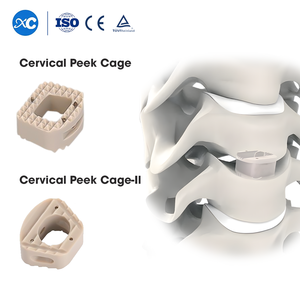
Product Portfolio
Precision-Engineered Orthopedic Fixation Systems
ISO 13485 & CE certified medical devices machined from medical-grade Titanium (Ti-6Al-4V ELI) and PEEK OPTIMA for trauma, spine, CMF, and veterinary surgical applications.
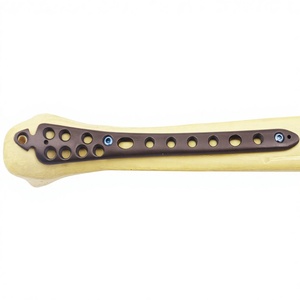
Orthopedic Titanium Trauma Implant Distal Tibial Medial Locking Plate Bone Fracture Internal Fixation Medical CE ISO Certified
Get Catalog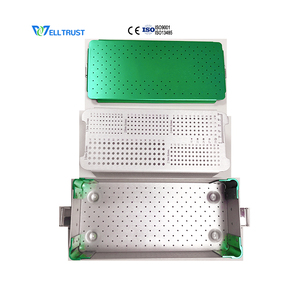
Veterinary Orthopedic Surgical Instruments Surgery Aluminum 1.5/2.0/2.4/2.7/3.5 Implant Screw Sterilization Box
Get Catalog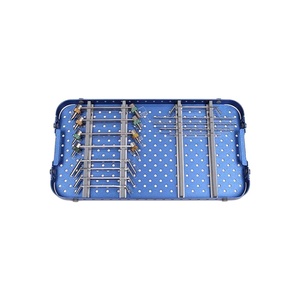
Orthopedic Implants Manufacturer in China 1.5/2.0/2.4/2.7/3.5mm Veterinary Orthopedic Instrument Kit
Get Catalog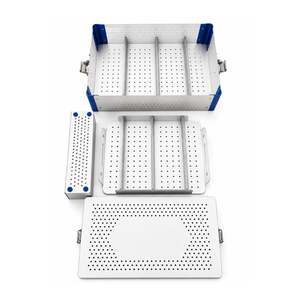
Ariston International AI-DHS Box Medium-01 Orthopedic Implant Sterilization Instrument Case CE Certified ISO13485 Compliant
Get Catalog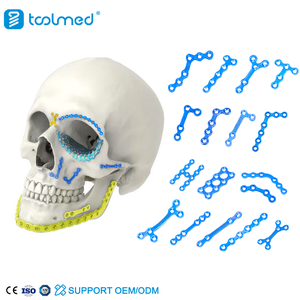
Toolmed Cmf Maxillofacial Surgery Orthopedic Titanium Alloy Implant Cost-Effective 2.0mm Rectangle Craniomaxillofacial Locking
Get Catalog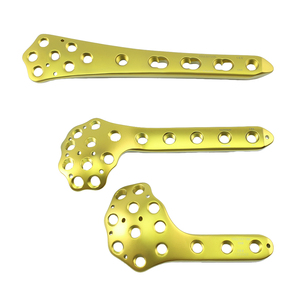
CE Certified Titanium Distal Lateral Femur Minimally Invasive Locking Orthopedic Implant
Get Catalog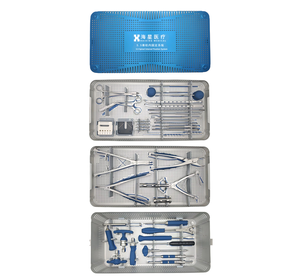
5.5 Titanium Spinal Internal Fixation System Class III Orthopedic Implant for Surgery Haixing Brand Fujian China
Get Catalog100%
ASTM F136 / F67 Certified
±0.005mm
5-Axis Swiss CNC Tolerance
ISO 13485
Audited QMS System
65+
Countries Exported Worldwide
Executive Sourcing Whitepaper: The Technical Blueprint of High-Precision Orthopedic Contract Manufacturing
The global contract manufacturing market for orthopedic implants is undergoing a radical paradigm shift driven by stringent regulatory frameworks (such as EU MDR 2017/745 and US FDA 21 CFR Part 820), heightened clinical expectations for biomechanical performance, and the urgent need for supply chain resilience. As a trusted OEM/ODM contract manufacturing partner, our manufacturing ecosystem bridges the gap between sophisticated material science, sub-micron machining capabilities, and full regulatory traceability.
Contract manufacturing of Class IIb and Class III medical devices—ranging from trauma locking compression plates (LCP) and pedicle screw spinal construct systems to craniomaxillofacial (CMF) mini-plates and polyetheretherketone (PEEK) interbody fusion cages—requires an uncompromising commitment to engineering integrity. Every implant produced within our facilities is built to withstand multiaxial fatigue loading, minimize wear debris generation, and provide optimal osseointegration environment for target anatomical sites.
Metallurgical Rigor: Biocompatible Alloys and High-Performance Polymers
The selection of raw materials defines the fatigue life, corrosion resistance, and radiolucency of surgical implants. Our factory strictly utilizes medical-grade raw materials sourced from certified mill suppliers with full lot-level mill test reports (MTRs):
- Titanium Alloy (Ti-6Al-4V ELI / ASTM F136): Featuring Extra Low Interstitial element control, Ti-6Al-4V ELI delivers superior fracture toughness and bio-inertness. It is the gold standard for trauma plates, pedicle screws, and joint reconstructive hardware where high tensile strength-to-weight ratios are mandatory.
- Commercially Pure Titanium (CP Ti Grade 2 & 4 / ASTM F67): Utilized primarily in low-load applications such as CMF mesh, reconstruction plates, and anatomical trauma plates requiring intraoperative cold bending without structural micro-cracking.
- Implant-Grade PEEK (Polyetheretherketone / ASTM F2026): PEEK OPTIMA polymers offer an elastic modulus (approx. 3.6 GPa) closely matching human cortical bone, thereby eliminating stress shielding in spinal interbody fusion cages (ACDF, PLIF, TLIF). Integrated radiopaque tantalum markers (per ASTM F560) enable accurate intraoperative fluoroscopic localization.
- Anodized Aluminum Alloy (6061-T6 / 7075-T6): Specially processed with hard-coat Type III anodization for surgical sterilization boxes, tray inserts, and ergonomic instrument handles to withstand repeated autoclaving cycles without surface degradation.
Information Gain Benchmark: Our contract manufacturing facility enforces 100% positive material identification (PMI) via X-ray fluorescence (XRF) spectrum analyzers prior to raw material machining, eliminating batch contamination risks at the source.
Sub-Micron Machining Infrastructure & Precision Tolerance Controls
Transforming raw medical-grade titanium rods and PEEK blocks into complex anatomical shapes requires multi-axis Swiss-type turning centers, 5-axis high-speed CNC milling machines, and precision Wire Electrical Discharge Machining (EDM). Locking plate threads require tight thread pitch control (tolerances within ±0.005 mm) to guarantee perfect alignment with variable-angle locking screws during surgical fixation.
Factory Advantages
Why Global Medical Device Brands Partner With Us
A complete contract manufacturing infrastructure engineered for OEM/ODM brand owners, international medical distributors, and hospital procurement groups.
5-Axis CNC Precision Machining
State-of-the-art Swiss CNC turning and 5-axis simultaneous milling centers deliver complex contours, burr-free thread geometry, and sub-micron dimensional repeatability for Class III implants.
ISO 13485:2016 Certified QMS
Our quality management system is certified specifically for medical device manufacturing, maintaining complete Device History Records (DHR), material traceability, and batch control.
Regulatory Dossier & Registration Support
We empower international distributors with complete technical documentation, including material test reports, ISO compliance certificates, IFUs, and packaging validation data for local regulatory filings.
Type II Electrochemical Anodization
In-house titanium surface treatment offering Type II anodization for improved fatigue resistance and Type III color coding for immediate intraoperative identification of screw diameters and plate sizes.
Turnkey Surgical Instrument Kits
Comprehensive manufacturing of matching surgical instrument sets—drills, taps, depth gauges, bending irons, and screwdrivers—housed in custom aluminum sterilization boxes.
ISO Class 7 Cleanroom Packaging
Optional toll washing, ultrasonic multi-stage cleaning, and primary pouch sealing within validated ISO Class 7 cleanroom environments, ready for gamma radiation or ETO sterilization.
Biomechanical Testing and ASTM Protocol Compliance Matrix
To ensure long-term clinical safety and minimize implant failure risks in vivo, our product designs undergo mechanical validation according to recognized international testing standards. The matrix below outlines our core test protocols and performance benchmarks:
| Implant System | Testing Standard | Evaluated Biomechanical Parameter | Acceptance Threshold |
|---|---|---|---|
| Metallic Bone Plates (Trauma) | ASTM F382 | Single Cycle Bending & Bending Fatigue Strength | > 1,000,000 cycles at 75% yield stress |
| Medical Bone Screws | ASTM F543 | Torsional Strength, Insertion/Removal Torque, Self-Tapping Performance | Zero strip out; axial pull-out strength > 2.5 kN |
| Spine Pedicle Screw Systems | ASTM F1717 | Static & Dynamic Axial Compression, Torsion, Fatigue Life | Runout threshold at 5,000,000 cycles without construct fracture |
| PEEK Lumbar Interbody Cages | ASTM F2077 / F2267 | Static/Dynamic Shear & Compression, Subsidence Testing | Compressive strength > 25 kN; minimal tooth deformation |
| Maxillofacial Plating System | ASTM F382 / ISO 14602 | Low-Profile Micro-Bending & Screwhole Torque Yield | Exceeds anatomical strain requirements for midface reconstruction |
Through finite element analysis (FEA) computer simulation and physical biomechanical validation, our contract engineering team optimizes plate thickness, hole spacing, and stress-distribution radii. This prevents stress concentrations near plate screw holes and reduces intraoperative breakage risks during surgical contouring.
Global Technological & Manufacturing Development Trends in Orthopedics
The orthopedic implant manufacturing landscape is evolving rapidly under the influence of additive manufacturing, digital surgical planning, advanced surface functionalization, and smart diagnostic capabilities. Understanding these macro trends allows medical device distributors and brand managers to position their product pipelines effectively over the next decade.
1. Additive Manufacturing & Trabecular Titanium Surfaces
Direct Metal Laser Sintering (DMLS) and Electron Beam Melting (EBM) technologies are revolutionizing orthopedic implant design. By 3D-printing porous trabecular titanium structures with interconnected pore sizes ranging between 300 µm and 600 µm, manufacturers can mimic cancellous bone architecture. This promotes rapid bony ingrowth (osteointegration) and eliminates the need for secondary plasma-spray coatings.
2. Patient-Specific Implants (PSI) & CAD/CAM Integration
Driven by advanced CT/MRI segmentation software, patient-specific implants (PSI) for complex oncological reconstructions, pelvic fractures, and craniomaxillofacial defects are shifting from niche custom orders to streamlined digital workflows. Contract factories are establishing automated CAD/CAM pipelines capable of delivering validated custom implants within reduced turn-around windows.
3. Bioresorbable Materials & Carbon-PEEK Composites
While Ti-6Al-4V remains dominant, hybrid composite materials such as Carbon-Fiber-Reinforced PEEK (CF-PEEK) provide radiolucency without artifact distortion in MRI/CT scans, facilitating postoperative tumor surveillance. Concurrently, bioresorbable magnesium alloys (Mg-Zn-Ca) are emerging for pediatric trauma applications, avoiding secondary implant removal surgeries.
4. Antibacterial & Nano-Textured Surface Functionalization
Surgical site infections (SSI) represent a critical clinical challenge. Modern contract manufacturing is adopting nano-textured surface treatments—such as femtosecond laser ablation and silver-nanoparticle/hydroxyapatite (HA) dual coating—that inhibit bacterial biofilm formation while simultaneously accelerating osteoblast proliferation.
Future Procurement & Sourcing Trends for Global Medical Device Buyers
Procurement directors and supply chain executives in the medical device industry face unprecedented challenges regarding geopolitical trade shifts, regulatory compliance costs, and inventory holding expenses. Sourcing strategies are moving away from traditional transactional buying toward strategic CDMO (Contract Development and Manufacturing Organization) alliances.
Key Trends Reshaping Medical Device Sourcing:
- Consolidation into One-Stop CDMO Partners: Procurement teams increasingly prefer single-source manufacturing partners capable of delivering complete systems—implants, locking screws, matching instrument sets, and sterilization cases—to eliminate interface mismatches between multi-vendor components.
- Total Cost of Ownership (TCO) vs. Piece-Price Sourcing: Leading buyers evaluate suppliers based on Total Cost of Ownership, factoring in regulatory audit support, lot failure rates, warranty claims, lead time predictability, and packaging flexibility rather than unit purchase price alone.
- Supply Chain Resilience & Dual-Sourcing Strategies: To hedge against localized disruptions, global medical supply firms maintain strategic safety stocks with trusted offshore contract factories that hold comprehensive ISO 13485 certifications and robust raw material inventories.
- Regulatory Technical Dossier Integration: Importers no longer accept standalone hardware. Modern sourcing agreements demand ready-to-file technical dossiers (MDR Annex II/III compliance, CE documentation, biocertifications) to accelerate local health authority market approvals.
Buyer FAQ
Frequently Asked Sourcing & Technical Questions
Clear, authoritative answers regarding our manufacturing capabilities, quality controls, and OEM cooperation models.
What biomaterials are used in your orthopedic implant manufacturing?
Our trauma plates and bone screws are machined from medical-grade Titanium Alloy (Ti-6Al-4V ELI conforming to ASTM F136 / ISO 5832-3) and Commercially Pure Titanium (CP Ti Grade 2 & Grade 4 conforming to ASTM F67). For spinal fusion solutions, we utilize implant-grade PEEK (Polyetheretherketone per ASTM F2026) equipped with radiopaque Tantalum markers (ASTM F560) for precise imaging visualization.
What quality certifications and documentation do you provide for registration?
Our manufacturing facility operates under an ISO 13485:2016 audited Quality Management System. We provide complete regulatory support documentation for local product registration and hospital tenders, including Raw Material Certificates (MTRs), Batch Inspection Reports, Certificate of Conformance (CoC), Instructions for Use (IFU), packaging validation files, and sterilization validation reports (ISO 11137 / ISO 11135).
Do you supply matching surgical instrument sets and sterilization cases?
Yes. Every implant system—including trauma locking plates, intramedullary nails, pedicle screws, and CMF plates—is paired with a dedicated surgical instrument kit (drills, taps, torque screwdrivers, bending pliers, depth gauges). Instruments are supplied in hard-anodized aluminum sterilization cases engineered to fit standard hospital autoclave trays.
What are your OEM / ODM contract manufacturing capabilities and MOQs?
We provide comprehensive OEM/ODM services, including customized implant dimensional modifications, custom laser marking (logo, lot number, matrix codes), private-label cleanroom packaging, and custom instrument box design. Minimum Order Quantities (MOQs) depend on the item complexity; we offer flexible initial order quantities for market evaluation and registration pilot runs.
How do you ensure batch-to-batch dimensional consistency and thread tolerance?
Dimensional control is guaranteed through 5-axis CNC Swiss automatic machining, optical coordinate measuring machines (CMM), thread pitch gauges, and automated 2D/3D profile projectors. In-process quality control (IPQC) sampling is conducted at every machining step, supplemented by 100% final visual and functional fit testing prior to packaging.
How can international buyers request sample kits or product catalogs?
Procurement managers and medical distributors can click the "Get Catalog" button below to connect directly with our international export sales team. We provide digital PDF catalogs, technical specification sheets, and sample evaluation packages upon request.
Partner with a World-Class Orthopedic Implant Factory
Contact our engineering and export sourcing team today to request complete product catalogs, technical dossier samples, or a competitive OEM contract manufacturing quote.