Precision Orthopedic Implants & Surgical Systems
Explore our certified medical-grade titanium implants, custom 3D bioprinting solutions, and complete surgical instrument sets manufactured for international distributors, hospital tenders, and OEM partners.
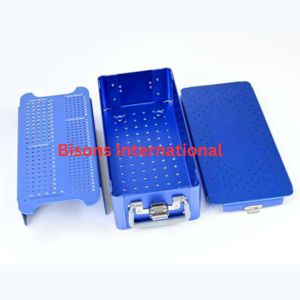
BISONS High Quality CE Certified Class I Orthopedic Implant Screw Sterilization Box Stainless Steel Surgical Instrument Manual
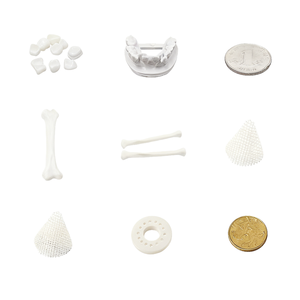
Medical Implant 3D Printing Service Custom Orthopedic Devices Bioprinting Compatibility Precision Craftsmanship
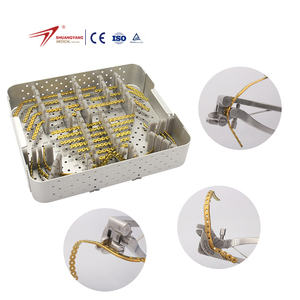
Shuangyang China Manufacturing Orthopedic Implant CMF Titanium Maxillofacial Implant 2.4mm Reconstruction/Locking Plate Set
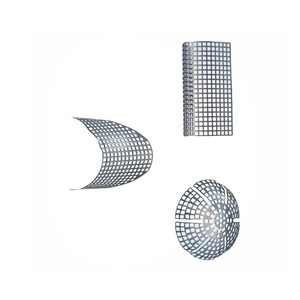
Competitive Price Titanium Alloy Material MESH Orthopedic Implants for Hospital
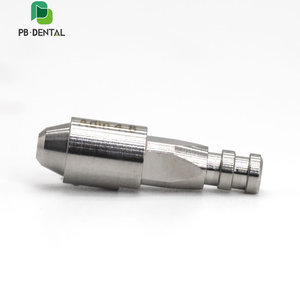
Multi 3D Analog Adin Compatible Implant Digital Library for Multi Unit Prosthetic Restoration and CAD Development
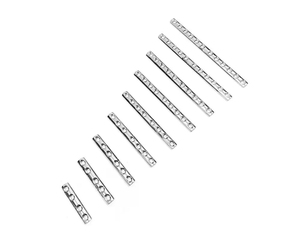
Veterinary 3.5mm One Third Tubular Plate Cortical Screw Orthopedic Implants Bone Fixation Set SureMed Instruments
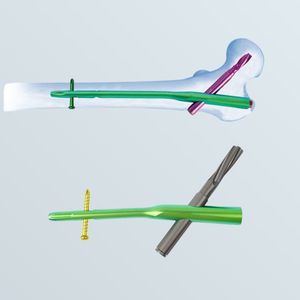
Premium Pfna Intramedullary Nail Wholesale Orthopedic Implant for Femur Intertrochanteric Bone Fracture
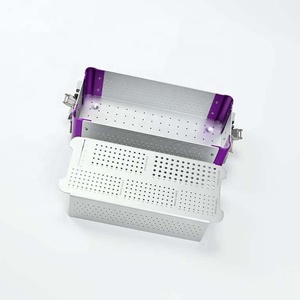
Veterinary Orthopedic Surgical Instruments Set Sterilization Box 1.5/2.0/2.4/2.7/3.5 Implant Screw Case
Understanding China’s Orthopedic Implant Manufacturing Landscape
Over the past two decades, China has evolved from a component subcontractor into a global powerhouse for advanced orthopedic implant manufacturing. International medical device brand owners, OEM purchasing groups, and regional distributors increasingly source trauma, spinal, and craniomaxillofacial (CMF) systems from specialized Chinese manufacturing hubs like Jiangsu (Jiangyin/Zhangjiagang), Zhejiang, and Guangdong. This shift is driven by deep raw material supply chains, rapid adoption of 5-axis CNC machining, and comprehensive compliance with international regulatory frameworks including ISO 13485:2016 and EU MDR 2017/745.
When evaluating leading China orthopedic implant manufacturers, procurement leaders must look beyond raw unit cost. Strategic value lies in metallurgical purity, fatigue life performance, anatomical contouring precision, and complete Device History Record (DHR) traceability. Premier factories utilize medical-grade titanium alloy per ASTM F136 (Ti-6Al-4V ELI - Extra Low Interstitial) and commercially pure titanium per ASTM F67 (Grades 1 through 4), alongside implant-grade Polyetheretherketone (PEEK-OPTIMA) for interbody fusion devices.
| Material Class | Standard Compliance | Mechanical Properties | Primary Clinical Applications |
|---|---|---|---|
| Ti-6Al-4V ELI Alloy | ASTM F136 / ISO 5832-3 | Tensile Strength ≥ 860 MPa, High Fatigue Limit | Locking Compression Plates, Intramedullary Nails, Pedicle Screws |
| Commercially Pure Titanium (CP Ti) | ASTM F67 / ISO 5832-2 | Excellent Ductility, Malleable Intra-operatively | CMF Micro/Mini Plates, Reconstructive Mesh, Cranial Flaps |
| Implant-Grade PEEK | ASTM F2026 / ISO 10993 | Modulus ~3.6 GPa (Matches Cortical Bone) | TLIF/PLIF Spinal Cages, Cervical Interbody Fusion Devices |
| 316L Stainless Steel | ASTM F138 / ISO 5832-1 | High Stiffness, Cost-Effective Rigidity | Surgical Instruments, Sterilization Trays, Temporary Fixation |
Why Global Distributors Choose Orthovana Medical Solutions
Ultra-Precision CNC Machining
Equipped with multi-axis Swiss-type automatic lathes and 5-axis CNC machining centers (DMG MORI, Citizen), ensuring micron-level thread precision for combi-holes, variable-angle locking threads, and complex geometry bone screws.
Rigorous Quality Control & Auditability
Operating under an ISO 13485 certified quality management system. Every batch undergoes CMM dimensional inspection, mechanical fatigue testing (ASTM F382 & ASTM F543), bio-burden testing, and 100% optical sorting.
OEM/ODM Private Label Execution
From custom laser marking (UDI compliance) and specialized anodization color-coding to private-label sterile packaging (Tyvec blister packaging in Class 10,000 cleanrooms), we turn custom concepts into market-ready products.
Future Technological Trends in Orthopedic Manufacturing
The orthopedic device industry is undergoing a paradigm shift toward personalized medicine, minimally invasive procedures, and smart bio-interactive materials. Importers and hospital procurement agents sourcing from China must align with manufacturers investing in next-generation R&D.
- Additive Manufacturing (3D Porous Titanium): Transitioning from solid implants to 3D-printed porous trabecular structures that mimic natural cancellous bone, accelerating osseointegration and reducing stress shielding.
- Patient-Specific Implants (PSI) & Digital Libraries: Integration of CT scan DICOM data with CAD/CAM digital libraries (e.g., Adin-compatible digital analog libraries) to produce custom CMF plates, complex pelvic reconstructive implants, and guide templates.
- Biodegradable Magnesium Alloys: Development of bio-absorbable magnesium screws and pins that dissolve safely within the human body post-healing, eliminating secondary hardware removal surgeries.
- Color Anodization & Type II Surface Treatment: Advanced surface modification techniques, such as Type II electrochemical anodization, to enhance fatigue strength, decrease friction, and provide distinct color-coded identification for swift surgical selection.
Future Procurement Trends for International Medical Buyers
As global healthcare systems push for cost containment without compromising patient outcomes, orthopedic procurement strategies are evolving rapidly:
1. Turnkey Surgical Systems ("Implants + Dedicated Instrumentation"): Hospitals no longer purchase implants in isolation. Premier exporters must supply complete, modular surgery-ready kits containing implants, color-coded drills, sleeve guides, taps, torque-limiting drivers, and anodized aluminum sterilization containers (such as the BISONS sterilization cases).
2. Expansion in Veterinary Orthopedics: The companion animal healthcare market is experiencing unprecedented growth. Global veterinary distributors are sourcing specialized veterinary trauma kits (1.5mm, 2.0mm, 2.4mm, 2.7mm, 3.5mm TPLO and one-third tubular plates) directly from qualified Chinese factories to meet rising clinical expectations.
3. Regulatory Document Readiness: Procurement managers now mandate instant access to full registration dossiers—including Raw Material Mill Test Reports (MTR), Cytotoxicity ISO 10993 reports, Biocompatibility data, and Packaging Validation files—to streamline local MOH/FDA product registrations.
Frequently Asked Questions by Global Buyers
Essential technical and commercial answers for hospital procurement departments, OEM buyers, and medical device importers.
What chemical and physical material grades are used in your implants?
Our metallic implants are manufactured exclusively from medical-grade titanium alloy (Ti-6Al-4V ELI per ASTM F136 / ISO 5832-3) and Commercially Pure Titanium (CP Ti Grade 2 & Grade 4 per ASTM F67). For spinal fusion devices, we utilize medical-grade PEEK (Polyetheretherketone) per ASTM F2026, equipped with Tantalum radiopaque markers for clear radiographic intra-operative visualization. All incoming raw material shipments are verified via third-party spectro-analysis and delivered with full Mill Test Certificates (MTC).
Can distributors receive full registration dossiers for local MOH / Health Authority approval?
Yes. We provide complete technical documentation packages to authorized international distributors. Dossiers include ISO 13485 certification, CE Declaration of Conformity, Material Biocompatibility Test Reports (ISO 10993), Mechanical Fatigue Test Summaries (ASTM F382 / ASTM F543 / ASTM F1717), Instructions for Use (IFU), draft labeling artwork with UDI barcoding, and sterilization validation reports (EO / Gamma).
How do you ensure instrument compatibility with implant screw threads and plate holes?
Each implant system is engineered as a unified ecosystem. Screws and matching drill bits, taps, and star/hex drivers are manufactured under unified geometric tolerances. Thread profiles are checked on 100% optical comparators and digital thread gauges. Furthermore, pre-assembled instrument trays with silicone cutouts and laser-etched dimensional markings prevent intra-operative mismatching.
What are the Minimum Order Quantities (MOQ) and production lead times for OEM projects?
For standard stocked items (such as PFNA intramedullary nails, standard locking compression plates, and veterinary kits), there is no strict MOQ, and orders dispatch within 7-14 business days. For OEM/ODM private-label manufacturing (custom geometry, specialized anodization colors, or custom laser marking), typical initial production runs require 50-100 units per specification, with lead times averaging 30-45 days depending on tooling complexity.
Are sterilization boxes and surgical instruments autoclavable?
Yes. All stainless steel (SUS316L / SUS420) surgical instruments and aluminum sterilization cases (such as the BISONS and SureMed instrument boxes) are specifically designed to withstand repeated autoclave steam sterilization cycles at 134°C (273°F) and 2.1 bar pressure in compliance with ISO 17665 standards.
How do you support 3D bioprinting and custom patient-specific implants (PSI)?
We work directly with healthcare providers and OEM clients to convert patient CT/MRI DICOM files into 3D printable CAD models. Utilizing Selective Laser Melting (SLM) 3D printers, we manufacture custom CMF reconstruction plates, cranial grids, and spinal scaffolds with controlled pore sizes (300-500 microns) to encourage optimal bone ingrowth.
Partner with China’s Leading Orthopedic Implant Exporter
Whether you are expanding your regional trauma line, launching a private-label spinal portfolio, or participating in government hospital tenders, our engineering and export team is ready to assist.
Inquire Now