Precision Orthopedic Implants & Surgical Instrument Systems
Engineered from certified ASTM F136 Ti-6Al-4V ELI titanium alloys and implant-grade PEEK biomaterials. Optimized for anatomical contouring, fatigue strength, and seamless surgical integration.
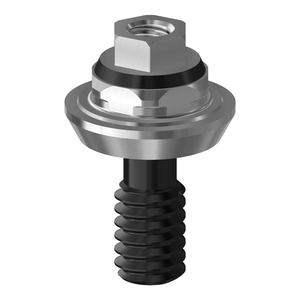
Dental Implant Compatible Parts Internal Connection Titanium Healing Abutment Scan Post Crown Restoration Multi-Platform
Engineered for sub-micron connection accuracy across major dental platforms. Features medical-grade Ti-6Al-4V alloy, color-coded anodization, and biocompatible surface finishing for soft-tissue conditioning.
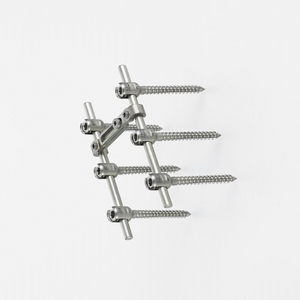
Top Ranking Orthopedic Equipments JMT EDEN Pedicle Screw Spinal Fixation System Implantable Artificial Organs Class II Back
Advanced thoracolumbar spinal instrumentation system with friction-head polyaxial screws, low-profile rods, and cross-links. Fully certified under Class II medical device standards for deformity correction.
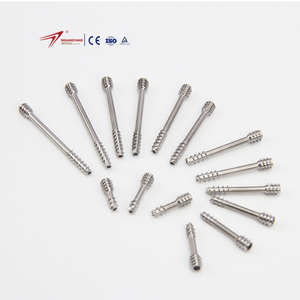
Trauma Surgery Orthopedic Implants Compression Headless Bone Screws Price Titanium Cannulated Orthopaedic Herbert Screw
Precision-threaded differential pitch headless compression screw designed for scaphoid fractures and intra-articular osteotomies. Minimizes soft-tissue impingement while supplying maximum interfragmentary compression.
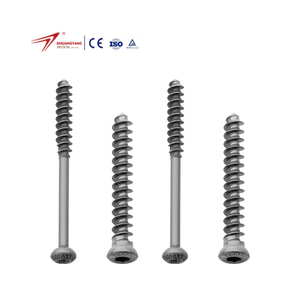
Shaungyang Medical Custom Orthopedic Surgical Trauma Implants Screw Orthopedic 4.0 Series Titanium Alloy Bone Cancellous Screws
Deep-thread cancellous bone screws tailored for osteoporotic bone anchorage in metaphyseal fractures. High pull-out strength design with continuous lot traceability and electrochemical surface passivating.
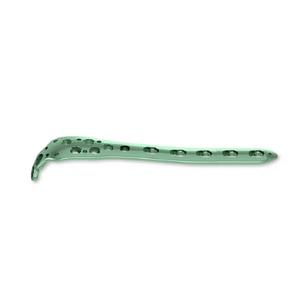
Medical Orthopedic Implants Premium Quality Professional Stainless Steel Material Orthopedic Implants with Latest Design
High-strength 316LVM surgical stainless steel trauma fixation systems. Ideal for cost-effective hospital tenders, offering superior mechanical yield strength, fatigue endurance, and rigid fracture stability.
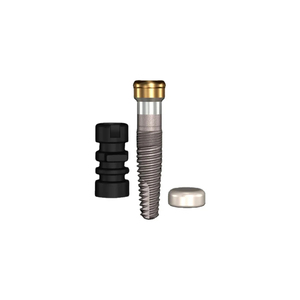
Implante Dental De Titanio - High Precision Surgical Drill Kit Set for Implants
Complete surgical osteotomy drill kit featuring DLC-coated drill bits, depth stops, and torque drivers. Minimizes intraoperative bone necrosis and guarantees exact hole dimensions for implants.
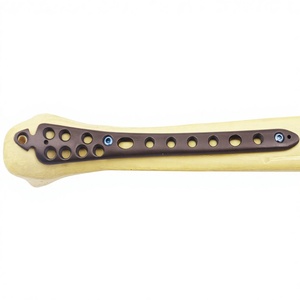
Orthopedic Titanium Trauma Implant Distal Tibial Medial Locking Plate Bone Fracture Internal Fixation Medical CE ISO Certified
Anatomically contoured medial distal tibia locking plate with dynamic combi-holes. Preserves periosteal blood supply, prevents secondary reduction loss, and accelerates complex lower-limb union.
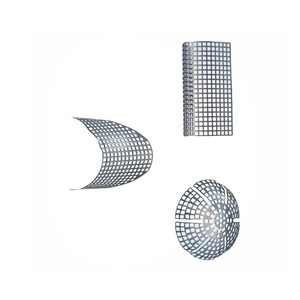
Competitive Price Titanium Alloy Material MESH Orthopedic Implants for Hospital
Malleable commercially pure titanium and Ti-6Al-4V mesh sheets for craniomaxillofacial reconstruction and severe bony defects. High structural adaptability with optimal tissue ingrowth capability.
Enterprise Manufacturing Infrastructure & Technical Superiority
Why international healthcare organizations, medical device distributors, and OEM private-label brands rely on China’s leading orthopedic device manufacturing ecosystems.
5-Axis CNC Precision Machining & Automated Swiss Lathes
Equipped with state-of-the-art Japanese Citizen Swiss-type multi-axis lathes and German DMG MORI 5-axis CNC machining centers, our production facilities yield anatomical trauma plates, complex spinal pedicle screws, and micro-dentistry components with positional tolerances controlled down to ±0.003mm. Automated optical CMM inspection guarantees zero-defect threaded locking mechanisms.
Metallurgical Purity & Material Traceability
Raw materials are sourced strictly from accredited metallurgical mills providing mill certs for ASTM F136 Ti-6Al-4V ELI, ASTM F67 Commercially Pure Titanium, ASTM F2026 PEEK, and 316LVM stainless steel. Every raw bar undergoes ultrasonic flaw detection and spectrographic composition verification prior to production machining.
Advanced Surface Engineering & Anodization
Implants feature Type II electrochemical anodization, micro-arc oxidation (MAO), and plasma-sprayed hydroxyapatite (HA) coatings to maximize osseointegration, eliminate titanium galling, and provide clear color-coded surgical identification across variable thread sizes and plate geometries.
Cleanroom Assembly & EO Sterilization Validation
Final cleaning, ultrasonic degreasing, and primary packaging take place within validated ISO Class 7 (Class 10,000) cleanrooms. Sterile packaging options include double-peel Tyvek pouches validated for 5-year shelf-life stability per ISO 11607 and EN 868 standards.
1. Executive Whitepaper: Strategic Evolution of China’s Orthopedic Manufacturing Sector
Over the past two decades, China’s orthopedic medical device manufacturing landscape has undergone a monumental shift from low-cost component replication to high-precision, innovation-driven bioengineering. Today, premier Chinese orthopedic factories operate at the intersection of advanced materials science, computer-aided biomechanical design, and stringent global regulatory compliance (EU MDR 2017/745, US FDA 510(k), and ISO 13485:2016).
This technical whitepaper outlines the structural advantages, engineering protocols, material specifications, and regulatory frameworks that allow leading Chinese orthopedic OEMs to deliver surgical implants and instrumentation systems that match or exceed Western legacy brands at highly competitive economic structures.
Information Gain Key Takeaway: Sourcing orthopedic devices from top-tier Chinese manufacturers is no longer merely a cost-reduction strategy. It is a strategic quality lever that provides access to ultra-modern 5-axis CNC machining centers, automated quality inspection arrays, and rapid OEM customization timelines.
2. Biomaterial Engineering & Metallurgy Standards
The biomechanical success of internal fixation implants depends heavily on material selection. Leading Chinese factories adhere strictly to international standards established by ASTM International and ISO:
- Titanium Alloy Ti-6Al-4V ELI (ASTM F136 / ISO 5832-3): Extra Low Interstitial (ELI) grade titanium is the gold standard for load-bearing trauma locking plates, pedicle screws, and intramedullary nails. With tensile yield strength exceeding 795 MPa and superior fatigue endurance, Ti-6Al-4V ELI reduces the risk of implant fracture under cyclic anatomical loading while offering MRI-conditional compatibility.
- Commercially Pure Titanium (ASTM F67 / ISO 5832-2): Grades 2 and 4 CP titanium are utilized extensively in maxillofacial reconstruction plates and anatomical mesh systems where high ductility and intraoperative contouring malleability are paramount.
- Implant-Grade Polyetheretherketone (PEEK - ASTM F2026): Radiolucent PEEK biomaterials are engineered for interbody spinal fusion cages (TLIF, PLIF, ALIF, Cervical). With an elastic modulus (3.6 GPa) closely matching human cortical bone, PEEK cages eliminate stress shielding and permit real-time radiographical artifact-free bone bridge assessment.
- 316LVM Surgical Stainless Steel (ASTM F138 / ISO 5832-1): Vacuum Arc Remelted (VAR) stainless steel offers maximum corrosion resistance and mechanical toughness for trauma instrumentation, K-wires, and heavy-duty fracture fixation systems in price-sensitive healthcare markets.
3. Comprehensive Mechanical Testing & Validation Protocols
To secure CE certification and international market authorization, Chinese orthopedic device manufacturers subject all implant designs to rigorous biomechanical fatigue testing simulated under simulated physiological conditions:
- Spinal Construct Testing (ASTM F1717 / ASTM F2193): Pedicle screw and rod systems undergo static compression, static torsion, and dynamic fatigue testing exceeding 5,000,000 load cycles without construct failure.
- Metallic Bone Plate Testing (ASTM F382 / ISO 9585): Locking plates are subjected to 4-point bending fatigue assessments to evaluate bending strength, bending stiffness, and fatigue life under high cyclic loads.
- Medical Bone Screw Evaluation (ASTM F543): Bone screws undergo torsional strength, drive torque, self-tapping performance, and axial pull-out force testing in solid rigid polyurethane foam models.
- Dental Implant System Testing (ISO 14801): Dynamic fatigue testing under 30-degree off-axis loading for 5,000,000 cycles ensures long-term abutment-implant connection integrity.
4. Global Procurement & Sourcing Trends (2025–2030)
The global orthopedic implant market is experiencing rapid transformation driven by demographic aging, expanding healthcare access in emerging economies, and rising pressure on hospital purchasing budgets. Key sourcing trends shaping buyer strategies include:
- Demand for Value-Based Healthcare Sourcing: Hospital procurement boards are actively decoupling from high-margin legacy brand monopolies, seeking direct-from-factory partnerships with ISO 13485 certified Chinese manufacturers that offer equivalent clinical performance at 40%–60% lower unit costs.
- Rise of Patient-Specific Implants (PSI) & Additive Manufacturing: Selective Laser Melting (SLM) and Electron Beam Melting (EBM) 3D-printing technologies are allowing Chinese factories to mass-produce porous titanium implants with trabecular lattice structures that mimic natural cancellous bone, promoting rapid osteointegration.
- Integration of Turnkey Surgery-Ready Kits: B2B buyers increasingly demand pre-packaged, color-coded, single-use or reusable instrument kits matching specific implant lines to streamline hospital operating theatre setup times.
- Strict EU MDR Compliance & Traceability Requirements: Importers require full technical documentation (TD) dossiers, Unique Device Identification (UDI) barcoding, and extensive Clinical Evaluation Reports (CER) from their OEM manufacturing partners.
Frequently Asked Questions (B2B Sourcing & Procurement FAQ)
Essential technical, regulatory, and commercial answers for hospital buyers, medical device distributors, and private-label OEM partners.
Q: What raw material standards are guaranteed for orthopedic implants?
All titanium implants are manufactured from certified medical-grade Ti-6Al-4V ELI (ASTM F136) or Commercially Pure Titanium (ASTM F67). Stainless steel implants use 316LVM (ASTM F138). PEEK cages use ASTM F2026 compliant resin. Full material mill certificates and chemical/mechanical test reports are provided with every delivery lot.
Q: What international regulatory documentation is provided for local product registration?
We provide registered distribution partners with comprehensive regulatory dossier packs including ISO 13485:2016 quality management certificates, CE mark documentation, Certificate of Free Sale (CFS), material biocompatibility reports (ISO 10993), Instructions for Use (IFU), and lot-level sterilization validation reports.
Q: Do you supply matching surgical instrument sets with implant orders?
Yes. Every trauma plating system, pedicle screw array, or intramedullary nail line is supplied with dedicated, color-coded surgical instrument kits housed in anodized aluminum sterilization containers designed for rapid hospital autoclave processing.
Q: Can you support custom OEM laser marking, private labeling, and custom packaging?
Absolutely. We offer complete OEM/ODM solutions, including custom laser marking (brand logos, part numbers, UDI matrix barcodes), custom anodization color palettes, tailored packaging design (sterile Tyvek blisters or non-sterile bulk), and custom surgical kit tray design.
Q: What is the typical lead time for standard versus OEM custom implant orders?
Standard inventory catalog items are dispatched within 7–14 business days. Custom OEM production orders, specialized plate geometries, or proprietary instrument sets typically require 30–45 days depending on tooling complexity and surface finishing specifications.
Q: How is quality control maintained across large volume batch manufacturing?
Our QMS enforces a 4-tier inspection protocol: incoming raw material ultrasonic testing, in-process 5-axis CNC dimension sampling every 30 minutes, 100% optical CMM thread inspection, and final cleanroom pre-packaging lot release audits.
Partner with China's Premier Orthopedic Implant Manufacturing Factory
Request technical specification sheets, product catalogs, factory audit reports, or a competitive quotation for your hospital or distribution network today.
Inquire Now