Top China Custom Orthopedic Implants Manufacturer & Supplier

Global OEM/ODM Whitepaper & Technical Sourcing Guide: Engineering Medical-Grade Titanium (Ti-6Al-4V ELI) & PEEK Fixation Systems with Sub-Micron Precision

Precision Product Matrix

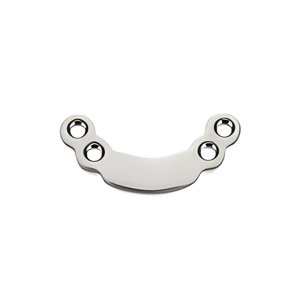
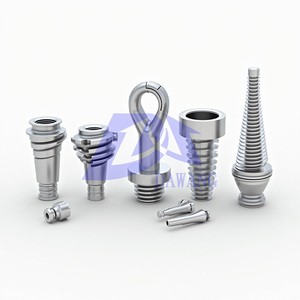
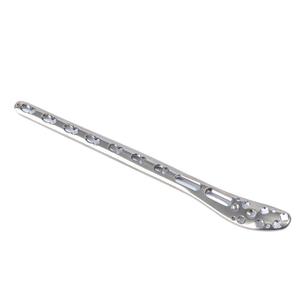
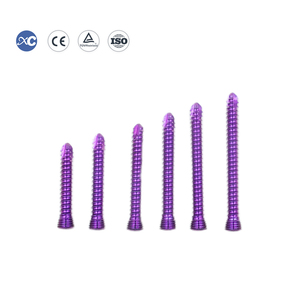
High-Performance Custom Orthopedic Implants & Surgical Kits

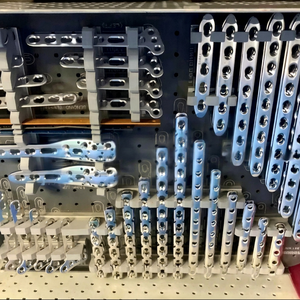
Explore our flagship orthopedic devices manufactured under strict ISO 13485:2016 quality management standards. Each product undergoes rigorous coordinate measuring machine (CMM) testing, surface anodization, and 100% lot-level traceability.

Technical Authority & Competencies

State-of-the-Art China Orthopedic Manufacturing Architecture

As a leading China custom orthopedic implants manufacturer and supplier, our engineering ecosystem bridges cutting-edge materials science, multi-axis ultra-precision CNC machining, and stringent international regulatory compliance.

±0.003mm
CNC Swiss Tolerance
ISO 13485
Quality Management
100%
Lot-Level Traceability
Class 100K
Cleanroom Environment

Medical-Grade Titanium & PEEK Material Science

We source only high-purity, implant-certified raw materials with certified mill test reports. Implants are fabricated using Ti-6Al-4V ELI (ASTM F136 / ISO 5832-3) for exceptional strength-to-weight ratios and fatigue resistance, alongside Commercially Pure Titanium (ASTM F67) for adaptable soft-tissue plates. Interbody spinal fusion cages utilize implant-grade PEEK (Polyetheretherketone per ASTM F2026), offering an elastic modulus (~3.6 GPa) closely matching human cortical bone to prevent stress shielding and radiolucency for crystal-clear postoperative imaging.

5-Axis CNC & Swiss Milling Precision

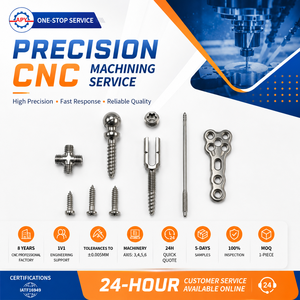
Our modern manufacturing facility operates multi-axis automated CNC Swiss lathe centers (DMG MORI, Citizen, Willemin-Macodel). This allows complex geometry execution in a single clamping setup—guaranteeing sub-micron accuracy for variable-angle locking threads, cannulated cores, bone screw lead angles, and pedicle screw polyaxial heads. Batch-to-batch micro-consistency eliminates intra-operative cross-threading and driver slippage.

Surface Engineering & Osseointegration

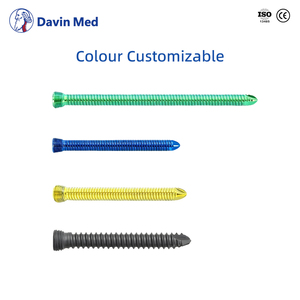
Surface micro-topography directly impacts osteoblast adhesion and clinical outcome. We provide Type II Anodization for enhanced fatigue performance and micro-hardness, electrochemical surface passivation to eliminate free iron, and color-anodized size identification. For permanent total joint replacement and spinal fusion, advanced porous coatings (Plasma Sprayed Titanium, Hydroxyapatite HA, and SLA sandblasting) promote rapid vascularization and bone ingrowth.

Turnkey Surgical Instrument Ecosystems

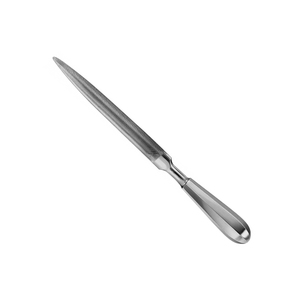
An implant is only as good as the instrument set used to place it. We engineer fully integrated, color-coded surgical tool sets alongside every implant system. From self-holding screwdrivers, tissue protectors, and depth gauges to precise bending irons and torque-limiting ratchets—our surgical kits arrive organized in custom-fitted, steam-sterilizable anodized aluminum containers.

Rigorous ISO 13485 & Regulatory Documentation

Navigating global healthcare regulatory frameworks requires bulletproof paperwork. We supply full technical dossiers for distributor registration, including Material Test Certificates (MTC), Biocompatibility Reports (ISO 10993), Mechanical Fatigue Testing (ASTM F382 / ASTM F543), Sterilization Validation (EN ISO 17665), and Lot Inspection Sheets to support immediate market clearance.

Custom OEM/ODM & Sample-to-CAD Engineering

We empower OEM brand owners and hospital networks through direct CAD/CAM engineering collaboration. Whether converting physical prototype samples into 3D digital models or customizing plate contours for anatomical variations, our engineering team delivers rapid prototyping, custom laser marking, customized packaging, and scalable volume production with reliable lead times.

Strategic Procurement Analysis

Future Procurement Trends in Global Orthopedic Implant Supply Chains

The global orthopedic implant market is undergoing a structural shift driven by demographic aging, healthcare cost optimization, and rapid technological adoption. Procurement officers and distributors must adapt to several critical procurement paradigms over the coming decade.

1. Decentralization & Demand for High-Value OEM Alternatives

Public health systems and private hospital chains are seeking high-quality, cost-effective alternatives to tier-one Western multinational brands. By partnering directly with advanced Chinese OEM manufacturers capable of producing ISO 13485-certified implants with identical metallurgical and mechanical specs, global distributors achieve margins up to 40-60% higher while delivering affordable healthcare solutions.

2. Rise of Patient-Specific Implants (PSI) & On-Demand OEM

Standard off-the-shelf plates are increasingly being supplemented by custom patient-specific implants (PSI) for oncological resections, severe trauma, and complex maxillofacial reconstructions. Strategic suppliers are shifting toward digital workflows—receiving CT DICOM files directly from hospitals, converting them to 3D CAD models, and machining custom implants within short production turnarounds.

3. Supply Chain Resiliency & Modular Kit Standardization

Global procurement teams prioritize vendors with robust raw material inventory reserves and standardized, modular product lines. Modular kit architectures—where single instrument sets accommodate multiple anatomical plate sizes—dramatically reduce surgical tray footprint, decrease hospital sterilization turnover costs, and minimize distributor stock-holding capital.

Innovation Horizon

Next-Generation Product & Material Development Trends

Orthopedic implant design is rapidly advancing beyond basic mechanical stabilization toward bio-interactive and smart materials. Discover the key technological vectors shaping the future of trauma, spine, and CMF fixation.

3D Printed Porous Trabecular Titanium Structures

Additive manufacturing (Selective Laser Melting - SLM and Electron Beam Melting - EBM) enables the creation of biomimetic trabecular titanium geometries. Featuring controlled pore sizes (400–700 µm) and high porosity (60–80%), 3D printed implants imitate cancellous bone architecture, encouraging deep osteoblast migration and long-term biological secondary fixation without the need for bone cement.

Bioabsorbable Polymers & Magnesium Alloy Systems

To eliminate second-stage hardware removal surgeries in pediatric trauma and craniomaxillofacial repairs, manufacturers are developing bioresorbable poly-L-lactic acid (PLLA) and absorbable magnesium-zinc-calcium alloys. These implants provide structural load-bearing during initial bone healing and gradually degrade into non-toxic biological metabolites over 12–24 months.

Antimicrobial & Silver/Copper Ion Impregnated Topographies

Postoperative implant-associated infections (IAI) present a major clinical challenge. Emerging surface modification technologies—such as silver nanoparticle micro-doping, micro-arc oxidation containing antimicrobial copper ions, and antibiotic-eluting polymeric coatings—actively combat bacterial biofilm formation (Staphylococcus aureus) at the implant-tissue interface.

Procurement & Technical Guidance

Frequently Asked Questions (FAQ) for Medical Implants Sourcing

Addressing essential technical, quality control, regulatory, and logistics queries for international medical device buyers, hospital tender committees, and OEM partners.

What exact titanium and polymer grades are utilized in your orthopedic implants?
Our bone plates, trauma locking screws, and spinal pedicle systems are exclusively machined from medical-grade Titanium Alloy Ti-6Al-4V ELI (Extra Low Interstitial, Grade 23 per ASTM F136 / ISO 5832-3) and Commercially Pure Titanium (Grades 2 & 4 per ASTM F67). For interbody fusion devices, we utilize high-performance implant-grade PEEK Optima (per ASTM F2026) integrated with radiopaque tantalum markers. Every raw material lot is delivered with mill test certificates verifying chemical composition, tensile strength, and microstructural integrity.
What technical documentation is provided to support distributor product registration?
We provide full technical documentation packages for registration with national health authorities (e.g., FDA, CE, MoH). These packages include ISO 13485:2016 quality system certificates, Certificate of Analysis (CoA), Material Test Reports (MTC), ISO 10993 Biocompatibility Test Summaries, Mechanical Fatigue and Static Test Reports (ASTM F382 plate bending, ASTM F543 screw axial pull-out), Instructions for Use (IFU), multi-language packaging artwork, and lot-level certificate of conformity.
Do you offer complete surgical instrument sets matched to your implant lines?
Yes. Every orthopedic plating system, intramedullary nail system, and spinal fixation line is paired with a corresponding, surgeon-evaluated instrument set. Kits include color-coded drill bits, depth gauges, torque-limiting ratchets, plate benders, and custom aluminum sterilization trays capable of withstanding repeated steam autoclave cycles (134°C / 273°F).
What are your OEM, ODM, and private-label manufacturing capabilities?
We offer full-service white-label OEM and custom ODM engineering. Capabilities include custom laser marking (logo, catalog number, lot GTIN code, UDI matrix), bespoke surface anodization colors, customized blister/pouch packaging, and full reverse engineering or CAD design optimization from customer samples or DICOM imaging data.
How do you ensure batch-to-batch dimensional accuracy and quality assurance?
Quality control is embedded at every manufacturing step: incoming material spectral analysis, in-process 5-axis CMM micro-dimensional measurement, optical thread comparators, surface roughness (Ra) profilometry, Class 100,000 cleanroom ultrasonic washing, and 100% final visual/laser inspection. Every individual component features laser-etched batch tracking for complete historical auditability.
What are the Minimum Order Quantities (MOQ) and production lead times for export orders?
For standard inventory items across trauma plates, bone screws, and spinal systems, minimum order quantities are highly flexible to support distributor trial orders. Custom OEM/ODM projects typically require low MOQs based on raw material batch sizes. Standard dispatch lead times range from 2 to 4 weeks, with expedited emergency air freight support available.
Are veterinary orthopedic implants manufactured to the same quality standards as human devices?
Yes. All veterinary orthopedic implants (including 1.5mm–3.5mm AO locking plates, micro-hip replacements, and TPLO/TTA plates) are produced on the exact same multi-axis CNC machines using identical medical-grade Ti-6Al-4V ELI material and stringent cleaning processes as human trauma systems, guaranteeing exceptional biomechanical durability for animal health applications.
Partner with China's Premier Custom Orthopedic Implant Manufacturer

Whether you are expanding your distributor portfolio, seeking reliable OEM/ODM contract manufacturing, or submitting hospital tenders, our engineering team provides complete technical, quality, and commercial support.