Precision Surgical Fixation Systems
High-precision orthopedic implants manufactured under strict ISO 13485 quality standards, utilizing medical-grade Titanium Alloy (Ti-6Al-4V ELI) and PEEK biomaterials.
Executive Summary: Navigating Global Orthopedic Sourcing & Manufacturer Benchmarking
The global orthopedic implant market is experiencing a profound paradigm shift driven by demographic aging, an increasing incidence of high-energy traumatic injuries, and rapid surgical innovation in spine stabilization, trauma fixation, and craniomaxillofacial (CMF) reconstruction. Procurement officers, hospital supply directors, and international medical device distributors evaluating top orthopedic implant manufacturers and exporters face complex regulatory environments, stringent biophysical material standards, and elevated requirements for supply chain stability.
Sourcing medical-grade surgical implants goes far beyond simple unit-cost negotiation. Modern hospital purchasing committees require multi-faceted verification encompassing biocompatibility certifications, 5-axis CNC machining precision, surface anodization consistency, fatigue strength testing, and comprehensive technical documentation packages for local registration. This whitepaper analyzes the key technical evaluation criteria, material science innovations, and global procurement trends that procurement leaders must consider when auditing surgical implant exporters.
Core Evaluation Criteria for Top Orthopedic Implant Exporters
When shortlisting high-tier orthopedic implant manufacturers for OEM/ODM contract manufacturing or territorial brand distribution, international procurement committees evaluate facilities based on six critical pillars of technical competence and quality assurance:
1. Raw Material Purity & Metallurgy
Tier-1 exporters source certified Ti-6Al-4V ELI (Extra Low Interstitial) conforming to ASTM F136 and CP-Ti per ASTM F67. High-grade raw titanium prevents micro-voids, ensuring maximum fatigue resistance during dynamic cyclic loading.
ASTM F136 ASTM F67 ISO 5832-32. 5-Axis CNC Precision Machining
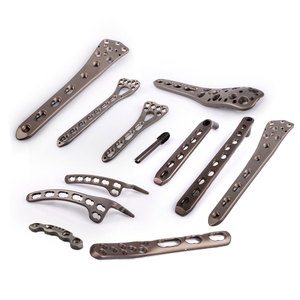
Complex anatomical geometries—such as proximal femur locking compression plates and polyaxial pedicle screw heads—demand sub-micron dimensional tolerances to eliminate thread binding and micro-motion.
Swiss CNC Tolerance ±0.005mm3. ISO 13485 & Regulatory Compliance
Regulatory documentation is as crucial as implant quality. Top manufacturers maintain comprehensive Design History Files (DHF), Technical Files, and ISO 13485 Medical QMS certifications to facilitate rapid market registration.
ISO 13485 CE MDR Ready FDA 510(k) Files4. Surface Treatment & Anodization
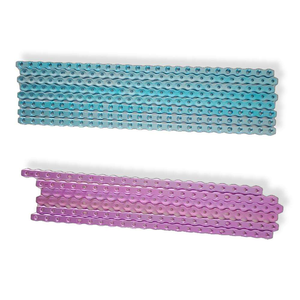
Type II electrochemical anodization increases titanium surface hardness and biopassivation while color-coding enables intuitive size identification inside the operating theater, reducing surgical procedure time.
Type II Anodizing Color Coding5. Integrated Surgical Instrument Sets
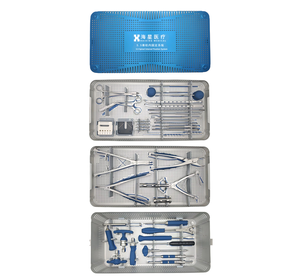
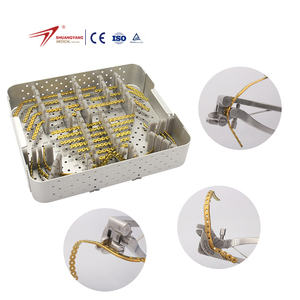
A surgical implant system is incomplete without matching, durable surgical instruments. Leading exporters deliver implants alongside ergonomic drill guides, torque-limiting drivers, and quick-coupling sterilization trays.
Surgery-Ready Torque Drivers6. Global OEM & Private-Label Support
Established exporters provide private labeling, customized laser marking, validated cleanroom packaging, and tailored production forecasting to safeguard regional distributors from stock-out risks.
Laser Marking Cleanroom PackagingFuture Procurement Trends & Technological Developments (2025–2030)
The global orthopedic implant export market is being reshaped by modern surgical techniques, additive manufacturing, and enhanced biomechanical design principles. B2B medical procurement teams must anticipate these evolving trends to maintain competitive advantages in their respective healthcare sectors:
A. Shift Toward Variable-Angle Locking Technologies
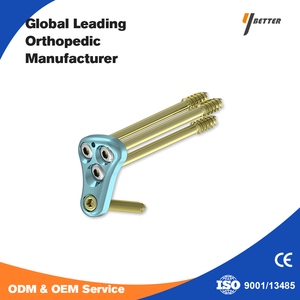
Traditional mono-axial locking compression plates (LCP) are rapidly giving way to Variable-Angle (VA) locking plate systems. Surgeons demand the flexibility to trajectory-steer bone screws by up to ±15° to target specific articular fragments, osteoporotic bone zones, or avoid existing hardware. Manufacturers capable of producing high-precision multiaxial locking threads represent the premium tier of exporters.
B. Rise of Radiotranslucent PEEK Interbody Systems
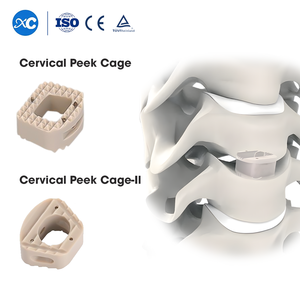
In spinal fusion surgery, PEEK (Polyether ether ketone) interbody cages have established dominance over pure metallic cages. PEEK features an elastic modulus (3.6 GPa) nearly identical to human cortical bone, significantly reducing stress shielding and subsidence. Enhanced cages featuring integrated tantalum radiographic markers or 3D-printed porous titanium coatings represent the cutting-edge standard in spinal arthrodesis.
C. 3D-Printed Porous Titanium & Additive Manufacturing
Direct Metal Laser Sintering (DMLS) and Electron Beam Melting (EBM) enable manufacturers to create biomimetic porous structures that promote rapid osseointegration. Rather than relying solely on plasma-sprayed coatings, 3D-printed trabecular titanium allows bone ingrowth directly into the core matrix of joint components, CMF plates, and spinal implants.
D. Supply Chain Regionalization & Complete Traceability
In response to international regulatory tightening, healthcare providers demand absolute raw material origin transparency. Top exporters are embedding digital batch tracking—recording heat numbers, forge certifications, CNC machine logs, and passivation reports—accessible via QR codes on primary packaging.
Strategic Enterprise Capabilities of Orthovana Medical Co., Ltd
Orthovana Medical Co., Ltd stands at the forefront of precision orthopedic implant manufacturing, specializing in trauma locking plates, pedicle screw systems, PEEK interbody fusion devices, and CMF fixation sets. Designed with direct input from orthopedic surgeons and biomedical engineering experts, our solutions optimize clinical outcomes while minimizing surgical complexity.
Our modern manufacturing facility features Swiss-type multi-axis CNC lathes, high-precision wire-cut EDM machinery, automated surface anodization lines, and Class 10,000 cleanroom packaging environments. Every lot undergoes rigorous CMM (Coordinate Measuring Machine) inspection and fatigue testing in strict alignment with ISO 13485 guidelines.
Anatomical Contour Engineering
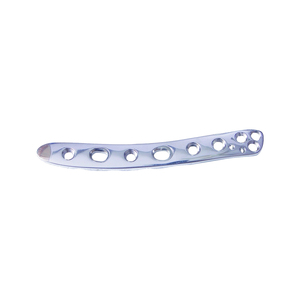
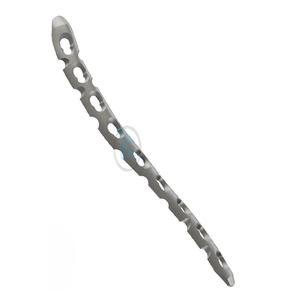
Pre-contoured plate design minimizes intra-operative bending, reducing operative time and maintaining structural titanium integrity.
Comprehensive Registration Bundles
We empower global distributors with full documentation packs—including IFUs, material safety data sheets, testing reports, and ISO certificates.
Surgery-Ready Kit Configurations
Implants are packaged alongside matched, color-coded instrument sets housed in heavy-duty aluminum sterilization containers.
Frequently Asked Sourcing & Technical Questions
Comprehensive technical answers for hospital procurement committees, medical device importers, and distributor business managers.
What materials are Orthovana Medical implants made from? +
Which documents can international distributors receive for local product registration? +
Do you supply complete instrument sets with the implants? +
Do you support OEM, ODM, or private-label distributor cooperation? +
How can procurement managers obtain the latest product catalogues and pricing schedules? +
What quality control and inspection protocols are executed before shipment? +
Ready to Upgrade Your Orthopedic Implant Portfolio?
Partner with Orthovana Medical for high-precision titanium plates, spinal systems, PEEK cages, and CMF fixation sets supported by comprehensive regulatory documentation.