Evaluating Top Orthopedic Implant Manufacturers in 2025
The global market for orthopedic trauma plates, spinal pedicle screw systems, intramedullary nails, and craniomaxillofacial (CMF) fixation devices is undergoing a structural evolution. Procurement teams, healthcare agency buyers, and medical device brand owners no longer evaluate factories purely on piece-part costs. Today's baseline requirements demand rigorous metallurgical validation, ISO 13485:2016 quality management system compliance, absolute lot-level batch traceability, and rapid custom tooling capacity for original equipment manufacturers (OEM).
Information Gain Benchmark: Standard Vendor vs. Top Tier OEM Factory
This comparative audit highlights the operational metrics that separate commodity suppliers from world-class orthopedic manufacturing facilities when issuing a Request for Quote (RFQ).
| Evaluation Parameter | Standard Tier-3 Supplier | Top 10 OEM Factory Benchmark | Strategic Buyer Impact |
|---|---|---|---|
| Raw Material Purity | Standard Ti-6Al-4V Grade 5 | ✓ Ti-6Al-4V ELI (ASTM F136) / PEEK-OPTIMA | Superior fatigue strength & biocompatibility |
| Machining Precision | 3-Axis standard CNC milling | ✓ 5-Axis Swiss CNC Precision Machining | Micron-level thread alignment & zero burr rate |
| Traceability & QC | Batch-level paper logging | ✓ 100% Barcode / Laser Lot Traceability | Immediate recall control & audit compliance |
| Regulatory Dossier | Basic COA & Commercial Invoice | ✓ Full Tech File (CE MDR / FDA 510k ready) | Accelerated national product registration |
| Instrument Match | Sold separately or non-standard | ✓ Complete Modular Surgical Instrument Sets | Turnkey hospital surgical site readiness |
Critical Engineering & Metallurgical Criteria for RFQ Evaluation
To mitigate clinical risks and regulatory hurdles, sourcing directors must scrutinize four core engineering pillars prior to contract sign-off.
1. Metallurgical Purity & Standards
Implants destined for internal trauma fixation or spinal fusion must adhere strictly to ASTM F136 (Ti-6Al-4V ELI - Extra Low Interstitial) or ASTM F67 (Commercially Pure Titanium). PEEK implants require ASTM F2026 certification. High-density, medical-grade titanium alloy minimizes micro-motion fretting corrosion, ensures optimal MRI conditional compatibility, and lowers long-term mechanical failure rates in high-load structural areas like the femoral shaft and thoracolumbar spine.
2. Multi-Axis CNC & Anodization
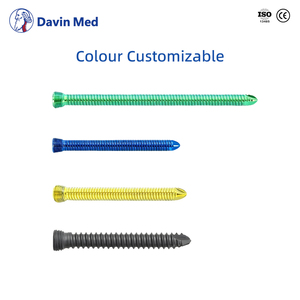
Leading manufacturers utilize 5-axis Swiss Citizen and STAR CNC machines to achieve thread pitch tolerance within ±0.005mm. Modern locking compression plates (LCP) demand variable-angle locking threads that prevent cold welding during screw insertion. Additionally, Type II Electrochemical Anodization enhances surface hardness, reduces fatigue failure, and allows color-coded identification across instrument trays for streamlined OR operations.
3. Regulatory Technical Dossiers
Requesting a quote must extend beyond unit pricing to verifying regulatory submission assets. Certified OEM factories maintain complete Technical Files aligned with EU MDR (2017/745), US FDA 510(k) predicate device cross-references, ISO 10993 biocompatibility testing, and validated ethylene oxide (EO) or gamma sterilization validation protocols, substantially accelerating local distribution licensing.
Core Orthopedic Systems Demanding Quotation Precision
An anatomical overview of primary hardware categories supplied by top OEM manufacturers, complete with instrumentation requirements and clinical indication parameters.
Trauma & Fracture Fixation Systems
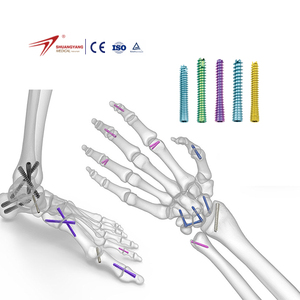
Trauma remains the largest volume segment for hospital procurement. Modern locking plate systems feature double-bend distal tibia configurations, proximal humerus multi-planar locking holes, and self-tapping Herbert cannulated screws for scaphoid and osteochondral fractures.
- Implants: LCP Plates (1.5mm to 5.0mm), PFNA Nails, Cannulated Screws
- Materials: Titanium Ti-6Al-4V ELI / Pure Titanium ASTM F67
- Primary Application: Complex periarticular & diaphyseal fractures
Spinal Fixation & Interbody Fusion
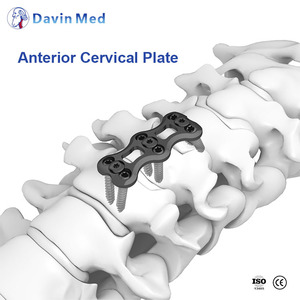
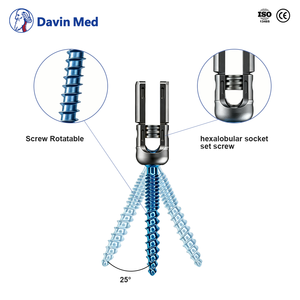
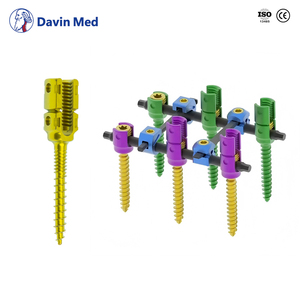
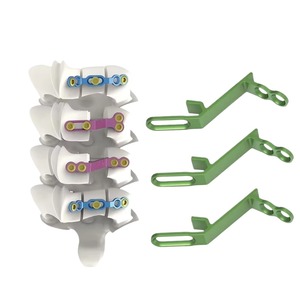
Spine solutions demand zero-defect manufacturing due to adjacent neural structures. Polyaxial pedicle screws allow a 45-degree angle cone for ease of rod placement, coupled with low-profile anterior cervical plates (ACP) and radiolucent PEEK lumbar cages (TLIF / PLIF / Cervical).
- Implants: Monoaxial/Polyaxial Screws, PEEK Cages, ACP Systems
- Features: Radiographic Tantalum markers, friction-head design
- Primary Application: Degenerative disc disease, spondylolisthesis
Craniomaxillofacial & Small Fragment
CMF systems require ultra-low profile titanium mini-plates (1.0mm, 1.5mm, 2.0mm system) designed to minimize tissue palpability while maintaining rigid anatomical fixation across delicate facial, orbital, and mandibular trauma reconstructions.
- Implants: Midface Mesh, Mandibular Reconstruction Plates, Micro Screws
- Features: Easy-malleable titanium alloys, micro-thread engagement
- Primary Application: Maxillofacial trauma & orthognathic surgery
Future Procurement Trends in Orthopedic Manufacturing
Understanding where medical device manufacturing technology is heading enables purchasing managers to select factory partners that offer long-term technological competitiveness.
Additive Manufacturing (3D Porous Titanium)
Selective Laser Melting (SLM) and Electron Beam Melting (EBM) enable factories to produce trabecular-mimicking porous titanium implants. These structures reduce stress shielding by matching the elastic modulus of cancellous bone and dramatically accelerate osseointegration in spinal fusion cages and joint revision implants.
Antibacterial & Bioactive Coatings
Surface modification technologies are transitioning from passive anodization to active antibacterial surfaces. Next-generation RFQs prioritize factories capable of depositing Hydroxyapatite (HA) uniform coatings, silver nanoparticle ion implantation, or bio-resorbable polymer matrices that prevent surgical site infections (SSI).
Smart Supply Chains & Digital Twins
Leading manufacturers integrate Automated Optical Inspection (AOI) with cloud-based ERP inventory tracking. Distributors can monitor real-time production status, raw material heat numbers, and batch-level dimensional inspection sheets via digital supplier portals, ensuring predictable supply chain continuity.
Why Orthovana Medical Leads Global OEM Manufacturing
Rooted in materials science, state-of-the-art multi-axis machining, and clinical co-design, Orthovana Medical Co., Ltd represents the benchmark standard for international procurement partners.
Full Contract Manufacturing & Private Labeling
Orthovana provides complete OEM/ODM solutions including custom implant geometric modifications, custom fiber-laser marking (UDI compliance ready), specialized anodization color patterns, custom-molded sterilization tray design, and private-label packaging configurations engineered for rapid market clearance.
Integrated Surgical Instrument Set Supply
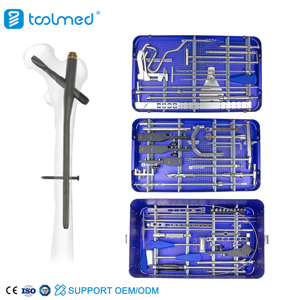
An implant is only as effective as the instruments used to place it. We manufacture matching surgical instrument sets—including depth gauges, torque-limiting screwdrivers, drill guides, bending pliers, and quick-coupling handles—housed inside custom aluminum sterilization containers ready for immediate OR deployment.
Frequently Asked Procurement & RFQ Questions
Addressing key commercial, technical, and logistics inquiries raised by international medical supply purchasing committees.
What medical grade raw materials are utilized across your implant catalog?
Which regulatory compliance documents are provided for distributor registration?
Are complete matched surgical instrument sets supplied with implant orders?
What are your standard lead times, minimum order quantities (MOQ), and shipping terms?
How does the factory support OEM customization and private label branding?
How can I request a formal quotation or updated factory product catalogue?
Ready to Request a Quote for High-Precision Orthopedic Implants?
Connect directly with our senior biomedical sales engineers. Receive competitive factory-direct pricing, detailed material data sheets, and complete technical registration dossiers today.