Verified Procurement Catalog
Featured Orthopedic Implant Systems & Specialized Surgical Toolsets
Standardized medical-grade titanium implants, trauma sets, and autoclavable surgical instrumentation engineered for international tenders, clinical distributors, and OEM buyers.
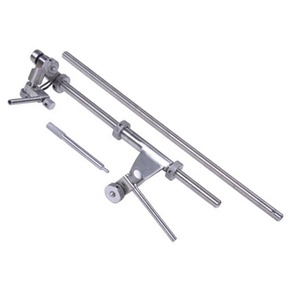
CE Approved Femoral Distractor Complete Instrument Set Stainless Steel Autoclavable
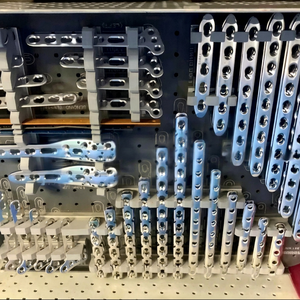
Small Fragment LCP Locking Compression Plate System & Trauma Surgery Kit
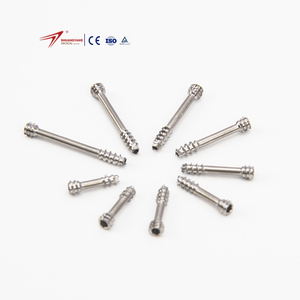
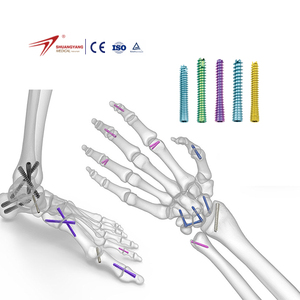
Headless Compression Cannulated Titanium Herbert Screw Trauma Surgery Kit
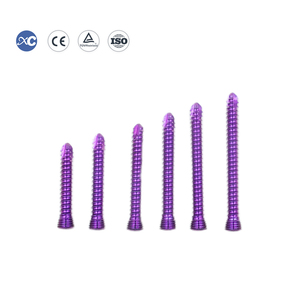
Veterinary Orthopedic Implant System 2.7mm AO Standard Self-Tapping Locking Screws
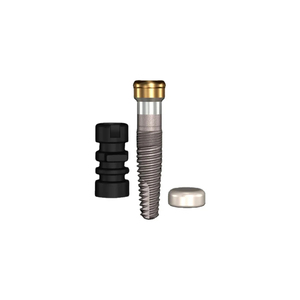
High-Precision Dental & CMF Titanium Implant Surgical Drill Kit Set
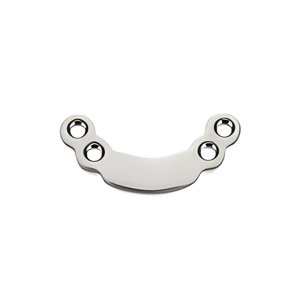
Customized Titanium 2.0mm Acetabular Reconstruction Plate & OEM Sample Fast-Track
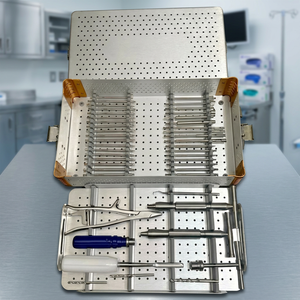
Universal Orthopedic Spine & Trauma Implant Removal Set (54 Piece Extracting System)
ISO 13485
Certified Quality Management
±0.005 mm
Swiss CNC Tolerancing
100%
Heat-Lot Traceability
ASTM F136
Medical Grade Titanium ELI
Industry Whitepaper
Navigating the Global Orthopedic Implant Sourcing Landscape
An analytical guide for medical device procurement directors, sourcing agents, and OEM brand holders seeking technical compliance, operational resilience, and verified manufacturing partners.
The global orthopedic implant sector is undergoing a profound structural evolution. Driven by stringent regulatory shifts—most notably the implementation of the European Union Medical Device Regulation (EU MDR 2017/745) and stringent US FDA 510(k) premarket notifications—medical procurement agents and hospital purchasing consortia can no longer rely on simple transactional buying. Today, evaluating Top 10 orthopedic implant sourcing agent factories and direct manufacturing facilities demands rigorous scientific scrutiny of raw material metallurgy, multi-axis machining capabilities, dynamic fatigue resistance, and total quality management system (QMS) audits.
Strategic sourcing in trauma, spinal, maxillofacial (CMF), and joint reconstruction requires bridging the gap between raw manufacturing capability and clinical usability. A qualified sourcing agent or OEM factory partner must operate at the intersection of material science (utilizing certified Ti-6Al-4V ELI per ASTM F136 and radiolucent PEEK-OPTIMA per ASTM F2026) and micron-level mechanical execution. Modern orthopedic internal fixation systems require locking compression plates (LCP) and cannulated compression screws to withstand multi-directional biomechanical stress without structural deformation or bio-incompatibility.
Procurement Director Insight: Sourcing low-cost implants without authenticated Mill Test Reports (MTR) or validated surface anodization increases the risk of micro-fractures, metal ion leaching, and costly regulatory recalls. World-class factories integrate automated optical inspection (AOI) directly into 9-axis Swiss CNC turning centers to guarantee zero-defect threads on locking screws.
Enterprise Benchmarks
Orthovana Medical: Manufacturing Capabilities & Quality Architecture
Why international distributors and specialized medical sourcing agents partner with Orthovana Medical for private-label and contract manufacturing.
Certified Metallurgy & Material Science
We source raw titanium bars and PEEK rods exclusively from ISO 13485 audited mills. Every production batch is accompanied by comprehensive chemical analysis, tensile testing, and grain size verification according to ASTM F136, ASTM F67, and ASTM F2026 standards.
High-Precision Swiss CNC Machining
Our state-of-the-art manufacturing facility houses multi-axis Citizen Swiss-type lathes and high-speed DMG MORI machining centers, enabling tight dimensional tolerances within ±0.005mm for anatomically contoured trauma plates and variable-angle locking screws.
Surface Passivation & Anodizing
Implants undergo validated ultrasonic cleaning, electro-polishing, and Type II color anodization. This enhances corrosion resistance, eliminates burrs under 50x magnification, and enables color-coded dimensional recognition for surgical efficiency.
Audit Matrix: Sourcing Agent Capability vs. Direct Factory Audit Standards
Use this comparative matrix when evaluating third-party orthopedic sourcing agencies against direct factory manufacturing qualifications.
| Evaluation Metric | Tier-1 OEM Factory Standard (Orthovana) | Standard Sourcing Agent Capability | Regulatory Risk Mitigation |
|---|---|---|---|
| Raw Material Traceability | 100% Heat-lot traceable back to mill ingot certificate (ASTM F136/F67) | Relies on secondary factory declarations | Zero Material Contamination Risk |
| Dimensional Tolerancing | Swiss CNC turning holding ±0.005 mm tolerance across all lots | Varies across sub-contracted workshops | Guaranteed Locking Thread Fit |
| Cleanroom Packaging | Class 100,000 (ISO Class 7) cleanroom sealing with sterile pouch options | Often repackaged in standard office environments | Validated Bio-Burden & Sterilization |
| Technical Dossier (CE / FDA) | Complete STED format technical files, Biocompatibility (ISO 10993) | Basic commercial invoice and certificates of origin | Rapid National Registration |
| Custom Instrument Integration | In-house CAD/CAM design of matched autoclavable surgical trays | Sours instruments from separate third-party vendors | Seamless Intra-operative Ergonomics |
Technology Benchmark
Current & Emerging Trends in Orthopedic Implant Development
How advanced manufacturing technologies, biomechanical design innovations, and smart materials are reshaping the orthopedic implant market.
1. Additive Manufacturing & Trabecular Structures
While subtractive CNC milling remains the gold standard for high-strength bone plates and screws, Selective Laser Melting (SLM) 3D printing is revolutionizing interbody spinal cages and acetabular cups. By creating porous trabecular titanium surfaces with an elastic modulus matching cancellous bone, 3D printing accelerates osseointegration and reduces stress shielding in orthopedic patients.
2. Variable-Angle Locking & Low-Profile Geometry
Modern trauma fixation has shifted decisively from rigid mono-axial locking plates to variable-angle (VA) locking mechanisms. Surgeons can now steer locking screws within a 30-degree cone to target specific articular fracture fragments without sacrificing angular stability. Simultaneously, low-profile plate designs featuring rounded edges minimize soft tissue irritation in periarticular zones like the distal radius and ankle.
3. PEEK-OPTIMA & Carbon-PEEK Composite Cages
In spinal instrumentation, Polyetheretherketone (PEEK) maintains a dominant market share due to its radiolucency under X-ray and CT imaging, allowing surgeons to clearly assess fusion progress. The integration of tantalum markers and carbon-fiber reinforced PEEK constructs provides superior radiolucency alongside enhanced fatigue strength under cyclic spinal loads.
4. Customization & Patient-Specific Implants (PSI)
Advancements in 3D CT reconstruction algorithms allow factories to produce patient-specific maxillofacial reconstruction plates and complex pelvic trauma implants in fast-track production windows. Sourcing agents capable of facilitating rapid DICOM-to-CAD workflows provide a distinct competitive edge to hospital networks handling oncological resections and severe trauma cases.
Strategic Outlook
Future Sourcing Trends for Medical Distributors & Buying Agents
Key macro-economic and supply chain forces that will dictate orthopedic implant purchasing strategies over the next decade.
Supply Chain Consolidation & Turnkey Kits
Hospital procurement teams are abandoning fragmented purchasing. Future contracts will heavily favor sourcing agents and factories capable of supplying complete, surgery-ready kits—combining color-coded titanium plates, self-tapping screws, and autoclavable stainless steel surgical instrument sets in customized sterilization trays.
Regulatory Dossier Portability & STED Alignment
As global health authorities harmonize registration protocols around the Summary Technical Documentation (STED) format, distributors will demand pre-packaged regulatory dossiers from factories. Suppliers offering ready-to-file technical benchmarks for local FDA/Health Ministry registrations will capture greater market share.
Ethical ESG Sourcing & Recycled Titanium Alloys
Sustainability mandates in healthcare purchasing are elevating Environmental, Social, and Governance (ESG) criteria. Top-tier factories are implementing closed-loop scrap recycling for high-value Ti-6Al-4V turnings, reducing carbon footprint while maintaining strict raw material purity standards.
Procurement Knowledge Base
Frequently Asked Questions (FAQ) for Orthopedic Sourcing
Expert answers to common technical, quality control, and regulatory questions raised by medical sourcing agents and international distributors.
What raw material standards are mandatory for global orthopedic implant tenders?
For metallic bone plates and trauma screws, raw material must comply with ASTM F136 (Standard Specification for Wrought Titanium-6Aluminum-4Vanadium ELI Alloy for Surgical Implant Applications) or ASTM F67 (Unalloyed Titanium for Surgical Implant Applications). For spinal interbody fusion cages, ASTM F2026 (PEEK polymer for surgical implants) is required. Buyers must insist on Mill Test Reports (MTR) detailing chemical heat analysis, mechanical tensile strength, and ultrasonic flaw detection.
How do sourcing agents verify factory quality controls without visiting the physical plant?
Professional sourcing agents conduct multi-stage remote audits backed by third-party verification. Key documentation includes valid ISO 13485:2016 certificates issued by accredited Notified Bodies (such as TÜV SÜD or BSI), full-lot inspection reports using 3D Coordinate Measuring Machines (CMM), dynamic fatigue test data (ASTM F543 for bone screws, ASTM F1717 for spinal constructs), and ISO 11607 cleanroom packaging validation records.
What is the difference between standard non-locking screws and locking plate systems (LCP)?
Standard cortical screws rely on friction between the bone plate and bone cortex to achieve compression, requiring precise anatomical plate bending. Locking Compression Plate (LCP) systems feature threaded screw heads that lock directly into threaded plate holes, creating a fixed-angle construct. LCP systems provide superior stability in osteoporotic bone, periarticular fractures, and comminuted fractures by eliminating reliance on friction at the bone-plate interface.
Can Orthovana Medical support OEM private-label branding and custom laser marking?
Yes. Orthovana Medical offers comprehensive OEM/ODM services for global brand owners and tier-1 distributors. Our capabilities include precision fiber laser marking for catalog numbers, lot tracking codes, matrix barcoding, custom anodization colors, and sterile or non-sterile private-label packaging configured to your market's regulatory standards.
What regulatory support documentation is included with high-volume implant orders?
Registered partners receive complete document packs designed for rapid local ministry of health registrations. This includes Certificates of Conformance (CoC), raw material certificates, biocompatibility test summaries according to ISO 10993, Instructions for Use (IFU) in multiple languages, sterilization validation reports (ISO 11135 / ISO 11137), and standard technical drawing sets.
How are instrument set compatibility and surgical tray ergonomics tested?
Each implant family—whether a small fragment trauma kit or a lumbar pedicle screw system—is co-engineered with its corresponding instrument set. Before mass production, prototypes undergo rigorous simulated surgical trials on sawbones models. Torque limiters, drill guides, tap drivers, and plate benders are calibrated to fit standard AOA/QC quick-coupling connections and pass 100+ cycle autoclave validation testing.
Partner with a Certified Orthopedic Manufacturing Pioneer
Contact Orthovana Medical's international engineering team to request factory audit reports, technical product catalogs, OEM quotation schedules, or sample evaluation kits.