Certified Orthopedic & Surgical OEM Components
Every implant and sterilization system manufactured in certified facilities undergoes rigorous batch-level testing and is delivered with a complete Certificate of Analysis (CoA) and Mill Test Report.
Deconstructing the Orthopedic Certificate of Analysis (CoA): A Risk-Mitigation Benchmark
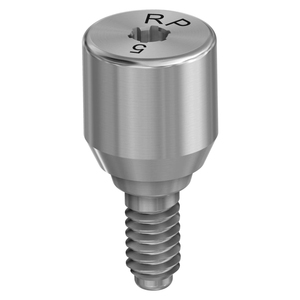
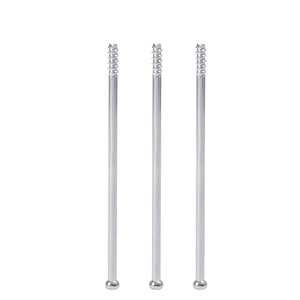
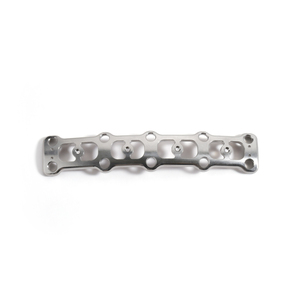
In global medical device procurement, particularly within orthopedic trauma, spinal fusion, and craniomaxillofacial (CMF) reconstruction, the Certificate of Analysis (CoA) is far more than routine shipping paperwork. It is the legally binding, empirical bridge connecting raw metallurgical science to surgical patient safety. An authentic CoA verifies that a manufactured lot of titanium bone plates, pedicle screws, or PEEK cages strictly conforms to international biomedical benchmarks such as ASTM F136 (Ti-6Al-4V ELI), ASTM F67 (Commercially Pure Titanium), and ASTM F2026 (Implant-grade PEEK).
Information Gain Insight: Procurement executives who evaluate orthopedic implant factories solely based on unit price often face massive regulatory blockades during EU MDR (2017/745) or US FDA 510(k) audits. Leading Tier-1 factories establish direct material heat-lot tracking, validating chemical stoichiometry, tensile strain limits, grain size uniformity, and fatigue endurance limits right at the manufacturing source.
When reviewing top contract manufacturers and OEM/ODM implant factories, procurement teams must audit whether the factory's CoA includes the following mandatory chemical, mechanical, and surface properties:
- Chemical Spectrometry Analysis: Quantitative limits on interstitial elements (Hydrogen ≤ 0.012%, Oxygen ≤ 0.13%, Nitrogen ≤ 0.05%, Iron ≤ 0.25%, Carbon ≤ 0.08%). In Ti-6Al-4V ELI (Extra Low Interstitial), controlling oxygen content is critical to prevent premature hydrogen embrittlement and catastrophic stress-fractures under fatigue loading.
- Mechanical Yield & Tensile Verification: Empirical validation of Ultimate Tensile Strength (≥ 860 MPa), 0.2% Offset Yield Strength (≥ 795 MPa), and Elongation percentage (≥ 10%), conducted in compliance with ASTM E8/E8M testing standards.
- Microstructural Metallography: Alpha-beta phase distribution verification, ensuring grain size meets ASTM E112 standards without continuous alpha-case boundaries that impair cyclic loading lifespan.
- Anodic Oxidation & Passivation Verification: Surface passivation reporting per ASTM F86, confirming electrochemical Type II anodization for titanium biocompatibility and color-coded surgical identification.
Key Certificate of Analysis Parameters Across Top Factory Tiers
Compare how standard OEM factories differ from elite ISO 13485 certified orthopedic implant manufacturers in CoA reporting depth and quality verification.
| Quality Audit Parameter | Standard Commercial OEM Factory | Top-Tier Medical Device Factory (e.g. Orthovana) | Regulatory Impact (FDA / MDR) |
|---|---|---|---|
| Material Traceability | Batch-level mill certificate copy | Direct Melt-Heat Lot Traceability + XRF Spectrometry | Mandatory Class III Compliance |
| Chemical Limits (Ti-6Al-4V) | Standard ASTM F136 chemical bounds | Strict ELI Grade (O2 < 0.13%, H2 < 0.009%) Verified | Mandatory Prevents In-Vivo Fatigue Failure |
| Dimensional Verification | Manual Caliper / Sampling QC | 100% Optical CMM & Multi-Axis Laser Scanning | Critical Screw-to-Plate Thread Lock Fit |
| Cleanroom Packaging | Non-classified clean areas | ISO Class 7 / Class 8 Bioburden-Controlled Cleanroom | Mandatory Terminal Sterilization Ready |
| Biocompatibility Docs | Generic ISO 10993 reference | Lot-Specific Cytotoxicity, Pyrogenicity & Endotoxin Reports | Mandatory CE / Tender Submission |
Top 10 Pillars of Orthopedic Implant CoA Factory Selection
1. Medical-Grade Titanium & PEEK Material Assurance
Leading implant manufacturers maintain exclusive supply agreements with certified raw material melters. Every bar stock of Ti-6Al-4V ELI (ASTM F136), Commercially Pure Titanium (ASTM F67), and PEEK Optima (ASTM F2026) undergoes incoming verification to guarantee biocompatibility, MRI conditional safety, and high fatigue endurance under physiological stress.
2. Multi-Axis Swiss CNC Machining
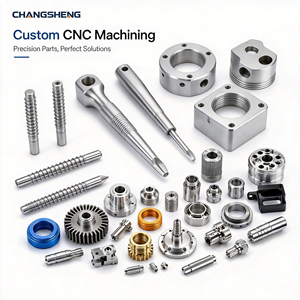
High-precision 9-axis Citizen and Star Swiss CNC lathe centers execute complex anatomical contours, variable-angle locking threads, and cannulated drill channels with tolerances strictly controlled within ±0.003mm.
3. Anodic Oxidation & Color Coding
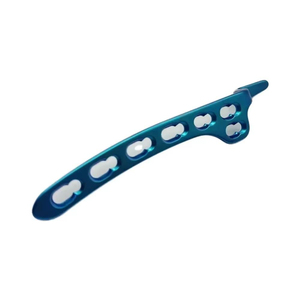
Type II Electrochemical Anodization enhances titanium corrosion resistance while applying surgical color coding (Gold, Blue, Magenta, Green) for quick intra-operative implant sizing and instrument matching.
4. 100% Optical CMM Inspection
Automated non-contact video measurement systems verify pitch diameter, plate thickness curvature, screw head recess depth, and chamfer profiles to eliminate human visual inspection error.
5. ISO 13485 Certified QMS
Comprehensive Quality Management Systems audit raw material receipt, in-process SPC monitoring, final washing, and cleanroom packaging under international medical standards.
Why International Health Systems Partner with Orthovana Medical
Orthovana Medical Co., Ltd stands at the forefront of precision orthopedic contract manufacturing and custom OEM production. Specializing in trauma locking plates, cannulated compression screws, spinal pedicle screw systems, PEEK interbody fusion cages, and craniomaxillofacial (CMF) reconstruction systems, Orthovana operates as a single-source OEM partner for hospital tenders and international healthcare brand owners.
Complete Surgery-Ready Configurations
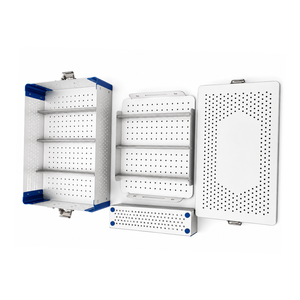
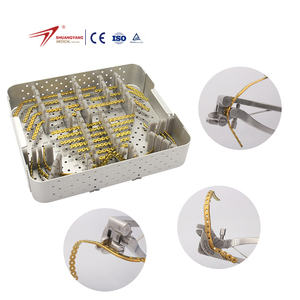
Orthovana does not merely deliver standalone implants. Each plating, nailing, and spinal system is paired with fully calibrated drill bits, depth gauges, bending irons, screwdrivers, and ergonomic aluminum sterilization storage trays (e.g. AI-DHS sterilization series). Hospitals receive plug-and-play kits optimized for immediate operating room deployment.
Regulatory Dossiers for Rapid Registration
To accelerate distributor market entry, Orthovana supplies fully formatted technical documentation packages, including certified CoA sheets, raw material melt reports, ISO 10993 biocompatibility testing, validated IFU leaflets, and sterilization validation data required for local MOH tenders and CE/FDA submissions.
Future Sourcing & Industry Development Trends in Orthopedic Manufacturing
1. Transition to Smart Digital CoAs and Blockchain Lot-Traceability
Paper-based Certificate of Analysis documents are rapidly being replaced by encrypted, QR-code-accessible digital CoAs tied directly to blockchain ledger systems. Procurement directors can instantly scan an implant barcode in surgical inventory to review the exact raw material melt heat, CNC machine calibration log, passivation batch record, and gamma/E-beam sterilization clearance.
2. Rise of Hybrid Additive-Subtractive Titanium Manufacturing
The boundary between traditional CNC milling and 3D printing (Selective Laser Melting - SLM) is disappearing. Future orthopedic implant procurement will favor factories that integrate porous trabecular titanium structures for rapid osseointegration with ultra-precise CNC threads for mechanical stability. CoA documents will expand to certify powder mesh size distributions, laser energy density, and residual un-melted powder clearance.
3. Carbon-Reinforced PEEK and Bio-Absorbable Composite Innovations
While Ti-6Al-4V remains the dominant trauma standard, spinal and sports medicine applications are heavily trending toward carbon-fiber-reinforced PEEK (CFR-PEEK) and bio-absorbable magnesium alloys. These advanced composites match the elastic modulus of human cortical bone, reducing stress shielding while allowing artifact-free post-operative MRI/CT imaging.
4. Harmonized Global Quality Audits (MDR vs. FDA QSR)
With the full implementation of EU MDR 2017/745 and FDA’s harmonization with ISO 13485:2016, OEM factories are held to unprecedented post-market surveillance (PMS) and clinical evaluation standards. Suppliers capable of providing real-time quality metric dashboards and lot-level CoA archives will command a decisive competitive advantage in global healthcare tenders.
Frequently Asked Questions on Orthopedic Implant CoAs
Answers to common quality verification, material testing, and regulatory documentation questions submitted by global medical procurement teams.
What specific material information must be verified on an Orthopedic Implant CoA?
Why is the "Extra Low Interstitial" (ELI) designation in Ti-6Al-4V ELI crucial for implants?
Can Orthovana Medical supply complete surgical instrument sets alongside implants?
What documentation is provided to support product registration in target countries?
How does Orthovana support OEM and private-label contract manufacturing?
How are surface roughness (Ra) and cleaning verified prior to packaging?
Accelerate Your Orthopedic Supply Chain Today
Partner with an ISO 13485 certified manufacturer committed to 100% Certificate of Analysis material compliance, precision CNC craftsmanship, and dependable global delivery.