Featured NMPA Registered Orthopedic Implants & Systems
Precision-engineered medical implants certified under Class III NMPA regulatory standards. Designed for high fatigue resistance, optimal osseointegration, and surgical repeatability.
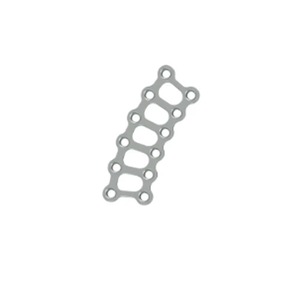
Wholesale Export Quality Surgical Implant & Trauma System
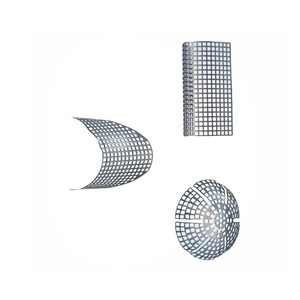
Competitive Titanium Alloy Surgical MESH Orthopedic System
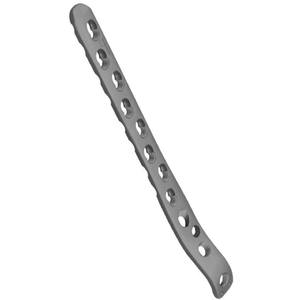
Titanium Limited Compression Locking Fracture Fixation Plate
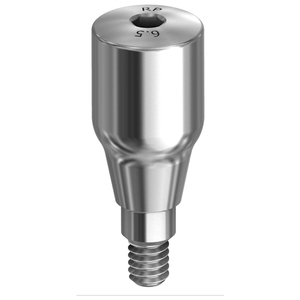
Straight & Angled Prosthetic Abutment Titanium Implant System
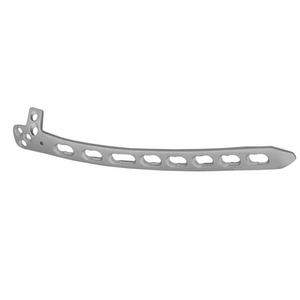
Premium Stainless Steel & Titanium Trauma Fixation Portfolio
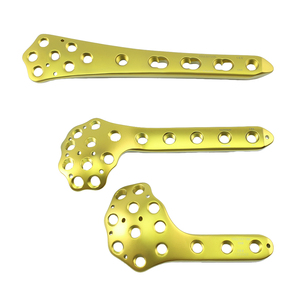
Distal Lateral Femur Minimally Invasive Locking Plate System
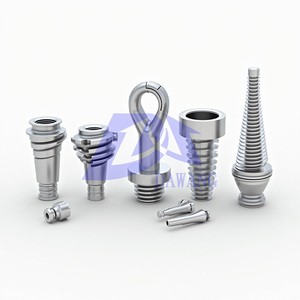
High Precision Machined Implants for Knee, Hip & Spine Surgery
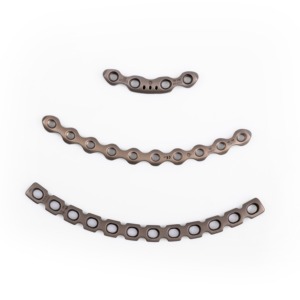
Modern Lightweight Stainless Steel Orthopedic Trauma Plate
Navigating NMPA Registration & Global Export Standards
Understanding the regulatory rigor, material compliance, and precision manufacturing requirements for top-tier Chinese orthopedic suppliers.
The global demand for high-performance orthopedic implants has undergone a structural transformation. Medical device procurement teams, regional distributors, and hospital networks are increasingly evaluating top-tier Chinese manufacturers that hold NMPA (National Medical Products Administration) Class III registrations. Class III designation represents the highest regulatory threshold in China, reserved for implantable devices that support or sustain human life or present potential risks to the human body.
For international buyers, sourcing from an NMPA Class III registered supplier offers exceptional risk mitigation. The approval pathway demands extensive clinical evaluation reports (CER), rigorous mechanical testing under international standards (such as ASTM F136 for medical-grade titanium alloy Ti-6Al-4V ELI and ASTM F2026 for implant-grade PEEK), and stringent cleanroom particle concentration controls during final assembly.
Critical Regulatory Metrics for NMPA-Registered Implants
When sourcing trauma plates, spinal pedicle screw constructs, intramedullary nails, or craniomaxillofacial (CMF) systems from leading exporters, procurement officers must verify several fundamental technical criteria:
- Biocompatibility & Cytotoxicity Validation: Compliance with ISO 10993 series testing, guaranteeing zero toxic leachables, non-pyrogenic surface chemistry, and optimal cell adhesion for accelerated osseointegration.
- Dynamic Fatigue Limits & Load Bearing Capacity: Implants undergo multi-million cycle axial compression, bending, and torsional testing under ASTM F1717 (spinal constructs), ASTM F543 (bone screws), and ISO 7206 (hip prosthetics) to prevent catastrophic fatigue failure in vivo.
- Sub-Micron Machining Tolerances: Swiss-type multi-axis CNC turning and milling ensures locking thread engagement between bone plates and locking screws maintains precise angular stability without cold-welding or thread stripping during intra-operative insertion.
- Complete Traceability & Material Origin: End-to-end documentation mapping every manufactured batch back to its original titanium ingot heat number, complete with Mill Test Certificates (MTC) and spectral analysis.
Why Top Global Distributors Partner with Certified Exporters
Key competitive differentiators that separate world-class NMPA registered manufacturers from standard suppliers.
Medical-Grade Titanium & PEEK Material Engineering
Implants are manufactured strictly using certified Ti-6Al-4V ELI (ASTM F136), Commercially Pure Titanium (ASTM F67 Grade 4), and PEEK-OPTIMA (ASTM F2026). This delivers superior biocompatibility, low elastic modulus matching natural bone, and high fatigue endurance limits.
5-Axis CNC Ultra-Precision Machining
Utilizing high-end Swiss-type multi-axis CNC machines and automated optical measurement systems. Micro-dimensional tolerances are maintained within ±0.005mm, guaranteeing consistent locking mechanisms and anatomical contours.
ISO 13485 & Cleanroom Sterilization
Integrated quality control infrastructure operating under ISO 13485:2016 management standards. Final cleaning, inner pouch sealing, and double-blister packaging take place in certified ISO Class 7 cleanroom environments.
Turnkey Regulatory Dossier Support
Export partners receive comprehensive technical registration files, including CE MDR technical documentation, STED regulatory dossiers, IFUs, labeling artwork, and stability trial reports for rapid local MOH approvals.
Complete Surgery-Ready Instrument Kits
Every anatomical system is supplied alongside matching ergonomic surgical instruments, color-coded drill bits, torque-limiting drivers, and quick-coupling handles enclosed within autoclavable aluminum sterilization trays.
Global OEM & Private Label OEM Solutions
Extensive experience supplying customized laser marking, private label packaging, anatomical plate redesigns, and custom screw pitch developments for international brand owners operating in over 60 countries.
Future Procurement Trends in Global Orthopedic Implants
Analyzing market forces, technical migrations, and purchasing shifts shaping hospital supply chains through 2030.
The global orthopedic market is undergoing rapid evolution driven by aging demographics, expanding access to healthcare in emerging economies, and persistent cost pressures on public hospital budgets. As a result, procurement strategies are shifting away from traditional high-margin Western brands toward verified, direct-from-manufacturer NMPA suppliers that offer equivalent biomechanical efficacy at competitive price points.
1. Transition Toward Direct OEM & Contract Manufacturing Partnerships
Distributors and hospital groups are actively cutting out intermediary trading agents to establish direct relationships with certified manufacturing facilities. Direct supply contracts lower landed unit costs by 35% to 50%, enabling distributors to win aggressive national healthcare tenders while maintaining healthy gross margins.
2. Rapid Adoption of 3D-Printed Porous Titanium & Additive Manufacturing
Traditional machined solid surfaces are increasingly being augmented by additive manufacturing (Electron Beam Melting - EBM and Selective Laser Melting - SLM). Porous trabecular structure implants replicate human cancellous bone architecture (porosity ranging from 60% to 80%), encouraging rapid cellular ingrowth, micro-vascularization, and superior secondary fixations in joint reconstruction and interbody fusion cages.
3. Demand for Variable Angle Locking Compression Systems (VA-LCP)
Fixed-angle locking technology is steadily yielding market share to Variable Angle Locking Systems. Surgeons require intra-operative flexibility to direct bone screws at up to 15 degrees off-axis in complex periarticular or osteoporotic fracture configurations. Leading NMPA exporters have patented polyaxial thread mechanisms that accommodate varying screw trajectories without compromising structural rigidity.
4. Convergence of NMPA, CE MDR, and US FDA Regulatory Documentation
The harmonization of technical documentation under the International Medical Device Regulators Forum (IMDRF) means top Chinese exporters build unified Technical Files. Sourcing from suppliers whose quality systems seamlessly align NMPA clinical trial metrics with EU MDR (2017/745) requirements simplifies product expansion across South America, Southeast Asia, the Middle East, and Europe.
Technological & Manufacturing Development Trends
How advanced surface chemistry, material science, and automation are revolutionizing next-generation surgical implants.
Bioactive Hydroxyapatite (HA) & Anodization
Advanced surface functionalization via Plasma Sprayed Hydroxyapatite (HA) and Type II Electrochemical Anodization creates nanostructured titanium oxide layers. This reduces ion release, enhances friction coefficients, and accelerates peri-implant bone healing times.
Carbon-Fiber Reinforced PEEK (CFR-PEEK)
The introduction of continuous carbon fiber matrix reinforcement into PEEK constructs yields bending modulus values closely matching human cortical bone (~18 GPa). This eliminates stress-shielding while offering complete radiolucency during CT and MRI oncological follow-ups.
Sub-Micron Laser Marking & UDI Compliance
Implementation of high-speed picosecond fiber laser marking allows direct part marking of Unique Device Identification (UDI) matrix codes on micro-screws and thin-walled plates without introducing thermal micro-cracks or compromise corrosion resistance.
Frequently Asked Questions by Global Buyers
Addressing key technical, regulatory, and commercial queries for international medical implant sourcing.
What is the significance of NMPA Class III registration for international importers?
NMPA Class III registration confirms that an orthopedic implant has successfully passed China’s highest regulatory scrutiny, including comprehensive pre-clinical mechanical testing, clinical evaluation, ISO 10993 biocompatibility testing, and unannounced manufacturing plant audits. International buyers gain assurance that the manufacturer’s quality management system (QMS) meets world-class standards suitable for immediate registration transfer in their home countries.
Which raw material grades are utilized in your orthopedic implant manufacturing?
Plates and screws are manufactured using medical-grade Titanium Alloy (Ti-6Al-4V ELI) complying with ASTM F136 / ISO 5832-3 standards, as well as Commercially Pure Titanium (CP-Ti Grade 4) per ASTM F67. Spinal interbody cages are machined from implant-grade PEEK (PEEK-OPTIMA LT1) per ASTM F2026, equipped with radiopaque tantalum markers (ASTM F560) for intra-operative radiographic visualization.
Can distributors request complete regulatory documentation for local product registration?
Yes. Authorized distributors receive full technical support packages including ISO 13485 certificates, Certificate of Free Sale (CFS), Mill Test Reports (MTR), Risk Management Files (ISO 14971), Sterilization Validation Reports (ISO 11137), Instructions for Use (IFU) in target languages, and high-resolution product artwork for local Ministry of Health registration.
Are implants delivered in sterile or non-sterile packaging configurations?
Suppliers offer both configurations based on distributor requirements. Implants can be supplied non-sterile for hospital tray sterilization or sterile-packaged in cleanroom double-blister Tyvek pouches validated for a 5-year shelf life under accelerated aging stability protocols.
What are the typical lead times for custom OEM/ODM brand production orders?
Standard catalog items maintain a stock buffer with dispatch within 7–14 working days. Custom OEM/ODM projects involving custom plate geometry, specialized anodization color schemes, or private-label laser marking typically follow a 30 to 45-day production cycle following sample protocol approval.
Do implant systems come with matched surgical instrument sets?
Absolutely. All trauma plating systems, spinal constructs, and CMF lines are matched with complete, dedicated surgical instrument sets. Instruments are crafted from surgical-grade stainless steel (Custom 455 / 17-4PH) and silicone handles, packaged inside custom-molded anodized aluminum sterilization trays.
Partner with an Established NMPA Registered Exporter
Expand your medical supply portfolio with certified trauma, spine, and CMF implant systems. Request our complete 2025 product catalogues, technical dossiers, and OEM price lists today.