Global Sourcing Benchmark: Navigating FDA-Registered Orthopedic Implant Manufacturing
The global market for orthopedic implants, encompassing internal trauma fixation systems, spinal pedicle instrumentation, maxillofacial plating, and veterinary orthopedic solutions, is undergoing a seismic regulatory and structural shift. Hospital procurement directors, medical device distributors, and private-label brand owners must strictly evaluate OEM/ODM manufacturing facilities not merely on direct unit cost, but on rigorous quality management system (QMS) validation, raw material metallurgy, precise thread engineering, and global regulatory registration dossier readiness.
In accordance with the Google Search Quality Rater Guidelines (E-E-A-T) and clinical risk standards for Class II and Class III medical devices, this benchmarking whitepaper delivers technical insight into evaluating the top FDA-registered orthopedic implant factories, understanding advanced manufacturing processes, forecasting procurement trends, and mitigating international supply chain risks.
Comparative Technical Benchmarking Matrix: Leading Global Manufacturing Standards
When selecting a contract manufacturing partner or direct exporter for bone plates, cannulated compression screws, PEEK spinal cages, or veterinary trauma sets, technical teams must audit facilities against standardized engineering metrics:
| Evaluation Criterion | FDA Registered / ISO 13485 Benchmark Factory | Standard Non-Certified Exporter | Surgical & Clinical Impact |
|---|---|---|---|
| Raw Material Origin | ASTM F136 Ti-6Al-4V ELI / ASTM F67 Grade 1-4 / PEEK OPTIMA | Commercial grade titanium alloys without mill certs | Prevents fatigue failure, micro-corrosion, and tissue inflammation. |
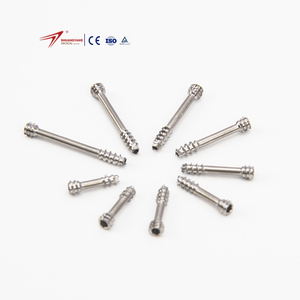
| Machining Precision | 5-Axis Swiss CNC Lathe (±0.005mm tolerance control) | 3-Axis standard turning (±0.02mm tolerance) | Ensures perfect mating between locking screw threads and plate holes. |
| Quality System | FDA 21 CFR Part 820 / ISO 13485:2016 / MDSAP Certified | Basic ISO 9001 general industrial quality management | Guarantees batch-to-batch consistency and fast regulatory clearance. |
| Surface Finishing | Type II Anodization, Passivation, Automated Electropolishing | Manual mechanical polishing only | Removes surface impurities and improves biocompatibility & wear rate. |
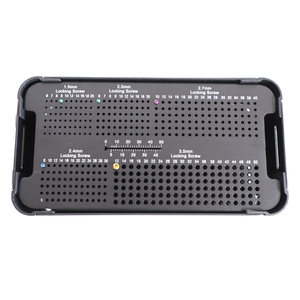
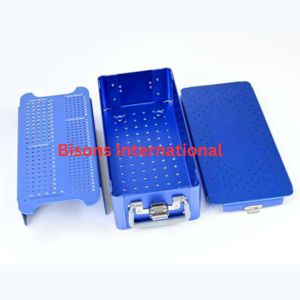
| Sterilization & Trays | Validated PPSU / Anodized Aluminum Trays with ISO 11607 packaging | Generic non-validated stainless boxes | Ensures autoclave durability and OR tray organization. |
Future Procurement Trends in the Orthopedic Implant Sourcing Ecosystem
As health systems face tight operating budgets and elevated supply chain complexity, international procurement strategies are evolving rapidly across four primary vectors:
1. Shift Towards Direct Factory OEM Partnerships & Private Labeling
Global medical device distributors are increasingly bypassing intermediary trading houses in favor of direct contracts with FDA-registered manufacturing facilities. Direct engagement enables custom laser-etching, proprietary packaging, private-label branding, and joint development of specialized implant lines (such as variable angle locking compression systems). Direct factory alignment reduces supply chain friction by 25% to 40% while securing direct access to engineering design files (DHF) and Device Master Files (DMF).
2. Demand for Complete "Surgery-Ready" System Kits
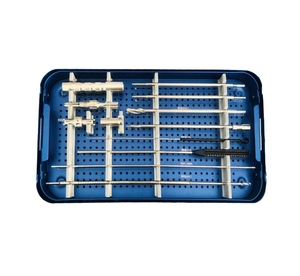
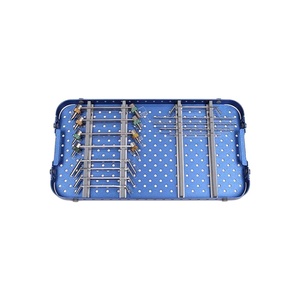
Hospitals no longer purchase standalone implants without dedicated instrumentation. Sourcing requirements now mandate fully integrated systems where anatomical plates, self-drilling/self-tapping screws, guide sleeves, depth gauges, drill bits, and torque-limiting screwdrivers are packaged within a custom-contoured sterilization tray. This eliminates intra-operative compatibility failures between third-party instruments and implant screw heads.
3. Rapid Acceleration of Veterinary Orthopedic Sourcing
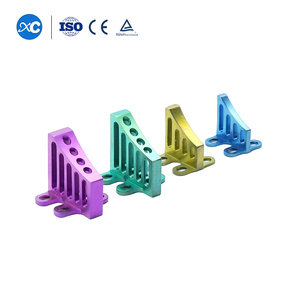
Veterinary surgical medicine has experienced an unprecedented surge in sophistication. Specialized veterinary trauma products—such as 1.5mm/2.0mm/2.4mm/2.7mm/3.5mm mini-locking plates, Tibial Tuberosity Advancement (TTA) systems, and Tibial Plateau Leveling Osteotomy (TPLO) plates—are seeing annual growth exceeding 14%. Exporters offering dual human-grade titanium precision modified for veterinary anatomies are capturing substantial global market share.
4. Rigorous Traceability via Unique Device Identification (UDI)
Regulatory authorities worldwide—including the US FDA (GUDID database) and European Union (EUDAMED)—mandate 100% device traceability down to the specific titanium ingot heat number. Modern implant factories integrate laser UDI marking directly onto screw heads and plate surfaces, enabling automated barcode scanning during inventory management and surgical tracking.
Future Industry Development Trends: Technology & Material Innovations
Looking toward the next decade, the orthopedic manufacturing industry is being reshaped by major scientific and technological innovations:
1. 3D-Printed Porous Titanium & Trabecular Structures
Selective Laser Melting (SLM) and Electron Beam Melting (EBM) additive manufacturing technologies allow factories to fabricate implants with interconnected porous structures mimicking natural cancellous bone. These 3D-printed titanium implants demonstrate a low elastic modulus (reducing stress shielding) while promoting accelerated osseointegration across spinal interbody fusion devices, hip reconstruction cups, and custom oncological bone defect fills.
2. Patient-Specific Implants (PSI) & CMF Reconstruction
Advancements in high-resolution Computed Tomography (CT) imaging and CAD/CAM modeling enable the rapid fabrication of Patient-Specific Implants (PSI). Particularly in Craniomaxillofacial (CMF) and complex pelvic reconstruction, custom-contoured titanium plates fit the exact anatomical defect of the patient, drastically cutting surgical time and reducing intra-operative plate bending fatigue.
3. Bioabsorbable & Smart Hybrid Implants
Research into bioabsorbable magnesium alloys and bio-composite polymers aims to create temporary osteosynthesis implants that gradually load-share with healing bone before fully degrading in vivo. Concurrently, micro-sensor integration into smart spinal cages is emerging, providing real-time telemetry regarding fusion strain, temperature, and localized infection markers directly to surgical monitoring teams.
4. Global Regulatory Harmonization & Escalated Compliance Standards
With the transition from EU MDD to EU MDR (2017/745) and elevated post-market surveillance (PMS) demands, compliance has become the ultimate competitive moat. FDA-registered factories maintaining active Medical Device Single Audit Program (MDSAP) certification can seamlessly supply multi-regional markets including the USA, Canada, Australia, Japan, and Brazil under unified quality audits.