Featured FDA-Standard Implants & Instrument Kits
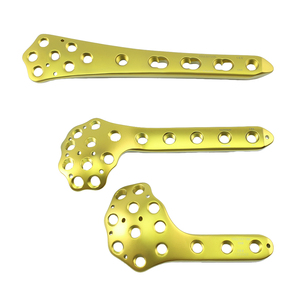
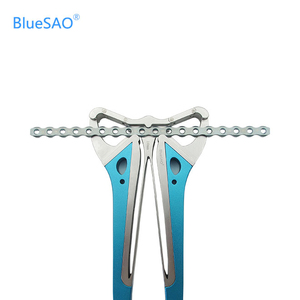
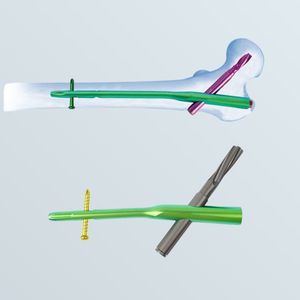
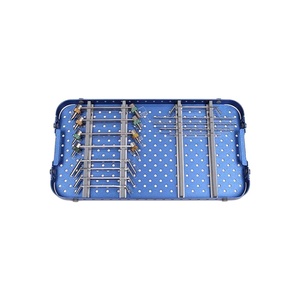
Explore our clinical-grade titanium locking plates, cannulated compression screws, intramedullary nails, and sterilized orthopedic instrument sets.
Executive Summary: Navigating the Global Orthopedic Implant Ecosystem
The global orthopedic implants market is currently experiencing unprecedented transformation, driven by an aging global demographic, a surging incidence of musculoskeletal trauma, and rapid advancements in additive manufacturing (3D printing) and biocompatible materials. According to clinical supply chain analyses, medical device buyers, hospital procurement committees, and international distributors face strict regulatory scrutiny when evaluating orthopedic hardware. The critical benchmark for market access in North America, Latin America, Europe, and Asia-Pacific relies heavily on FDA 510(k) clearance, FDA Premarket Approval (PMA), and ISO 13485:2016 Medical Devices Quality Management Systems compliance.
This comprehensive industry report delves deep into the Top 10 FDA approved orthopedic implants manufacturers and contract manufacturing factories. Beyond ranking market share leaders, this paper provides medical device engineers, hospital buyers, and OEM brand directors with actionable technical insights regarding titanium metallurgy (Ti-6Al-4V ELI ASTM F136), implant-grade PEEK polymer structures, biomechanical fatigue standards (ASTM F382, ASTM F1264), and contract OEM manufacturing capabilities.
Analysis of the Top 10 FDA Approved Orthopedic Implants Manufacturers
When selecting a manufacturing vendor or OEM factory, understanding the structural strengths, product focus, and regulatory footprints of the leading global manufacturers is critical. Below is an in-depth breakdown of the top industry players recognized for their FDA clearances and biomechanical engineering excellence.
Zimmer Biomet Holdings, Inc.
Headquartered in Warsaw, Indiana (USA), Zimmer Biomet is an established titan in total joint reconstruction (hips, knees, shoulders). They maintain extensive FDA PMA and 510(k) portfolio clearances, pioneering Trabecular Metal™ material technology which features up to 80% porosity for natural osseointegration.
Stryker Corporation
Stryker leads the global trauma, joint replacement, and craniomaxillofacial (CMF) sectors. Renowned for their proprietary Tritanium® 3D-printed porous titanium technology, Stryker’s FDA-cleared implants reduce stress shielding and optimize mechanical stability in complex fracture fixations.
DePuy Synthes (Johnson & Johnson)
DePuy Synthes holds one of the largest anatomical implant portfolios globally. Their trauma locking compression plate (LCP) systems and spinal pedicle screw lines set international standards for fracture stability under dynamic physiological loading.
Smith & Nephew plc
Based in the UK with major FDA-registered manufacturing operations in the US, Smith & Nephew specializes in advanced sports medicine, extremity reconstruction, and trauma. Their proprietary OXINIUM◊ Oxidized Zirconium alloy provides exceptional wear resistance without nickel toxicity.
Medtronic Orthopedics & Spine
Medtronic's spine division is an industry leader in complex spinal fusion cages, minimally invasive pedicle screws, and cervical plating systems. Utilizing PEEK-OPTIMA™ polymers and titanium alloys, Medtronic holds extensive FDA 510(k) clearances for interbody spinal devices.
Globus Medical, Inc.
Globus Medical rapidly expanded its FDA-cleared surgical footprint following its merger with NuVasive. Globus focuses heavily on lateral lumbar interbody fusion (LLIF), expandable fusion cages, and computer-assisted robotic navigation systems for spinal surgery.
Orthofix Medical Inc.
Orthofix provides specialized FDA-approved solutions across spine, extremity reconstruction, and pediatric trauma. Their complex external fixation frames and internal locking intramedullary nails serve high-complexity fracture cases globally.
Wright Medical (Tornier / Stryker)
Now integrated under Stryker, Wright Medical achieved widespread recognition for FDA-approved upper extremity (shoulder, elbow) and foot/ankle fixation systems, utilizing patient-specific pre-operative planning platforms.
LimaCorporate (Enovis)
LimaCorporate revolutionized metal additive manufacturing for orthopedic implants. Their FDA-cleared 3D-printed titanium implants feature lattice geometries engineered to match the elastic modulus of human cancellous bone.
Orthovana Medical & Precision Contract OEM Facilities
Leading specialized Contract Manufacturing Organizations (CMOs) and factories like Orthovana Medical Co., Ltd. represent the foundational engine of global orthopedic supply chains. Operating ISO 13485 certified facilities equipped with Swiss 5-axis CNC machining, these factories produce FDA 510(k)-equivalent titanium trauma plates, cannulated compression screws, PEEK cages, and custom surgical instrument sets for global distributors and OEM partners.
FDA Regulatory Pathways & Material Engineering Standards
For orthopedic implants to gain regulatory entry into North America and international markets that recognize U.S. FDA credentials, hardware must undergo rigorous evaluation under specific device classifications:
FDA 510(k) Premarket Notification
Most Class II orthopedic implants (locking plates, intramedullary nails, cannulated screws, PEEK cages) utilize the 510(k) pathway by demonstrating Substantial Equivalence (SE) to a legally marketed predicate device, backed by static and dynamic mechanical testing.
Medical Titanium Metallurgy
High-grade implants rely strictly on Ti-6Al-4V ELI (Extra Low Interstitial, ASTM F136) and Commercially Pure Titanium (CP Ti Grade 2/4, ASTM F67). These alloys guarantee superior fatigue strength, high biocompatibility, non-magnetic MRI compliance, and micro-fracture resistance.
Biomechanics Testing Compliance
Before clinical release, implants must pass standardized mechanical protocols: ASTM F382 (Metallic Bone Plates Bending Fatigue), ASTM F543 (Metallic Medical Bone Screws), and ASTM F1264 (Intramedullary Fixation Devices).
Future B2B Procurement Trends in Orthopedic Manufacturing (2025–2030)
As healthcare systems undergo cost-containment programs and demand higher supply chain resilience, global procurement directors are shifting their sourcing strategies. Key trends dominating the future of orthopedic implant manufacturing include:
- Supply Chain Diversification & Dual-Sourcing: Hospitals and major medical device distributors are reducing dependency on single-region production by partnering with ISO 13485-certified contract factories in Asia and Europe that offer rapid scale-up capability.
- Direct-to-Surgery Complete Kits: Procurement teams no longer purchase loose implants alone. Demand has shifted heavily toward pre-sterilized, color-coded implant boxes packaged alongside complete single-use or reusable surgical instruments (drills, taps, depth gauges, bending irons).
- Expansion of Veterinary Orthopedics: Veterinary trauma fixation (including 1.5mm/2.0mm/2.7mm/3.5mm locking plate systems for canine and feline surgeries) represents the fastest-growing parallel sector for implant manufacturers.
- Value-Based OEM Branding: Regional distributors in Latin America, the Middle East, and Southeast Asia are actively establishing their own private-label orthopedic lines via factory OEM partnerships to capture market share from high-cost multinational conglomerates.
Technological Innovations Shaping Modern Implants
The convergence of advanced materials science and automated precision engineering has unlocked next-generation implant functionalities:
Additive Porous Coatings
Direct Metal Laser Sintering (DMLS) creates engineered surface roughness on titanium plates and spinal cages, facilitating bone cell attachment (osteoblast migration) without requiring plasma-sprayed coatings that carry delamination risks.
Anodized Color-Coding & Laser UDI
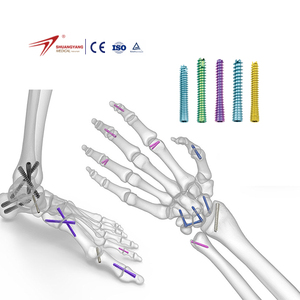
Modern production facilities utilize Type II micro-anodization for distinct color recognition during surgery (e.g., gold for 3.5mm screws, blue for 2.7mm screws) coupled with high-resolution fiber laser marking for Unique Device Identification (UDI) tracking.
PEEK Interbody Cages with Radiographic Markers
Polyetheretherketone (PEEK) cages offer an elastic modulus (3.6 GPa) closely matching cortical bone. Modern cages embed Tantalum or Titanium radiographic pin markers, allowing clear X-ray visualization during interbody fusion procedures.
Factory Advantage: Why Leading Distributors Partner with Orthovana Medical
At Orthovana Medical Co., Ltd., we bridge high-level biomedical engineering with cost-effective, scalable OEM contract manufacturing. As a specialized manufacturer of trauma plates, bone screws, spinal solutions, and maxillofacial systems, our manufacturing platform is built on four fundamental pillars:
1. Medical Grade Material Sourcing
We source raw titanium bars exclusively from certified mills with complete heat/batch traceability. Material test reports (MTRs) according to ASTM F136 (Ti-6Al-4V ELI) and ASTM F67 are supplied with every production lot.
2. Ultra-Precision CNC Machining
Utilizing 5-axis Swiss-type turning centers and high-speed CNC milling, we achieve tolerances within ±0.005mm for locking thread pitches, ensuring zero thread cross-locking during delicate surgical fixation.
3. Complete Surgery-Ready Systems
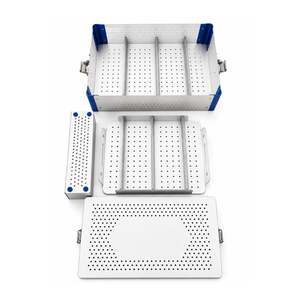
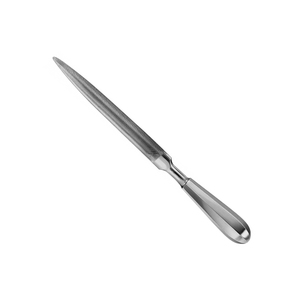
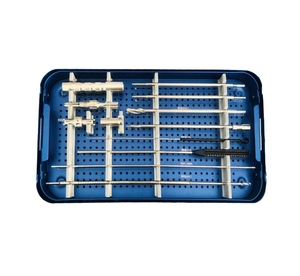
Every implant family is accompanied by a custom-engineered aluminum sterilization tray and matching surgical instrument sets (taps, drill bits, hex screwdrivers, sleeve guides) designed for intuitive operating room workflows.
4. Comprehensive Regulatory Dossiers
We empower our international partners with product registration support, including ISO 13485 certification packages, technical dossiers, Instructions for Use (IFU), and custom private-label laser marking.
Frequently Asked Questions (Procurement & Technical FAQ)
Answers to common questions from hospital buyers, biomedical engineers, and medical device distributors regarding orthopedic implant procurement.
What materials are Orthovana Medical implants made from?
Which documents can distributors receive for product registration?
Do you supply complete instrument sets with the implants?
Do you support OEM, ODM, or private-label cooperation?
What is the lead time for standard vs customized orthopedic orders?
Partner with a Certified Orthopedic Implants Manufacturer
Expand your product portfolio with high-precision, ISO 13485-certified trauma plates, spinal systems, and surgical tools. Contact our global sales engineering team today for technical catalogs and factory pricing.