Product Showcase
Featured Orthopedic & Surgical Systems
Discover our broad selection of precision-machined titanium trauma plates, intramedullary nails, spinal constructs, veterinary solutions, and diagnostic monitoring devices.
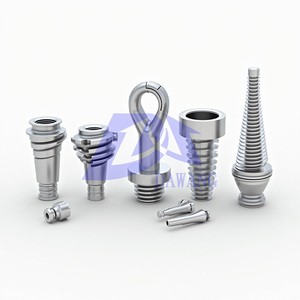
High Precision CNC Machined Orthopedic Implants For Knee Hip And Spine Surgery Applications Medical Parts
Get Catalog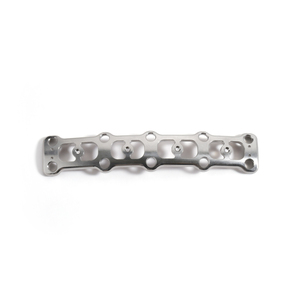
Orthopedic 3D CNC Titanium Alloy Stud for Bone Machining Micro CNC Machining Hospital Use Implantation Part Manufacture TC4
Get Catalog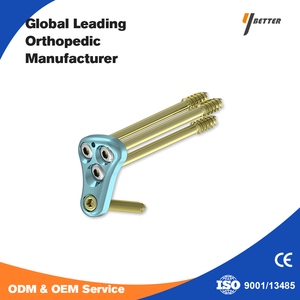
Ortho Implant Titanium Orthopedic Implants Multiaxial Compression Proximal Femur Locking Plate
Get Catalog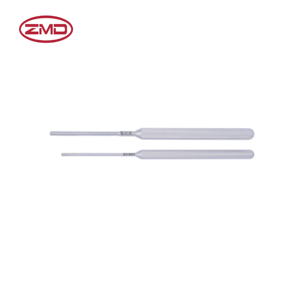
ZMD Medical Veterinary Pulley File-Precision Surgical Instrument for Animal Orthopedic Implant Adjustment
Get Catalog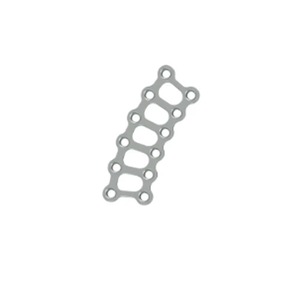
Wholesale Orthopedic Implants Export Quality Surgical Implant Manufacturer and Supplier
Get Catalog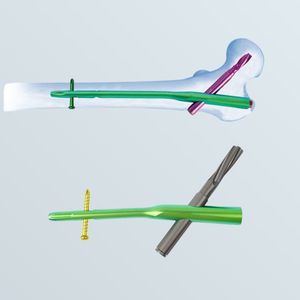
Premium Pfna Intramedullary Nail Wholesale Orthopedic Implant for Femur Intertrochanteric Bone Fracture
Get Catalog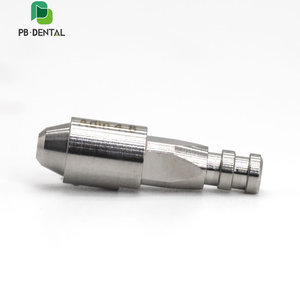
Multi 3D Analog Adin Compatible Implant Digital Library for Multi Unit Prosthetic Restoration and CAD Development
Get CatalogISO 13485
Certified Quality System
± 0.005mm
Micron CNC Tolerances
ASTM F136
Ti-6Al-4V ELI Implant Grade
100%
Full Batch Traceability
Executive Overview: The Strategic Imperative for Precision OEM/ODM Orthopedic Supply Chains
In modern orthopedic reconstruction, trauma care, and spinal fusion, the performance of internal fixation systems relies heavily on manufacturing accuracy, material purity, and anatomical alignment. As international hospital networks, regional distributors, and medical OEM brand owners face stricter regulatory shifts—such as the European Union Medical Device Regulation (EU MDR 2017/745) and updated US FDA 510(k) submission frameworks—sourcing high-tier implant hardware from a qualified OEM/ODM exporter has become a strategic priority.
As a specialized manufacturer, Orthovana Medical Co., Ltd operates at the intersection of metallurgical science, multi-axis CNC micro-machining, and clinical workflow optimization. Our enterprise infrastructure is built to support international dealers, medical equipment tenders, and private-label partners by providing consistent, audit-ready implant systems backed by comprehensive technical documentation (STED format), batch material certificates, and matching surgical instrumentation.
Whether navigating complex periarticular osteoporotic fractures using multiaxial locking compression plates or performing minimally invasive spinal stabilization with radiolucent PEEK interbody fusion cages, our contract manufacturing operations ensure every production lot achieves strict dimensional accuracy, fatigue resistance, and bio-compatibility.
Technical Competence
Materials Science & Precision Manufacturing Standards
Detailed engineering benchmarks for raw material selection, surface treatments, and 5-axis Swiss-type milling.
Medical Titanium & PEEK Alloys
Plates and bone screws are machined exclusively from implant-grade Ti-6Al-4V ELI (ASTM F136) and commercially pure Titanium (ASTM F67 Grade 2/4). Spinal cages use biocompatible PEEK OPTIMA with tantalum markers for superior radiolucency and cortical-bone elastic modulus matching.
5-Axis CNC Precision Machining
Utilizing high-speed Citizen and Tsugami Swiss-type 5-axis CNC turning-milling centers, we achieve sub-micron dimensional tolerances. This ensures perfect locking screw thread engagement, zero cross-threading, and contoured anatomical fit.
Surface Finishing & Anodization
Controlled electrochemical Type II and Type III anodization improves surface hardness, wear resistance, and fatigue strength while providing clear color coding for surgical inventory identification in theatre environments.
System Breakdown: Anatomical Fixation Portfolios for Global Dealers
To meet diverse clinical requirements across regional trauma centers and private surgical hospitals, our ODM/OEM development capabilities span eight core anatomical domains:
- Trauma Locking Compression Plates (LCP): Anatomically contoured mini-, small-, and large-fragment plates covering distal radius, proximal humerus, distal femur, proximal tibia, and clavicle. Equipped with variable-angle locking holes for flexible screw trajectory options.
- Intramedullary Nailing Systems: Advanced PFNA (Proximal Femoral Nailing Antirotation) constructs featuring helical blades for intertrochanteric fractures, alongside trochanteric and tibial nails with static and dynamic locking options.
- Spinal Reconstruction Systems: Polyaxial pedicle screws, titanium rods, anterior cervical plates, and TLIF/PLIF/ALIF PEEK interbody fusion cages designed for degenerative disk correction and spinal trauma stabilization.
- Maxillofacial & CMF Plating: Ultra-low profile 1.5mm, 2.0mm, and 2.4mm mini and micro plating systems for cranial-maxillofacial reconstruction, orbital rim repair, and mandibular fracture fixation.
- Veterinary Orthopedic Fixation: Specialized high-density TPLO plates, cut-to-length mini plates, and pulley files configured specifically for companion animal and equine surgical procedures.
Industry Horizon
Future Procurement & Technology Trends (2025–2030)
Strategic insights for medical device procurement directors and distributors planning multi-year inventory cycles.
1. Trabecular Titanium & Additive Manufacturing
Traditional solid metal implants are increasingly giving way to 3D-printed porous titanium structures. Direct Metal Laser Sintering (DMLS) allows the creation of biomimetic trabecular surfaces that match human cancellous bone porosity (60–80% open pore structure), accelerating cellular osteointegration and vascularization while lowering stress shielding.
Procurement Takeaway: Forward-thinking distributors must partner with OEM suppliers capable of blending subtractive CNC machining with 3D additive printing technologies.
2. Smart Diagnostic Implants & Osseointegration Monitoring
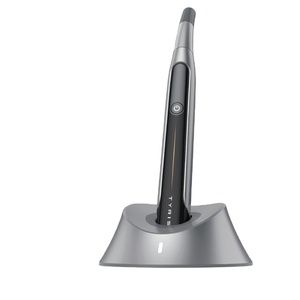
Intraoperative and postoperative verification of implant stability is evolving from visual assessment to quantitative measurement. Devices utilizing Resonance Frequency Analysis (RFA), such as stability monitors, provide non-invasive, objective Implant Stability Quotient (ISQ) values, enabling surgeons to make data-driven weight-bearing decisions.
Procurement Takeaway: Broadening your hardware catalog to include diagnostic monitors offers a strong point of differentiation in competitive hospital tenders.
3. Turnkey Regulatory Technical Dossiers & MDR Compliance
Regulatory hurdles are intensifying worldwide. Procurement teams are avoiding suppliers that offer simple hardware without supporting paperwork. Importers now require pre-validated sterilization parameters, biocompatibility reports (ISO 10993), and biomechanical testing datasets (ASTM F543 for pull-out strength, ASTM F382 for plate bending).
Procurement Takeaway: Securing OEM partners that provide turnkey technical files reduces market entry timelines by 60%.
4. Biodegradable & Bioresorbable Fixation Matrices
The market for pediatric trauma and specialized CMF surgery is shifting toward bio-absorbable polymers (PLGA/PLLA) and novel biodegradable magnesium-zinc alloys. These materials maintain sufficient mechanical stability during bone healing and gradually resorb, eliminating secondary surgery for implant removal.
Procurement Takeaway: Early adoption of bio-resorbable ODM lines establishes a competitive lead in pediatric and facial surgery tenders.
Enterprise Strengths
Why Global Dealers Choose Orthovana Medical
Integrated engineering, certified quality control, and flexible contract manufacturing options.
ISO 13485 Quality Infrastructure
Our manufacturing facility operates under strict ISO 13485:2016 quality management standards. Every production run undergoes 100% optical CMM measurement, surface roughness validation, and thread gauge checks.
Complete Instrument Set Matching
We deliver surgery-ready solutions. Every plate, screw, or spinal system is paired with ergonomically designed, color-coded instrument sets housed in customizable anodized sterilization containers.
Turnkey OEM Private Labeling
From high-precision fiber laser marking of customer logos and lot tracking codes to custom cleanroom pouch packaging and box design, we offer complete OEM private-label production services.
Buyer FAQ
Frequently Asked Procurement Questions
Clear responses to standard commercial, technical, and regulatory questions from international buyers.
What raw material certifications are supplied with OEM/ODM orders?
Every single lot shipped by Orthovana Medical includes complete Material Test Reports (MTR) from accredited testing laboratories. We certify chemical composition, tensile strength, yield strength, and elongation compliance according to ASTM F136 (Ti-6Al-4V ELI), ASTM F67 (Unalloyed Titanium), and ASTM F2026 (PEEK OPTIMA).
What is the minimum order quantity (MOQ) for custom ODM implant designs?
For standard catalog items, we maintain low MOQs to support initial market evaluation. For custom ODM projects requiring dedicated CNC tooling, 3D anatomical prototyping, or specialized anodization, MOQs are determined case-by-case based on production setup costs. Contact our engineering team for a project evaluation.
How do you ensure locking screw thread compatibility with bone plates?
We utilize double-lead precision thread designs and computerized multi-axis CNC milling to manufacture both plates and screws. Every lot undergoes strict plug-and-ring gauge testing, along with 3D optical profile verification, guaranteeing seamless intra-operative screw seating without jamming or stripping.
Can Orthovana provide complete technical documentation for local medical device registration?
Yes. We support our distribution partners by providing comprehensive regulatory submission dossiers structured in STED format. This includes ISO 13485 certificates, CE documentation, Instructions for Use (IFU), labeling files, cleaning and sterilization validation data, and biomechanical test reports.
Are implants supplied clean, non-sterile, or pre-sterilized?
We offer flexibility based on importer preferences. Implants can be shipped as non-sterile hardware packaged in cleanroom protective pouches for autoclave sterilization in hospitals, or fully pre-sterilized in double-peel pouches via validated Gamma rays or EO (Ethylene Oxide) gas sterilization.
How are OEM private-label branding and laser marking managed?
We employ cold fiber laser marking equipment capable of etching high-definition customer logos, catalog numbers, matrix barcodes, and batch lot numbers onto implant surfaces without altering corrosion resistance or biocompatibility.
Partner with a Trusted OEM/ODM Implant Exporter
Expand your medical brand's market reach with high-precision trauma, spinal, and maxillofacial implant systems engineered to international standards.
Get Catalog