Precision Orthopedic Implants & Surgical Tooling Portfolio
Engineered for global healthcare brands, distributors, and surgical institutions under strict ISO 13485 and ASTM quality protocols.
Navigating the Global OEM/ODM Orthopedic Implant Manufacturing Ecosystem
The modern orthopedic implant manufacturing sector operates at the convergence of advanced material science, multi-axis ultra-precision machining, and rigorous international regulatory compliance. As healthcare providers worldwide demand biomechanically optimized, anatomical internal fixation devices, global medical device brand owners, procurement consortia, and hospital networks increasingly rely on experienced contract manufacturers (OEM/ODM factories) to bridge the gap between initial conceptual design and mass market delivery.
Sourcing OEM/ODM orthopedic implants requires an exhaustive evaluation of a manufacturer's metallurgical integrity, manufacturing technology, cleanroom validation, quality management systems (QMS), and technical documentation packs. Standard commercial machining capabilities fall short of the stringent demands imposed by medical-grade titanium (ASTM F136 / ASTM F67), implantable PEEK (Polyetheretherketone), and surgical-grade stainless steels such as 17-4PH and 316L. Every implantable screw, locking plate, interbody spinal cage, and hand-held surgical instrument must perform under severe dynamic cyclic fatigue without compromising patient safety or bio-compatibility.
Our state-of-the-art manufacturing facilities integrate high-speed multi-axis 5-axis CNC machining centers, Swiss-type automatic lathes, investment silica sol precision casting, and automated anodization lines designed specifically for orthopedic trauma, spinal reconstruction, craniomaxillofacial (CMF), and veterinary applications.
Metallurgical & Mechanical Comparison of Key Orthopedic Biomaterials
| Biomaterial Standard | Composition / Grade | Tensile Strength (MPa) | Modulus of Elasticity (GPa) | Primary OEM/ODM Applications |
|---|---|---|---|---|
| ASTM F136 / ISO 5832-3 | Ti-6Al-4V ELI (Extra Low Interstitial) | ≥ 860 MPa | 110 GPa | Trauma Plates, Pedicle Screws, VA Radius Locking Plates |
| ASTM F67 / ISO 5832-2 | Commercially Pure Titanium (Grades 1-4) | 240 - 550 MPa | 105 GPa | Reconstruction Maxillofacial Plates, Cranial Meshes |
| ASTM F2026 | Implant-Grade PEEK Polymer | 90 - 100 MPa | 3.5 - 4.0 GPa (Close to cortical bone) | Interbody Fusion Cages (TLIF, PLIF, Cervical) |
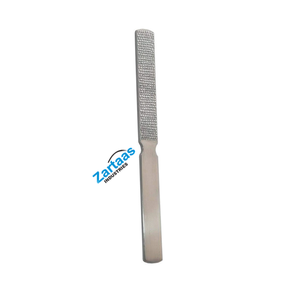
| ASTM F899 / 17-4PH | Precipitation Hardening Stainless Steel | ≥ 1000 MPa | 200 GPa | Precision Surgical Instrument Sets, Bone Raspatories |
Technical Breakdown of Recommended Orthopedic Implants & Tooling
An in-depth review of structural design, clinical utility, and manufacturing precision for key product categories.
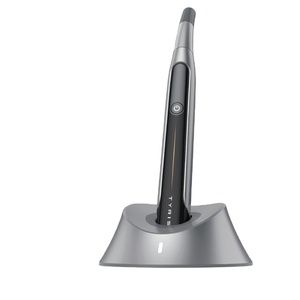
Tyris MD-100 Implant Stability Monitor
The Tyris MD-100 represents the cutting edge of intra-operative and post-operative osseointegration monitoring. Utilizing non-invasive resonance frequency analysis (RFA), the device provides surgeons with real-time quantitative ISQ (Implant Stability Quotient) data. Designed with a intuitive digital touch interface, it eliminates subjective tactile torque checks, mitigating early implant failure risks in complex dental and orthopedic weight-bearing reconstructive procedures.
OEM Sourcing Note: Available for private-label housing customization, firmware localized languages, and packaged OEM diagnostic instrument integration.
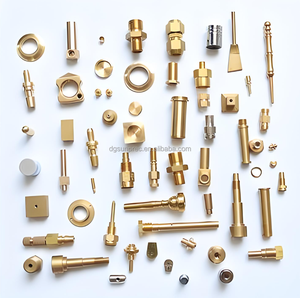
5-Axis CNC Titanium Precision Components
Complex orthopedic structural components, such as polyaxial pedicle screw heads, cross-connectors, and custom bone anchor housings, require simultaneous 5-axis micro-milling. Machined from solid ASTM F136 Ti-6Al-4V ELI bar stock, our 5-axis process ensures single-setup concentricity, eliminating accumulative tolerances. Thread profiles feature burr-free microscopic finishes, preventing mechanical galling during intra-operative insertion.
Manufacturing Capacity: Fleet of Swiss Tornos and Yamazaki Mazak multi-axis centers delivering tolerances down to ±0.005mm.
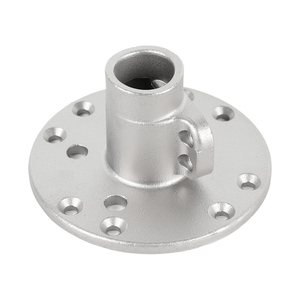
17-4PH Stainless Steel Silica Sol Casting
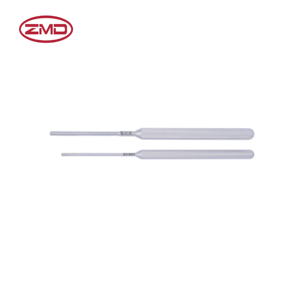
Surgical handles, retractor blades, and high-load bone clamps demand superior yield strength and corrosion resistance. Our silica sol investment casting process utilizing 17-4PH (H900/H1150 heat-treated condition) stainless steel delivers complex ergonomic geometries impossible via conventional milling. Post-casting vacuum heat treatment optimizes hardness up to 40-44 HRC without embrittlement, ensuring resistance to aggressive autoclaving cycles.
Quality Assurance: 100% radiographic X-ray inspection for internal porosity and dye penetrant crack testing.
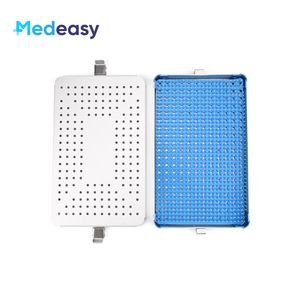
Autoclavable Sterilization Trays & Caddies
Modern hospital central sterile supply departments (CSSD) demand durable, lightweight, chemical-resistant sterilization containment. Constructed from deep-drawn anodized aluminum alloy with silicone insert brackets, our custom sterilization boxes facilitate rapid steam penetration and fast drying times. PPSU clear lids and laser-etched inventory outlines minimize surgical set-up times and lower instrument loss rates.
ODM Customization: Custom graphics, color-coded anodization, and modular bracket design tailored to specific implant sets.
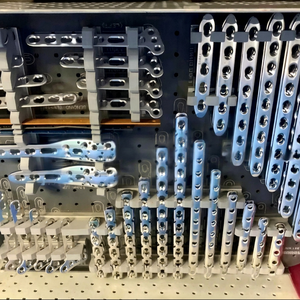
Small Fragment LCP Locking Plate Systems
Trauma fixation relies heavily on Limited Contact Dynamic Compression Locking Plates (LCP). Featuring combi-holes that allow both conventional cortical compression screw placement and threaded locking screw angular stability, our plates are anatomically pre-contoured for radius, ulna, fibula, and humerus diaphyseal fractures. Surface Type II electrochemical anodization reduces tissue adhesion while enhancing fatigue resistance.
Kit Configuration: Supplied with color-coded drill bits, tap drivers, torque-limiting screwdrivers, and depth gauges.
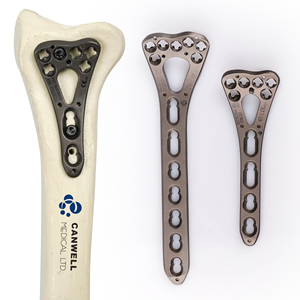
Distal Radius Variable Angle (VA) Locking Plates
Addressing intra-articular distal wrist fractures requires precise screw trajectory customization. Our 2.4mm / 2.7mm Titanium VA Distal Palmar Radius System allows up to a ±15° off-axis cone of screw angulation within the plate's locking hole. This allows surgeons to target specific osteochondral fragments while maintaining low-profile volar plate positioning to prevent flexor tendon irritation.
Compliance: Fully documented under CE marking and FDA 510(k) equivalent technical dossiers.
Future Procurement & Technological Trends in Orthopedic Manufacturing (2026–2030)
As global healthcare systems shift toward value-based care and localized regulatory compliance, procurement officers and OEM brand managers must anticipate key technological dislocations shaping orthopedic manufacturing:
1. Additive Manufacturing (3D Printing) & Porous Lattice Structures
Traditional solid titanium implants are rapidly being augmented by direct metal laser sintering (DMLS) 3D-printed implants featuring biomimetic porous trabecular surfaces. These porous structures emulate natural cancellous bone pore sizes (300-600 microns), accelerating bony ingrowth and long-term biological fixation. OEM suppliers are integrating hybrid manufacturing—combining 3D-printed porous surfaces with 5-axis CNC-machined locking interfaces.
2. Smart Implants & Sensor Telemetry Integration
The integration of micro-telemetry and micro-sensors directly within load-bearing implants is revolutionizing post-operative rehabilitation. As demonstrated by diagnostic systems like the Tyris MD-100, future orthopedic implants will actively transmit real-time data regarding strain, bone consolidation, temperature, and sub-clinical infection markers, empowering surgeons with actionable digital diagnostics.
3. Patient-Specific Implants (PSI) & Rapid Prototyping
Standard off-the-shelf anatomical plates are insufficient for complex oncological reconstructions or severe CMF deformities. Contract manufacturers must maintain streamlined DICOM-to-CAD workflows, converting patient CT scan data into patient-specific custom implants via rapid 3D printing and high-speed milling within ultra-short 5-to-7 day production windows.
4. Bio-Resorbable Polymers & Magnesium Alloys
To eliminate secondary hardware removal surgeries in pediatric trauma and craniomaxillofacial cases, OEMs are advancing bioresorbable polymers (PLLA-PGA matrix blends) and high-purity magnesium alloys. These materials maintain mechanical integrity during bone healing before safely degrading into natural metabolic sub-products, eliminating permanent metallic retention risks.
5. Stringent Regulatory Harmonization (EU MDR & FDA Unique Device Identification)
The transition from EU MDD to EU MDR (2017/745) has elevated regulatory requirements for contract manufacturers. Global buyers must partner with OEM suppliers who provide complete Design History Files (DHF), Device Master Records (DMR), extensive clinical evaluation support, 100% laser-etched UDI (Unique Device Identifier) compliance, and full raw material melt certificate traceability.
6. Automated Cleanroom Packaging & Ready-to-Use (RTU) Gamma Sterilization
Hospitals are migrating away from in-house autoclave processing toward pre-sterilized, single-pack sterile implants. OEM factories are establishing ISO Class 7 certified cleanrooms equipped with automated blister sealing and pouching lines, delivering validated Gamma or Ethylene Oxide (EtO) sterile-packaged products directly to hospital operating rooms.
Why International Medical Brands Partner with Orthovana Medical
As a specialized manufacturer of orthopedic implants, spinal systems, and trauma solutions, Orthovana Medical provides end-to-end contract manufacturing services tailored to international medical device companies, regional stocking distributors, and hospital networks.
ISO 13485 QMS Control
Our complete quality management system is audited for medical device design, contract manufacturing, and final packaging. Automated optical CMM coordinate measuring machines verify 100% of critical dimensions against engineering drawings.
Turnkey Private Labeling
We provide comprehensive branding customization: high-precision fiber laser marking for company logos, part numbering, batch codes, localized sterile packaging, and multi-language IFU (Instructions for Use) printing.
Matched Instrument Sets
Implant success depends on surgical ergonomics. We design and manufacture matching surgery-ready instrument caddies, torque-limiting screwdrivers, tissue protectors, and depth gauges engineered specifically for each plating system.
Frequently Asked Questions for OEM/ODM Procurement
Clear, definitive answers to technical, regulatory, and supply chain questions commonly raised by international buyers.
? What medical-grade raw materials do you utilize for orthopedic implant production?
We strictly utilize certified medical-grade raw materials sourced from leading global suppliers. Metallic implants are machined from medical titanium alloy Ti-6Al-4V ELI (per ASTM F136 / ISO 5832-3) and Commercially Pure Titanium (CP-Ti per ASTM F67). Spinal interbody cages are manufactured from implant-grade PEEK (Polyetheretherketone per ASTM F2026) featuring radio-opaque Tantalum markers. All surgical instruments utilize precipitation-hardening stainless steels (17-4PH, 420, 316L per ASTM F899). Complete material heat number certificates and chemical composition analysis reports are provided with every batch shipment.
? What documentation packages are supplied to support regional product registration?
To facilitate swift registration with national health authorities (such as US FDA, EU Notified Bodies, Saudi SFDA, Brazilian ANVISA, or NMPA), registered procurement partners receive complete Technical Dossiers. These include ISO 13485 certificates, Certificates of Analysis (CoA), material mill test reports, mechanical fatigue test data (ASTM F382 for bone plates, ASTM F1717 for spinal constructs), biocompatibility summary reports (ISO 10993 series), sterilization validation files, and standardized multi-language Instructions for Use (IFU).
? What are your minimum order quantities (MOQ) and production lead times for custom OEM projects?
For standard catalog items under private labeling, our minimum order quantities start as low as 50 to 100 units per item size. For fully customized ODM implants requiring dedicated tooling and CAM programming, MOQs depend on component geometry and material type. Prototype sampling is typically completed within 2 to 3 weeks, while production batch runs average 4 to 6 weeks from drawing approval. We maintain buffer stocks of raw titanium and PEEK bar stock to accommodate urgent customer scheduling.
? How do you guarantee batch-to-batch dimensional accuracy and thread consistency?
Our quality assurance protocol includes In-Process Quality Control (IPQC) and Final Quality Control (FQC) using fully automated ZEISS Coordinate Measuring Machines (CMM), optical comparator profile projectors, and specialized pitch thread gauges. For threaded locking plates and screws, 100% of locking mechanisms are verified against Go/No-Go plug gauges. Every production batch generates a digital Device History Record (DHR) retaining dimensional records, anodization thickness measurements, and cleanroom bio-burden test results.
? Can your factory manufacture custom customized surgical instrument sets?
Yes. OEM/ODM customers can either choose from our existing catalog of ergonomic surgical instruments or request custom instrument development. Our engineering team converts surgical workflow requirements into 3D CAD models, optimizing instrument balance, blade geometry, and quick-coupling handle mechanics. Instrument trays can be custom-milled or vacuum-formed with color-coded silicone brackets tailored specifically to your surgical system layout.
? What surface treatment options are available for titanium locking plates and screws?
We offer full surface engineering capabilities including Type II Electrochemical Anodization (grey/dark anodization for fatigue strength enhancement and micro-fissure sealing), Type III Color Anodization (vibrant color-coding by screw diameter or plate size for quick operating room identification), electropolishing, sandblasting (aluminum oxide or zirconium beads for textured surfaces), and microscopic laser etching for logos, part numbers, and UDI matrix codes.
? How do I request a formal quotation or initiate a factory audit?
To initiate a quote or arrange a virtual/on-site facility audit, click the inquiry button below or email our international export division directly at [email protected]. Please include your target product specifications, estimated annual volumes, and required regulatory destination. Our engineering sales team will respond within 24 business hours with comprehensive pricing, technical feasibility feedback, and sample availability.
Partner with a World-Class Orthopedic Manufacturing Factory
Accelerate your market expansion with certified titanium trauma plates, PEEK spinal cages, 5-axis CNC micro-parts, and custom surgical instrumentation.