Featured OEM/ODM Medical & Veterinary Implant Systems
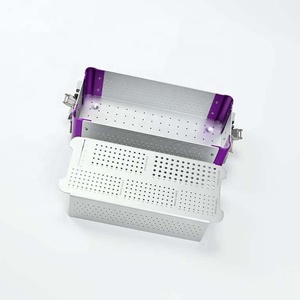
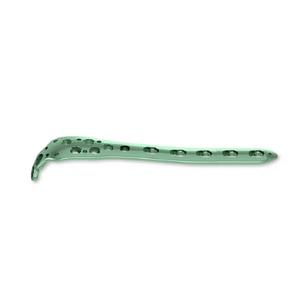
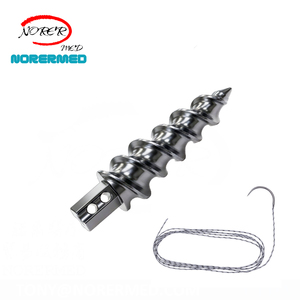
As an ISO 13485:2016 certified contract manufacturer, our direct factory production delivers high-precision trauma plates, spinal pedicle screw systems, veterinary bone fixation implants, and custom surgical instrument containers. Engineered from implant-grade Titanium (Ti-6Al-4V ELI) and Stainless Steel (316LVM), each product family offers micron-level tolerance and comprehensive batch traceability.
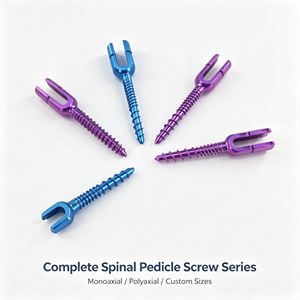
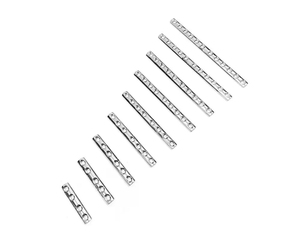
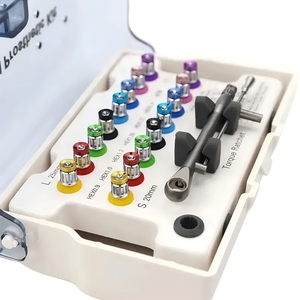
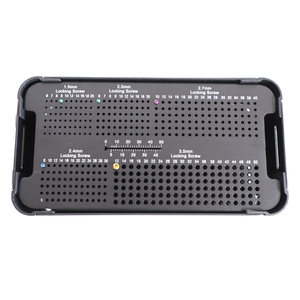
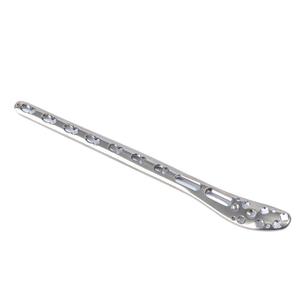
Executive Summary & Enterprise OEM/ODM Manufacturing Authority
The global landscape for medical device manufacturing demands absolute compliance, micron-level precision, and uncompromised supply chain reliability. For orthopedic distributors, hospital procurement teams, and original equipment manufacturers (OEMs), partner selection is not merely a commercial agreement—it is a critical extension of clinical responsibility.
At Orthovana Medical Co., Ltd, our contract manufacturing infrastructure is built specifically to address the complex requirements of human trauma, spine, craniomaxillofacial (CMF), sports medicine, and veterinary implant systems. Operating under a comprehensive ISO 13485:2016 Quality Management System, our factory integrates multi-axis Swiss CNC turning, 5-axis high-speed milling, surface passivation, and Class 7 cleanroom packaging into a seamless end-to-end production ecosystem.
Information Gain Insight: Modern orthopedic contract manufacturing requires moving beyond basic machining tolerances. True enterprise OEM reliability centers on fatigue-life optimization through controlled cold working, Type II electrochemical surface passivation, and rigid validation of material ingot purity according to ASTM F136 and ASTM F67 standards.
Why Global Procurement Buyers Partner With Our OEM/ODM Factory
International medical device buyers encounter distinct operational challenges: stringent regulatory shifts under EU MDR (2017/745), strict FDA 21 CFR Part 820 quality audits, fluctuating titanium raw material costs, and the risk of batch-to-batch thread dimensional variances. Our manufacturing framework mitigates these risks through structured capabilities:
Advanced Metallurgy & Material Control
We work exclusively with certified medical-grade titanium alloy (Ti-6Al-4V ELI per ASTM F136), Commercially Pure Titanium (CP Grade 4 per ASTM F67), 316LVM implant-grade stainless steel (ASTM F138), and radiolucent PEEK-OPTIMA (ASTM F2026). Every raw material lot is delivered with full chemical and mechanical Mill Test Reports (MTRs).
Multi-Axis Swiss CNC Machining
Utilizing high-precision Citizen 9-axis Swiss lathe turning centers and DMG MORI 5-axis machining centers, we achieve micron-accurate thread profiles for locking bone screws, cannulated compression screws, and spinal pedicle screw tulips with zero chatter marks.
Rigid Quality Assurance & CMM Inspection
Quality control is embedded at every step: automated optical inspection (AOI) for screw thread geometry, Keyence 3D optical comparators, and Zeiss Coordinate Measuring Machines (CMM) ensure complete compliance with CAD dimensional drawings before lot release.
Regulatory DHF & Technical Dossier Support
We simplify market registration for brand partners. Our regulatory team compiles Design History Files (DHF), Device Master Records (DMR), biocompatibility test data (ISO 10993), and sterilization validation files required for FDA 510(k) and CE Mark applications.
Anodization & Laser Identification Marking
In-house Type II titanium electrochemical anodization and hard-coat color coding (blue, gold, green, magenta) allow rapid surgical size identification. Fiber laser marking systems add clear UDI barcodes, lot numbers, and customer logos.
Integrated Instrument Set Manufacturing
Beyond implants, we engineer matching surgery-ready instrument sets: drill bits, taps, depth gauges, torque-limiting drivers, bending pliers, and custom graphic sterilization trays manufactured from Radel, aluminum, and stainless steel.
Material Science Whitepaper: Technical Specifications & Comparison
Selecting the appropriate material substrate is a foundational engineering decision in orthopedic device design. Implants must provide an optimal balance of ultimate tensile strength, fatigue endurance limit, elastic modulus matching, and biological inertness. Below is a engineering overview comparing key medical implant alloys and polymers utilized in our manufacturing facilities.
| Material Grade | Standard Spec | Density (g/cm³) | Yield Strength (MPa) | Elastic Modulus (GPa) | Key Clinical Applications |
|---|---|---|---|---|---|
| Ti-6Al-4V ELI (Grade 23) | ASTM F136 / ISO 5832-3 | 4.43 | ≥ 795 | 110 - 114 | Pedicle screws, spinal rods, trauma locking plates, suture anchors |
| CP Titanium (Grade 4) | ASTM F67 / ISO 5832-2 | 4.51 | ≥ 480 | 105 - 110 | Maxillofacial mini-plates, cranial reconstruction, low-load bone plates |
| PEEK-OPTIMA (Natural) | ASTM F2026 | 1.30 | ≥ 95 | 3.5 - 4.0 | Interbody spinal fusion cages (TLIF, PLIF, ACIF), radiolucent spacers |
| 316LVM Stainless Steel | ASTM F138 / ISO 5832-1 | 7.95 | ≥ 690 | 190 - 200 | Veterinary trauma sets, intramedullary nails, dynamic hip screw systems |
| Co-28Cr-6Mo Alloy | ASTM F75 / ISO 5832-4 | 8.30 | ≥ 500 | 220 - 230 | Joint arthroplasty bearing components, high-wear femoral heads |
Biomechanical Advantage of Titanium Alloy (Ti-6Al-4V ELI)
Extra Low Interstitial (ELI) Grade 23 Titanium represents the gold standard for dynamic internal fixation. By reducing interstitial elements such as iron, oxygen, and carbon, Ti-6Al-4V ELI achieves superior fracture toughness and resistance to cyclic stress fatigue compared to standard Grade 5 titanium. Furthermore, its elastic modulus (~110 GPa) is considerably closer to human cortical bone (~18 GPa) than stainless steel (~200 GPa), significantly mitigating the risk of stress shielding and subsequent bone resorption around the implant site.
Future Technology Trends in Orthopedic Manufacturing
The orthopedic contract manufacturing market is undergoing a rapid evolution driven by additive manufacturing, smart surface engineering, and patient-specific implant customization. Overseas factories that succeed in the next decade must integrate high-volume manufacturing with flexible digital engineering.
1. Porous Titanium & 3D Printing (EBM/DMLS)
Additive manufacturing using Electron Beam Melting (EBM) and Direct Metal Laser Sintering (DMLS) allows the creation of biomimetic porous structures (trabecular titanium). These porous scaffolds feature interconnected porosity (60-80%) that accelerates cellular osteointegration directly into interbody cages and joint replacement coatings without needing secondary plasma spray processes.
2. Antimicrobial & Bioactive Surface Coating
To reduce implant-associated surgical site infections (SSI), modern factories are implementing advanced surface modifications. Micro-arc oxidation (MAO) combined with hydroxyapatite (HA) nanoparticle deposition creates bio-interactive surfaces that encourage rapid bone apposition while reducing bacterial colonization on titanium surfaces.
3. Patient-Specific Implants (PSI) & Digital Workflow
Leveraging patient CT scan data, 3D medical image segmentation software generates digital CAD models tailored to complex revision trauma or oncological bone resection cases. Contract manufacturers can transition from patient DICOM files to custom-milled titanium plates within accelerated 7-to-14-day manufacturing windows.
Future Procurement Trends: Global Strategic Sourcing (2025–2030)
Procurement strategies in the medical device sector are transitioning from price-per-unit evaluation to a comprehensive Total Cost of Ownership (TCO) model. International brand owners and medical distributors are restructuring their supply chains around several strategic imperatives:
Vendor Consolidation
Distributors are consolidating suppliers by partnering with factories capable of producing complete surgical ecosystems—combining bone plates, locking screws, spinal fixators, PEEK cages, and sterilizable instrument trays under one quality system umbrella to streamline audit complexity.
MDR & Regulatory Risk Mitigation
With the European Union Medical Device Regulation (EU MDR 2017/745) imposing stringent requirements for clinical evidence and post-market surveillance, procurement leaders require OEM factories that can supply validated technical files, cleanroom environmental monitoring data, and full material batch traceability.
Agile Inventory & Rapid DFM Prototyping
Long lead times threaten hospital supply stability. Leading OEM factories utilize advanced Design for Manufacturability (DFM) analysis to optimize implant toolpaths prior to raw material cutting, cutting prototyping lead times down to weeks rather than months.
Comprehensive FAQ: Technical & Sourcing Guidance for Buyers
Common technical, regulatory, and commercial questions answered by our engineering and quality assurance teams.