Precision-Engineered Orthopedic Implant Portfolio
Designed for trauma, joint reconstruction, spinal fusion, and veterinary orthopedics. Manufactured under strict ISO 13485 quality systems.
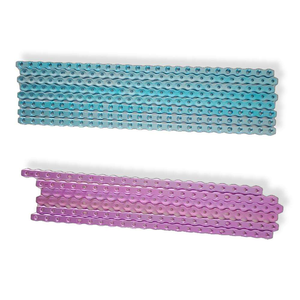
Veterinary ALPS Reconstruction Bone Plate
Top grade small animal orthopedic implant designed for biological osteosynthesis. Features contoured low-profile geometry and titanium strength.
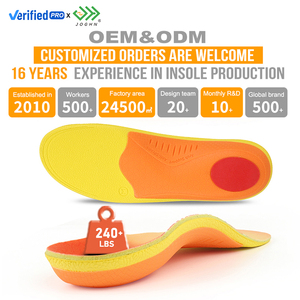
Custom Arch Support Orthopedic Insoles
Designed for plantar fasciitis relief and ergonomic biomechanical support. High-density EVA foam molded for custom OEM orthotic distribution.
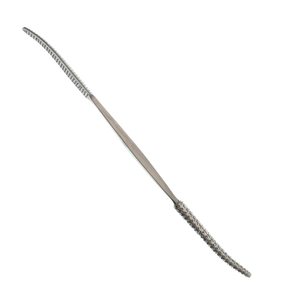
Curved Stainless Steel Surgical Bone File
Ergonomically designed manual surgical instrument crafted from high-grade stainless steel for bone smoothing and intra-operative contouring.
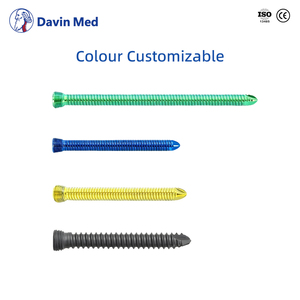
Titanium Locking Screws (1.5mm–5.0mm)
Medical-grade Ti-6Al-4V ELI bone screws available in self-tapping and cannulated profiles. Fully compatible with standard trauma plating systems.
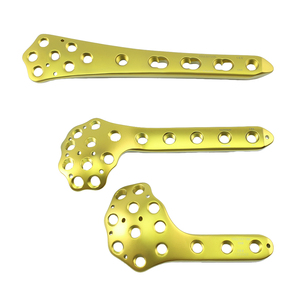
Distal Lateral Femur Minimally Invasive Locking Plate
Anatomically contoured titanium implant optimized for minimally invasive surgical techniques (MIS) in complex distal femoral fractures.
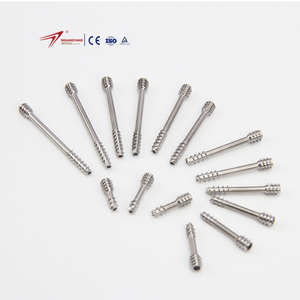
Cannulated Headless Compression Herbert Screws
Precision titanium compression screws designed for scaphoid and intra-articular fracture osteosynthesis with minimal soft-tissue irritation.
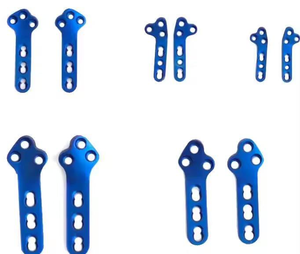
Veterinary Orthopedic Fracture Repair System
Comprehensive animal bone stabilization reconstruction plate system engineered for canine and feline orthopedic surgical management.
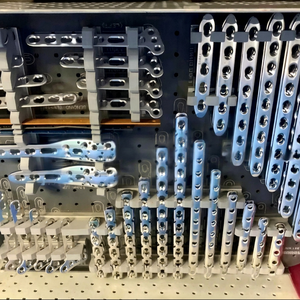
Small Fragment LCP Locking Plate & Instrument Set
Full surgery-ready trauma kit including titanium locking compression plates, color-coded drill guides, taps, and sterilization container.
Executive Summary: The Evolution of Custom OEM Orthopedic Implant Manufacturing
An in-depth guide for healthcare procurement executives, medical device brand owners, and hospital networks on navigating modern biomechanical contract manufacturing.
In contemporary orthopedic surgery, the margin for error is non-existent. Whether engineering small-fragment locking compression plates (LCP) for trauma repair, pedicle screw systems for spinal stabilization, or specialized PEEK interbody fusion cages, implant performance hinges directly on precision manufacturing. **Orthovana Medical Co., Ltd** stands at the forefront of this industrial sector, serving as a trusted contract manufacturer and original equipment manufacturer (OEM) for international distributors, orthopedic startups, and established hospital supply networks.
Contracting orthopedic implant production requires more than simple machining capability; it demands a deep domain mastery of orthopedic biomechanics, material science, surface tribology, and regulatory risk management. This whitepaper systematically evaluates the critical technical parameters, raw material selection standards, sourcing procurement trends, and technological evolutions governing custom OEM orthopedic implant manufacturing.
Comparative Analysis of Implant-Grade Biomaterials
Biomechanical evaluation of primary materials utilized in OEM orthopedic hardware fabrication.
| Material Specification | Standard Compliance | Tensile Strength (MPa) | Elastic Modulus (GPa) | Biocompatibility & Clinical Indication |
|---|---|---|---|---|
| Titanium Alloy Ti-6Al-4V ELI | ASTM F136 / ISO 5832-3 | ≥ 860 MPa | 110 GPa | Ultra-high fatigue strength. Primary choice for load-bearing trauma plates, bone screws, and spinal pedicle systems. MRI conditional. |
| Commercially Pure Titanium (CP-Ti) | ASTM F67 / ISO 5832-2 | 240 – 550 MPa | 105 GPa | Excellent ductility and intra-operative contourability. Ideal for maxillofacial (CMF) mini-plates and cranial reconstruction. |
| Implant-Grade PEEK (OPTIMA) | ASTM F2026 | 90 – 120 MPa | 3.5 – 4.1 GPa | Elastic modulus closely matching human cortical bone (18 GPa). Radiolucent with X-ray/CT markers. Standard for spinal fusion cages. |
| 316L Surgical Stainless Steel | ASTM F138 / ISO 5832-1 | ≥ 860 MPa | 193 GPa | High stiffness and economic cost profile. Utilized in temporary fracture fixation, intramedullary pins, and specialized manual instruments. |
Comprehensive OEM/ODM Engineering Specializations
Customized contract manufacturing options tailored to target anatomical regions and surgical methodologies.
Orthopedic Trauma Fixation
Locking Compression Plates (LCP), Variable Angle (VA) plates, intramedullary gamma nails, distal radius systems, and cannulated headless screws. Manufactured with anatomical pre-contouring to minimize intra-operative bending.
Spinal Fusion & Fixation
Polyaxial and monoaxial pedicle screw systems, posterior lumbar rods, anterior cervical plating, and PEEK interbody fusion cages (TLIF, PLIF, ALIF, Cervical) featuring radiopaque tantalum markers.
Craniomaxillofacial (CMF)
Ultra-low-profile 1.5mm, 2.0mm, and 2.4mm mini and micro plating systems, orbital mesh, and high-strength mandibular reconstruction plates engineered from malleable CP-Titanium.
Veterinary Orthopedic Implants
Specialized veterinary ALPS plates, TPLO (Tibial Plateau Leveling Osteotomy) locking plates, TTA systems, and micro-fragment bone screws tailored for small animal fracture management.
Matched Surgical Instrument Sets
Complete surgical kits containing drill bits, tap sleeves, torque-limiting drivers, countersinks, and customized anodized aluminum sterilization containers.
Global Procurement Trends in Orthopedic Manufacturing
Strategic insights for procurement directors evaluating contract manufacturing partners.
Key Supply Chain Shift 1: Regulatory Technical File Co-Development
The implementation of strict regulatory frameworks such as the European Union Medical Device Regulation (EU MDR 2017/745) and stringent FDA 510(k) audit trails has fundamentally changed contract manufacturing. Buyers no longer seek simple machine shops. Procurement teams require OEM partners capable of supplying validated test data, raw material chemical certifications, fatigue testing reports (ISO 14630), and localized regulatory submission dossiers.
Key Supply Chain Shift 2: Modular Inventory & Agile Batch Production
Modern hospital inventory models favor modular, standardized screw-plate interfaces. OEM suppliers must support high-mix, low-to-medium volume production runs alongside high-volume fast-moving sizes (e.g., 3.5mm cortex screws and 5.0mm locking screws). Agile batch scheduling prevents hospital stock-outs while reducing carrying costs for regional distributors.
Key Supply Chain Shift 3: Turnkey Private Labeling & Cleanroom Packaging
International medical buyers increasingly request fully packaged, sterile-ready or sterile-blistered products. OEM capabilities now encompass precision fiber laser marking (UDI compliance, serial numbers, lot codes), customized color anodization for size identification, and Class 7 cleanroom primary pouch sealing.
Next-Gen Manufacturing Technologies (2025 – 2030)
Innovative production paradigms transforming orthopedic implants from static devices to biological interfaces.
1. Additive Manufacturing & Porous Titanium
3D Selective Laser Melting (SLM) enables the creation of biomimetic porous trabecular titanium structures. These porous surfaces mimic cancellous bone architecture, encouraging rapid bone ingrowth and eliminating the need for secondary coatings.
2. Patient-Specific Implants (PSI) & CAD Modeling
Leveraging patient CT/MRI DICOM data, OEM suppliers can rapid-prototype custom reconstructive implants for severe oncological bone loss or complex maxillofacial trauma, matching patient anatomy within sub-millimeter precision.
3. Bio-Interactive & Hydroxyapatite (HA) Coatings
Advanced surface engineering techniques, such as Micro-Arc Oxidation (MAO) and plasma-sprayed Hydroxyapatite (HA) coatings, significantly accelerate early-stage osteoblast attachment and improve long-term fixation in osteoporotic bone.
Why Partner with Orthovana Medical Co., Ltd
End-to-end engineering excellence, state-of-the-art CNC machinery, and uncompromised quality verification.
Multi-Axis CNC Milling Infrastructure
Our manufacturing centers house high-precision Citizen Swiss-type 9-axis lathes and DMG MORI 5-axis CNC machining centers, capable of executing complex screw thread profiles and contoured plate geometries in a single setup.
Optical CMM Dimensional Inspection
Every production batch undergoes rigorous 100% optical Coordinate Measuring Machine (CMM) dimensional verification, video measuring inspection, and thread pitch gauge checking to eliminate intra-operative binding.
Strict Material Validation & Traceability
Raw titanium bars and PEEK rods are sourced exclusively from certified melt sources with full chemical composition and mechanical test reports (Mill Test Certificates). Every product carries laser-etched batch codes for end-to-end traceability.
Frequently Asked Questions for OEM Procurement Managers
Technical, operational, and regulatory inquiries regarding custom orthopedic implant sourcing.
What specific titanium and polymer grades are used in Orthovana Medical implants?
Our trauma plates and bone screws are machined from implant-grade Titanium Alloy Ti-6Al-4V ELI (Extra Low Interstitial, meeting ASTM F136 / ISO 5832-3 standards) and Commercially Pure Titanium (CP-Ti Grade 2/4, meeting ASTM F67). For spinal interbody fusion cages, we utilize medical-grade PEEK OPTIMA (meeting ASTM F2026), integrated with radiopaque tantalum markers for precise intra-operative visualization.
What documentation is supplied to support regional product registration and hospital tenders?
Registered OEM and distribution partners receive comprehensive documentation packs including ISO 13485:2016 quality system certificates, raw material Mill Test Certificates (MTC), dimensional inspection reports, sterilizability validation protocols, Instructions for Use (IFU), packaging degradation studies, and full technical dossiers tailored for local MOH registration.
Can Orthovana Medical supply matched instrument sets and sterilization trays?
Yes. We provide complete, surgery-ready instrument sets tailored to every implant system—including drill bits, depth gauges, tap sleeves, countersinks, and torque-limiting screwdrivers. Instrument sets are delivered in custom-molded, color-coded, anodized aluminum or PPSU sterilization cases designed for repeated autoclave processing.
What are the minimum order quantities (MOQ) and lead times for OEM private-label projects?
MOQs vary depending on whether the item is a standard catalog profile or a fully custom patient-specific casting/milling project. For standard trauma plates and screws with custom laser branding, initial trial MOQs are flexible. Production lead times typically range from 3 to 6 weeks following engineering drawing sign-off and prototype sample evaluation.
How is lot-level traceability maintained across manufacturing batches?
From the moment raw titanium stock enters our warehouse, it is assigned a unique internal heat lot number. This lot number is maintained through every stage of CNC machining, ultrasonic deburring, surface anodization, cleaning, inspection, and final packaging. The lot number is laser-etched onto the implant body alongside UDI barcode matrix identifiers.
How do I request a product catalog, technical drawings, or OEM pricing quotes?
You can request complete digital catalogs, engineering CAD specifications, or sample kits directly through our interactive portal. Click any of the "Get Catalog" buttons on this page to open an instant technical inquiry session with our international export engineering team.
Initiate Your Custom OEM/ODM Orthopedic Manufacturing Partnership
Connect with our technical engineering and international business director teams today to review your CAD specifications, sample requirements, and market registration targets.