Featured Orthopedic Trauma, Spine & CMF Fixation Implants
Manufactured from medical-grade Ti-6Al-4V ELI (ASTM F136), Commercially Pure Titanium (ASTM F67), and PEEK-OPTIMA. Fully traceable batch production certified to ISO 13485.
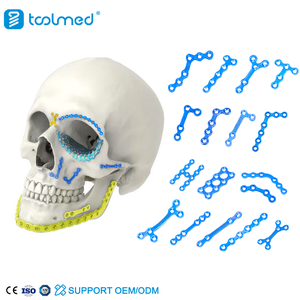
Toolmed CMF Maxillofacial 2.0mm Rectangle Locking Plate
Ultra-low profile micro-titanium plate engineered for precise orbital, zygomatic, and midface structural reconstruction. Features variable locking screw geometry.
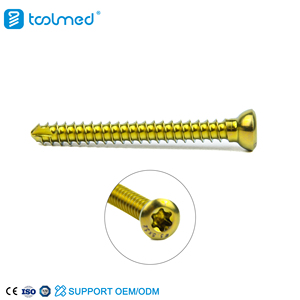
3.5mm Titanium Cortical Bone Screw System
Precision-machined cortical fixation screws crafted from ASTM F136 Ti-6Al-4V ELI. Optimized pitch profile ensures maximum pull-out strength in dense diaphysis bone.
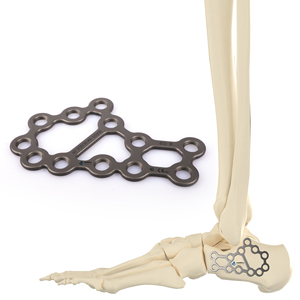
Calcaneal Anatomical Titanium Locking Compression Plate
Anatomically pre-contoured calcaneus fracture plate for foot and ankle surgery. Low-profile construction minimizes soft-tissue irritation while providing rigid stability.
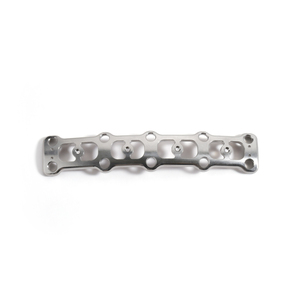
Micro 5-Axis CNC Titanium Alloy (TC4) Stud Implant
Custom micron-tolerance CNC turning implant component. Engineered for joint prosthetics, external fixation anchors, and specialized surgical instrumentation assemblies.
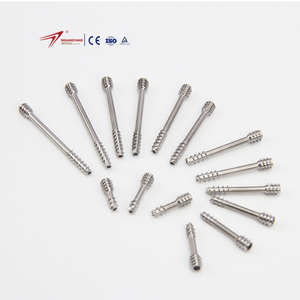
Cannulated Headless Compression Herbert Bone Screw
Self-drilling, self-tapping headless titanium screw designed for scaphoid and intra-articular fracture compression with minimal articular cartilage disruption.
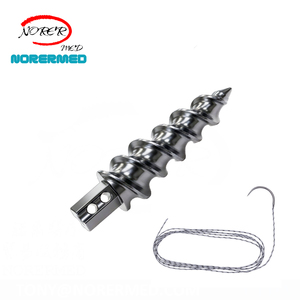
Titanium Suture Anchor Screw for Sports Medicine
High-pullout strength threaded anchor designed for rotator cuff and ligamentous repair. Features smooth eyelet geometry to protect high-strength UHMWPE sutures.
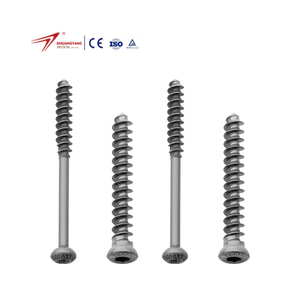
4.0 Series Titanium Alloy Cancellous Screw System
Deep-threaded cancellous bone screw engineered for metaphyseal fracture fixation. Offers exceptional initial stability in osteopenic and spongy bone structures.
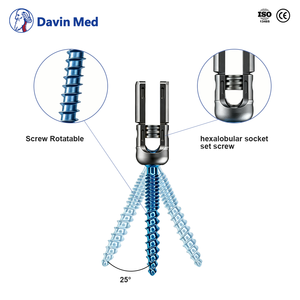
Long-Tail Polyaxial Pedicle Screw Spinal System
Thoracolumbar posterior spinal fixation screw with extended tabs for minimally invasive MIS surgery. Polyaxial head allows 50° angular freedom for rod insertion.
Precision OEM Manufacturing Capabilities & Metallurgical Engineering
As a specialized custom OEM orthopedic implants manufacturer and global exporter, our production facility operates at the intersection of advanced metallurgical science, multi-axis micro-machining, and rigorous clinical quality assurance. The global demand for surgical implants requires absolute dimensional reproducibility, bio-inertness, and long-term fatigue durability. We address these critical imperatives by maintaining total control over the manufacturing lifecycle—from melt-certified raw titanium bar stock to sterile-ready packaged implants.
Our factory is equipped with high-precision 5-axis and 7-axis CNC Swiss-type automatic turning centers (including Citizen and Star platforms) combined with high-speed 5-axis vertical machining centers. This enables complex anatomical contours—such as variable angle locking screw threads, anatomical radius plates, and complex polyaxial pedicle screw heads—to be manufactured with tight tolerances down to ±3 microns. Micro-burrs and microscopic stress concentration points are eliminated through validated multi-stage automated polishing and electrochemical deburring.
Medical-Grade Biomaterials
We process exclusively certified Ti-6Al-4V ELI (Extra Low Interstitial, ASTM F136), Commercially Pure Titanium (CP-Ti Grades 2 & 4, ASTM F67), and PEEK-OPTIMA (ASTM F2026). All material batches undergo spectrographic chemical analysis and mechanical tensile testing prior to machining.
Type II & III Surface Anodization
Implants undergo controlled electrochemical anodization. Type II anodization alters surface oxide structure to improve fatigue resistance and reduce fretting corrosion, while Type III color anodization provides vivid intra-operative sizing identification for surgical teams.
Full Technical Dossier Support
We provide global distributors and OEM brand owners with comprehensive regulatory documentation packs—including ISO 10993 biocompatibility test reports, ASTM F1717 / F543 / F382 static and dynamic fatigue test data, cleanroom validation, and draft IFUs.
Paradigm Shifts in Global Orthopedic Implant Sourcing & Procurement Trends
The global orthopedic implant market is undergoing a structural evolution driven by shifting regulatory environments, healthcare cost rationalization, and the rapid expansion of hospital tender requirements in emerging markets. Procurement executives, hospital networks, and OEM brand owners are changing how they evaluate contract manufacturing partners. Below are the key strategic procurement trends defining the next decade of medical device sourcing:
1. Shift from Transactional Buying to Turnkey Contract Manufacturing
Historically, distributors sourced raw un-packaged implants from disparate factories and managed laser-marking, cleaning, packaging, and instrument set creation internally. Modern procurement demands complete OEM turn-key integration. Leading exporters are now expected to supply fully finished, color-coded, laser-etched (UDI serial-compliant) implants housed in custom surgical instrument trays with validated double-sterile blister packaging ready for immediate hospital deployment.
2. Regulatory Friction Costs Driving Demand for Pre-Validated Technical Dossiers
With the full implementation of the European Union Medical Device Regulation (EU MDR 2017/745) and heightened US FDA 510(k) equivalency scrutiny, distributors can no longer afford white-label partners who lack robust technical documentation. Strategic procurement centers upon factories that maintain pre-compiled Technical Files, audited Quality Management Systems under ISO 13485:2016, and real-time lot-level material traceability from raw ingot to final screw thread.
3. Rationalization of Supply Chains & Dual-Sourcing Risk Mitigation
Global supply chain vulnerabilities have exposed the risks of over-reliance on single-source suppliers or localized tier-1 multinational brands whose price structures erode distributor margins. International healthcare buyers are actively building resilient dual-sourcing models. Partnering with established high-capacity OEM export factories allows distributors to secure stable safety-stock inventory, protect lead times, and maintain 30% to 50% cost advantages without sacrificing mechanical integrity.
4. Standardization of Universal Surgical Instrument Trays
Hospitals face growing sterilization and inventory holding costs. Future procurement trends heavily favor implant systems that utilize cross-compatible, standardized instrument sets. OEM manufacturers who design ergonomic, color-matched aluminum sterilization cases with intuitive screw length gauges and quick-connect drivers allow hospitals to reduce surgical set-up times and lower sterilization processing expenses.
Future Development Trends in Orthopedic Engineering & Biomaterials
Innovation in orthopedic manufacturing is accelerating rapidly beyond traditional static hardware. As biomechanical engineering advances, next-generation implants combine additive manufacturing, functional bio-active surfaces, and patient-matched geometries. OEM factories at the forefront of this evolution are investing heavily in the following technological vector developments:
Hybrid Additive-Subtractive Manufacturing
The integration of Direct Metal Laser Sintering (DMLS) 3D titanium printing with secondary 5-axis CNC machining enables the creation of biomimetic trabecular bone structures. Porous titanium coatings on spinal interbody cages and joint reconstructive plates facilitate rapid osteointegration and vascular ingrowth while maintaining precision-machined threaded interface tolerances.
Smart Implants & Micro-Telemetry Sensors
Future trauma and spinal fixation systems will incorporate passive sensor chips capable of monitoring post-operative biomechanical load distribution, micro-motion, and early signs of localized infection. OEM manufacturers are redesigning internal screw geometries and interbody cage cavities to accommodate bio-compatible sensor housing without compromising mechanical load-bearing limits.
Bio-Absorbable & Antimicrobial Nanocoatings
To eliminate post-operative infection risks and reduce secondary hardware removal surgeries, research is shifting toward bioactive coatings. Deposition of Hydroxyapatite (HA), silver nanoparticles, and bio-absorbable magnesium polymer matrices onto titanium surfaces creates localized drug-eluting barriers that inhibit bacterial adhesion while accelerating bone healing.
Patient-Specific Implants (PSI) & Digital Twin FEA
Utilizing high-resolution CT scan DICOM data, OEM factories are transitioning toward automated patient-matched plate manufacturing. Combined with Finite Element Analysis (FEA) computer simulations, custom anatomical reconstruction plates for complex oncology or CMF revision cases can be digitally validated for fatigue resistance before physical CNC milling occurs.
Biomaterial Performance Matrix for Orthopedic OEM Manufacturing
Selecting the optimal medical alloy or polymer is foundational to surgical success and structural biomechanics. Below is an engineering property comparison of our standard manufacturing biomaterials:
| Material Grade Standard | Elastic Modulus (GPa) | Tensile Strength (MPa) | Biocompatibility Standard | Primary Clinical Application |
|---|---|---|---|---|
| Ti-6Al-4V ELI (ASTM F136) | 110 - 114 | ≥ 860 | ISO 10993 / ASTM F981 | Trauma Plates, Pedicle Screws, Cannulated Screws |
| CP Titanium Grade 4 (ASTM F67) | 100 - 105 | ≥ 550 | ISO 10993 / ASTM F981 | CMF Cranial Plates, Reconstruction Mesh, Rib Fixation |
| PEEK-OPTIMA (ASTM F2026) | 3.5 - 4.0 (Close to Bone) | 100 - 130 | ISO 10993 / USP Class VI | Interbody Fusion Cages (TLIF, PLIF, Cervical) |
| Co-Cr-Mo Alloy (ASTM F75) | 210 - 230 | ≥ 960 | ISO 10993 / ASTM F981 | High Load-Bearing Joint Prosthetics & Spinal Rods |
Frequently Asked Questions on Custom OEM Implant Manufacturing
Detailed technical answers for international hospital buyers, regulatory directors, and medical device distributors.
What raw material certifications and traceability documentation are provided with OEM implant orders?
How does your factory handle custom OEM private labeling, branding, and packaging?
What mechanical fatigue testing standards do your implants undergo during design validation?
Can your engineering team manufacture custom anatomical implants from customer CAD files or CT scans?
What quality management systems and factory audit certifications does your manufacturing facility hold?
Do you supply matching surgical instrument sets and sterilization trays alongside implant ranges?
What are the standard Minimum Order Quantities (MOQs) and lead times for OEM contract orders?
How do you support international distributors with regulatory registration in local markets?
Partner with a Leading Custom OEM Orthopedic Implant Manufacturer
Expand your product line with high-precision trauma, spine, and CMF implant systems engineered for superior clinical performance. Speak directly with our technical sales and engineering team today.