Featured OEM Orthopedic Implants & Instrument Kits
Explore our flagship orthopedic surgical systems engineered for trauma, spinal reconstruction, and maxillofacial interventions. All products feature batch-controlled titanium and PEEK formulations.
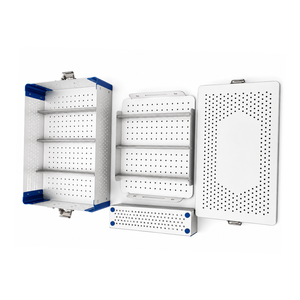
Complete Ariston International AI-DHS Box Medium Orthopedic Implant Instrument Storage Sterilization Box CE Certified Surgical
- Anodized Aluminum Alloy Structure
- High-Temperature Autoclave Safe (134°C)
- Customized Silicone Hold-Down Strips
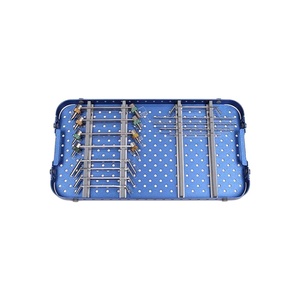
Orthopedic Implants Manufacturer in China 1.5/2.0/2.4/2.7/3.5mm Veterinary Orthopedic Instrument Kit
- Micro-Fragment Locking Plates
- Full Drilling & Tapping Instrument Array
- Commercially Pure Titanium & Stainless
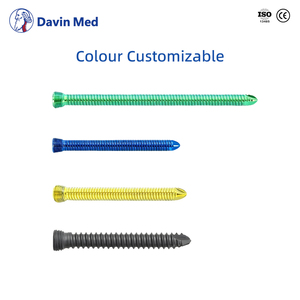
Davin Med Titanium Locking Screw 1.5/2.0/2.4/2.7/3.5/5.0mm Bone Screw Orthopedic Implant CE ISO Manufacturer In China
- Self-Tapping Flute Precision Cut
- Torx & Hex Star Drive Mechanism
- ASTM F136 Ti-6Al-4V ELI Alloy
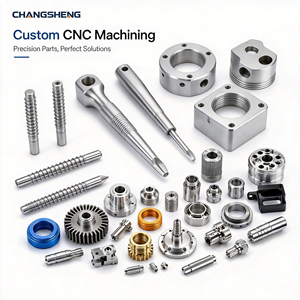
High Precision CNC Machining Custom Parts OEM Manufacturing Medical Surgical Tools Orthopedic Implants Medical Stainless Steel
- Multi-Axis CNC Milling & Turning
- Strict ±0.005mm Tolerance Control
- Biocompatible Electrochemical Polishing
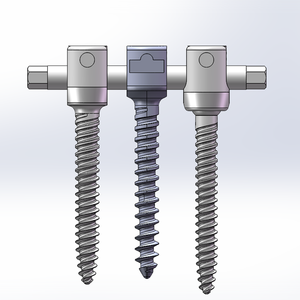
High Quality New Generation Titanium CoxII Orthopedic Surgery Implant Factory Direct Sales Spinal Nail Implants Interventional
- Polyaxial & Monoaxial Head Designs
- Optimized Friction Thread Profile
- Color-Coded Anodized Diameters
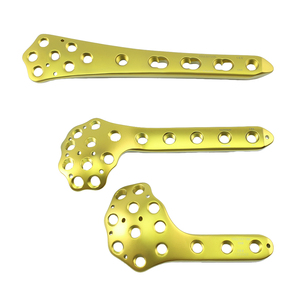
CE Certified Titanium Distal Lateral Femur Minimally Invasive Locking Orthopedic Implant
- Anatomically Pre-Contoured Curve
- Combines Compression & Locking Holes
- MIS Targeter Guide Compatibility
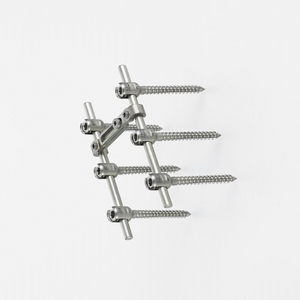
Top Ranking Orthopedic Equipments JMT EDEN Pedicle Screw Spinal Fixation System Implantable Artificial Organs Class II Back
- Low-Profile Screw Head Geometry
- High Fatigue Resistance Titanium Rods
- Complete Lumbar & Thoracic Range
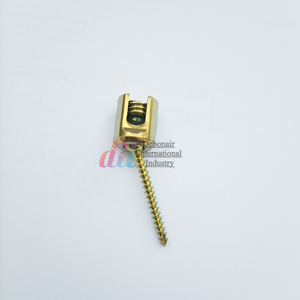
Veterinary Manual Pedicle Screw Spine Fixation System | Titanium Spinal Implant CE Certified Animal Surgery Orthopedic Implant
- Specially Scaled Small-Animal Implants
- Ergonomic Manual Screwdrivers
- Corrosion-Resistant Passivated Surfaces
Why Leading Global Medical Brands Partner With Our Factory
From raw titanium billet validation to high-precision Swiss 5-axis machining and cleanroom packaging, our production facilities are optimized to deliver zero-defect orthopedic implant systems for multinational distributors.
ASTM Metal Metallurgy
We source certified medical-grade Ti-6Al-4V ELI (ASTM F136) and commercially pure titanium (ASTM F67). Every raw material lot undergoes spectroscopic chemical composition verification and mechanical yield strength validation.
Swiss 5-Axis Micro-Machining
Utilizing high-end Citizen and Star CNC lathes, our facility maintains tolerances down to ±0.005mm. Thread pitches on locking screws and pedicle screw heads are machined with zero burr formation.
ISO 13485 & Full Traceability
Our quality management system is fully accredited under ISO 13485:2016. Every manufactured lot generates a comprehensive Device Master Record (DMR) linking raw material mill test reports directly to final laser-marked serials.
Implant-Grade PEEK Polymer Processing
For spinal interbody fusion cages (TLIF, PLIF, Cervical), we utilize biocompatible PEEK-OPTIMA. Radiographic tantalum markers are precision-pressed to enable flawless intra-operative X-ray visualization.
Electrochemical Surface Passivation
Implants undergo controlled Type II anodization and citric passivation per ASTM F86 standards. This eliminates free iron contaminants, creates a bio-inert oxide layer, and provides vibrant color-coding for surgical speed.
Complete OEM Surgical Kit Bundling
We supply fully integrated systems: titanium bone plates, matching locking screws, drill bits, depth gauges, bending irons, and custom-perforated aluminum sterilization trays built to surgeon preferences.
Orthopedic Raw Material Mechanical & Biological Comparison
Data overview of material choices used in OEM implant manufacturing and their structural suitability across anatomical locations.
| Material Standard | Composition / Grade | Tensile Strength (MPa) | Elastic Modulus (GPa) | Primary Clinical Application |
|---|---|---|---|---|
| ASTM F136 | Ti-6Al-4V ELI (Extra Low Interstitial) | ≥ 860 MPa | 110 GPa | Trauma Locking Plates, Pedicle Screws, Nails |
| ASTM F67 | Commercially Pure Titanium (Grade 2/4) | 480 – 680 MPa | 105 GPa | CMF Maxillofacial Plates, Reconstructive Mesh |
| ASTM F2026 | PEEK (Polyetheretherketone) | 90 – 100 MPa | 3.6 GPa (Close to cortical bone) | TLIF, PLIF, Cervical Interbody Fusion Cages |
| ASTM F138 | 316L Stainless Steel (Medical Grade) | ≥ 690 MPa | 200 GPa | Veterinary Kits, Temporary Fixation Pins |
1. Future Sourcing Trends in Global Orthopedic Implant Procurement
The global orthopedic contract manufacturing market is undergoing a structural paradigm shift. Hospital procurement boards, regional medical device distributors, and private-label brand owners are migrating away from fragmented supplier networks toward vertically integrated OEM factories. Driven by stringent international regulatory overhauls—most notably the European Union Medical Device Regulation (EU MDR 2017/745) and enhanced US FDA 510(k) post-market surveillance requirements—distributors require OEM partners capable of delivering exhaustive Device Master Files (DMF), batch-level biomechanical test reports, and non-destructive testing (NDT) certifications.
Strategic procurement strategy in 2025 and beyond centers on three primary imperatives:
- Supply Chain Resilience and Lead-Time Stabilization: Stock-outs in trauma plates or spinal screws directly compromise surgical schedules. OEM factories that maintain pre-tested, certified raw titanium rod reserves (ASTM F136 / ASTM F67) enable accelerated production cycles, insulating distributors from global logistical volatility.
- Procedural Standardization via Complete Instrument Kits: Modern surgical centers no longer purchase standalone bone plates. Procurement teams favor suppliers that manufacture matched, color-coded surgical instrumentation—such as self-holding drivers, tissue-protecting drill sleeves, and calibrated torque limiters—shipped inside standardized anodized sterilization containers.
- Regulatory Dossier Readiness: Rapid market entry hinges on the OEM supplier’s ability to supply technical dossiers containing fatigue test data (per ASTM F382 for bone plates and ASTM F1717 for spinal constructs), biocompatibility assessments (ISO 10993 series), and cleanroom particulate monitoring records.
2. Technological Development Trends in Orthopedic Engineering
Technological advancement in orthopedic implant manufacturing focuses on improving biological fixation while minimizing stress shielding—a phenomenon where overly rigid metallic implants absorb natural mechanical loads, leading to local bone resorption. Advanced OEM manufacturing centers are pioneering innovations across several core vectors:
Variable-Angle Locking Technologies: Traditional monoaxial locking systems restrict screw insertion to a single pre-set trajectory. Next-generation trauma systems incorporate variable-angle (VA) locking mechanisms, allowing surgeons to angle screws within a 30-degree cone. This capability is paramount for securing osteoporotic bone fragments in periarticular fractures near the shoulder, knee, and ankle joint spaces.
Porous Surface Modifications & Nanotopography: To accelerate osseointegration, titanium surfaces are moving beyond simple grit-blasting. Advanced electrochemical anodization techniques create nanoscale titanium dioxide (TiO2) tubular structures that promote osteoblast attachment and proliferation while exhibiting inherent micro-structural resistance to bacterial colonization.
3D Printed Additive Manufacturing Integration: While traditional multi-axis CNC Swiss machining remains the gold standard for high-volume threaded screws and micro-locking plates, hybrid manufacturing combines CNC machining with selective laser melting (SLM) 3D printing. This hybrid approach enables the creation of highly complex porous titanium interbody cages with biomimetic trabecular structures that match the modulus of elasticity of human cancellous bone.
3. OEM Quality Management Protocols: From Titanium Bar to Sterile Operating Room
To guarantee zero clinical failures in load-bearing implants, rigorous quality assurance must be embedded at every stage of the contract manufacturing lifecycle. Our quality control framework operates across four mandatory inspection gates:
- Gate 1: Incoming Raw Material Validation: Raw titanium alloy (Ti-6Al-4V ELI) bars undergo positive material identification (PMI) using X-ray fluorescence spectroscopy, ultrasonic flaw detection to identify internal voids, and tensile testing to verify ultimate tensile and yield strength compliance against ASTM F136 specifications.
- Gate 2: In-Process CNC Optical Inspection: During multi-axis turning and milling, high-resolution optical comparator gauge systems measure critical features—such as pitch diameter, thread lead, and countersink angles—every 30 minutes to prevent dimensional drift caused by tool wear.
- Gate 3: Surface Passivation & Biocompatibility Processing: Machined implants undergo ultrasonic degreasing followed by citric acid passivation (ASTM F86). This process removes free iron atoms embedded during tooling and establishes a dense, protective titanium oxide passivation layer. Electrolytic color anodization provides distinct color coding (e.g., gold for 2.7mm, blue for 3.5mm, green for 5.0mm systems) to streamline intra-operative selection.
- Gate 4: Final Mechanical & Cleanroom Inspection: Finished batches are inspected using automated Coordinate Measuring Machines (CMM) before undergoing particulate and bioburden testing in ISO Class 7 cleanrooms prior to primary pouch sealing.
Frequently Asked Sourcing & Manufacturing Questions
Clear answers to technical, regulatory, and logistical questions frequently raised by international medical device buyers and OEM contract partners.
What specific titanium grades are utilized across your trauma and spinal catalog?
We manufacture load-bearing trauma plates, intramedullary nails, and pedicle screws exclusively from implant-grade Titanium Alloy Ti-6Al-4V ELI (Extra Low Interstitial), fully compliant with ASTM F136 and ISO 5832-3 standards. For craniomaxillofacial (CMF) mini-plates requiring manual intra-operative contouring, we utilize Commercially Pure Titanium Grade 2 and Grade 4 (ASTM F67) for optimal ductility without work-hardening failure.
Can your factory support custom private-label branding and laser marking?
Yes. We provide complete OEM/ODM contract manufacturing services. Implants and surgical instruments can be customized with high-precision fiber laser marking for your brand logo, specific part reference numbers, GTIN barcoding, and lot code traceability. Custom packaging—including branded primary Tyvek pouches and printed outer boxes—is available upon request.
What documentation is supplied to support medical device registration in regional markets?
We supply registered distribution partners with comprehensive regulatory dossier support, including ISO 13485:2016 certificates, raw material Mill Test Reports (MTR) with heat number identification, Certificate of Conformity (CoC), biocompatibility testing summaries (ISO 10993), Instructions for Use (IFU) templates, and technical drawings needed for local health authority registration (e.g., US FDA, CE MDR, ANVISA, SFDA).
Are surgical instrument sets supplied pre-configured with sterilization cases?
Absolutely. Every trauma, spinal, or CMF system catalog section is backed by a matching, ergonomically designed surgical instrument kit. Kits include CNC-machined drill bits, depth gauges, torque-limiting screwdrivers, bending irons, and reduction forceps, organized neatly inside high-temperature, autoclave-safe (134°C) anodized aluminum sterilization trays.
What is the typical production lead time for custom OEM prototyping vs bulk orders?
Custom prototype samples manufactured from customer-supplied CAD drawings typically require 2 to 3 weeks, including first-article inspection reports (FAIR). Standard production lot orders for items listed within our primary catalog are fulfilled within 30 to 45 days, depending on batch size and surface anodization requirements.
Partner With a Certified Precision Orthopedic OEM Manufacturer
Directly connect with our medical device engineering and export sales teams to request product catalogues, material test dossiers, or custom OEM manufacturing quotes.