Featured OEM/ODM Precision Orthopedic Product Portfolio
Engineered for global medical device brand owners, distributors, and hospital networks. Every component undergoes 100% optical inspection and lot-level traceability verification.
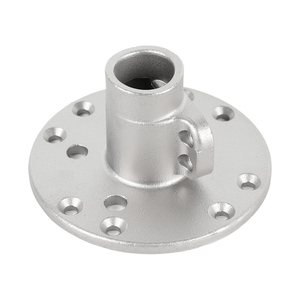
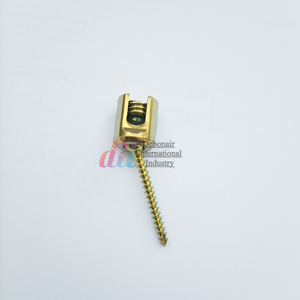
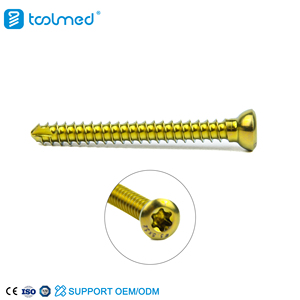
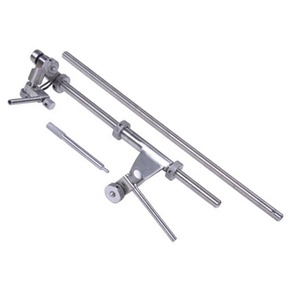
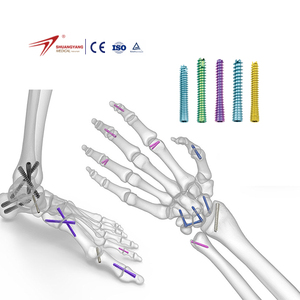
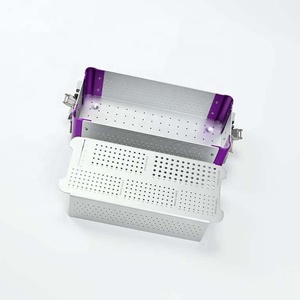
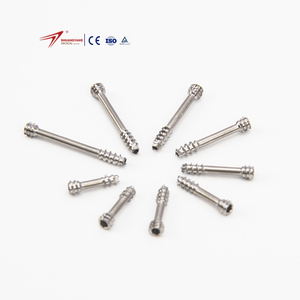
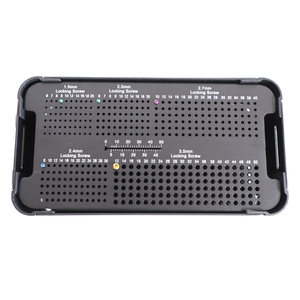
OEM Quality Management Capability Benchmark
Realizing zero-defect manufacturing for surgical implants through rigorous metrology, certified raw materials, and closed-loop process verification.
Executive Overview: The Paradigm Shift in Custom OEM Orthopedic Manufacturing
In the rapidly evolving global healthcare ecosystem, the contract manufacturing of orthopedic implants—spanning trauma plating systems, spinal pedicle screw constructs, craniomaxillofacial (CMF) micro-fixation, and veterinary surgical implants—demands an uncompromising convergence of bio-metallurgical expertise, multi-axis precision machining, and robust regulatory compliance. As international procurement leaders, OEM brand managers, and hospital tenders navigate escalating scrutiny under the European Union Medical Device Regulation (EU MDR 2017/745), the United States FDA 21 CFR Part 820 Quality System Regulation (QSR), and global MDSAP audits, selecting a qualified custom OEM orthopedic implant factory and exporter has transitioned from a purely cost-driven transaction to a strategic risk-mitigation imperative.
Modern orthopedic implants perform under rigorous biomechanical stress within hostile physiological environments. Bone fixation plates, cannulated compression screws, interbody fusion cages, and intramedullary nails must maintain cyclic fatigue resistance, osteointegration viability, and zero chemical leaching over millions of load-bearing cycles. Consequently, establishing an industry-leading Quality Management System (QMS) is not merely a documentation exercise; it represents the operational framework that guarantees micro-inch dimensional accuracy, material purity, surface passivation integrity, and end-to-end batch traceability from raw titanium billet to final sterile barrier packaging.
1. Total Quality Management System (QMS) Architecture for Implant Fabrication
An enterprise-grade OEM orthopedic factory operates under a fully integrated ISO 13485:2016 quality management framework structured around process validation, risk management (ISO 14971), and continuous process improvement. The QMS infrastructure governs every touchpoint of the contract manufacturing lifecycle, ensuring that OEM partners receive device history records (DHR) that withstand international regulatory submissions.
Raw Material Verification
Rigorous incoming material control utilizing X-ray Fluorescence (XRF) spectroscopy, optical emission spectrometry (OES), and mechanical tensile testing to verify ASTM F136 Ti-6Al-4V ELI, ASTM F67 Commercially Pure Titanium, and ASTM F138 316L Stainless Steel mill certificates prior to production release.
In-Process Metrology Control
Utilization of Zeiss non-contact optical CMMs and Keyence 3D profile measuring systems to validate intricate locking thread geometry, pitch precision, and hole angularity at defined 15-minute machining intervals.
Full DHR & Traceability
Every export shipment includes a complete Device History Record (DHR), detailing heat treat lot logs, CNC operator stamps, passivating chemical concentration reports, and laser marking verification numbers.
Risk Management Protocols (ISO 14971 Integration)
In accordance with ISO 14971, potential failure modes during custom manufacturing—such as burr formation in cannulated screw lumens, micro-cracking during plate bending, or surface contamination from machining coolants—are systemically mitigated through Failure Mode and Effects Analysis (FMEA). Our manufacturing engineers conduct Design for Manufacturability (DFM) reviews before toolpath generation, identifying critical-to-quality (CTQ) dimensions and establishing automated tool wear monitoring systems to prevent thermal distortion.
2. Metallurgy, Biomaterial Engineering & Machining Operations
The biological performance of orthopedic implants relies heavily on metallurgical structure and mechanical properties achieved during high-precision subtractive manufacturing. Custom OEM production utilizes medical-grade alloys engineered for biocompatibility, fatigue resistance, and artifact-free post-operative imaging.
| Biomaterial Standard | Composition & Metallurgy | Mechanical Strength (Tensile / Yield) | Primary Clinical OEM Applications |
|---|---|---|---|
| ASTM F136 (Ti-6Al-4V ELI) | Titanium alloy with Extra Low Interstitial oxygen content for superior toughness. | UTS: ≥ 860 MPa YS: ≥ 795 MPa |
Trauma locking plates, cannulated compression screws, spinal pedicle screws, CMF reconstruction. |
| ASTM F67 (CP Titanium Grade 2 / 4) | Commercially Pure Titanium offering high ductility and osteoconductive surface forming. | UTS: 485 – 550 MPa YS: 380 – 483 MPa |
Maxillofacial mini-plates, cranial mesh constructs, malleable sternal fixation plates. |
| Implant-Grade PEEK (ASTM F2026) | Polyether ether ketone polymer matching cortical bone elastic modulus (~3.6 GPa). | Tensile Strength: ≥ 95 MPa Flexural Modulus: 4.1 GPa |
TLIF/PLIF interbody lumbar cages, cervical fusion cages with Tantalum X-ray markers. |
| Stainless Steel 17-4PH / 316LVM | Vacuum Arc Remelted (VAR) stainless steel for maximum corrosion resistance and hardness. | UTS: ≥ 1000 MPa (17-4PH) Hardness: HRC 38-44 |
Autoclavable surgical instruments, drill guides, tap handles, femoral distractors, sterilization boxes. |
Subtractive Precision Machining & Surface Passivation
Machining implant-grade titanium requires specialized cutting fluid chemistry, dynamic toolpath suppression, and high-rigidity CNC machinery. Our production facility houses Swiss-type Citizen and Tsugami sliding-head lathe fleets capable of turning complex cannulated screws with wall thickness tolerances held under ±0.005mm. Simultaneously, 5-axis DMG Mori milling centers contour anatomical bone plates with continuous smooth curves, eliminating micro-notch stress concentration sites.
Post-machining surface treatment is governed by ASTM F86 standards. Implants undergo multi-stage automatic ultrasonic cleaning to remove polar and non-polar hydrocarbon residues. Anodization processes—including Type II electrochemical anodization for friction reduction and fatigue endurance, and Type III color anodization for intuitive surgical size identification—are executed in controlled chemical baths verified by spectrophotometry.
3. Strategic Procurement Trends in Global Orthopedic OEM Sourcing (2025–2030)
The landscape of orthopedic contract manufacturing is undergoing structural shifts. Global distributors and OEM brand owners face mounting pressures: compressed regulatory lead times, unpredictable supply chains, and rising costs associated with technical file compilation under EU MDR. To maintain competitive advantage, procurement officers are transitioning toward holistic supply chain alliances with specialized factories that provide consolidated engineering, production, and regulatory capabilities.
1. Dual-Sourcing & Geopolitical Risk Hedging
Enterprise medical device companies are actively diversifying their supplier matrices. Partnering with certified Asian OEM factories featuring turnkey export infrastructure allows brand owners to insulate supply chains against localized disruptions while optimizing unit production economics.
2. Complete Surgery-Ready Kit Bundling
Hospitals increasingly demand "one-stop" surgical solutions. Successful OEM exporters no longer supply standalone bone plates or screws; they deliver pre-configured surgical tray systems containing custom aluminum sterilization cases, color-coded drills, taps, and ergonomic drivers.
3. Hybrid Additive & Subtractive Manufacturing
The integration of Selective Laser Melting (SLM) 3D titanium printing for trabecular porous structures combined with high-precision CNC finish machining is revolutionizing interbody cage and joint reconstruction design, fostering superior biological bone ingrowth.
4. Technological Roadmap: Next-Gen Orthopedic Implants & Smart OEM Quality Systems
Looking toward the next decade, the convergence of digital manufacturing, automated inspection algorithms, and advanced biomaterials will redefine quality management standards in orthopedic implant production.
In-Line Automated Optical Quality Inspection: Transitioning from manual sampling to 100% inline machine-vision verification powered by AI defect classification algorithms. Every screw thread angle, pitch distance, and hex-socket depth is measured within fractions of a second during high-speed turning, eliminating human inspection error.
Patient-Specific Implants (PSI) & Mass Customization: Advanced OEM factories are upgrading digital workflows to translate hospital CT scan DICOM data directly into custom toolpaths for patient-matched oncology reconstruction plates, CMF implants, and complex revision spine cases within 48-hour design-to-shipment windows.
Resorbable & Bioactive Surface Treatments: Beyond static titanium anodization, contract manufacturing research focuses on plasma-sprayed hydroxyapatite (HA) coatings and biodegradable magnesium alloy implants that provide temporary mechanical stability before safely degrading into natural metabolic pathways.
5. Factory Capabilities & Enterprise Infrastructure Audit
Operating as a high-precision contract manufacturer and international exporter, our facilities integrate state-of-the-art machinery, rigorous laboratory testing, and turnkey export services designed specifically for global OEM partnerships.
| Operational Phase | Equipment & Infrastructure | Quality Assurance Benchmark |
|---|---|---|
| Multi-Axis Machining | Swiss-type CNC lathes (Tsugami, Citizen), 5-axis machining centers, high-speed thread whirling units. | Tolerances held to ±0.003mm; automated chip management and high-pressure oil coolant delivery. |
| Precision Investment Casting | Silica sol ceramic mold investment casting for complex surgical instrument handles and distractors. | Elimination of porosity per ASTM E192 standards; superior surface finish before final machining. |
| Surface Finishing & Cleaning | 7-stage automated ultrasonic cleaning line, Type II & III anodization tanks, fiber laser marking. | Residue testing per ISO 19227; dark, permanent UDI laser marking compliant with GS1 standards. |
| Cleanroom Packaging | ISO Class 7 positive-pressure cleanroom equipped with automated pouch sealing and blister packaging lines. | Bioburden monitoring per ISO 11737; validated packaging sterile barrier integrity (ASTM F1929). |
6. B2B Procurement & Technical FAQ
Essential technical and commercial answers tailored for medical device procurement managers, regulatory affairs directors, and OEM contract negotiators.