Precision Implant Portfolio
Factory-direct orthopedic internal fixation systems, certified bio-compatible trauma hardware, and specialized surgical instrumentation sets.
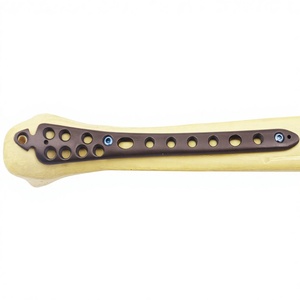
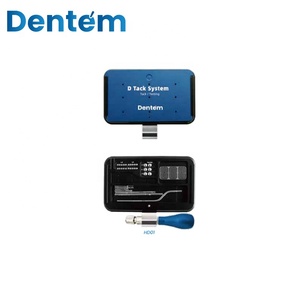
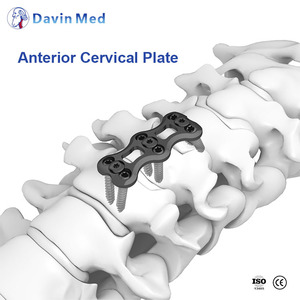
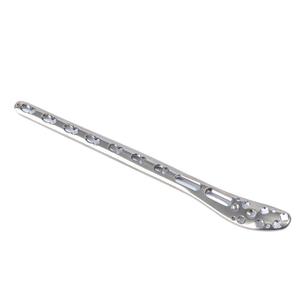
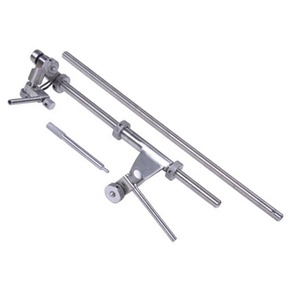
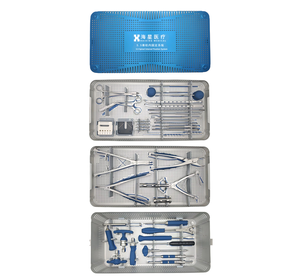
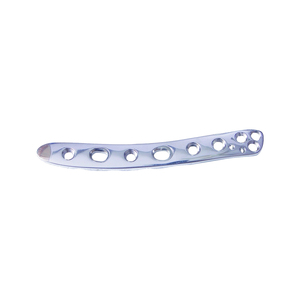
OEM/ODM Manufacturing Infrastructure
Why Tier-1 medical device brand owners and regional hospital supply chains partner with our manufacturing facilities.
Metallurgical Integrity & Pure PEEK
We exclusively source implant-grade titanium alloy (Ti-6Al-4V ELI per ASTM F136) and Commercially Pure Titanium (ASTM F67). Interbody fusion cages are manufactured using radiolucent PEEK-OPTIMA polymers integrated with tantalum markers for superior radiographic visualization.
5-Axis CNC & Swiss Machining
Operating high-precision 5-axis DMG MORI and Citizen Swiss lathe centers. Dimensional tolerance is strictly held within ±0.005mm to guarantee thread-locking concentricity and elimination of screw-plate cold welding during trauma procedures.
Regulatory Dossier & Traceability
Full compliance under ISO 13485:2016 quality systems. Every dispatch includes raw material melt certificates, Type II anodization thickness reports, bio-burden validation, and complete lot-level traceability documentation for local MOH registrations.
Strategic Guide to Custom OEM Orthopedic Implant Manufacturing & Sourcing
The global orthopedic implant landscape is undergoing a massive structural shift. As healthcare systems push for cost containment alongside improved clinical outcomes, the demand for specialized Custom OEM Orthopedic Implant Distribution Partners, contract manufacturers, and exporters has escalated dramatically. Sourcing high-grade internal fixation hardware—ranging from distal tibial locking compression plates to complex posterior spinal pedicle screw systems—requires a rigorous analysis of metallurgical integrity, biomechanical design, machining precision, and regulatory compliance.
This technical white paper explores the core engineering principles, production workflows, and future market dynamics governing orthopedic device manufacturing. Designed for hospital purchasing authorities, regional medical device distributors, and private-label brand holders, this document provides actionable insights into establishing risk-mitigated supply chains with certified OEM factories.
1. Material Science and Metallurgy in Orthopedic Reconstruction
The selection of raw materials dictates the fatigue life, corrosion resistance, and osseointegration profiles of orthopedic implants. Modern internal fixation demands materials that minimize stress shielding while delivering superior tensile yield strengths.
- Ti-6Al-4V ELI (Extra Low Interstitial) - ASTM F136: The benchmark material for load-bearing trauma plates, intramedullary nails, and spinal pedicle screws. The ELI grade reduces iron and interstitial elements (oxygen and nitrogen), yielding superior fracture toughness and fatigue resistance under cyclic bending moments.
- Commercially Pure Titanium (CP Grade 2 & 4) - ASTM F67: Primarily utilized for maxillofacial reconstructive mini-plates and cranial mesh systems where high ductility allows intra-operative anatomical contouring without micro-fracturing plate geometry.
- Polyetheretherketone (PEEK-OPTIMA): Biocompatible thermoplastic widely integrated into interbody fusion cages (PLIF, TLIF, ALIF). PEEK features an elastic modulus (~3.6 GPa) closely matching human trabecular and cortical bone, thereby drastically attenuating stress-shielding phenomena.
- Cobalt-Chromium-Molybdenum Alloys (CoCrMo - ASTM F75): Utilized in joint arthroplasty bearing surfaces requiring extreme wear resistance and mirror-polished surface micro-topography.
Biomechanical & Material Property Comparison Matrix
| Material Standard | Yield Strength (MPa) | Tensile Strength (MPa) | Elastic Modulus (GPa) | Primary Clinical Application |
|---|---|---|---|---|
| Ti-6Al-4V ELI (ASTM F136) | ≥ 795 | ≥ 860 | 110 - 114 | Trauma Plates, Pedicle Screws, Nails |
| CP Titanium Grade 4 (ASTM F67) | ≥ 480 | ≥ 550 | 105 - 110 | CMF Maxillofacial Plating, Cranioplasty |
| Implant-Grade PEEK | N/A (Flexural: 170) | 90 - 100 | 3.6 | Spinal Interbody Fusion Cages |
| 316L Stainless Steel (ASTM F138) | ≥ 690 | ≥ 930 | 193 | Temporary External Fixators, Distractors |
2. Precision Machining and Surface Engineering Technologies
Transitioning raw titanium titanium bar stock into an anatomically contoured, burr-free locking plate involves advanced subtractive manufacturing methodologies. Modern OEM factories must maintain rigid process controls to eliminate micro-cracks that act as stress concentration points.
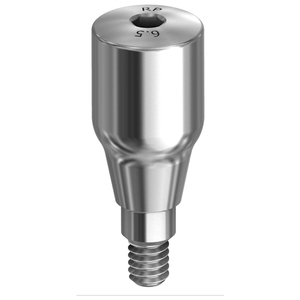
Multi-Axis CNC Milling & Swiss Lathe Turning: Variable-angle locking holes demand complex multi-axis toolpaths. The internal threads of a locking plate hole must be machined with precision geometry to accept both locking and cortex screws without cross-threading. Swiss-type automatic turning centers execute high-speed machining of pedicle screw threads, cannulated screws, and dental abutments in a single setup, ensuring absolute concentricity.
Anodization & Surface Topography Modification: Surface passivation is critical for medical implants. Type II Anodization forms a controlled titanium oxide ($TiO_2$) protective layer that suppresses ion release, dramatically enhances fatigue strength, and reduces tissue adhesion where plate removal is anticipated. Type III Color Anodization provides intuitive color-coding by screw diameter and plate family, simplifying surgical workflow inside the operating theater.
Thread Design Mechanics
Double-lead buttress and helical threads optimize insertion velocity while maximizing pullout resistance in osteopenic bone structures.
Fatigue Testing Standards
Implants undergo rigorous cyclic fatigue testing under ASTM F382 (bone plates) and ASTM F1717 (spinal constructs) up to 5 million cycles.
Cleanroom Packaging
Final washing via multi-stage ultrasonic baths, followed by assembly and double-tyvek blister sealing inside Class 10,000 (ISO 7) cleanrooms.
Future Global Sourcing Trends in Orthopedic Manufacturing (2025–2030)
The global orthopedic contract manufacturing sector is moving rapidly toward intelligent automation, digital patient-matching, and hybrid additive-subtractive workflows. OEM distributors must align with manufacturing partners who invest in next-generation production capabilities.
Trend 1: Convergence of Additive Manufacturing (3D Printing) and CNC Milling
While traditional CNC machining remains superior for thread geometry and high-volume trauma plates, Electron Beam Melting (EBM) and Direct Metal Laser Sintering (DMLS) 3D printing technologies allow factories to fabricate porous titanium structures. These porous scaffold matrices emulate natural trabecular bone pore sizing (300–500 microns), accelerating osteoblast migration and biological fixation. Forward-thinking OEM exporters now utilize hybrid production lines: 3D printing the porous core of spinal cages or acetabular cups, followed by 5-axis CNC finishing of structural mating threads.
Trend 2: Variable-Angle (VA) Locking Compression Technologies
Mono-axial locking plates are being superseded by Variable-Angle Locking Systems. Surgeons require the flexural freedom to angle screws up to 15 degrees off-axis in any direction to avoid adjacent articular surfaces or target specific fracture fragments. OEM exporters capable of manufacturing cold-workable titanium inserts or specialized polyaxial locking thread geometry are gaining significant market share over legacy fixed-angle suppliers.
Trend 3: Supply Chain De-risking and Regulatory Technical File Support
With the transition from the EU Medical Device Directive (MDD) to the stringent EU Medical Device Regulation (MDR 2017/745), alongside evolving FDA 510(k) requirements, distributors can no longer source from uncertified white-label workshops. Modern exporters must supply comprehensive Technical Documentation dossiers (STED format), clinical evaluation reports (CER), usable Instructions for Use (IFU), and validated sterilization validation packaging protocols (ISO 11607).
Trend 4: Dedicated Veterinary Orthopedic Expansion
The veterinary surgical sector is expanding at unprecedented rates. OEM partners are increasingly requested to modify human trauma plate profiles into micro-fragment systems tailored for small-animal TPLO (Tibial Plateau Leveling Osteotomy) and THR (Total Hip Replacement) surgical techniques, utilizing identical medical-grade titanium alloys.
Key Criteria for Evaluating an OEM Orthopedic Manufacturing Partner
When conducting supplier audits for custom orthopedic hardware, international procurement directors should apply a rigorous multi-tier verification checklist:
- Quality Management Certifications: Verify valid ISO 13485:2016 certification issued by accredited Notified Bodies (e.g., TÜV SÜD, BSI, SGS) covering both implant and instrument manufacturing scope.
- Metrology Instrumentation: Ensure the factory cleanroom utilizes optical coordinate measuring machines (CMM), surface roughness testers, visual thread comparators, and automated torque-testing rigs.
- OEM Tooling & Mold Capability: Assess internal capabilities for Rapid Prototyping, Finite Element Analysis (FEA) computer simulations, and custom sterilization tray fabrication.
- Batch-to-Batch Consistency: Confirm lot traceability mechanisms where raw material mill certificates can be cross-referenced to the specific physical implant delivered to the surgeon's tray.
Frequently Asked Sourcing Questions
Detailed answers regarding technical specifications, OEM customization, regulatory support, and export logistics.
Partner with a Certified OEM Implant Manufacturer
Expand your orthopedic product portfolio with factory-direct pricing, high-precision titanium implants, complete surgical instrument sets, and full regulatory backing.
Inquire Now