Engineering Excellence in Custom OEM Orthopaedic Solutions
As the global orthopaedic implant market pivots toward high-precision, patient-matched, and bio-harmonious trauma systems, original equipment manufacturers (OEMs), distributors, and hospital procurement boards face unprecedented regulatory, metallurgical, and manufacturing demands. Sourcing a dependable custom OEM orthopaedic implants supplier requires rigorous validation across raw material origin, multi-axis CNC tolerance execution, surface passivations, and ISO 13485 quality control protocols.
Recommended Surgical & Orthopaedic Solutions
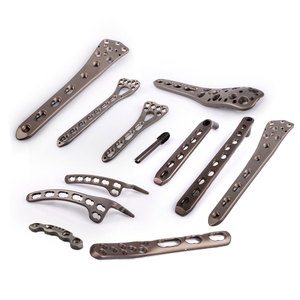
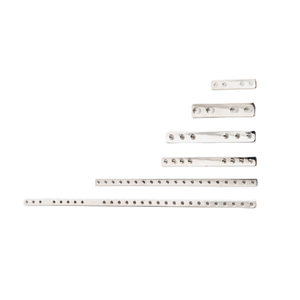
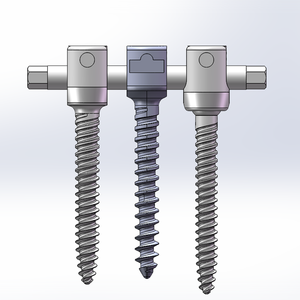
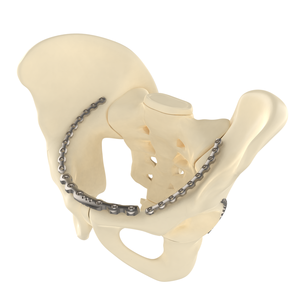
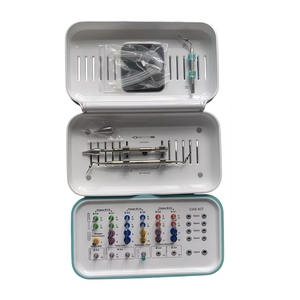
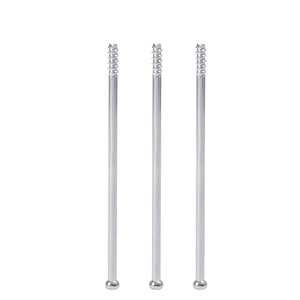
Explore our primary OEM product offerings, encompassing precision trauma locking plates, veterinary osteosynthesis systems, specialized spinal nails, interbody devices, and surgical instrumentation.
Material Science in OEM Orthopaedic Fixation
The mechanical performance of orthopaedic implants hinges on raw material purity and specific crystal phase characteristics. Leading OEM suppliers work predominantly with Ti-6Al-4V ELI (Extra Low Interstitial, ASTM F136) titanium alloys, 316L/316LVM surgical stainless steels (ASTM F138), and implant-grade Polyetheretherketone (PEEK, ASTM F2026).
ASTM F136 Ti-6Al-4V ELI Alloy
Offering reduced oxygen, nitrogen, and iron content compared to standard grade 5 titanium, Ti-6Al-4V ELI exhibits superior damage tolerance, higher fracture toughness, and exceptional fatigue strength necessary for dynamic weight-bearing bone plates and pedicle screws.
Polyetheretherketone (PEEK)
Implant-grade PEEK features an elastic modulus (~3.6 GPa) closely matching human cortical bone, substantially reducing stress shielding. Combined with radiolucency and integrated tantalum/titanium radiopaque markers, it remains the gold standard for spine fusion cages.
Type II & Type III Anodization
Electrochemical surface passivation creates anti-galling oxide layers (Type II anodization) that prevent cold welding between titanium screws and locking plate threads during high-torque insertion. Type III color coding enhances intra-operative identification.
Material Performance Specification Comparison
| Material Specification | Tensile Strength (MPa) | Yield Strength (MPa) | Elastic Modulus (GPa) | Biocompatibility Standard | Primary Clinical Application |
|---|---|---|---|---|---|
| Ti-6Al-4V ELI (ASTM F136) | ≥ 860 | ≥ 795 | 110 - 114 | ISO 10993 / ASTM F981 | Trauma Plates, Pedicle Screws, Nails |
| CP Titanium Grade 4 (ASTM F67) | ≥ 550 | ≥ 483 | 105 | ISO 10993 / ASTM F981 | Maxillofacial Plates, Cranial Fixation |
| 316LVM Stainless (ASTM F138) | ≥ 860 | ≥ 690 | 190 - 200 | ISO 10993 / ASTM F981 | Cost-Effective Trauma, Veterinary Fixation |
| Implant PEEK (ASTM F2026) | 90 - 100 | ≥ 90 | 3.6 - 4.0 | ISO 10993 Approved | TLIF/PLIF/Cervical Interbody Cages |
Future Sourcing & Procurement Trends in Orthopaedics
The global contract manufacturing ecosystem for orthopaedic devices is undergoing a structural paradigm shift driven by digital surgical planning, regulatory harmonization, and additive manufacturing.
1. Additive Manufacturing & Porous Structures
Laser Powder Bed Fusion (LPBF) and Electron Beam Melting (EBM) enable direct fabrication of 3D trabecular bone-mimicking porous titanium coatings (50–70% porosity, pore sizes 300–600 µm). Sourcing partners are transitioning from solid titanium cages to 3D-printed porous interbody structures that foster direct osseointegration and vascular ingrowth without plasma-spray coatings.
2. Patient-Specific Implants (PSI) & Digital Workflows
Hospitals and specialized distributors are demanding rapid-turnaround custom OEM workflows. By taking CT/MRI DICOM datasets, custom suppliers leverage automated CAD reconstruction algorithms to produce patient-matched maxillofacial plates, pelvic reconstruction grids, and complex revision arthroplasty components in less than 72 hours.
3. Stringent Regulatory Matrix & EU MDR 2017/745
The implementation of the EU Medical Device Regulation (MDR) and elevated FDA 510(k) clearability metrics require suppliers to provide exhaustive Technical Documentation Files (TDF). Modern OEM partners must offer full traceability, bio-burden validation, cleanroom packaging (ISO Class 7), and lifetime fatigue test data (ASTM F382 / ASTM F543).
Evolution of Bone Fixation Architecture
Historically, dynamic compression plates (DCP) relied entirely on friction generated between the plate and bone surface to achieve stability. This method frequently led to periosteal blood supply impairment and subsequent cortical necrosis.
The technological transition to Locking Compression Plate (LCP) systems revolutionized trauma surgery. By introducing threaded screw heads that lock into corresponding female threads within the plate holes, the system acts as an internal fixator. Current R&D trends focus on Variable-Angle (VA) Locking Systems, permitting surgeons to angle screws up to 15 degrees off-axis in any direction. This allows targeted screw placement in periarticular fractures while preserving mechanical construct rigidity.
Why Global Healthcare Brands Partner With Us
Our manufacturing infrastructure blends precision Swiss-type CNC turning, 5-axis high-speed milling, automated optical inspection, and rigorous compliance management.
5-Axis Precision Milling
State-of-the-art DMG MORI and Citizen CNC machines guarantee sub-micron repeatability for complicated anatomic contouring, thin-wall maxillofacial plates, and micro-threaded locking holes.
ISO Class 7 Cleanroom
Ultrasonic multi-stage bio-burden removal, passivations, and primary sterile packaging are conducted within validated cleanroom environments in adherence to ISO 14644-1.
Complete Regulatory Bundles
We furnish distributors with complete technical documentation, raw material mill test certificates (MTC), biocompatibility dossiers, and shelf-life stability validation files.
Frequently Asked Sourcing Questions
Detailed technical and commercial answers for international healthcare buyers, hospital tenders, and OEM partners.
Partner with a Trusted OEM Orthopaedic Implant Manufacturer
Accelerate your medical device portfolio expansion. Request a comprehensive product catalog, DFM technical review, or factory audit dossier today.
Send an Inquiry