Featured Surgical Implants & Instrument Systems
Factory-direct medical hardware certified under ISO 13485 & CE standards, manufactured via multi-axis CNC micro-machining.
Executive Whitepaper: The Evolution of Orthopedic Manufacturing in China
Analysis of metallurgical engineering, regulatory compliance, and supply chain optimization for global B2B medical procurement teams.
The global demand for high-precision orthopedic surgical instruments and structural implants has undergone a paradigm shift over the last decade. As healthcare systems seek to balance fiscal constraints with uncompromised clinical outcomes, China has evolved from a high-volume component manufacturer into an advanced center for biomechanical innovation, micro-machining, and bio-compatible materials processing. Global distributors, regional hospital networks, and original equipment manufacturer (OEM) brand owners now rely on Chinese factories for medical devices engineered to exact international standards such as ISO 13485:2016, EU MDR 2017/745, and US FDA 510(k) framework controls.
Modern orthopedic manufacturing relies on the precise integration of advanced metallurgy, automated toolpaths, and sterile processing protocols. In trauma, spinal reconstruction, sports medicine, and craniomaxillofacial (CMF) surgery, an implant's performance depends on micron-level dimensional tolerances, surface morphology, and mechanical fatigue resistance. This whitepaper provides a comprehensive technical overview for procurement directors, product engineers, and regulatory specialists evaluating China's wholesale orthopedic manufacturing landscape.
Enterprise Capabilities & Manufacturing Excellence
Why leading medical brands choose our integrated manufacturing facilities for wholesale orthopedic instruments and implant production.
Multi-Axis CNC Swiss Machining
Our production floors utilize 5-axis and 9-axis Swiss-type automatic CNC lathes capable of completing complex polyaxial pedicle screws, variable-angle locking plates, and cannulated instruments in single-setup operations to eliminate cumulative positioning errors.
Implant-Grade Metallurgical Traceability
Every titanium plate, rod, and screw is forged from certified raw material suppliers adhering strictly to ASTM F136 (Ti-6Al-4V ELI) and ASTM F67 (Unalloyed Titanium). Heat numbers are stamped and tracked through final packaging to guarantee structural integrity.
Surface Treatment & Type II/III Anodization
Proprietary electrochemical surface treatments provide vibrant, wear-resistant color-coding for surgical identification, while Type II anodization significantly increases surface hardness, reducing fretting corrosion and micro-motion wear in internal fixation systems.
Technical Specification Matrix: Implant Alloys vs Application Standards
| Material Specification | Biomechanical Properties | Standard Compliance | Primary Clinical Indications |
|---|---|---|---|
| Ti-6Al-4V ELI Titanium Alloy | High tensile strength (≥860 MPa), low elastic modulus, excellent fatigue resistance | ASTM F136 / ISO 5832-3 | Spinal Pedicle Screws, Intra-medullary Nails, Structural Trauma Plates |
| Commercially Pure Titanium (CP-Ti) | Ductile, superior bio-integration, easily contourable during surgery | ASTM F67 / ISO 5832-2 | Maxillofacial Miniplates, Cranial Reconstruction, Reconstructive Mesh |
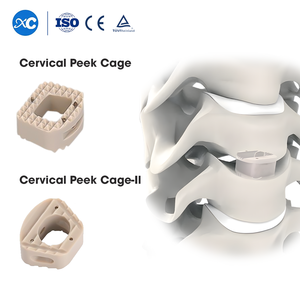
| PEEK-OPTIMA® Polyetheretherketone | Radiolucent, cortical bone-matched modulus (3.5 GPa), zero artifact on MRI | ASTM F2026 | ACDF Cages, TLIF/PLIF Lumbar Interbody Fusion Devices |
| Medical Stainless Steel 316L | High rigidity, cost-effective fracture fixation, high torque resistance | ASTM F138 / ISO 5832-1 | Small Fragment Trauma Sets, K-Wires, Bone Drills & Surgical Reamers |
Biomechanical Engineering & Surgical System Architecture
In-depth technical breakdown of trauma, spinal, and maxillofacial implant engineering.
Trauma Fixation Mechanics
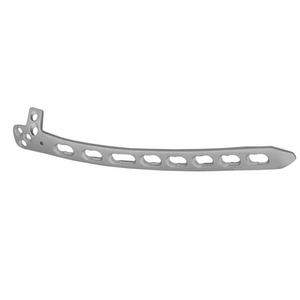
Locking Compression Plate (LCP) systems combine dynamic compression technology with angular stability. Threaded screw holes interlock with the screw head, transforming the plate-screw assembly into a single rigid construct. This minimizes periosteal compression, preserving micro-vascular blood supply to fractured osseous segments and accelerating primary bone healing.
Spinal Internal Fixation Systems
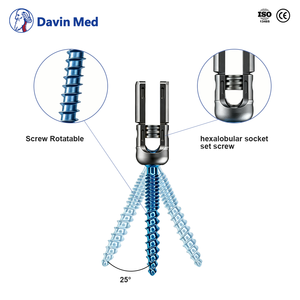
Polyaxial pedicle screw systems feature friction-head mechanisms allowing up to 50 degrees of trajectory variation for seamless rod insertion. Combined with radiolucent PEEK interbody fusion cages featuring tantalum radio-opaque markers, surgeons achieve stable 360-degree spinal fusion with precise intra-operative fluoroscopic visualization.
Ergonomic Instrument Engineering
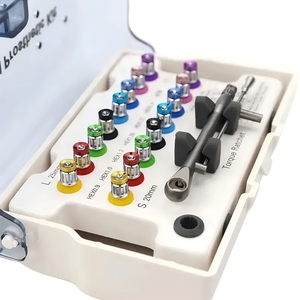
Surgical instruments are manufactured using high-chromium surgical stainless steel (420/630 grade) paired with silicone quick-connect handles. Taps, reamers, drill bits, and depth gauges are color-coded, laser-etched, and designed to withstand thousands of autoclave sterilization cycles without loss of calibration.
Future Global Procurement Trends in Orthopedic Manufacturing
Key strategic trends shaping medical supply chain management over the next decade.
1. Patient-Specific Instruments (PSI) & Additive Manufacturing
Surgical teams are moving rapidly toward custom 3D-printed porous titanium implants and patient-matched surgical cutting guides. Advanced factories in China are integrating electron beam melting (EBM) and direct metal laser sintering (DMLS) to produce porous scaffold structures that mimic natural trabecular bone structure.
2. Modular & Reusable Sterilization Systems
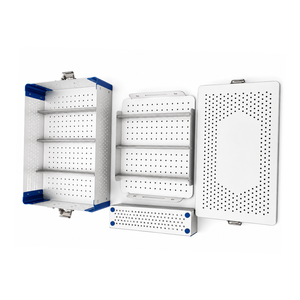
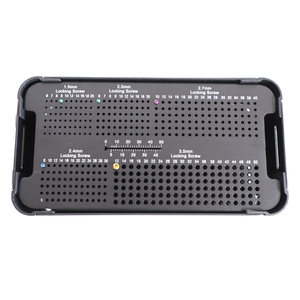
Hospitals are prioritizing high-durability anodized aluminum sterilization boxes with modular PPSU silicone inserts. Standardized trays optimize Central Sterile Services Department (CSSD) throughput, lower processing costs, and reduce single-use plastic waste across operating theaters worldwide.
3. Direct OEM White-Label Customization
International distributors are consolidating vendor bases by partnering directly with contract manufacturers capable of turnkey service—including custom laser branding, custom tray configurations, multi-lingual Instructions for Use (IFU), and regulatory technical file submission.
Industry Development Trends: 2025–2030 Roadmap
Technological innovations establishing next-generation orthopedic care standards.
-
1
Bio-resorbable Polymer Composite Systems
Development of magnesium alloy and PLA/PGA bio-absorbable implants that provide initial structural fixation for pediatric and sports medicine procedures, gradually safely absorbing as natural bone regenerates, eliminating secondary implant removal surgeries.
-
2
Smart Robotic-Assisted Surgical Instruments
Instrumentation tailored for robotic navigation systems. Precision machining ensures perfect coupling between optical tracking arrays and surgical drills, pedicle screwdrivers, and joint replacement cutting blocks.
-
3
Nanostructured Osseointegrative Surface Treatments
Transitioning beyond smooth titanium to acid-etched, plasma-sprayed hydroxyapatite (HA) and nano-porous surfaces that encourage cell adhesion, vastly shortening recovery timelines in osteoporotic patient populations.
Frequently Asked Questions (FAQ) for Global Buyers
Addressing key procurement, regulatory, and quality control inquiries for international medical device buyers.
Partner with a Leading Chinese Orthopedic Manufacturer
Streamline your medical device supply chain today. Connect with our senior engineering team to request technical datasheets, CAD model reviews, sample kits, or factory audit schedules.