The Global Landscape of Orthopedic Implant Manufacturing & Wholesale Supply
The global market for orthopedic implants—spanning trauma fracture fixation systems, spinal interbody fusion cages, intramedullary nails, and craniomaxillofacial (CMF) reconstruction—is undergoing a profound transformation. As global healthcare expenditure faces persistent pressure to optimize Total Cost of Ownership (TCO) without compromising clinical outcomes, healthcare procurement authorities and medical device OEMs are increasing their reliance on specialized China-based contract manufacturers and wholesale suppliers.
Modern orthopedic surgery demands implants that demonstrate optimal biomechanical stability, immediate primary fixations, and minimal bio-reactivity. Manufacturing these devices requires a convergence of ultra-precise mechanical engineering, advanced material science, and uncompromising quality assurance compliance matching standards such as ISO 13485:2016 and the European Union Medical Device Regulation (EU MDR 2017/745).
1. Advanced Materials Science in Modern Orthopedic Implants
Material selection dictates the biomechanical longevity of an orthopedic implant inside the human body. The primary challenge in fracture fixation and spinal fusion is avoiding stress shielding—a phenomenon where an overly stiff metal implant absorbs body load, depriving surrounding bone tissue of necessary mechanical stress and causing bone resorption (osteopenia).
| Material Variant | Standard Compliance | Tensile Strength (MPa) | Elastic Modulus (GPa) | Primary Clinical Indications |
|---|---|---|---|---|
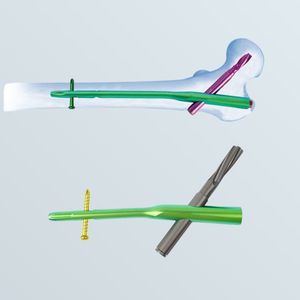
| Ti-6Al-4V ELI | ASTM F136 / ISO 5832-3 | ≥ 860 MPa | ~110 GPa | Trauma Plates, Pedicle Screws, PFNA Nails |
| Pure Titanium (Grades 1-4) | ASTM F67 / ISO 5832-2 | 240 – 550 MPa | ~105 GPa | Low-profile CMF Plates, Cranial Fixation |
| PEEK-OPTIMA® | ASTM F2026 | 90 – 100 MPa | 3.5 – 4.0 GPa | Spinal Interbody Fusion Cages (TLIF/PLIF) |
| Co-Cr-Mo Alloy | ASTM F75 / ISO 5832-4 | ≥ 660 MPa | ~210 GPa | Arthroplasty Bearings, Structural Joint Rods |
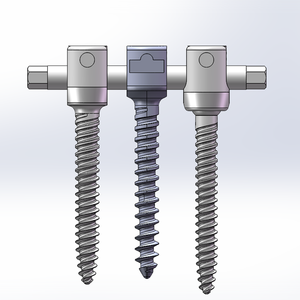
As demonstrated in the comparison table above, Ti-6Al-4V ELI (Extra Low Interstitial) remains the gold standard for load-bearing trauma locking compression plates (LCP) and spinal pedicle screw systems. By reducing interstitial elements like oxygen, nitrogen, and iron, ELI-grade titanium exhibits significantly enhanced fracture toughness and fatigue resistance under cyclic physiological loading compared to standard industrial titanium.
Conversely, in spinal fusion procedures, PEEK (Polyetheretherketone) has gained dominance for interbody cages. PEEK features an elastic modulus (3.5 GPa) closely matching human cancellous and cortical bone, drastically reducing cage subsidence into vertebral endplates while offering complete radiolucency for clear post-operative X-ray and CT imaging assessment.
2. Precision Manufacturing Technologies & Surface Modification
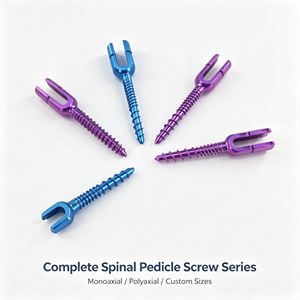
Precision execution at the micrometer level separates commercial-grade hardware from surgical-grade medical implants. High-speed multi-axis CNC Swiss lathe turning and 5-axis milling centers enable the creation of complex geometric profiles such as dynamic locking holes, self-tapping screw flutes, and anatomical contours pre-shaped to natural skeletal structures.
- Type II Anodization & Micro-Arc Oxidation (MAO): Electrochemical surface treatment creates a thick, inert titanium oxide layer that increases wear resistance, eliminates titanium ion leaching, and enables color-coding (e.g., magenta for 3.5mm screws, blue for 5.0mm screws) for rapid intra-operative identification by surgical teams.
- Laser Marking & UDI Compliance: Every single screw, plate, and rod undergoes direct part marking with unique device identification (UDI) barcodes and lot matrix codes to ensure 100% trace-back capability from the surgical suite back to the original raw material titanium ingot.
- Automated Passivation & Ultrasonic Cleaning: Multi-stage ultrasonic cleaning cycles utilizing validated deionized water and bio-compatible detergents strip away micro-particles, cutting fluids, and organic contaminants prior to cleanroom packaging.