Precision-Engineered Orthopedic & Dental Implants
Manufactured to ISO 13485 Standards utilizing ASTM F136 Titanium Alloy and Implant-Grade PEEK
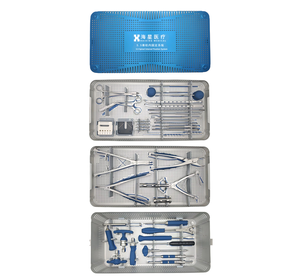
5.5 Titanium Spinal Internal Fixation System Class III Orthopedic Implant for Surgery Haixing Brand Fujian China
Send an Inquiry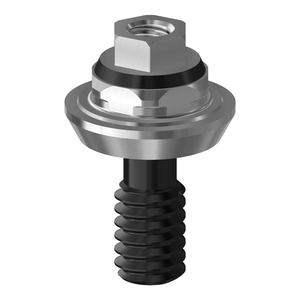
Dental Implant Compatible Parts Internal Connection Titanium Healing Abutment Scan Post Crown Restoration Multi-Platform
Send an Inquiry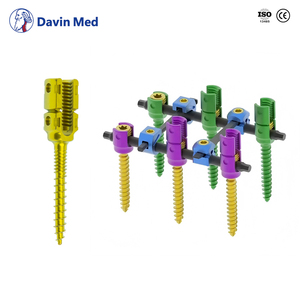
Titanium Alloy Monoaxial Pedicle Screw Spinal Fixation System Spine Implants For Orthopedic Surgery PLIF Spinal Implant System
Send an Inquiry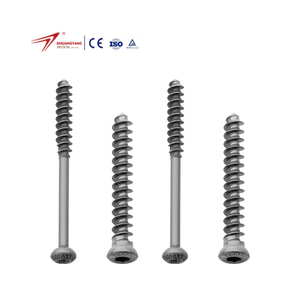
Shaungyang Medical Custom Orthopedic Surgical Trauma Implants Screw Orthopedic 4.0 Series Titanium Alloy Bone Cancellous Screws
Send an Inquiry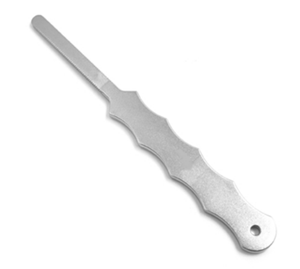
Pet-specific Stainless Steel Multi-faced Flat Bone File for Orthopedic Surgery
Send an Inquiry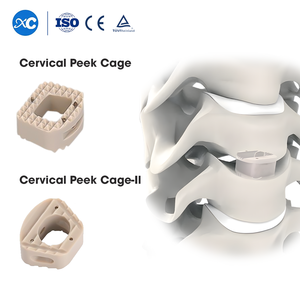
ISO Medical Lumber Implantes Quirurgicos Ortopedicos Spinal Fusion Internal Fixation ACDF Interbody Cervical Peek Cage Implants
Send an Inquiry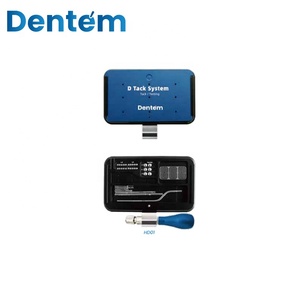
Dentem D Tack System GBR Kit Guided Bone Regeneration Titanium Screw Dental Implant Kit Reusable Surgical Tool Instrument
Send an Inquiry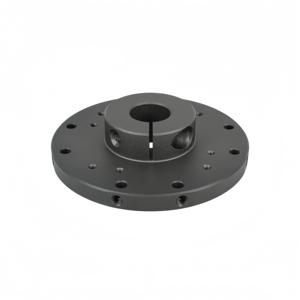
OEM Custom Orthopedic Implant Machined Parts Titanium Alloy
Send an InquiryNavigating the Global Sourcing Landscape for Wholesale Orthopedic Implants
Technical Insights for Importers, OEM Buyers, and Hospital Procurement Directors
1. Strategic Advantage of Partnering with Top-Tier Chinese Manufacturers
The global orthopedic implant sector is experiencing unprecedented demand driven by aging populations, increased trauma incidents, and expanded access to advanced surgical care in emerging markets. For international medical device importers, wholesale distributors, and brand owners, sourcing directly from specialized Chinese manufacturing hubs offers an unmatched combination of high-precision engineering capacity, scalable production pipelines, and cost efficiency.
Leading Chinese exporters have transitioned from traditional high-volume manufacturing to state-of-the-art biomedical engineering centers. Utilizing multi-axis CNC machining centers imported from Switzerland and Japan, automated passivating lines, and ISO Class 7 ultra-clean packaging environments, modern Chinese factories deliver implants that meet or exceed stringent regulatory thresholds set by global market authorities.
2. Core Material Science & Metallurgy Standards
When importing Class II and Class III orthopedic hardware—such as spinal pedicle screw systems, trauma locking plates, interbody cages, and dental abutments—material integrity represents the single most critical quality benchmark. Premier original equipment manufacturers (OEM) adhere strictly to established ASTM and ISO specifications:
| Material Designation | Standard Specification | Tensile Strength (MPa) | Biocompatibility & Mechanical Characteristics | Primary Clinical Application |
|---|---|---|---|---|
| Ti-6Al-4V ELI (Grade 23) | ASTM F136 / ISO 5832-3 | ≥ 860 | Extra-Low Interstitial element control; high fatigue resistance, exceptional strength-to-weight ratio. | Spinal Pedicle Screws, Locking Trauma Plates, Intramedullary Nails |
| CP Titanium (Grade 2 / Grade 4) | ASTM F67 / ISO 5832-2 | 483 to 680 | Commercially pure; maximum corrosion resistance, superior osseointegration characteristics. | Cranio-Maxillofacial (CMF) Plates, Dental Implants, Reconstructive Mesh |
| Implant-Grade PEEK | ASTM F2026 | 90 to 100 | Polyetheretherketone; radiolucent (MRI/CT clear), modulus of elasticity closely matching human cortical bone. | ACDF & PLIF Interbody Fusion Cages, Cervical & Lumbar Spacers |
| 316L Stainless Steel | ASTM F138 / ISO 5832-1 | ≥ 860 | High mechanical rigidity, cost-effective fracture stabilization for temporary internal fixation. | Surgical Instruments, Vet-specific Flat Files, Cannulated Bone Screws |
3. Key Technology Trends Reshaping Orthopedic Manufacturing
To retain competitive dominance in international procurement tenders, Chinese exporters are actively integrating several disruptive manufacturing innovations:
- Additive Manufacturing (3D Printing): Electron Beam Melting (EBM) and Direct Metal Laser Sintering (DMLS) are utilized to produce porous titanium structures with stochastic cell geometries. This architecture mimics natural trabecular bone, accelerating osteoconduction without compromising structural load capacities.
- Anodization Type II & Color-Coding Systems: Advanced electrochemical surface treatments produce thick oxide layers that dramatically enhance anti-galling performance while color-coding implants by diameter and anatomical side (e.g., left vs. right distal radius plates).
- Low-Profile Anatomical Pre-Contouring: Advanced reverse-engineering and 3D clinical data modeling allow engineers to pre-shape locking plates to complex human bone contours, reducing the need for intra-operative manual bending by surgeons and decreasing procedure times.
Future Procurement & Product Development Trends
Strategic Insights for Supply Chain Risk Management and Regulatory Readiness
1. Shift Toward Complete Surgical Kit Systems
Global procurement teams are moving away from importing standalone implants. The market heavily favors manufacturers that supply integrated solutions—combining implants, specialized drill bits, guidance sleeves, taps, and ergonomic screwdrivers inside validated sterilization trays.
- Reduces surgical assembly errors
- Simplifies inventory management
- Accelerates hospital procurement approval
2. Stringent Auditability & Regulatory Alignment
Importers are demanding turn-key regulatory dossiers to navigate stricter medical device regulations worldwide. Forward-thinking Chinese factories now supply comprehensive Technical Documentation Files (TDFs) directly compatible with local submission criteria.
- Full MDSAP & CE MDR readiness
- Biocompatibility test reports (ISO 10993)
- Validated shelf-life & packaging reports
3. Expansion into Veterinary & Dental Niche Implants
Diversification into high-margin sub-sectors—such as pet-specific orthopedic trauma plates, TPLO instrumentation, and multi-platform dental restoration parts—is accelerating. Custom micro-machining capabilities allow rapid prototyping for emerging market niches.
- Specialized pet-specific bone files & screws
- Multi-system compatible dental scan posts
- Rapid custom OEM engineering cycles
Why International Importers Partner with Our Manufacturing Hub
Combining High-Precision Machining with Strict Quality Control Protocols
Swiss 5-Axis CNC Precision Machining
Our production floor features high-precision CNC sliding-head lathes engineered for continuous micro-machining. This guarantees tight tolerance adherence (±0.005mm) across complex geometries, including self-tapping flutes, locking thread interfaces, and variable-angle screw pockets.
ISO Class 7 Cleanroom & Ultrasonic Washing
Implants undergo multi-stage ultrasonic washing in deionized water environments to completely eradicate residual cutting oils, metal micro-particulates, and bioburden. Packaging is performed inside certified cleanrooms to guarantee pristine purity prior to sterilization.
Rigorous Quality Assurance & Fatigue Testing
Every production lot undergoes rigorous mechanical testing, including static axial compression, dynamic torsional shear, and fatigue life testing per ASTM F543 and ASTM F1717 standards. Optical coordinate measuring machines (CMM) verify 100% of critical dimensions.
Comprehensive Private-Label & OEM Support
We provide full private-label services for global medical brands. From high-resolution fiber laser marking of custom part numbers and logos to customized sterile blister packaging, IFU printing, and outer box design—we deliver retail-ready or hospital-ready solutions.
Ready to Streamline Your Orthopedic Implant Supply Chain?
Partner with an established China manufacturing exporter equipped with ISO 13485 certification, advanced CNC infrastructure, and complete regulatory support for international distributors and hospital tenders.
Send an Inquiry Request Technical Catalog & SpecsFrequently Asked Questions by Importers & Procurement Officers
Essential Technical, Commercial, and Regulatory Answers for Sourcing Managers