Featured Precision Orthopedic Systems
Direct-from-factory orthopedic implants, surgical instrument sets, and OEM custom-machined trauma hardware compliant with ISO 13485 and ASTM medical standards.
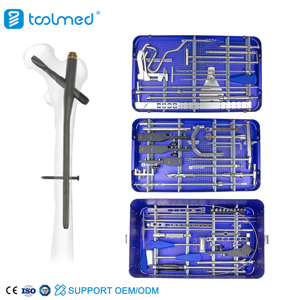
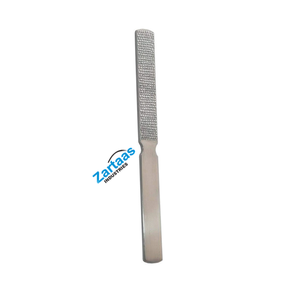
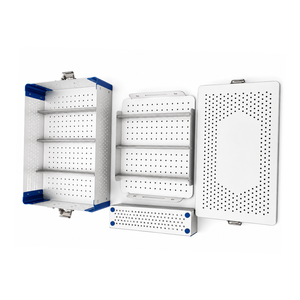
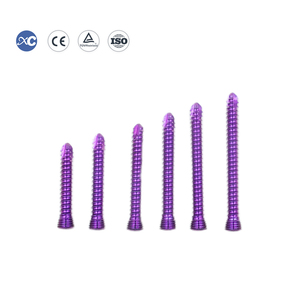
China Orthopedic Manufacturing: Technical Sourcing Blueprint
The global supply chain for orthopedic medical devices has undergone a structural paradigm shift. Specialized industrial clusters in China—most notably in Changzhou (Jiangsu), Shanghai, and Zhejiang—now produce a substantial portion of the world's trauma plates, intramedullary nails, spinal pedicle screws, and PEEK interbody fusion devices. For international distributors, purchasing directors, and hospital procurement officers, sourcing wholesale orthopedic implants for sale from China provides a strategic balance of mechanical precision, clinical efficacy, and capital optimization.
Medical-grade titanium alloys (Ti-6Al-4V ELI per ASTM F136) and Commercially Pure Titanium (CP-Ti Grade 2/4 per ASTM F67) form the backbone of modern trauma implant production. These alloys exhibit extraordinary yield strength (≥ 795 MPa), superior fatigue endurance limits under cyclic loading, and optimal elastic modulus values close to human cortical bone, reducing stress shielding post-implantation.
Utilizing high-end 5-axis and 9-axis Swiss CNC turning-milling lathe centers (Citizen, Tsugami), manufacturing tolerances for complex locking screw threads, cannulated cores, and variable-angle plate holes are held strictly within ±0.005mm.
Type II electrochemical anodization forms a compact, bio-inert titanium oxide layer that increases corrosion resistance while allowing color-coded identification for distinct screw diameters (e.g., 2.7mm, 3.5mm, 4.5mm, 5.0mm) during surgery.
Information Gain Insight: Biomechanical Load Sharing in Trauma Fixation
Unlike traditional non-locking compression plates (DCP) that rely on friction between the plate and bone surface (which can compromise periosteal blood supply), modern Titanium Locking Compression Plates (LCP) function as fixed-angle internal fixators. Threaded screw heads lock directly into matching threads within the plate holes, converting shear stress into axial compression. This creates a biomechanically stable construct that accelerates secondary bone healing through callus formation without necrosis of the periosteum.
Biomaterial Comparison: Selecting Implants for Specific Clinical Indications
Navigating supplier catalogues requires a deep technical understanding of biomaterial performance. Below is a comparative breakdown of primary materials used across Chinese export-grade implants:
| Material Type | Material Standard | Tensile Strength (MPa) | Elastic Modulus (GPa) | MRI Compatibility | Primary Clinical Application |
|---|---|---|---|---|---|
| Ti-6Al-4V ELI (Gr 5) | ASTM F136 / ISO 5832-3 | ≥ 860 MPa | 110 GPa | High (Low Artifact) | Trauma Plates, PFNA Nails, Pedicle Screws, CMF Screws |
| CP-Titanium (Gr 2/4) | ASTM F67 / ISO 5832-2 | 480 – 680 MPa | 105 GPa | High (Low Artifact) | Maxillofacial Reconstruction Plates, Cranial Meshes |
| PEEK-OPTIMA® | ASTM F2026 | 100 – 130 MPa | 3.5 – 4.0 GPa | Transparent (Radiolucent) | Interbody Fusion Cages (TLIF, PLIF, ACIF), Spinal Spacers |
| 316L Stainless Steel | ASTM F138 / ISO 5832-1 | ≥ 860 MPa | 200 GPa | Moderate (Artifact Prone) | Veterinary Implants, Temporary Fixation Pins, Bone Files |
Key Sourcing & Technological Trends (2025–2030)
Understanding macro trends in orthopedic implant manufacturing helps healthcare buyers align their multi-year procurement strategies with regulatory updates and clinical demands.
Hospitals are actively moving away from bulk non-sterile implants that require labor-intensive processing in central sterile supply departments (CSSD). Suppliers offering pre-sterilized double-blister packed locking plates and color-coded single-use instrument trays significantly lower hospital processing overhead and eliminate cross-contamination risks.
Electron Beam Melting (EBM) and Selective Laser Sinking (SLS) 3D printing technologies are replacing conventional plasma spraying. Chinese exporters are integrating porous, bone-mimicking trabecular titanium lattices into interbody cages and acetabular cups, encouraging rapid bone osteointegration and vascularization.
With the implementation of the European Union Medical Device Regulation (EU MDR 2017/745) and US FDA Unique Device Identification (UDI) system, top-tier Chinese manufacturers now feature high-precision laser-etched matrix codes on every implant. This ensures end-to-end trace-back capability from raw ingot to patient records.
Enterprise Advantages: Engineering & Quality Management
Rooted in advanced metallurgical science, rigorous process control, and full international compliance, our manufacturing partners deliver institutional-grade orthopedic devices for leading hospital brands globally.
Equipped with cleanroom environments (Class 100,000 / ISO Class 8) for ultrasonic washing, passivating, and packaging, eliminating endotoxin accumulation on implants prior to final gamma or ETO sterilization.
Every single batch of implants ships with complete documentation packs: Raw Material Mill Test Certificates (MTC), CMM coordinate dimensional test logs, static axial compression test reports, and dynamic bending fatigue records (ASTM F382 & ASTM F543).
We provide comprehensive contract manufacturing services for international brand owners, including custom plate design contouring, specialized drill sleeve threading, customized sterilization aluminum container layout, and laser etching of buyer brand logos.
Frequently Asked Questions (FAQ) for Global Importers
Essential technical and commercial answers to streamline your direct orthopedic implant procurement from China.
Request complete product catalogues, material certificates, OEM pricing structures, and sample evaluation packages directly from our global export division.
Send an Inquiry