Featured Wholesale Orthopedic Implants & Surgical Toolkits
Direct factory supply of ISO 13485 certified orthopedic systems, titanium trauma hardware, spinal fusion technologies, and specialized veterinary solutions.
1. The Global Landscape of China's Orthopedic Manufacturing Sector
The global demand for high-performance orthopedic implants has undergone a seismic shift over the past decade. International hospital procurement officers, medical device brand owners, and regional distributors are increasingly looking to China as the premier manufacturing powerhouse for orthopedic trauma systems, spinal fixation hardware, maxillofacial plates, and surgical instrumentation sets. This transition is not driven solely by cost efficiency, but fundamentally by technical advancement, rigorous metallurgical adherence, and state-of-the-art CNC precision machining capabilities.
Historically, Western tier-1 MedTech conglomerates dominated the global musculoskeletal market. However, China’s medical manufacturing infrastructure—concentrated in key industrial technology clusters such as Changzhou, Ningbo, and Jiangsu—has evolved into a sophisticated ecosystem capable of meeting and exceeding international regulatory standards. Leading Chinese orthopedic manufacturers now operate within audited ISO 13485 Quality Management Systems, producing implants machined from raw materials that conform strictly to ASTM F136 (Ti-6Al-4V ELI) and ASTM F67 (Commercially Pure Titanium) standards, alongside implant-grade Polyetheretherketone (PEEK per ASTM F2026).
Metallurgical Integrity and Biocompatibility Benchmarks
When selecting a wholesale supplier in China, medical device buyers must evaluate raw material integrity. High-grade orthopedic internal fixation hardware demands materials that resist multi-axial cyclic loading, biological corrosion, and bodily fluid degradation. Premier Chinese exporters utilize certified titanium ingots sourced with complete heat-number mill certificates. Mechanical testing, including tensile strength, yield stress, elongation percentage, and microstructural grain size analysis, is performed on every batch to eliminate early implant fatigue failure risks.
2. Enterprise Manufacturing Advantages: Engineering Precision & Quality Control
At Orthovana Medical Co., Ltd, our manufacturing architecture is built specifically to address the pain points of international medical distributors, private-label brand partners, and clinical procurement teams. By integrating advanced Swiss 5-axis CNC longitudinal machining centers with rigorous multi-stage quality assurance protocols, we ensure every bone plate, cannulated screw, pedicle screw, and PEEK interbody cage exhibits absolute dimensional stability.
Medical Titanium & PEEK Purity
Implantable systems crafted exclusively from ASTM F136 Ti-6Al-4V ELI, ASTM F67 CP Titanium, and radiographic-marked implant-grade PEEK. Complete raw material traceability provided with every shipment batch.
Micron CNC Precision
Multi-axis Swiss CNC machining ensures exact thread pitch, standardized self-tapping flutes, low-profile plate contouring, and flawless locking mechanism fitment across all anatomical implant lines.
ISO 13485 & CE Quality Audit
Cleanroom washing, ultrasonic passivating, surface anodization, and 100% optical gauge inspection guarantee zero-defect delivery and compliance for local health authority registrations.
Complete Surgery-Ready Sets
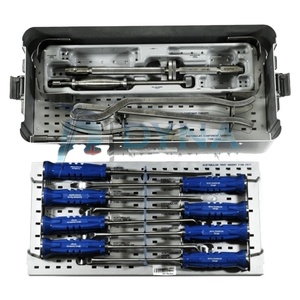
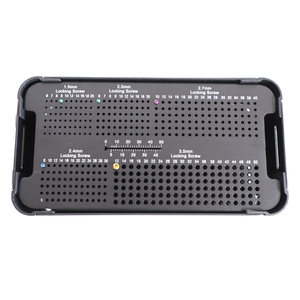
Every implant line is backed by custom surgical instrument sets, drill bits, depth gauges, bending irons, and aluminum sterilization boxes engineered for seamless intra-operative performance.
Global OEM/ODM & Private Label
Comprehensive contract manufacturing services including laser etching, custom branding, localized surgical technique manual design, and custom packaging support for regional distributors.
Supply Chain Reliability & Stock Buffer
Structured buffer inventory for fast-moving sizes (distal radius, proximal humerus, pedicle screws) minimizes procurement lead times and protects distributors against stock-out events.
3. Comprehensive Product Portfolio & Surgical Indications
A mature orthopedic supply partner must offer full anatomical coverage. Hospitals require harmonized surgical screw threads, standardized hexalobular/star drive recesses, and contoured plates that reduce intra-operative bending times. The primary product families produced by premier Chinese manufacturers include:
A. Trauma Fixation & Locking Compression Plate (LCP) Systems
Trauma internal fixation represents the foundation of emergency orthopedic surgery. Modern locking compression plates combine dynamic compression holes with threaded locking screw holes, allowing surgeons to execute hybrid fixation tailored to fracture severity:
- Upper Limb Plating Systems: Anatomically pre-contoured plates for the clavicle, proximal humerus, humeral shaft, distal humerus, olecranon, and distal radius (palmar/dorsal approaches).
- Lower Limb Fixation: High-strength titanium plates for proximal femur, femoral shaft, distal femur, proximal tibia, tibial shaft, distal tibia, and ankle/calcaneus fractures.
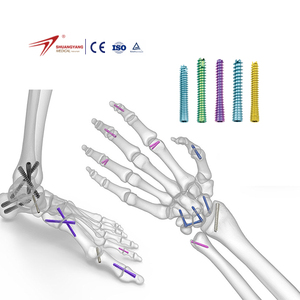
- Cannulated & Compression Screws: Herbert headless screws, 3.5mm/4.5mm/6.5mm cannulated compression screws designed for femoral neck fractures, scaphoid fixations, and osteotomies.
B. Spinal Internal Fixation & Interbody Fusion Technologies
Spinal surgery demands uncompromising dimensional accuracy and mechanical endurance under constant biomechanical load. Core spinal hardware includes:
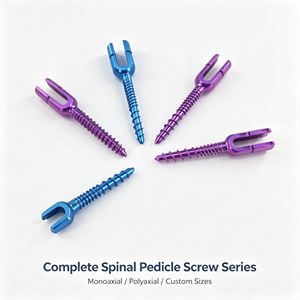
- Pedicle Screw Systems: Polyaxial and monoaxial pedicle screws with friction-head designs, reduction threads, and titanium connecting rods (5.5mm/6.0mm) for thoracolumbar spinal fusion, scoliosis correction, and spondylolisthesis repair.
- Cervical Fixation: Anterior Cervical Discectomy and Fusion (ACDF) low-profile locking plates with tactile locking mechanisms to prevent screw back-out.
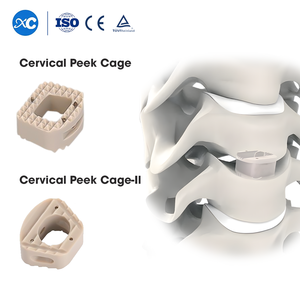
- PEEK Interbody Fusion Cages: Cervical, TLIF (Transforaminal Lumbar Interbody Fusion), PLIF (Posterior Lumbar), and ALIF cages engineered from radiolucent PEEK with integrated tantalum radiopaque markers for real-time radiographic alignment visualization.
C. Maxillofacial (CMF) & Reconstruction Plating
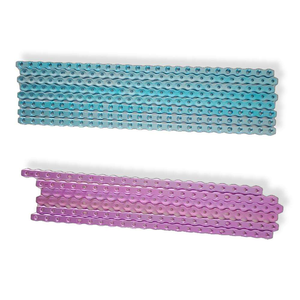
Cranio-Maxillofacial (CMF) surgery involves delicate facial bones requiring sub-millimeter plate profiles (1.0mm, 1.5mm, 2.0mm, and 2.4mm mini/micro plate series). Applications range from orbital floor repair and zygomatic complex reconstruction to orthognathic surgery and heavy-duty mandibular reconstruction following trauma or tumor resection.
D. Veterinary Orthopedic Implants
The global veterinary healthcare market has seen rapid demand expansion. Chinese exporters provide specialized small animal orthopedic implant lines, including ALPS (Advanced Locking Plate System), TPLO (Tibial Plateau Leveling Osteotomy) plates, cuttable bone plates, and mini-screw systems tailored for canine and feline orthopedics.
4. Future Global Procurement Trends in Orthopedic MedTech (2025–2030)
As the international medical device landscape transitions through regulatory updates, economic re-alignments, and technological innovations, healthcare procurement teams must stay ahead of emerging market trends:
Trend 1: Rise of Variable-Angle Locking Mechanics
Traditional fixed-angle locking plates restrict screw trajectory to a single predefined axis. Modern surgical preferences are rapidly moving toward Variable-Angle (VA) locking systems that allow surgeons to angle screws up to 15 degrees in any direction within the plate hole. This allows targeted screw placement around joint capsules, fracture fragments, or pre-existing hardware. Chinese factories are heavily investing in 5-axis micromachining to make VA locking hardware cost-effective for worldwide distribution.
Trend 2: Additive Manufacturing & 3D Porous Titanium Structures
While CNC machining remains the gold standard for structural plates and screws, 3D printing (Direct Metal Laser Sintering - DMLS) of porous titanium implants is gaining immense traction for complex spinal cages, acetabular cups, and custom joint revision implants. Porous titanium mimics cancellous bone architecture, encouraging rapid osseointegration and bone ingrowth compared to solid metal surfaces.
Trend 3: Supply Chain Diversification & White-Label Private Sourcing
Hospital networks and regional distributors are increasingly moving away from sole-reliance on expensive Western OEMs. By establishing direct white-label OEM contract manufacturing relationships with certified Chinese facilities, distributors can build their own proprietary branded implant lines, protecting gross profit margins while retaining full control over product availability.
Trend 4: Regulatory Harmonization & Digital Traceability
With the implementation of the EU Medical Device Regulation (MDR) and stricter registration rules across LATAM (ANVISA, COFEPRIS), Southeast Asia, and the Middle East, global buyers require suppliers who offer comprehensive technical documentation, clinical evaluations, biocompatibility testing (ISO 10993 series), and Unique Device Identification (UDI) barcoding on primary packaging.
5. Vendor Selection Framework: Direct Factory vs. Other Sourcing Channels
Evaluating vendor channels is critical for optimizing procurement budgets, quality assurance, and lead-time predictability. Below is a structural strategic matrix comparing direct sourcing from top Chinese manufacturers against traditional procurement channels:
| Evaluation Parameter | Direct Certified Chinese Factory (e.g., Orthovana) | Intermediary Trading Companies | Western Tier-1 Multi-Nationals |
|---|---|---|---|
| Raw Material Origin | Certified ASTM F136 / F67 Titanium with Mill Certificates | Variable / Indirect Verification | Certified ASTM Grade Titanium |
| Cost Savings Potential | High (40% - 65% below Western Benchmark) | Moderate (Added broker margin) | Baseline High Cost |
| OEM / ODM Customization | Full (Custom geometry, laser etching, kit assembly) | Limited or Restricted | None (Standard catalog only) |
| Quality System Audits | ISO 13485 Certified / Cleanroom Verified | Third-party dependent | ISO 13485 / FDA Approved |
| Lead Times & Agility | Fast (Direct production scheduling & buffer stock) | Subject to agent delays | Rigid regional allocation |
| Batch Traceability | 100% Lot-Level Heat Number Traceability | Varies by broker handling | 100% Traceability |
6. Frequently Asked Questions (FAQ) for International Buyers
Answers to technical, regulatory, and commercial inquiries routinely raised by hospital procurement officers, biomedical engineers, and medical supply importers.
What precise titanium grades are used in your orthopedic bone plates and screws?
Can distributors obtain complete technical dossiers for local health registration?
Are surgical instruments included, and are they compatible with other implant brands?
What are the options for OEM contract manufacturing, private labeling, and custom packaging?
How do you ensure batch-to-batch consistency across large production runs?
What is the standard production lead time and Minimum Order Quantity (MOQ)?
What surface anodization and cleaning procedures are applied to titanium implants?
How can international buyers request sample kits for evaluation?
Partner with China's Leading Orthopedic Implant Factory
Expand your orthopedic portfolio with high-precision, ISO 13485 certified trauma plates, spinal hardware, PEEK interbody cages, and custom surgical instruments. Get instant factory quotes, technical specifications, and registration support today.