Precision Surgical Products for Global Wholesale Distributors
Explore our flagship orthopedic instruments and anatomical implant systems engineered for trauma, spinal reconstruction, sports medicine, and veterinary surgery.
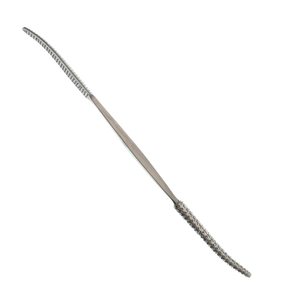
Curved Ends Stainless Steel Orthopedic Surgical Bone File
Ergonomic dual-ended rasp manufactured from surgical-grade German 316L stainless steel for bone contouring and rasping in joint arthroplasty.
Send an Inquiry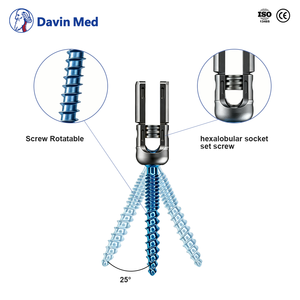
Davin Med Titanium Long Tail Polyaxial Pedicle Screw For Thoracolumbar Fixation
Ti-6Al-4V ELI extended-tab pedicle screws engineered for MIS posterior thoracolumbar spinal fixation and complex reduction cases.
Send an Inquiry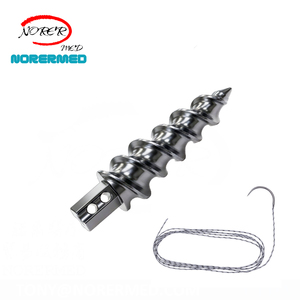
CNC Machined Custom Titanium Suture Anchor Screw for Sports Medicine
High pull-out strength threaded suture anchors designed for rotator cuff repairs, Glenoid labrum fixation, and ligament reconstruction.
Send an Inquiry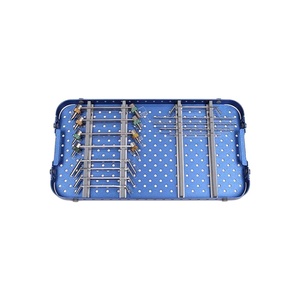
1.5/2.0/2.4/2.7/3.5mm Veterinary Orthopedic Instrument & Implant Kit
Comprehensive veterinary trauma system containing micro-locking plates, cortical screws, and autoclavable sterilization trays for pet fracture care.
Send an Inquiry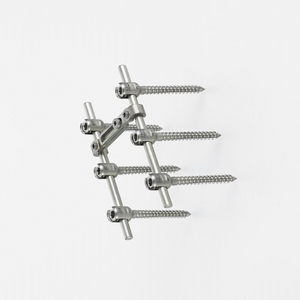
Top Ranking JMT EDEN Pedicle Screw Spinal Fixation System Class II
Low-profile friction-head polyaxial screws providing ±30° angular deviation for lumbar spine fusion and spondylolisthesis treatment.
Send an Inquiry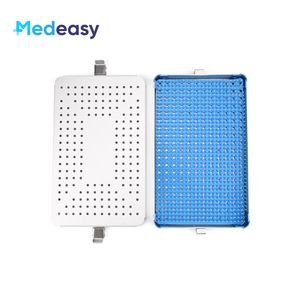
Medeasy Autoclavable Aluminum Disinfection Tray & Sterilization Box
Anodized heavy-duty aluminum instrument tray equipped with silicone holding inserts for safe steam autoclave sterilization cycles.
Send an Inquiry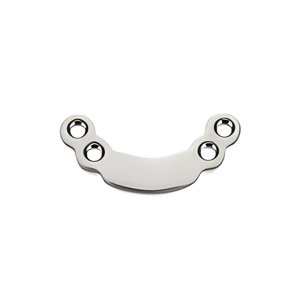
Custom Titanium Veterinary Orthopedic 2.0mm Acetabular Locking Plate
Sample-based OEM customized pelvic acetabular reconstructive plates forged from pure titanium for canine and feline hip dysplasias.
Send an Inquiry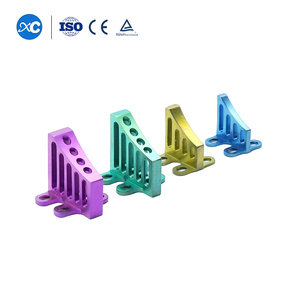
Veterinary Trauma Implant TTA System Surgical Instrument Kit
Tibial Tuberosity Advancement (TTA) cage and plate system specifically designed for cranial cruciate ligament repair in veterinary surgery.
Send an InquiryTechnical Evaluation & Sourcing Architecture for Orthopedic Implants
A deep dive into medical-grade metallurgy, Swiss CNC precision tolerances, and regulatory frameworks required for international distribution.
1. Advanced Metallurgy & Biocompatibility Engineering
In the global orthopedic device supply chain, selecting raw materials with proven biomechanical integrity is the single most critical factor for clinical efficacy and regulatory approval. Primary structural implants—including trauma locking compression plates (LCP), cannulated screws, intramedullary nails, and spinal pedicle screw systems—are manufactured primarily from medical-grade Titanium Alloy (Ti-6Al-4V ELI conforming to ASTM F136 / ISO 5832-3) and Commercially Pure Titanium (CP Ti Grade 2 & 4 conforming to ASTM F67).
Ti-6Al-4V ELI (Extra Low Interstitial) offers superior yield strength (typically exceeding 795 MPa) and exceptional fatigue resistance under dynamic physiological loads. The reduction of interstitial elements (oxygen, nitrogen, iron, and carbon) maximizes fracture toughness and resistance to stress corrosion cracking inside bodily fluids. For spinal interbody fusion cages, implant-grade PEEK (Polyetheretherketone) compliant with ASTM F2026 is utilized due to its modulus of elasticity (3.6 GPa) closely matching human cortical bone, thereby eliminating stress shielding phenomena while remaining radio-transparent under X-ray and CT imaging.
2. Precision Swiss CNC Machining & Surface Modification
Translating anatomical models into physical implants requires nanometer-level precision. Modern OEM/ODM manufacturing utilizes 5-axis longitudinal Swiss-type CNC automatic lathes (such as Citizen and Star platforms) capable of maintaining dimensional tolerances within ±0.005 mm. This ultra-high precision is paramount when cutting internal locking thread profiles on bone plates and double-lead self-tapping threads on pedicle screws.
Surface finishing processes dictate osseointegration performance and soft-tissue compatibility:
- Type II Anodization (Grey/Dark Anodizing): Significantly increases surface hardness, decreases friction coefficients, and eliminates micro-galling between titanium locking screw threads and plate holes.
- Color Anodization (Type III): Provides surgical teams with unambiguous diameter identification (e.g., Magenta for 2.7mm, Blue for 3.5mm, Gold for 4.5mm systems) during fast-paced operating room procedures.
- Electropolishing & Passivation: Chemical immersion per ASTM A967 removes free surface iron, creating a dense, continuous Titanium Dioxide (TiO₂) passive film that minimizes ion release in vivo.
Comprehensive Material & Application Comparison Matrix
| Material Standard | Tensile Strength (MPa) | Biomechanical Applications | Primary Advantage |
|---|---|---|---|
| Ti-6Al-4V ELI (ASTM F136) | ≥ 860 MPa | Locking Trauma Plates, Pedicle Screws, Nails | Ultra-high fatigue strength & bio-inertness |
| CP Titanium Grade 4 (ASTM F67) | ≥ 550 MPa | Maxillofacial Plates, Cranial Reconstruction | Superior cold-formability for intra-op bending |
| PEEK Optima (ASTM F2026) | ≥ 95 MPa | TLIF, PLIF, ACIF Interbody Fusion Cages | Radiolucent; modulus matches cortical bone |
| 316L Stainless Steel (ASTM F138) | ≥ 860 MPa | Surgical Instruments, Bone Drills, Rasps | High wear resistance & cost-effective hardness |
Future Procurement & Product Development Trends (2025–2030)
Analyzing global macro shifts in orthopedic device distribution, value-based hospital tenders, and next-generation surgical technologies.
1. Rise of Value-Based Healthcare & Sourcing Neutrality
Global healthcare systems are moving away from hyper-inflated brand premiums toward high-value, ISO-certified OEM orthopedic suppliers. Distributors in Europe, Latin America, and Southeast Asia are increasingly procuring directly from accredited Chinese manufacturers to maintain healthy profit margins under strict national reimbursement caps.
2. Modular & Sterile Ready-to-Use Kits
Hospitals are demanding pre-sterilized, single-use procedure kits to reduce central sterile supply department (CSSD) workload, eliminate cross-contamination risks, and streamline operating theatre turnover times. Wholesale dealers are prioritizing suppliers offering validated gamma/EO pre-packaged implants.
3. 3D Printed Trabecular Porous Structures
Additive manufacturing using Selective Laser Melting (SLM) is transforming spinal fusion and joint revision. Future product catalogs will focus heavily on 3D-printed titanium implants featuring open porous cell architectures (60-80% porosity) that simulate cancellous bone for rapid vascularization and direct bone ingrowth.
4. Stringent Regulatory Harmonization (MDR & STED)
With the EU MDR (Medical Device Regulation) and international MDSAP (Medical Device Single Audit Program) standards enforcement, distributors require manufacturers who can provide comprehensive STED (Summary Technical Documentation), clinical evaluation reports (CER), and full lot-level raw material traceability.
5. Veterinary Orthopedics Rapid Expansion
Companion animal healthcare is experiencing unprecedented global growth. Veterinary surgeons are adopting human-grade locking plate systems, TTA/TPLO knee instruments, and micro-fragment plates, opening lucrative new revenue streams for orthopedic medical dealers.
6. Smart Instrumentation & Color-Coded Workflow
Modern surgical suites demand intuitive, color-coded instrument trays that minimize operating time and eliminate drill/tap sizing errors. Standardizing screw pitch and drive mechanisms (such as Star/Torx drives) across trauma lines has become an industry standard.
Why Join Our Global Orthopedic Implant Dealer Network?
We provide strategic distributors, regional agents, and OEM brand owners with an unbeatable competitive advantage in quality, compliance, and profitability.
✓ Tiered Distributor Margins
Our direct-from-factory wholesale pricing architecture ensures distributors achieve 50% to 150% gross profit margins while maintaining tender competitiveness against top-tier multinational brands.
✓ Complete Registration Dossiers
We supply registered partners with full technical documentation—including ISO 13485 certificates, material mill test reports, biocompatibility test data, and sterilizer validation files—to expedite local MOH registrations.
✓ Turn-Key OEM/ODM Customization
From custom laser-etched branding and private-label packaging to bespoke plate modifications, our engineering team converts your surgical concepts into market-ready implants in as little as 30 days.
✓ Buffer Stock & Fast Dispatch
To eliminate stock-outs on fast-moving locking plates and pedicle screws, we maintain dedicated safety stock for contracted dealers, enabling dispatch within 5–7 business days.
✓ Surgical Technique Training
Distributors receive comprehensive surgical animation video guides, 3D anatomical sawbone models, and step-by-step surgical technique manuals to train local orthopedic surgeons effectively.
✓ Complete Instrument Compatibility
Implants are paired with heavy-duty, autoclavable instrument kits stored in organized aluminum sterilization trays, providing surgeons with a seamless, hassle-free operative experience.
Frequently Asked Questions by International Buyers
Clear, authoritative answers to common commercial, technical, and regulatory questions regarding wholesale orthopedic procurement.
What raw materials are used in your implants, and are mill certificates provided?
All metallic implants are manufactured strictly from certified titanium alloy (Ti-6Al-4V ELI per ASTM F136 / ISO 5832-3) or commercially pure titanium (CP Ti Grade 2 & 4 per ASTM F67). Non-metallic spinal cages use implant-grade PEEK (ASTM F2026). Every shipment includes lot-matched material test certificates (CoA) verifying chemical composition, physical properties, and ultrasonic test compliance.
How do you support local product registration with national Ministries of Health?
We provide contract distributors with full regulatory technical files formatted to STED guidelines. This includes ISO 13485 factory certificates, Certificates of Free Sale (CFS), clinical evaluation summaries, risk assessment reports (ISO 14971), sterilization validation reports, and high-resolution product artwork.
What is your minimum order quantity (MOQ) for wholesale dealers and OEM projects?
For standard catalog items, we support low MOQs (as few as 5–10 pieces per plate size) to help dealers build initial inventory. For OEM custom laser marking or private-label packaging projects, MOQs are determined based on production batching, typically starting at 50 units per SKU.
Are your orthopedic instrument sets compatible with standard sterilization protocols?
Yes. All surgical instrument sets—including drill bits, taps, screwdrivers, bending irons, and depth gauges—are manufactured from high-grade 17-4PH / 316L stainless steel and silicone inserts. They are fully validated for moist heat steam autoclaving at 134°C (273°F) per ISO 17665 standards.
What mechanical fatigue testing standards do your implants undergo?
Our implant designs undergo rigorous mechanical validation in accredited testing laboratories. Metallic locking trauma plates are dynamic fatigue tested per ASTM F382, spinal pedicle screw constructs are tested under ASTM F1717, and spinal cages undergo axial compression and shear fatigue testing per ASTM F2077 / ISO 14801 protocols.
How are order lead times and international logistics managed?
Standard inventory items ship within 5 to 7 days. Customized OEM batch orders generally ship within 25 to 35 days. We export via DHL/FedEx Express for urgent surgical needs, or via temperature-controlled air and sea freight forwarders with full export customs documentation.