Precision Surgical Products Available for Global Wholesale Sourcing
Explore our core ISO 13485 & CE certified orthopedic trauma, spinal, maxillofacial, and veterinary fixation systems. Standardized manufacturing guarantees batch-to-batch consistency and full material traceability.
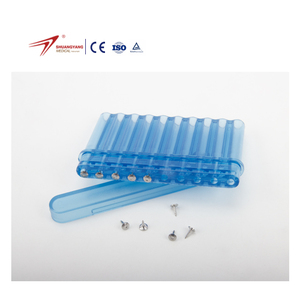
Shuangyang Orthopedic Implant Titanium Alloy Screw Gbr Membrane Bone Tack System Dental Hospital Use CEISO Certified 1 Year
Get a Quote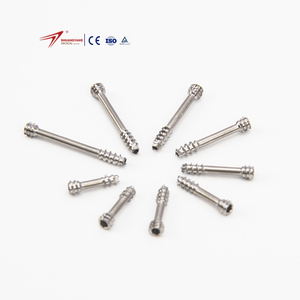
Orthopedic Implant Titanium Herbert Screw Trauma Surgery Headless Compression Cannulated Screw Orthopedic Herbert Screw Price
Get a Quote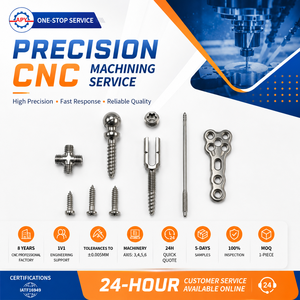
Precision CNC Machined Orthopedic Implants Titanium Bone Screws Spinal Fixation Parts OEM Custom Medical Components Manufacturer
Get a Quote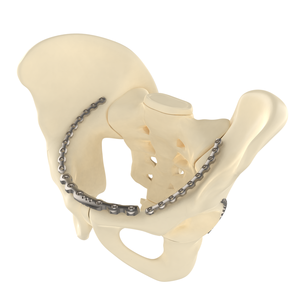
CANWELL CE/ISO Certified Stainless Steel Orthopedic Trauma 3.5mm Pelvic Locking Plate Curved Bone Fixation Implant Anatomical
Get a Quote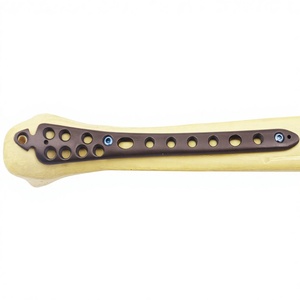
Orthopedic Titanium Trauma Implant Distal Tibial Medial Locking Plate Bone Fracture Internal Fixation Medical CE ISO Certified
Get a Quote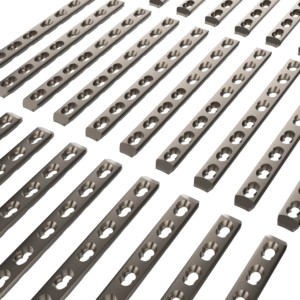
CANWELL 4.5mm Locking Compression Plate Narrow Humerus Femur Tibia Fixation Orthopedic Implant Manufacturer CE ISO OEM Supplier
Get a Quote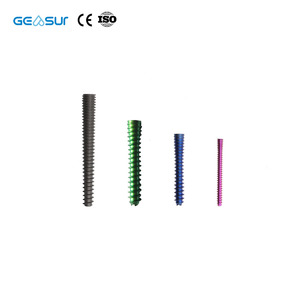
Geasure CE ISO Certified Class III Titanium Alloy Headless Compression Cannulated Screw-Orthopedic Implant for Orthopedic
Get a Quote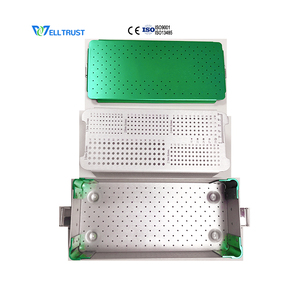
Veterinary Orthopedic Surgical Instruments Surgery Aluminum 1.5/2.0/2.4/2.7/3.5 Implant Screw Sterilization Box
Get a QuoteExecutive Whitepaper: Strategic Sourcing of Certified Orthopedic Implants from China Manufacturers
The global market for orthopedic fixation devices, spinal hardware, and craniomaxillofacial (CMF) implants is undergoing a fundamental structural transition. Hospital procurement boards, international medical device distributors, and private-label OEM buyers are balancing the twin imperatives of absolute biological safety and rigid budget containment. In this dynamic landscape, specialized certified orthopedic implant manufacturers in China have established advanced manufacturing ecosystems capable of producing implantable devices matching or exceeding Western OEM specifications while optimizing total cost of acquisition.
Modern orthopedic surgery relies on precise internal fixation to preserve vascularity, facilitate rapid bone union, and allow early mobilization. Achieving these surgical goals requires implants manufactured from biocompatible, fatigue-resistant alloys (such as ASTM F136 Ti-6Al-4V ELI titanium and ASTM F67 Commercially Pure Titanium) or radiolucent polymers like PEEK (Polyether Ether Ketone). China's leading certified manufacturers utilize state-of-the-art multi-axis CNC Swiss machining, automated surface anodization, micro-deburring, and ISO Class 7 cleanroom packaging to maintain dimensional accuracy measured in single-digit microns.
Key Strategic Takeaway for B2B Procurement Officers: Certified Chinese OEM/ODM suppliers now offer standardized Technical Master Files (DHF/DMR), complete raw material mill certificates, and lot-level inspection data, reducing regulatory submission timelines for regional distributors entering tenders under CE MDR or local MOH frameworks.
This comprehensive whitepaper analyzes material metallurgy, biomechanical engineering parameters, regulatory audit compliance, supply chain economics, and future technological trends shaping the global orthopedic wholesale manufacturing sector.
Metallurgical Standards and Biomechanical Engineering Properties
Select material performance parameters govern the safety, corrosion resistance, and load-bearing endurance of implantable medical hardware. Premium wholesale manufacturers standardise raw material procurement exclusively from verified suppliers with certified ingot melting logs. Below is a comparative biomechanical analysis of core orthopedic material platforms used in certified manufacturing:
| Material Grade Standard | Young's Modulus (GPa) | Tensile Strength (MPa) | Fatigue Limit (Cycles) | Primary Clinical Application |
|---|---|---|---|---|
| Titanium Ti-6Al-4V ELI (ASTM F136) | 110 - 114 GPa | ≥ 860 MPa | > 10,000,000 (@ 500 MPa) | Trauma Locking Plates, Pedicle Screws, Intramedullary Nails |
| CP Titanium Grade 2 / Grade 4 (ASTM F67) | 105 - 110 GPa | 480 - 680 MPa | > 5,000,000 (@ 300 MPa) | Maxillofacial Mini Plates, Cranial Fixation, GBR Bone Tacks |
| Implant-Grade PEEK (Polyether Ether Ketone) | 3.6 - 4.0 GPa | 170 - 200 MPa | > 10,000,000 (@ 90 MPa) | TLIF/PLIF Spinal Cages, Cervical Interbody Fusion Devices |
| Medical Grade Stainless Steel (316L / ASTM F138) | 190 - 200 GPa | ≥ 860 MPa | > 10,000,000 (@ 450 MPa) | Cost-Effective Pelvic Plates, Heavy Trauma Fixation, K-Wires |
1. Titanium Alloy Ti-6Al-4V ELI (Extra Low Interstitial)
ASTM F136 Ti-6Al-4V ELI is the benchmark material for load-bearing orthopedic trauma and spinal constructs. By limiting interstitial elements—specifically oxygen, nitrogen, carbon, and iron—ELI titanium demonstrates superior damage tolerance, enhanced fracture toughness, and increased fatigue resistance compared to standard industrial alloys. Its Young’s Modulus (~110 GPa) is significantly closer to human cortical bone (~18-22 GPa) than stainless steel (~200 GPa), dramatically reducing stress-shielding phenomena that lead to peri-implant bone resorption and construct loosening.
2. Commercially Pure Titanium (CP Grade 2 and Grade 4)
CP Titanium (ASTM F67) is prioritized in non-load-bearing or micro-fixation scenarios such as Maxillofacial mini-plating, cranial reconstruction, and dental GBR (Guided Bone Regeneration) membrane tacks. CP Titanium offers supreme contourability, allowing surgeons to bend micro-plates intraoperatively to anatomical complex skull contours without initiating micro-cracks or stress risers.
3. Polyether Ether Ketone (PEEK) Polymers in Spinal Biomechanics
Spinal interbody fusion cages manufactured from implant-grade PEEK provide an elastic modulus (3.6 GPa) closely matching human cancellous and subchondral bone. This stiffness equilibrium encourages radiolucency under post-operative X-ray and CT imaging, permitting clear visualization of bone graft incorporation while eliminating stress-shielding at the endplate junction.
5-Axis Swiss CNC Machining
Ultra-precision turning and milling equipment ensures double-threaded locking profiles and cannibalized cannulation holes maintain ±0.005mm tolerances across production batches.
Electrolytic Type II Anodization
Advanced electrochemical surface anodizing creates biocompatible color-coded identity tags while building a dense titanium oxide film that mitigates fretting corrosion.
100% Quality Passivation
Multi-stage ultrasonic cleaning and nitric acid passivation eliminate free surface iron particles, guaranteeing zero risk of localized pitting corrosion in physiological saline environments.
Global Procurement Trends & Future Development Outlook
The international market for wholesale certified orthopedic implants is entering a period of rapid technological evolution. Sourcing directors and hospital procurement boards are moving away from traditional transactional buying toward strategic partnerships with high-capability OEM/ODM manufacturers. Key macro trends shaping the next decade of orthopedic procurement include:
1. Widespread Adoption of Variable-Angle Locking Plate Systems (VALCP)
Conventional fixed-axis locking compression plates (LCP) are increasingly being superseded by Variable-Angle Locking Plate Technology. Surgeons require the flexural freedom to angle locking screws up to 15 degrees off the central axis in complex periarticular fractures (e.g., distal tibial medial fractures, proximal humerus, distal radius). Chinese certified suppliers are redesigning their locking thread geometries using proprietary co-cr alloy insert rings or deformable titanium plate threads to support multi-directional screw trajectory without compromising pull-out strength.
2. Growth of Single-Use Pre-Sterilized Procedure Kits
Hospital sterilization facilities face escalating labor costs and cross-contamination liability risks. Global distributors are requesting factory-sealed, gamma-irradiated or EtO-sterilized single-use procedure kits containing the required plate, pre-counted locking screws, and disposable drills. Chinese manufacturers are scaling up ISO Class 7 cleanroom packaging capabilities to supply retail-ready sterile blister packs directly to overseas markets.
3. Integration of Additive Manufacturing (3D Printed Porous Titanium)
Selective Laser Melting (SLM) and Electron Beam Melting (EBM) technologies have transitioned from niche prototyping to mass manufacturing of spinal fusion cages and acetabular cups. 3D-printed porous titanium constructs feature biomimetic trabecular architectures (pore sizes between 400–700 µm with 60-80% porosity), accelerating early vascularization and direct osseointegration compared to traditional machined smooth titanium surfaces.
4. Stringent Regulatory Harmonization & Traceability (UDI Regulations)
With the global implementation of Unique Device Identification (UDI) mandates under US FDA and EU MDR directives, generic unmarked implants are being phased out. Certified wholesale exporters now apply automated high-speed laser marking systems to etch GS1-compliant DataMatrix 2D barcodes on every single screw head and plate surface. This guarantees complete lot-level traceability from raw bar material to surgical insertion.
Corporate Strategic Advantages & Turnkey Manufacturing Solutions
As a premier China Wholesale Certified Orthopedic Implant Manufacturer and Exporter, our enterprise infrastructure is engineered around international medical quality standards, manufacturing transparency, and client-focused commercial terms. We partner directly with medical device distributors, regional hospital chains, and global brand owners seeking verified supply security.
1. Rigorous ISO 13485:2016 Certified Quality Management System
Our cleanrooms, machine shops, and testing laboratories operate under an audited ISO 13485:2016 framework. Quality management is not merely a final inspection step; it is integrated across every operational node:
- Raw Material Verification: Every batch of ASTM F136 titanium or PEEK polymer undergoes spectral composition analysis, tensile testing, and grain size verification prior to forging or CNC loading.
- In-Process Dimensional Auditing: Optical measuring machines (OGP) and automated air gauge systems perform continuous coordinate verification during Swiss-lathe processing.
- Mechanical Fatigue Testing: Structural constructs are subjected to static bending strength tests and dynamic cyclic fatigue testing per ASTM F1264 (intramedullary nails) and ISO 14801 (dental/bone tacks) standards.
2. Complete OEM / ODM Customization Framework
We provide complete turnkey private-label solutions tailored to your target commercial market. Our engineering team assists with reverse engineering, CAD design modification, rapid prototyping, and surgical tray layout design. Custom laser marking, specialized anodization color coding (blue, gold, magenta, green), custom labeling, and region-specific IFU (Instructions for Use) technical translation are handled seamlessly in-house.
3. Matched Surgical Instrument Kits & Sterilization Trays
An implant is only as good as the instrument set used to insert it. We manufacture matching surgical instrument boxes—including silicon-handled quick-coupling screwdrivers, cannulated drills, torque-limiting ratchets, depth gauges, and anodized aluminum sterilization containers—ensuring surgeons experience zero friction in the operating theater.
Frequently Asked Questions by International Procurement Teams
Detailed technical and commercial answers addressing common inquiries from hospital purchasing boards and medical device importers.
What certified material grades are used in your orthopedic implant manufacturing?
What technical and regulatory documentation is provided to support local product registration?
Do you supply matching surgical instrument sets with wholesale implant orders?
What are your OEM / ODM private-label capabilities, MOQs, and lead times?
How do you ensure batch-to-batch dimensional accuracy across high-volume production?
Can I request product samples and factory audit facilities prior to contract signing?
Partner with a Leading China Wholesale Certified Manufacturer
Expand your medical distribution portfolio with high-precision, ISO 13485 & CE certified orthopedic trauma plates, bone screws, spinal hardware, and CMF solutions. Request factory catalog pricing, material certificates, and OEM proposal details today.
Get a Quote