Featured Surgical Implant Systems & OEM Kits
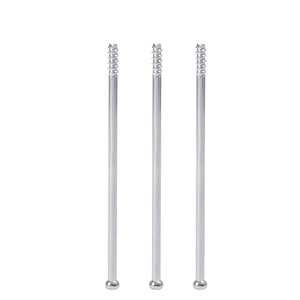
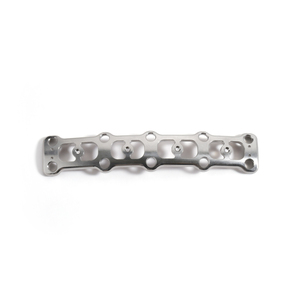
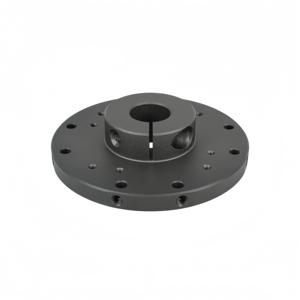
Direct factory-engineered titanium trauma plates, spine hardware, CMF implants, and veterinary instrumentation sets.
Executive Whitepaper: The Evolution of China’s Orthopedic ODM Manufacturing Ecosystem
The global medical device sector is undergoing a profound structural shift. As hospital procurement boards, international orthopedic brand owners, and medical distributors face mounting margin pressures, strict regulatory shifts under EU MDR 2017/745, and increasing demand for customized surgical solutions, China has established itself as the leading global hub for high-precision Original Design Manufacturing (ODM) and Original Equipment Manufacturing (OEM) of orthopedic implants.
Historically recognized for high-volume contract assembly, premier Chinese orthopedic manufacturers centered in bio-medical clusters such as Changzhou, Suzhou, and Weihai have evolved into sophisticated engineering enterprises. These facilities leverage advanced metallurgy, multi-axis Swiss-type lathe turning, high-speed 5-axis CNC milling, localized bio-surface modification, and automated cleanroom packaging to yield implant-grade hardware that meets or exceeds ISO, ASTM, and European CE benchmarks.
Information Gain: The Strategic Advantage of Chinese ODM Partners
Modern Chinese ODM partners offer global healthcare buyers an unmatchable dual benefit: rapid engineering prototyping paired with high-capacity serial production. By integrating CAD/CAM digital workflows with physical finite element analysis (FEA), premier factories reduce product launch cycles for variable-angle locking plates and spinal pedicle screws from 18 months down to under 12 weeks, while maintaining total metallurgical integrity.
Medical-Grade Biomaterial Engineering & Metallurgical Specifications
Surgical safety, bio-inertness, fatigue life, and osseo-integration depend fundamentally on chemical purity and microstructural uniformity. Leading Chinese ODM facilities deploy certified medical alloys strictly adhering to international standards.
| Biomaterial Grade | International Standard | Tensile Strength (MPa) | Yield Strength (MPa) | Primary Surgical Application |
|---|---|---|---|---|
| Ti-6Al-4V ELI (Grade 23) | ASTM F136 / ISO 5832-3 | ≥ 860 MPa | ≥ 795 MPa | Trauma Locking Compression Plates, Pedicle Screws, Cannulated Screws |
| CP Titanium (Grade 4) | ASTM F67 / ISO 5832-2 | ≥ 550 MPa | ≥ 483 MPa | Maxillofacial Reconstruction Plates, GBR Membrane Tacks |
| PEEK Optima (Polyetheretherketone) | ASTM F2026 | ≥ 95 MPa | ≥ 90 MPa | Interbody Fusion Cages (TLIF, PLIF, ACIF), Cranial Implants |
| Stainless Steel 316LVM | ASTM F138 / ISO 5832-1 | ≥ 860 MPa | ≥ 690 MPa | Veterinary Trauma Plates, K-Wires, External Fixation Rods |
Biomechanical Consideration for Raw Material Selection: Grade 23 Ti-6Al-4V ELI (Extra Low Interstitial) offers minimized oxygen, iron, and carbon contents relative to standard Grade 5 titanium. This yields superior fracture toughness and flexural fatigue resistance under cyclical physiological loading—an absolute prerequisite for load-bearing femoral neck plates, tibial intra-medullary nails, and long-segment spinal fixation systems.
Full-Spectrum Product Architecture & System Recommendations
Top Chinese ODM suppliers supply comprehensive, pre-contoured anatomical solutions designed to match diverse ethnic bone morphology, reducing operative time and intra-operative plate bending.
Trauma Fixation Systems
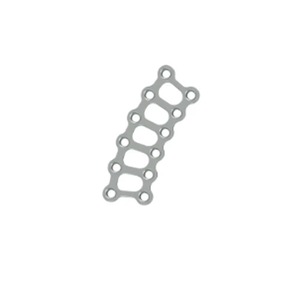
Includes 1.5mm to 4.5mm Micro, Small, and Large Fragment Locking Compression Plates (LCP). Featuring combination holes that accept both conventional cortical screws for dynamic compression and threaded locking screws for angular stability in osteoporotic bone.
Spinal Hardware & PEEK Cages
Top-loading monoaxial and polyaxial spinal pedicle screw systems engineered with dual-lead threads for rapid insertion. Complemented by radiolucent PEEK interbody fusion cages (TLIF, PLIF, Cervical) featuring tantalum radiographic position markers.
Craniomaxillofacial (CMF)
Ultra-low profile 1.0mm, 1.5mm, 2.0mm, and 2.4mm titanium mesh, mini-plates, and reconstruction systems. Specially optimized for orthognathic, midface trauma, orbital floor repair, and complex mandibular bridge defects.
Veterinary Orthopedic Kits
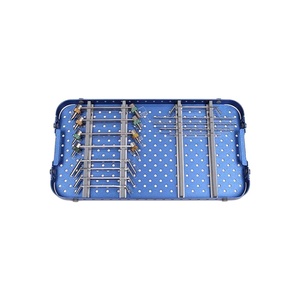
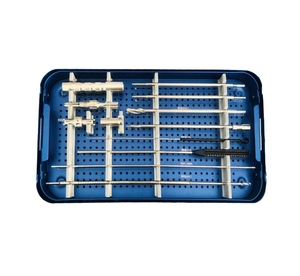
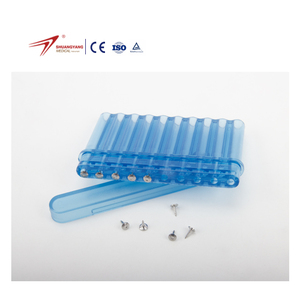
Specialized veterinary TPLO (Tibial Plateau Leveling Osteotomy), CPLO, and micro-locking plate kits (1.5mm/2.0mm/2.7mm/3.5mm). Paired with color-coded sterilization trays and custom surgical power tool interfaces.
Key Sourcing & Tech Trends Shaping Orthopedic Manufacturing (2025–2030)
Strategic sourcing managers must anticipate technological disruptions and changing market dynamics. The next decade will define a new paradigm in orthopedic procurement centered on four core vectors:
1. Transition to 3D Printed Additive Trabecular Structures
Traditional subtractive CNC milling is increasingly augmented by Direct Metal Laser Sintering (DMLS) 3D printing. Leading ODM suppliers are embedding cellular porous titanium structures directly into spinal cages and acetabular cups. These porous lattice networks mimic human cancellous bone micro-architecture (pore size 400–600 μm, porosity 65–75%), triggering rapid bony ingrowth without relying on HA (hydroxyapatite) spray coatings that carry delamination risks.
2. Variable-Angle (VA) Locking Plate Mechanics
Fixed-angle locking compression plates are giving way to Variable-Angle (VA) locking mechanisms. Modern Chinese factories utilize high-precision multi-thread cutting to allow surgical screw trajectory deviation up to 15° off-axis cone angle. This allows trauma surgeons to target specific fracture fragments and avoid articular joint spaces while preserving thread-interlock strength.
3. Type II Hard Anodization & Antibacterial Surface Treatments
To combat surgical site infections (SSI) and micro-fretting corrosion, Chinese ODM leaders have integrated Type II electrochemical hard anodization alongside silver-nanoparticle and iodine-infused physical vapor deposition (PVD) surfaces. Type II anodization thickens the protective titanium oxide layer, reducing friction co-efficient in screw-to-plate locking interfaces by up to 40%.
4. Digital CAD Libraries & Surgical Navigation Alignment
Surgical procurement teams no longer purchase standalone hardware. Top ODM suppliers deliver open-source 3D CAD digital libraries compatible with 3Shape, ExoCAD, and hospital-based surgical navigation systems. This empowers clinical teams to perform preoperative virtual simulation and patient-specific implant (PSI) contoured fabrication.
Step-by-Step ODM Engineering & Manufacturing Execution Workflow
Partnering with a Chinese ODM factory requires a structured product development protocol to guarantee absolute quality control, regulatory compliance, and rapid market entry.
Phase 1: Design Input & FEA Simulation
Clients provide reverse-engineered sample files, 2D drawings, or 3D STL models. Factory bio-engineers conduct Finite Element Analysis (FEA) under simulated anatomical stress loads (tensile, compression, torsion) per ASTM F382 (trauma plates) or ASTM F2077 (interbody cages) to optimize geometry prior to cutting metal.
Phase 2: 5-Axis Micro CNC Swiss Milling
Raw titanium bars (certified ASTM F136) are machined using ultra-precision Citizen Swiss-type lathes and DMG MORI 5-axis CNC machining centers. Sub-micron dimensional tolerances (±0.003 mm) guarantee seamless thread-fit between bone screws and locking plate holes.
Phase 3: Automated Cleaning & Anodization
Components undergo multi-stage ultrasonic degreasing, citric acid passivation, and micro-bead blast surface conditioning. Color-coded Type II anodizing is applied to instantly differentiate screw diameters (e.g., 2.7mm Gold, 3.5mm Green, 4.5mm Blue) during intra-operative use.
Phase 4: Class 100,000 Cleanroom Packaging
Implants are assembled, laser-etched with unique UDI (Unique Device Identification) barcodes for lot traceability, double-blister packed inside ISO Class 7 (Class 100,000) cleanrooms, and sealed in Tyvek pouches for Ethylene Oxide (EtO) or Gamma sterilization.
Quality Control Infrastructure & E-E-A-T Trust Verification
In accordance with Google’s Search Quality Rater Guidelines, establishing Experience, Expertise, Authoritativeness, and Trustworthiness (E-E-A-T) is critical when evaluating medical device suppliers. Premier Chinese ODM facilities operate under rigorous quality management frameworks:
-
ISO 13485:2016 Certification: Full medical device quality management system compliance across all design, machining, cleanroom packaging, and sterilization validation stages.
-
Full Chemical & Mechanical Lot Traceability: Every shipped box includes raw material mill certs, optical coordinate measuring machine (CMM) dimensional inspection reports, and bio-burden test certificates linked directly to the melt batch number.
-
Regulatory Dossier Support (CE / FDA 510k / NMPA): In-house regulatory affairs specialists provide comprehensive Technical Files (STED format), risk assessment reports per ISO 14971, and biological evaluation files per ISO 10993 to streamline distributor registration in target jurisdictions.
Frequently Asked Questions (FAQ) for Global Buyers
Clear, direct engineering answers to common inquiries from international procurement directors and OEM brand managers.
Partner with China’s Premier Orthopedic Implants ODM Factory
Elevate your medical product line with precision-engineered titanium trauma plates, spine systems, and CMF solutions. Request our 2025 engineering catalog, raw material test certs, and wholesale OEM pricing directly from our technical team.
Get Catalog