Featured Precision Orthopaedic Implant Systems & Instruments
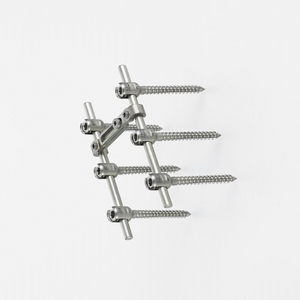
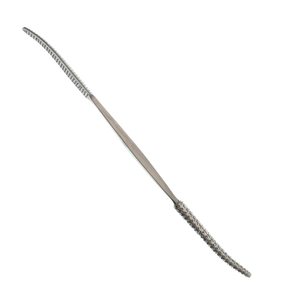
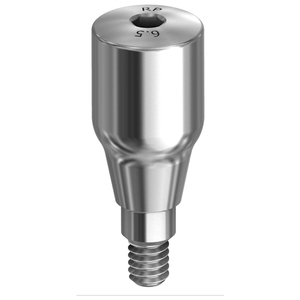
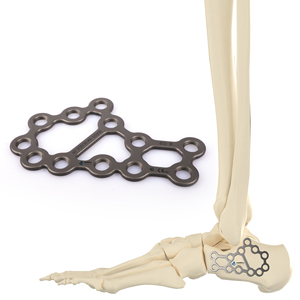
Explore our flagship orthopedic devices engineered for spinal stabilization, trauma fracture fixation, prosthetic abutments, surgical bone rasping, and veterinary orthopedics. Manufactured under micron-level CNC tolerances and certified ISO 13485 quality frameworks.
Executive Overview: Sourcing Orthopaedic Implants from Chinese Manufacturers
Over the past two decades, China’s medical device manufacturing sector has undergone a structural transformation. Driven by heavy capital investment in multi-axis CNC technology, cleanroom automation, and rigorous international quality management systems (QMS), premier Chinese orthopedic implant factories have evolved from basic contract machine shops into world-class Original Equipment Manufacturers (OEM) and Original Design Manufacturers (ODM). Today, global orthopedic distributors, hospital networks, and OEM brand owners source implantable devices from China to achieve an optimal balance of clinical efficacy, regulatory compliance, and total cost of ownership (TCO).
Sourcing permanent implantable devices—such as pedicle screw spinal fixation systems, trauma locking compression plates (LCP), interbody fusion cages, and dental abutment systems—demands total transparency in biomaterial origin, metallurgical purity, and dimensional accuracy. Leading Chinese manufacturers operate under ISO 13485:2016 certifications, maintaining full compliance with US FDA 21 CFR Part 820 and European Union Medical Device Regulation (EU MDR 2017/745). This whitepaper provides a comprehensive technical guide for procurement directors, regulatory specialists, and orthopedic distributors evaluating top-tier Chinese manufacturing capabilities.
Advanced Metallurgy, CNC Machining & Enterprise Advantages
The clinical longevity of an orthopedic implant relies upon mechanical fatigue strength, bio-inertness, and precise anatomical contouring. Top Chinese manufacturing facilities leverage advanced production infrastructure to eliminate stress concentration points and micro-burrs that could precipitate fatigue failure in vivo.
Certified Medical Biomaterials
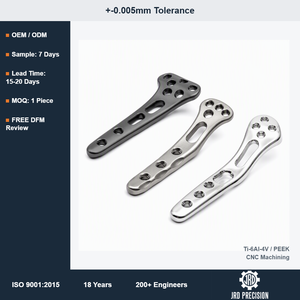
Raw materials are sourced strictly from accredited metallurgical mills accompanied by certified mill test reports (MTR). We utilize Titanium Ti-6Al-4V ELI (ASTM F136 / ISO 5832-3), Commercially Pure Titanium Grade 2/4 (ASTM F67), Implant-Grade PEEK (ASTM F2026), and Cobalt-Chromium alloys (CoCrMo ASTM F75) for maximum biostability.
5-Axis CNC Precision Machining
Equipped with high-precision Swiss-type automatic lathes (Citizen, Star) and DMG MORI 5-axis machining centers. Machining tolerances are strictly held to ±0.005mm. Complex thread profiles, such as variable pitch pedicle screw threads and Morse taper connections, are turned with micro-inch surface finishes.
Surface Anodization & Finishing
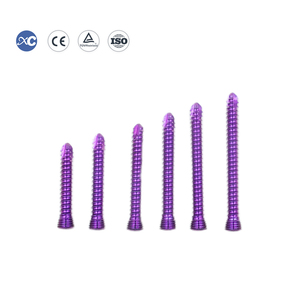
Proprietary surface modification techniques include Type II electrochemical anodization for increased wear resistance and reduced fretting, Type III color coding for surgical size differentiation, micro-arc oxidation (MAO), and automated ultrasonic multi-stage passivation per ASTM F86 standards.
Complete Instrument Set Bundling
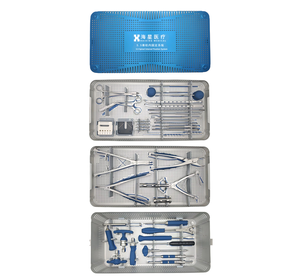
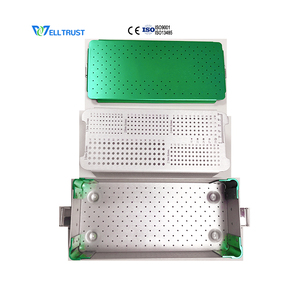
Implant systems are supplied alongside dedicated, color-coded surgical instrument kits (drills, taps, depth gauges, benders, screwdrivers). Instruments are housed in autoclavable aluminum sterilization trays fitted with medical-grade silicone inserts for seamless operating room execution.
ISO Class 7 Cleanroom Packaging
Final cleaning, assembly, and primary pouch sealing are executed within validated Class 10,000 (ISO 7) cleanrooms. Sterile packaging formats include double Tyvek blister trays compliant with ISO 11607, ready for Gamma or EtO terminal sterilization processes.
Full Regulatory & Technical Dossiers
We provide full Technical Files for OEM brand registration, including Biocompatibility Reports (ISO 10993), Mechanical Fatigue Test Reports (ASTM F1717 / ASTM F382 / ISO 14801), Risk Management Dossiers (ISO 14971), and UDI-compliant barcode label tracking.
| Material Standard | Composition | Tensile Strength (MPa) | Yield Strength (MPa) | Primary Clinical Application |
|---|---|---|---|---|
| ASTM F136 | Ti-6Al-4V ELI (Extra Low Interstitial) | ≥ 860 | ≥ 795 | Spinal Pedicle Screws, Trauma Locking Plates, Joint Fixation |
| ASTM F67 | Commercially Pure Titanium (Grade 4) | ≥ 550 | ≥ 480 | Maxillofacial Mini-Plates, Cranial Reconstruction, Dental Shells |
| ASTM F2026 | PEEK (Polyetheretherketone) Optima | ≥ 95 | ≥ 90 | Spinal Interbody Fusion Cages (PLIF, TLIF, Cervical) |
| ASTM F138 | 316L Implant Stainless Steel | ≥ 860 | ≥ 690 | Surgical Rasp Files, Wire Fixation, Temporary Bone Instruments |
Future Technological Trends in Orthopaedic Manufacturing
The global orthopedic implant ecosystem is experiencing rapid paradigm shifts. Buyers looking to secure long-term market dominance must align with manufacturers adopting next-generation manufacturing technologies and bio-digital workflows.
1. Additive Manufacturing & Biomimetic Porous Titanium
Selective Laser Melting (SLM) and Electron Beam Melting (EBM) 3D printing technologies are revolutionizing joint arthroplasty and spinal fusion. Leading Chinese suppliers are replacing solid titanium surfaces with 3D-printed biomimetic trabecular bone structures. Featuring tailored porosity (60–80%) and average pore sizes between 300–600 microns, these structures mimic human cancellous bone, lowering the elastic modulus to prevent stress shielding while accelerating early osseo-integration.
2. PEEK & Carbon-Fiber Reinforced Composites
While Ti-6Al-4V remains dominant in trauma, PEEK (Polyetheretherketone) and Carbon-Fiber Reinforced PEEK (CFR-PEEK) are rapidly expanding in spinal interbody devices and oncology fixation plates. Radiotransparent properties allow post-operative X-ray and MRI evaluation without artifact interference. Future procurement trends indicate rising demand for hybrid PEEK cages featured with 3D titanium plasma-sprayed coating interfaces.
3. Patient-Specific Implants (PSI) & Digital Surgical Planning
Off-the-shelf anatomical plates are increasingly augmented by Patient-Specific Implants (PSI). Utilizing DICOM datasets from patient CT scans, Chinese OEM factories leverage rapid CAD/CAM reverse engineering to manufacture custom maxillofacial reconstruction plates, pelvic trauma cages, and oncological bone resection guides within 72 hours of surgical file submission.
4. Bioactive & Antimicrobial Surface Coatings
Surgical site infections (SSI) represent one of the highest clinical liabilities in orthopedics. Top Chinese manufacturers are pioneering silver nanoparticle (AgNP) elution coatings, micro-arc oxidation (MAO) loaded with hydroxyapatite (HA), and bio-absorbable polymer coatings capable of releasing localized antibiotics post-operatively.
Global Procurement Strategy: Risk Mitigation & Supply Chain Resilience
For international healthcare distributors and medical device brand owners, shifting supply chain volume to top Chinese suppliers requires structured risk mitigation strategies:
1. Vendor Audit & Technical File Integrity
Ensure suppliers maintain complete technical documentation matching EU MDR (2017/745) Annex II/III requirements. Quality audits must verify device master records (DMR), lot history records (DHR), and full raw material melt certificate traceability back to the titanium ingot.
2. Mechanical Fatigue Validation Testing
Require accredited third-party lab test reports (e.g., ISO 17025 certified labs) verifying cyclic fatigue strength. Key standards include ASTM F1717 for spinal construct assemblies, ASTM F382 for metallic bone plates, and ISO 14801 for dental implants.
3. Dual-Sourcing & Buffer Safety Stock
Establish consignment or vendor-managed inventory (VMI) frameworks with Chinese partners. Stocking fast-moving sizes (e.g., standard 3.5mm/5.0mm locking screws and pedicle screws) safeguards against unexpected geopolitical or shipping disruptions.
Frequently Asked Questions (FAQ) for Medical Sourcing Directors
Partner with China’s Leading Orthopaedic Implant Factory
Looking to elevate your medical product line with precision-engineered titanium implants, PEEK cages, or OEM contract manufacturing? Request technical specifications, sample kits, or factory audit dossiers directly from our engineering sales team.