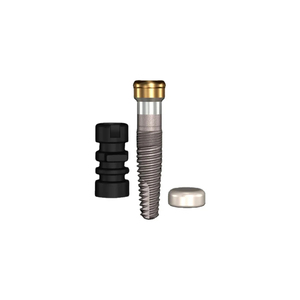
Medical-Grade Surgical Portfolio
Featured Precision Implants & Instrument Sets
Engineered to strict ASTM specifications for optimal osseointegration, high fatigue strength, and clinical reliability across trauma, spinal, dental, and maxillofacial procedures.
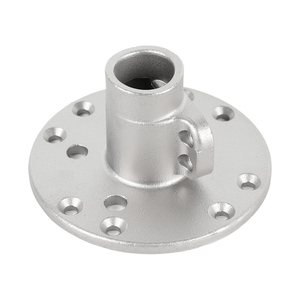
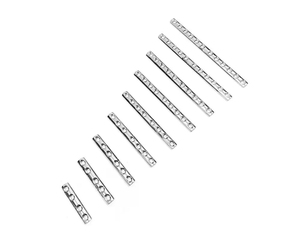
Executive Summary: The Evolution of China’s Orthopedic Implant Manufacturing Landscape
Over the past two decades, China has transitioned from an emerging contract component supplier into an international epicenter for high-precision orthopedic implant engineering. Premier Chinese manufacturers now operate ultra-modern smart factories equipped with 5-axis DMG MORI CNC machining centers, Citizen Swiss-type lathes, multi-laser additive manufacturing (3D printing) suites, and Class 10,000 cleanrooms. This infrastructure shift enables leading factories to produce bone fixation plates, intramedullary nails, spinal pedicle screws, PEEK fusion cages, and dental abutments that rival Western tier-one brands in biological safety, fatigue resistance, and dimensional accuracy.
Key Sourcing Takeaway: Modern procurement officers in North America, Europe, Latin America, and the Middle East are leveraging top Chinese orthopedic factories to achieve a 35%–55% cost optimization without compromising biocompatibility or ISO 13485 regulatory compliance.
1. Technological Foundations of Modern Chinese Implant Factories
The manufacturing process for implantable medical devices requires absolute metallurgical stability and micron-level precision. Standard industrial machining techniques are entirely insufficient for biomedical applications due to strict micro-cracking and surface contamination standards.
- Raw Material Integrity: Premium manufacturers source certified medical-grade Titanium Alloy (Ti-6Al-4V ELI per ASTM F136 / ISO 5832-3), Commercially Pure Titanium (CP-Ti Grade 2 and 4 per ASTM F67), Stainless Steel 17-4PH and 316L (ASTM F138), and implant-grade Polyetheretherketone (PEEK-OPTIMA). Every raw titanium rod undergoes ultrasonic flaw detection and spectrographic verification prior to machining.
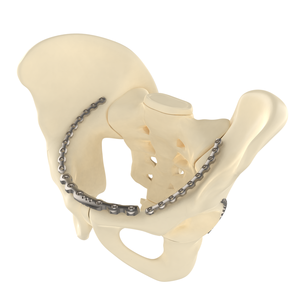
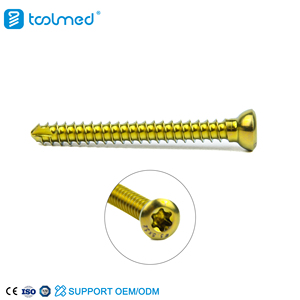
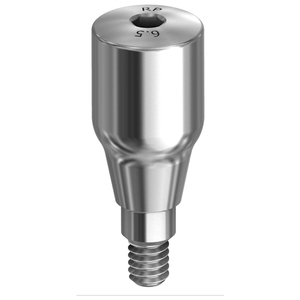
- Swiss-Type Turning & 5-Axis Milling: Complex geometries such as self-tapping thread flutes on cortical screws, anatomical anatomical curvature on pelvic locking plates, and internal hex Morse tapers on dental implant abutments are produced in a single setup. This eliminates cumulative clamping errors and ensures concentricity within tight tolerances (±0.005mm).
- Surface Modification Technology: Advanced finishing processes—including Type II anodization, plasma spraying of porous titanium coatings, chemical deburring, and automated electropolishing—enhance osseointegration while minimizing wear-debris release into surrounding biological tissue.
2. Regulatory Rigor: ISO 13485 and Technical Documentation
Navigating global regulatory approvals (such as EU MDR 2017/745, US FDA 510(k), ANVISA, and SFDA) demands extensive technical documentation. Top China orthopedic manufacturers maintain full Lot-level traceability. Every dispatched surgical kit or implant box includes:
- Material Test Certificates (MTC): Full chemical analysis and mechanical testing reports linked directly to the melt batch number.
- Biocompatibility Dossiers: Cytotoxicity, systemic toxicity, sensitization, and intracutaneous reactivity validation per ISO 10993 standards.
- Sterilization Validation: EO (Ethylene Oxide) or Gamma irradiation validation protocols per ISO 11135 / ISO 11137 for sterile-packaged finished implants.
Enterprise Strengths
Why Global Medical Brands & Distributors Partner With Us
From rapid OEM prototyping to large-scale contract manufacturing, our facility combines engineering depth with predictable supply chain logistics.
Custom OEM / ODM Engineering
Full CAD/CAM co-development services. We transform surgeon sketches, 3D DICOM scan data, or legacy prototypes into production-ready locking plate systems, custom spinal cages, and customized surgical instrumentation sets.
Rigorous QA & Optical Metrology
Our Metrology Lab utilizes ZEISS 3D Coordinate Measuring Machines (CMM), optical video measurement instruments, and dynamic fatigue testing rigs (ASTM F1264 / ASTM F543) to guarantee zero-defect shipment runs.
Complete Surgery-Ready Kits
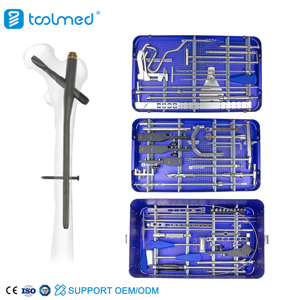
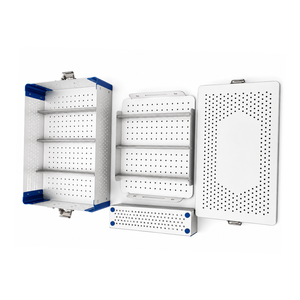
We provide turnkey solutions: anatomically contoured bone plates matched with color-coded cortical/locking screws, precision drills, taps, screwdrivers, and aluminum sterilization storage cases (e.g., AI-DHS sets).
Regulatory File Support
We equip our global sales partners with complete technical construction files (TCF), labeling artwork, IFU (Instructions For Use) translation packs, and raw material heat certificates to accelerate local MOH registration.
Lean Lead Times & Buffer Stock
Strategic raw material warehousing of standard titanium bars and PEEK blocks ensures standard order dispatch within 3–4 weeks, protecting hospital distributors from sudden supply disruptions.
Laser Marking & Branding
Automated Fiber Laser units apply precise, non-corrosive UDI (Unique Device Identification) barcodes, part numbers, lot codes, and custom distributor branding directly onto anodized implant surfaces.
Future Procurement Trends: Material Science & Surgical Design
The global orthopedic implant market is moving rapidly toward minimally invasive surgical (MIS) techniques, patient-specific implants (PSI), and advanced bioactive surfaces. Healthcare buyers must align with manufacturing plants capable of keeping pace with these technological shifts.
1. Transition to Titanium-PEEK Hybrid Solutions & Porous Metal
While traditional stainless steel (316L / 17-4PH) remains vital for temporary fracture fixation plates and rugged surgical drill kits, permanent structural implants are increasingly adopting Ti-6Al-4V ELI and radiolucent PEEK polymers.
- PEEK Interbody Cages: Non-absorbable PEEK provides a modulus of elasticity closely matching human cancellous bone, significantly reducing stress-shielding effects. Integrated radiographic markers ensure precise intra-operative fluoroscopic positioning.
- 3D-Printed Trabecular Structure: Additive manufacturing allows China’s leading factories to print porous titanium structures with tailored pore sizes (300–600 microns), encouraging rapid bone in-growth without the need for additional bone graft materials.
2. Variable-Angle Locking & Low-Profile Anatomical Contour
Fixed-angle locking compression plates (LCP) are giving way to Variable-Angle (VA) locking technology. VA locking screws allow surgeons to direct screws up to 15° off-axis in any direction, providing tailored trajectory control for intra-articular fractures (such as distal radius, calcaneal, and pelvic reconstructions).
3. Standardized Sterilization Storage & Instrument Integration
Modern surgical suites demand organized, color-coded modular trays. Sterilization containers—such as the AI-DHS system—are manufactured from high-grade anodized aluminum alloys, featuring silicone inserts that secure instruments during high-temperature steam autoclaving (134°C).
Strategic Sourcing Framework
Evaluation Checklist for Sourcing Orthopedic Implants from China
Mitigate supply chain risk and ensure clinical compliance by applying this rigorous four-stage audit framework during vendor evaluation.
STAGE 01
Raw Material & Mill Audit
Verify that the factory utilizes bar stock from recognized medical titanium suppliers (e.g., Baoti, Western Superconducting). Require spectral analysis test reports verifying iron and interstitial oxygen limits for Grade 23 Ti-6Al-4V ELI.
STAGE 02
Machining & Tolerance Verification
Inspect CMM inspection records for screw thread pitch, drive recess depth (Star/Torx/Hex), and plate locking thread pitch. Poor locking thread profiles lead to cross-threading in the operating theater.
STAGE 03
Cleanliness & Passivation Audit
Confirm that finished implants undergo multi-stage ultrasonic washing in purified water (RO water system) followed by citric or nitric acid passivation to remove free iron particles and prevent post-implantation corrosion.
STAGE 04
Regulatory Dossier Completeness
Ensure your OEM manufacturer provides comprehensive Technical Dossiers including ISO 13485 certificates, biocompatibility test data, mechanical fatigue test reports, and pre-designed IFU documentation.
Buyer FAQ
Frequently Asked Questions (FAQ) for Global Procurement Teams
Essential technical and commercial answers for hospital buyers, medical device distributors, and private-label brand owners.
What materials are primary used in China's top orthopedic factories?
Bone fixation plates and screws are machined primarily from medical-grade Titanium Alloy (Ti-6Al-4V ELI per ASTM F136) and Commercially Pure Titanium (CP-Ti per ASTM F67). For heavy-trauma structural applications, surgical stainless steels like 316L and 17-4PH are used. Spinal interbody cages are produced from implant-grade PEEK polymer featuring radiographic markers.
How do Chinese manufacturers guarantee lot-level quality and traceability?
Leading factories operate strictly under ISO 13485 quality management systems. Every batch of raw material is assigned a unique heat number recorded through CNC machining, anodization, cleanroom packaging, and final dispatch. Direct laser marking applies laser-etched lot numbers and UDI barcodes onto individual implants.
Can we order matching surgical instrument sets along with bone plates and nails?
Yes. Modern manufacturers supply turnkey surgical solutions. Each trauma plating system, PFNA intramedullary nail kit, or spinal pedicle screw family is complemented by a matching instrument set—including depth gauges, drill bits, bone holding forceps, benders, and anodized aluminum sterilization containers.
What regulatory documents are available to support local product registration?
Distributors and OEM clients receive comprehensive regulatory support packages. These include ISO 13485 quality system certificates, Material Test Certificates (MTC), biocompatibility validation reports (ISO 10993), mechanical fatigue testing data, sterilizer validation files, labeling artwork, and Instructions For Use (IFU).
What is the standard production lead time for OEM and private-label orders?
For standard catalogue implants with existing tooling, production lead time is typically 2 to 4 weeks. For custom OEM/ODM projects requiring new CNC tooling, CAD design validation, and sample prototyping, initial lead times range between 6 and 8 weeks.
Are custom angles and anatomical plate contours supported?
Yes. Modern 5-axis CNC multi-tasking centers allow for complex 3D surface contours tailored to specific ethnic anatomical databases or specialty surgical techniques, including low-profile maxillofacial micro-plates and pre-contoured clavicle or pelvic locking plates.
Partner with China's Premier Orthopedic Manufacturing Factory
Expand your market share with precision-engineered titanium trauma plates, PFNA nails, spinal solutions, and custom surgical instruments. Request technical catalogues, sample sets, and OEM quotations today.