Navigating the Global Orthopedic Supply Chain: Sourcing FDA 510(k) Cleared Implants from China
The global orthopedic medical device market is undergoing a structural realignment. Driven by escalating healthcare costs, hospital value-based purchasing, and the need for supply chain resiliency, international medical device brand owners, distributors, and procurement groups are increasingly partnering with top-tier Chinese manufacturers. China's elite orthopedic implant factories have evolved from low-cost contract machinists into sophisticated biomedical innovation hubs capable of securing direct U.S. FDA 510(k) clearances and European CE marks.
1. Regulatory Compliance Framework: Deconstructing the FDA 510(k) Pathway for Chinese Factories
For a Chinese medical device manufacturer to earn FDA 510(k) clearance (under 21 CFR Part 807), its devices must demonstrate "Substantial Equivalence" (SE) to a legally marketed predicate device in the United States. Achieving this requires rigorous technical evaluation across four mandatory technical pillars:
- Biocompatibility Validation (ISO 10993 Series): Complete cytotoxicity, sensitization, intracutaneous reactivity, acute systemic toxicity, subchronic toxicity, and pyrogenicity testing conducted by accredited GLP laboratories.
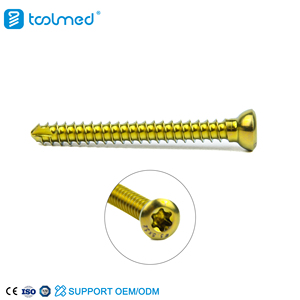
- Metallurgical and Material Standards: Full conformance to consensus standards such as ASTM F136 (Standard Specification for Wrought Titanium-6Aluminum-4Vanadium ELI Alloy for Surgical Implant Applications) and ASTM F67 (Standard Specification for Unalloyed Titanium).
- Mechanical Performance & Bench Testing: Dynamic fatigue testing according to ASTM F382 (Metallic Bone Plates), ASTM F543 (Metallic Medical Bone Screws), and ASTM F1717 (Spinal Implant Constructs in a Vertebrectomy Model).
- Quality System Regulation (21 CFR Part 820): Adherence to FDA Current Good Manufacturing Practice (cGMP), verified through rigorous Quality System Inspection Technique (QSIT) audits.
2. Material Science Excellence: Titanium Alloys vs. Implant-Grade PEEK
Selection of implant biomaterials directly dictates clinical osseointegration, fatigue life, and post-operative radiopacity. Leading Chinese manufacturers like Orthovana and Haixing deploy multi-material platforms engineered for specific anatomical biomechanics:
| Biomaterial Class | Standard Specification | Tensile Strength (MPa) | Primary Clinical Indication | Biomechanical Advantage |
|---|---|---|---|---|
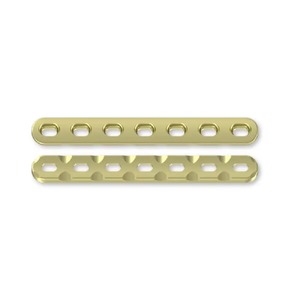
| Ti-6Al-4V ELI | ASTM F136 / ISO 5832-3 | ≥ 860 MPa | Locking Trauma Plates, Pedicle Screws | High fatigue limit, superior strength-to-weight ratio, low MRI artifact. |
| CP Titanium (Grade 4) | ASTM F67 / ISO 5832-2 | ≥ 550 MPa | Craniomaxillofacial (CMF) Plates | Excellent cold-malleability for intraoperative anatomical contouring. |
| PEEK-OPTIMA | ASTM F2026 | 90 – 100 MPa | Interbody Fusion Cages (TLIF, PLIF, ACIF) | Modulus of elasticity matching human cancellous bone; radio-translucent. |
| 316L Stainless Steel | ASTM F138 / ISO 5832-1 | ≥ 490 MPa | Temporary Trauma Fixation, K-Wires | Cost-effective structural rigidity for temporary fracture stabilization. |
3. Technological Development Trends in Orthopedic Engineering (2025–2030)
As surgical procedures shift toward Minimally Invasive Surgery (MIS) and robot-assisted placement, Chinese orthopedic implant factories are integrating next-generation technologies to remain competitive on the global stage:
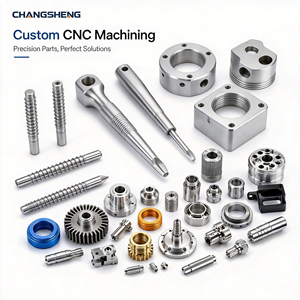
- Additive Manufacturing (3D Printed Porous Titanium): Transitioning from subtractive CNC milling to Electron Beam Melting (EBM) and Direct Metal Laser Sintering (DMLS). This allows creation of biomimetic trabecular structures with porosity levels (60–80%) that promote rapid bone ingrowth and eliminate cement reliance in hip and spine constructs.
- Variable-Angle Locking Screw Technology: Advanced polyaxial locking mechanisms allowing surgeons to angle screws up to 15° off-axis in any direction, optimizing screw trajectory in complex osteoporotic intra-articular fractures.
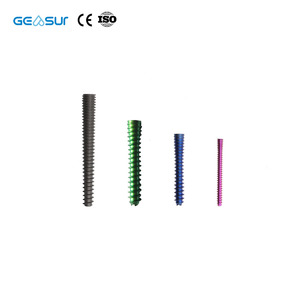
- Surface Modification & Anodization: Type II anodization for enhanced fatigue strength and reduction of micro-fretting wear, alongside Type III color-coding anodization for swift intraoperative identification by surgical teams.
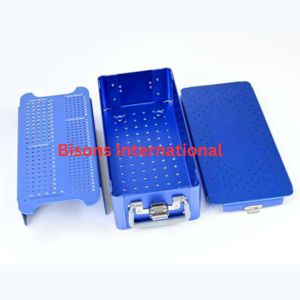
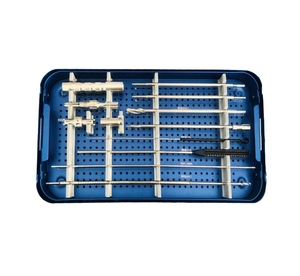
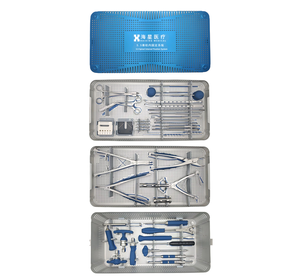
- Integrated Surgical Instrumentation: Supply of fully custom, autoclavable instrument kits containing high-torque silicone handles, quick-coupling drills, and color-matched depth gauges.