Featured Orthopedic Systems & Medical Equipment
Explore our CE & ISO certified surgical fixation portfolios, precision implant stability monitors, and specialized surgical instrumentation tailored for international hospital purchasing and OEM distribution networks.
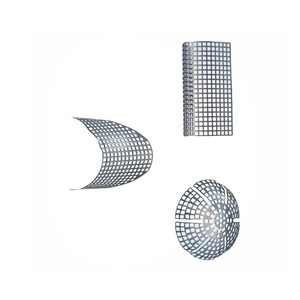
Competitive Price Titanium Alloy Material MESH Orthopedic Implants for Hospital
Engineered for spinal reconstruction and complex craniomaxillofacial defect repair. Features a high-porosity lattice matrix that accelerates bony ingrowth and osseointegration.
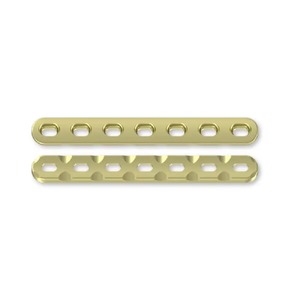
Titanium Orthopedic Implant – Manufacturer Direct, Limited Compression Surgical Implant
Anatomically contoured Limited Compression Locking Compression Plate (LC-LCP) designed to preserve periosteal blood supply while providing rigid internal trauma fixation.
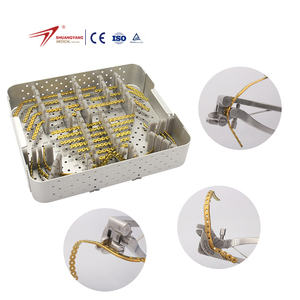
Shuangyang CMF Titanium Maxillofacial Implant 2.4mm Reconstruction/Locking Plate Set
Ultra-low profile micro-plating system for severe mandibular trauma, orthognathic alignment, and oncological bone reconstruction. High dynamic fatigue endurance.
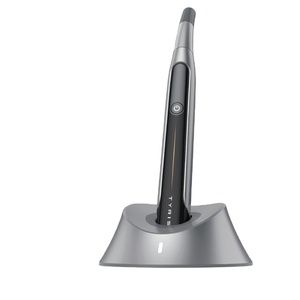
Tyris MD-100 Implant Stability Osseointegration Monitor with User-Friendly Interface
Advanced Resonance Frequency Analysis (RFA) diagnostic device providing accurate Implant Stability Quotient (ISQ) measurements to guide immediate or delayed surgical loading protocols.
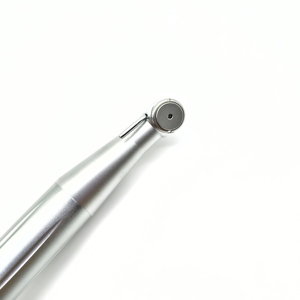
Orthocare Medical Dental Implant Contra Angle Handpiece with LED Light
Precision 20:1 reduction surgical handpiece engineered for precise osteotomy drills and dental implant placement. Features internal/external irrigation and high-luminance fiber optics.
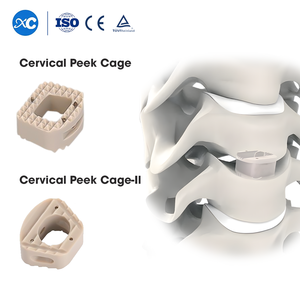
ISO Medical Spinal Fusion ACDF Interbody Cervical PEEK Cage Implants
Radiolucent PEEK Optima interbody cage for Anterior Cervical Discectomy and Fusion. Elastic modulus matching human cortical bone to minimize stress shielding and subside risks.
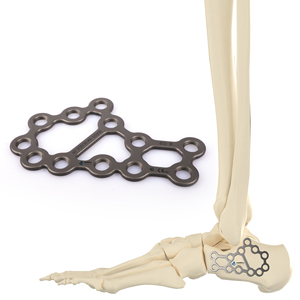
CANWELL Medical Calcaneal Locking Plate Titanium Foot Heel Bone Implants
Anatomical multi-hole calcaneal titanium locking plate designed for complex intra-articular heel fractures. Low-profile construction to prevent soft tissue impingement.
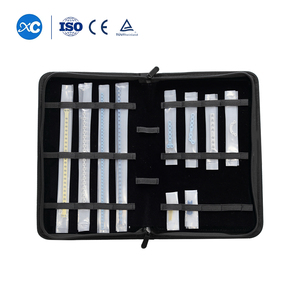
XC Medico Pet Orthopedic Implant AO/Stem System Sample Pack Stainless Steel & Ti
Comprehensive AO-standard trauma sample kit for veterinary and specialized surgical evaluation. Includes micro plates, cortical screws, and specialized instrument trials.
1. Technical Blueprint: Material Science & Precision Manufacturing in Chinese Orthopedics
The global orthopedic implant market demands unyielding material integrity, precise biomechanical performance, and absolute bio-compatibility. As healthcare providers worldwide seek optimized balance between fiscal restraint and clinical excellence, top-tier Chinese medical device manufacturers have evolved from low-cost component suppliers into advanced innovation hubs. This transition is underpinned by rigorous adherence to international metallurgical benchmarks, state-of-the-art CNC machining ecosystems, and stringent quality control protocols governed by ISO 13485:2016 and EU MDR 2017/745 mandates.
Key Insight for Procurement Officers: Sourcing high-grade orthopedic devices requires evaluating the raw material heat certification (ASTM F136 for Titanium, ASTM F2026 for PEEK) and verifying that the manufacturer performs multi-axis Swiss CNC micro-machining under controlled environmental conditions.
1.1 Advanced Metallurgy & Biocompatible Materials
Modern orthopedic surgery relies heavily on specialized alloys and high-performance polymers designed to endure multi-directional physiological stress while exhibiting minimal cytotoxicity. Leading manufacturers in China utilize four primary biomaterial families:
- Titanium Alloy (Ti-6Al-4V ELI - ASTM F136): Extra Low Interstitial (ELI) titanium remains the gold standard for trauma plates, pedicle screw systems, and intramedullary nails. Its exceptional strength-to-weight ratio, high fatigue endurance limit (>550 MPa at 107 cycles), and low elastic modulus (approx. 110 GPa compared to 200 GPa for stainless steel) reduce stress shielding around cortical bone.
- Commercially Pure Titanium (CP Ti Grade 2 & Grade 4 - ASTM F67): Preferred for malleable craniomaxillofacial (CMF) plates and reconstructive mesh where intra-operative contouring by the surgeon is critical without introducing micro-fractures along plate bends.
- PEEK-OPTIMA (Polyetheretherketone - ASTM F2026): An advanced radiolucent polymer utilized in spinal interbody fusion cages (ACDF, PLIF, TLIF). With an elastic modulus of 3.6 GPa matching cancellous/cortical bone interfaces, PEEK eliminates subsidence risk while allowing seamless post-operative radiographical assessment via CT and MRI without metallic artifact interference.
- Medical Stainless Steel (316LVM - ASTM F138): Vacuum Melted stainless steel retained for specific trauma screw designs and specialized veterinary orthopedic lines where extreme stiffness and cost-efficiency are paramount.
| Biomaterial Standard | Tensile Strength (MPa) | Yield Strength (MPa) | Elastic Modulus (GPa) | Primary Clinical Application |
|---|---|---|---|---|
| Ti-6Al-4V ELI (ASTM F136) | ≥ 860 | ≥ 795 | 110 | Trauma Locking Plates, Pedicle Screws, Joint Stems |
| CP Titanium Grade 4 (ASTM F67) | ≥ 550 | ≥ 480 | 105 | CMF Reconstruction, Sternum Fixation, Mesh Cages |
| PEEK-OPTIMA (ASTM F2026) | ≥ 95 | ≥ 90 | 3.6 | Interbody Cervical & Lumbar Spinal Cages |
| 316LVM Stainless Steel (ASTM F138) | ≥ 860 | ≥ 690 | 193 | Standard Cortical Screws, Kirschner Wires, Vet AO Systems |
1.2 Swiss-Type 5-Axis CNC Machining & Surface Modification
Producing locking compression plates with variable-angle thread holes and complex geometric spinal screws requires sub-micron manufacturing accuracy. Premium Chinese suppliers deploy multi-axis Citizen and Star CNC Swiss-lathes combined with high-precision milling centers. This equipment allows single-setup machining of complex components, eliminating cumulative tolerance errors.
Furthermore, surface treatment plays a critical role in cellular adhesion and wear reduction:
- Type II Anodization: Increases surface hardness, reduces friction co-efficients in thread-locking mechanisms, and creates a dense titanium oxide layer that prevents ion leaching.
- Micro-Arc Oxidation (MAO): Creates a porous ceramic coating on titanium surfaces, significantly increasing hydroxyapatite precipitation and biological osseointegration.
- Color-Coded Anodization: Standardizes surgical tray organization by assigning uniform color schemes to screw diameters (e.g., 2.7mm gold, 3.5mm blue, 5.0mm green), reducing operative time and instrument mismatch.
2. Enterprise Core Competencies & Quality Governance
When evaluating China's top orthopedic device exporters, international distributors must look beyond basic price points to assess quality control protocols, testing infrastructure, and regulatory support capabilities. Leading manufacturing enterprises demonstrate clear market leadership across four critical pillars:
Biomechanical Testing & Finite Element Analysis (FEA)
In-house testing laboratories perform dynamic fatigue testing per ASTM F382 (Metallic Bone Plates) and ASTM F1717 (Spinal Implant Assemblies). Finite Element Analysis optimizes stress distribution prior to mold production, preventing premature plate fracture under physiological loading.
Class 10,000 Cleanroom Packaging
Cleanroom environments (ISO Class 7) equipped with automated bio-burden controls ensure implants are washed with ultrasonic RO water systems and packed into double-barrier Tyvek pouches suitable for Gamma or Ethylene Oxide (EtO) sterilization.
Full Regulatory Technical Dossiers (STED)
To assist global partners with product registration, leading suppliers provide complete Summary Technical Documentation (STED), including biocompatibility reports (ISO 10993), clinical evaluation reports (CER), stability testing data, and IFU literature.
OEM / ODM Customized Instrumentation Sets
Complete turnkey service offering tailored laser etching for branding, customized instrument tray ergonomics, custom drill sleeve thread pitches, and proprietary screw-head geometries for regional hospital networks.
3. Global Development & Material Trends in Orthopedic Devices
The orthopedic manufacturing domain is experiencing rapid technological convergence. Procurement directors must align their multi-year purchasing strategies with three transformative industry shifts:
3.1 Additive Manufacturing & Porous Titanium Metamaterials
Traditional subtractive machining creates smooth titanium surfaces requiring grit-blasting or plasma spraying to promote bony contact. Selective Laser Melting (SLM) and Electron Beam Melting (EBM) 3D-printing technologies now allow direct fabrication of porous titanium lattice structures mimicking human cancellous bone trabeculae. These metamaterials feature open porosity (50-70%) and pore sizes ranging between 300 to 600 microns, drastically reducing stress shielding and creating direct cellular interconnectivity for faster osteogenesis.
3.2 Smart Osseointegration & Telemetric Diagnostics
Integrating micro-sensors into surgical implants and intra-operative diagnostic tools represents the frontier of modern fracture management. Diagnostic devices such as Resonance Frequency Analysis (RFA) monitors evaluate the Implant Stability Quotient (ISQ) non-invasively during surgery. By quantifying early micro-motion at the bone-implant interface, clinical teams can make data-driven decisions regarding weight-bearing timelines, lowering failure rates in complex articular fractures.
3.3 Transition from Passive Fixation to Bioactive Absorbable Composites
While permanent titanium implants remain standard for load-bearing long bone fractures, pediatric orthopedics and craniomaxillofacial repairs are increasingly transitioning to absorbable magnesium alloys and bio-polymeric PLGA (Poly-lactic-co-glycolic acid) osteosynthesis systems. These materials maintain mechanical strength throughout the osteotomy healing window and subsequently degrade safely within the body, eliminating the need for secondary implant removal surgeries.
4. Future Sourcing & Procurement Strategies for Global Buyers
As healthcare regulatory frameworks tighten worldwide, international medical device buyers must adopt sophisticated procurement risk management frameworks when negotiating with Chinese manufacturing partners.
4.1 Navigating EU MDR & International Regulatory Harmonization
The transition from the EU Medical Device Directive (MDD 93/42/EEC) to the Medical Device Regulation (EU MDR 2017/745) has significantly raised clinical evidence requirements. Buyers should prioritize Chinese manufacturers that possess existing CE certification under MDR, active FDA 510(k) clearances, or comprehensive ISO 13485 audits conducted by accredited Notified Bodies (e.g., TÜV SÜD, BSI, SGS). This ensures rapid approval in local target markets across Latin America, the Middle East, Southeast Asia, and Europe.
4.2 Supply Chain Resiliency & Total Cost of Ownership (TCO)
Evaluating orthopedic manufacturers solely on unit price often overlooks hidden logistics, quality audit, and inventory carrying costs. A robust Total Cost of Ownership analysis considers:
- Raw Material Hedging: Manufacturers with long-term titanium sponge and PEEK block supply contracts insulate buyers from global market price fluctuations.
- SKU Rationalization: Systems engineered with multi-functional instrumentation (e.g., universal screwdrivers compatible with both locking and cortical screws) reduce inventory investment per surgical tray by up to 30%.
- Safety Stock Maintenance: Partnering with factories that maintain buffer stocks of fast-moving plate lengths and standard screw sizes prevents hospital stock-outs during emergency surgical spikes.
Frequently Asked Questions for Medical Procurement
Clear, authoritative answers regarding material certification, OEM customization, regulatory registration support, and logistics for international healthcare buyers.
What specific material standards are used for Orthovana orthopedic implants?
Our bone plates, locking screws, and intramedullary nails are precision-machined from medical-grade Titanium Alloy (Ti-6Al-4V ELI conforming to ASTM F136 / ISO 5832-3) and Commercially Pure Titanium (Grade 2/4 conforming to ASTM F67). For spinal interbody fusion devices, we utilize implant-grade radiolucent PEEK-OPTIMA (conforming to ASTM F2026) integrated with x-ray opaque Tantalum radiomarkers (ASTM F560). Every production batch is backed by mill test certificates from certified raw material suppliers.
What regulatory documentation is provided to support distributor product registration?
We provide comprehensive STED-format technical dossiers to support national health authority registrations (such as ANVISA, SFDA, MOH, MoHFW). Registration packages include ISO 13485:2016 certificates, Full Quality Assurance certificates, CE Technical Files, Material Biocompatibility Test Reports (ISO 10993 series), Mechanical Fatigue Test Reports (ASTM F382 / ASTM F1717), Packaging Validation Reports (ISO 11607), Instructions for Use (IFU), and draft product labeling graphics.
Are surgical implants supplied sterile or non-sterile, and what is the shelf life?
We offer both options depending on distributor requirements. Implants can be supplied non-sterile in protective batch packaging suitable for hospital autoclave sterilization, or pre-sterilized via validated Ethylene Oxide (EtO) / Gamma Irradiation in Class 10,000 cleanroom double Tyvek blister packaging. Pre-sterilized implants carry a validated 5-year shelf-life under standard storage conditions.
Does Orthovana offer OEM / Private Label manufacturing for regional brand owners?
Yes. We offer complete turnkey OEM and ODM cooperation models. Our capabilities include custom laser etching of distributor brand logos and Unique Device Identification (UDI) barcodes, custom color-anodization matching your product catalog, customized instrument tray CAD layout design, and proprietary packaging design tailored to your local market regulations.
How do you ensure locking thread consistency between bone plates and screws?
Locking thread integrity is governed by multi-stage quality control. We utilize high-precision Swiss-type CNC micro-turning lathes that cut locking threads and plate holes in a single clamping cycle. During production, 100% of thread pitches are verified using optical profile projectors and customized plug gauges before undergoing Type II hard anodization to prevent thread galling during surgical torque application.
What is the typical production lead-time and Minimum Order Quantity (MOQ)?
For standard catalog items, we maintain raw material stock and semi-finished inventories, enabling shipment within 14 to 21 business days. Custom OEM production runs typically require 30 to 45 days depending on tooling requirements. We offer flexible MOQs for initial sample evaluations and registration trial kits to help new distributors evaluate clinical handling before placing large volume orders.