Featured EU MDR Compliant Orthopedic Implants & Instrument Sets
Engineered from Grade 5 ELI Titanium (ASTM F136) and Implant-Grade PEEK. Fully traceable batch-manufacturing for international tender requirements.
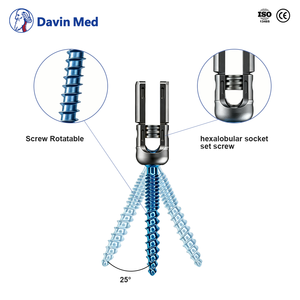
Davin Med Titanium Long Tail Polyaxial Pedicle Screw For Thoracolumbar Fixation
Designed for minimally invasive MIS spinal trauma and degenerative thoracolumbar procedures. Friction-fit polyaxial head design allowing 52° angular deviation with dual-thread geometry for fast insertion.
Get Catalog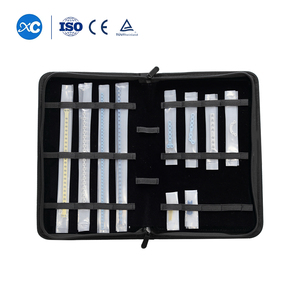
High Quality XC Medico Pet Orthopedic Implant AO/Stem System Sample Pack
Complete small animal joint and bone restoration trial pack. Manufactured from high-purity medical stainless steel and titanium alloy, matching AO principles for canine and feline trauma care.
Get Catalog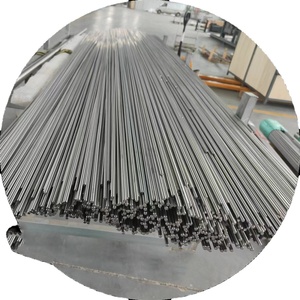
Titanium Bar Grade 5 ELI Orthopedic Implants 3mm 4mm 5mm Medical Rods
Ultra-clean medical grade 5 titanium alloy (Ti-6Al-4V ELI) round bars. Optimized fatigue resistance and biocompatibility for dental implants, spinal rods, and custom trauma bone screws machining.
Get Catalog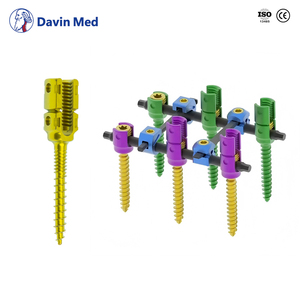
Titanium Alloy Monoaxial Pedicle Screw Spinal Fixation System for PLIF Surgery
High-strength rigid pedicle screw architecture designed for segmental lumbar instrumentation, spondylolisthesis reduction, and post-discectomy fusion stabilization.
Get Catalog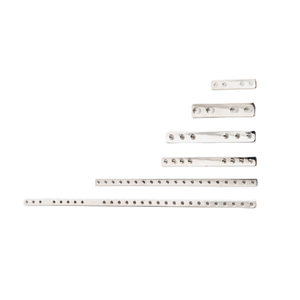
MEDICA Brand CE Certified Stainless Steel Veterinary Trauma Implants
Precision straight neutral dynamic compression plates (DCP) for veterinary osteosynthesis. Tapered outer edges facilitate minimally invasive submuscular insertion in small animal fracture repair.
Get Catalog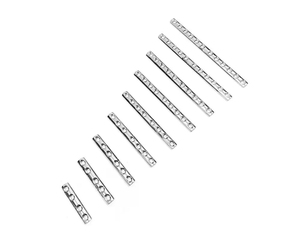
Veterinary 3.5mm One Third Tubular Plate Cortical Screw Bone Fixation Set
Low-profile anatomical contouring plates for distal fibular, radius, and ulna fractures. Includes color-coded self-tapping cortical screws and dedicated drill guides.
Get Catalog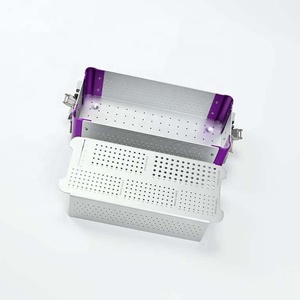
Veterinary Surgical Instruments Set & Sterilization Box (1.5mm - 3.5mm)
Comprehensive orthopedic kit featuring German-stainless steel bone holding forceps, depth gauges, torque-limiting screwdrivers, and an autoclavable double-layer aluminum tray.
Get Catalog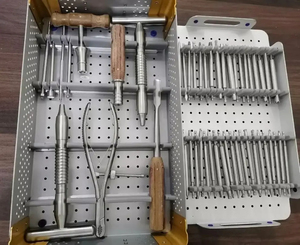
Complete 50 Piece Orthopedic Implant Removal Kit & Screw Extraction System
Universal emergency kit for extracting stripped, broken, or cold-welded bone screws across all major orthopedic plating systems. Includes reverse-thread conical taps and trepanning drills.
Get CatalogNavigating EU MDR 2017/745 Compliance from China's Precision Manufacturing Hub
As the European Union transitions strictly from the Medical Device Directive (MDD 93/42/EEC) to the stringent Medical Device Regulation (EU MDR 2017/745), global healthcare procurement teams require absolute transparency, documented biocompatibility, and total supply chain control.
Technical Whitepaper Insight: Strategic Regulatory Compliance for European Importers
The enforcement of EU MDR has reshaped the global medical device export market. Class IIb active and non-active surgical implants (such as spinal pedicle screw systems and dynamic locking compression plates) along with Class III long-term structural implants undergo unprecedented scrutiny regarding clinical evaluation reports (CER), post-market clinical follow-up (PMCF), and microstructural material integrity.
Our manufacturing complex combines 5-axis Swiss-type CNC precision turning, optical automated CMM dimensional verification, and ISO 14644 Class 7/8 certified cleanroom packaging. We maintain complete material heat traceability from raw titanium billets (ASTM F136 / ISO 5832-3) to final gamma-sterilized unit box labeling containing mandatory Unique Device Identification (UDI) barcodes.
ASTM F136 Grade 5 ELI Metallurgy
We source exclusively certified Ti-6Al-4V ELI (Extra Low Interstitial) titanium bars. ELI grade reduces interstitial elements like oxygen and iron to dramatically increase fracture toughness and fatigue strength under dynamic cyclic load tests.
Notified Body Technical Documentation
Every implant family includes a pre-packaged Technical Documentation Dossier prepared in accordance with EU MDR Annex II & III. This includes ISO 10993 biocompatibility reports, mechanical fatigue testing (ASTM F1717 / ISO 14801), and Risk Management files per ISO 14971.
Validated Surface Treatments
Precision Type II Anodization and Micro-Arc Oxidation (MAO) generate a uniform, biologically inert oxide layer. This improves wear resistance, prevents cold-welding during locking screw insertion, and provides vibrant color-coding for surgical clarity.
Future Procurement Trends in European & Global Orthopedic Supply Chains
How hospital purchasing consortia, distributor networks, and OEM brand managers can optimize margins while eliminating regulatory exposure.
1. Consolidation Toward Qualified Tier-1 Manufacturers
Rising regulatory compliance overhead in Europe has led distributors to rationalizing their vendor matrix. Instead of dealing with multiple small-scale machine shops, importers are consolidating volume with certified Chinese exporters capable of supporting long-term EUDAMED registration, post-market surveillance (PMS), and unannounced Notified Body audits.
2. Universal & Modular Extraction Instrumentation
With an aging global population and increasing rates of joint revision, hospitals face growing costs associated with retained or broken surgical hardware. Procurement managers now prioritize vendors providing standardized, universal removal sets alongside standard trauma plates to ensure surgical preparedness for complex revision procedures.
3. Dual-Sourcing & OEM Private-Label Resilience
To hedge against global geopolitical frictions and freight disruptions, major European device brands are leveraging dual-sourcing models. Establishing OEM/ODM production lines in China with dedicated custom laser marking, specific surface finishes, and customized sterilization trays provides high margin flexibility without compromising patient safety.
Next-Generation Biomechanical Trends in Orthopedic Fixation
The biomechanical baseline for orthopedic trauma and spinal reconstruction is evolving rapidly from rigid static stabilization toward dynamic load-sharing constructs. Clinical evidence demonstrates that excessive rigidity can lead to stress shielding, delayed union, or osteopenia beneath trauma plates.
- Variable-Angle Locking Technology (VALS): Transitioning from fixed-angle thread systems to polyaxial locking mechanisms allows surgeons to direct screws up to 15° off-axis. This flexibility is vital for targeted purchasing in intra-articular fractures and osteoporotic bone.
- PEEK Interbody Fusion Optimization: Polyetheretherketone (PEEK) retains an elastic modulus (3.6 GPa) closely matching human cortical bone. Integrating tantalum or radiopaque titanium markers ensures non-invasive radiolucent monitoring during post-operative fusion assessment.
- Veterinary Orthopedic Standardisation: Small-animal orthopedic surgery increasingly adopts human-grade locking compression mechanics (LCP). Precision 1.5mm to 3.5mm micro-plates allow immediate post-operative weight-bearing for canine trauma cases.
Our R&D engineering teams utilize Advanced Finite Element Analysis (FEA) to simulate thousands of dynamic loading cycles (under ASTM F382 protocols), ensuring optimized fatigue life before cutting a single bar of medical titanium.
Frequently Asked Questions for Global Buyers & Importers
Essential technical, regulatory, and commercial answers for international healthcare distributors.
Partner with China's Premier EU MDR Orthopedic Implants Exporter
Expand your product catalog with certified high-precision trauma systems, spine fixation constructs, and surgical instrument kits. Contact our medical engineering team today to request complete documentation and pricing.