Featured Certified Orthopedic Implants & Instruments
Manufactured under ISO 13485 quality systems from medical-grade Titanium (Ti-6Al-4V ELI) and implant-grade PEEK.
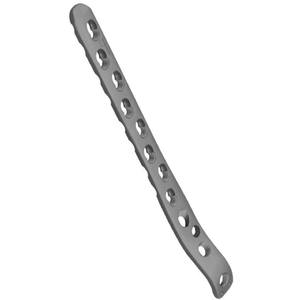
Titanium Orthopedic Implant – Limited Compression Surgical Implant
Engineered for dynamic fracture fixation with anatomical contouring, minimal periosteal contact, and high fatigue resistance (ASTM F136 compliant).
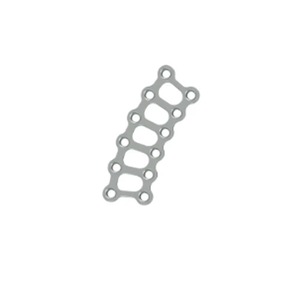
Wholesale Orthopedic Implants Export Quality Trauma Solutions
Comprehensive trauma fixation portfolio engineered for high-load bone union, featuring low-profile screw heads and multi-planar locking options.
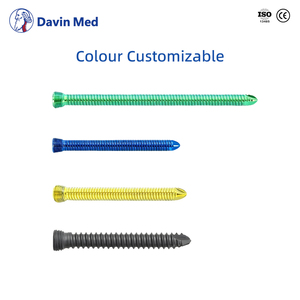
Davin Med Titanium Locking Screw (1.5/2.0/2.4/2.7/3.5/5.0mm)
Ultra-precision bone screws crafted from Grade 5 Titanium ELI with self-tapping threads and optimized Star/T-Drive torque transmission interfaces.
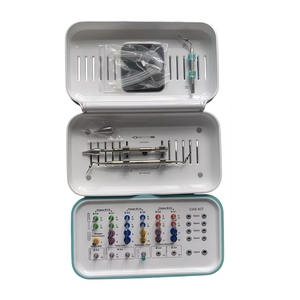
Dental Implant Sinus Kit Crestal Approach Surgical Tool Set
Specialized dental and CMF surgical instrument kit designed for safe crestal sinus floor elevation with depth-controlled stoppers and reamers.
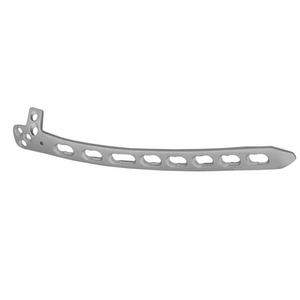
Premium Stainless Steel & Titanium Surgical Implant Solutions
Full spectrum fracture stabilization hardware available in medical-grade 316LVM Stainless Steel and Ti-6Al-4V ELI for demanding clinical applications.
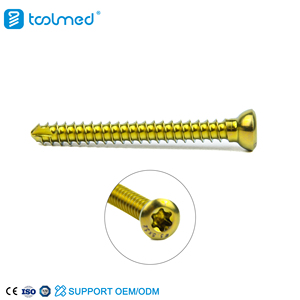
3.5mm Titanium Cortical Screw for Orthopedic Trauma Fixation
Precision-machined core diameter and thread pitch providing maximum pull-out strength in diaphyseal and metaphyseal cortical bone structures.
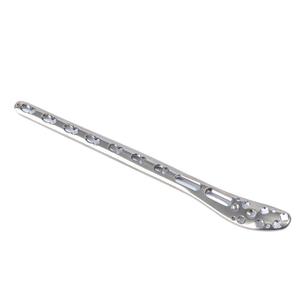
CNC Custom Medical Titanium Veterinary Orthopedic Implants
5-axis CNC customized implants and TPLO/TTA plates engineered specifically for veterinary orthopedic reconstruction and joint stabilization.
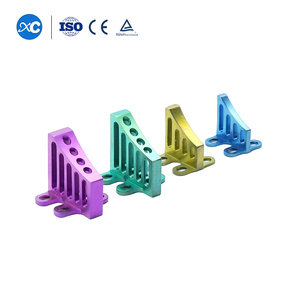
Veterinary Trauma Implant TTA System & Surgical Instruments
Comprehensive Tibial Tuberosity Advancement (TTA) cage and plate system supplied with ergonomic, color-coded sterilization tray assemblies.
Executive Summary: Elevating Private Label Orthopedic Supply Chains
The global orthopedic implant manufacturing landscape is undergoing a systemic evolution driven by stricter regulatory frameworks—most notably the European Union Medical Device Regulation (EU MDR 2017/745)—and increasing clinical demand for biomechanically optimized, patient-tailored fixation systems. For international procurement managers, medical device OEM brand owners, and hospital purchasing directors, sourcing CE-certified private label implants requires far more than basic price negotiation. It demands a rigorous evaluation of metallurgical purity, CNC machining tolerances, validated surface finishing, cleanroom packaging integrity, and comprehensive technical documentation (STED dossiers).
As a leading Chinese original equipment manufacturer (OEM) specializing in trauma, spine, craniomaxillofacial (CMF), and veterinary osteosynthesis, our manufacturing ecosystem is engineered to eliminate supply vulnerabilities while delivering superior technical performance. By leveraging raw materials conforming to ASTM F136 (Ti-6Al-4V ELI), ASTM F67 (Commercially Pure Titanium), and ASTM F138 (316LVM Surgical Stainless Steel), our production lines ensure exceptional mechanical strength, biological safety, and long-term fatigue durability under dynamic weight-bearing loads.
Information Gain Insight: Modern orthopedic osteosynthesis success relies heavily on limiting stress-shielding while maintaining mechanical stability. OEM manufacturing must achieve micro-level thread accuracy to ensure locked angle stability without cold-welding during intraoperative insertion.
Medical-Grade Material Specifications & Engineering Metrics
A direct comparative analysis of implant alloys and polymers utilized across our private-label manufacturing operations.
| Material Standard | Composition / Grade | Tensile Strength (MPa) | Elastic Modulus (GPa) | Primary Clinical Indications |
|---|---|---|---|---|
| ASTM F136 / ISO 5832-3 | Ti-6Al-4V ELI (Extra Low Interstitial) | ≥ 860 MPa | 110 GPa | Locking plates, bone screws, intramedullary nails, pedicle screws |
| ASTM F67 / ISO 5832-2 | Commercially Pure Titanium (Grade 2/4) | 483 – 680 MPa | 105 GPa | Maxillofacial mini-plates, sternal fixation, malleable reconstructive meshes |
| ASTM F2026 | PEEK (Polyetheretherketone) | 90 – 100 MPa | 3.6 – 4.0 GPa | Interbody spinal fusion cages (TLIF, PLIF, ACIF), radio-transparent spacers |
| ASTM F138 / ISO 5832-1 | 316LVM Stainless Steel (Vacuum Arc Remelted) | ≥ 860 MPa | 200 GPa | Trauma compression plates, pediatric pins, cost-effective bone hardware |
Technical Product Range Breakdown & Recommendations
Our facility provides end-to-end contract manufacturing spanning five core surgical disciplines. Each system is designed with synchronized surgical instrumentation to streamline operating theater workflows.
1. Orthopedic Trauma & Locking Compression Systems (LCP)
Featuring combination holes that accommodate both standard cortex screws for dynamic axial compression and threaded locking screws for angular stability. Anatomically pre-contoured profiles reduce the need for intraoperative plate bending, preserving fatigue life and minimizing soft tissue irritation.
- Proximal Humerus, Distal Radius, & Tibial Locking Plates
- Limited Compression Dynamic Compression Plates (LC-DCP)
- Cannulated Compression Screws (2.7mm, 3.5mm, 4.5mm, 7.3mm)
2. Spinal Fixation & Interbody Fusion Cages
Engineered for complex spinal deformity correction and degenerative disc conditions. Polyaxial pedicle screws provide 50-degree rod articulation angles with friction heads to facilitate rod placement. PEEK interbody cages incorporate Tantalum radiopaque markers for exact radiographic localization.
- Pedicle Screw Systems (5.5mm & 6.0mm Titanium Rods)
- TLIF, PLIF, and Cervical PEEK Fusion Cages
- Anterior Cervical Plating (ACP) with Dual Locking Mechanism
3. Craniomaxillofacial (CMF) Fixation Systems
Ultra-low-profile mini-plate and micro-plate configurations (1.5mm, 2.0mm, 2.4mm) manufactured from malleable Commercially Pure Titanium. Designed specifically for orthognathic surgery, orbital floor reconstruction, and complex mandibular trauma repair.
- Micro 1.5mm / Mini 2.0mm Titanium Bone Plates
- Mandibular Reconstruction Lock Plates & Mesh
- Self-Drilling & Self-Tapping CMF Screws
4. Veterinary Orthopedic Implants & Instruments
Dedicated veterinary surgical solutions engineered for canine and feline joint repair. Specialized TPLO (Tibial Plateau Leveling Osteotomy) and TTA (Tibial Tuberosity Advancement) implants optimized for biological healing in small animals.
- TPLO Locking Plates (1.5mm to 3.5mm Series)
- Veterinary Cuttable Plates & Micro Bone Screws
- Complete Vet Orthopedic Instrumentation Trays
Future Procurement Trends in Private Label Orthopedics (2025–2030)
The global orthopedic market is shifting away from generic OEM purchasing toward highly integrated, risk-mitigated manufacturing partnerships. As hospitals demand higher clinical efficacy while battling rising costs, private label brands must align with suppliers offering technological agility. The key global trends shaping procurement strategies include:
Additive Manufacturing & 3D Porous Titanium
Transitioning from traditional subtractive CNC machining to Direct Metal Laser Sintering (DMLS) for spinal cages and acetabular cups. Trabecular-shaped porous titanium surfaces simulate natural cancellous bone structure, encouraging rapid osseointegration and vascular ingrowth.
Surface Bio-Functionalization
Advanced anodization techniques (Type II Electrochemical Anodizing) increase surface hardness, friction coefficients, and fatigue limits while eliminating titanium dust release. Emerging coatings with silver nanoparticles and hydroxyapatite (HA) actively suppress surgical site infection rates.
Digital Traceability & UDI Integration
Global regulatory authorities now mandate Unique Device Identification (UDI) GS1 DataMatrix laser engraving on every individual implant and instrument. Modern OEM factories must provide automated 2D barcode laser marking integrated directly into ERP packaging workflows.
Uncompromising Manufacturing Capabilities & Quality Assurance
Our state-of-the-art facility combines Swiss-type automatic lathes, 5-axis CNC machining centers, and automated coordinate measuring machines (CMM) under ISO 13485 oversight.
ISO Class 7 Cleanroom Packaging
Implants are washed using ultrasonic multi-stage purified water systems and packaged inside certified ISO Class 7 (Class 10,000) cleanrooms. Sterile Tyvek blister packaging guarantees a 5-year shelf-life stability under ISO 11607 standards.
Dynamic Mechanical Testing Lab
Every implant geometry undergoes rigorous finite element analysis (FEA) followed by mechanical validation testing: axial compression, static bending, and fatigue testing per ASTM F382 (bone plates) and ASTM F543 (bone screws).
Full OEM / Private Label Branding
We support customized OEM laser etching (logo, lot number, reference code), custom anodization color palettes for size differentiation, customized IFUs (Instructions for Use), and branded outer box designs tailored to your market image.
Ready to Scale Your Local Brand with Direct Factory Pricing?
Contact our international OEM engineering team to receive full CAD catalogs, sample packages, and detailed STED technical dossier files.
Inquire NowFrequently Asked Questions for B2B Procurement
Addressing critical compliance, engineering, and logistics queries for medical device distributors.
Partner with a Certified Orthopedic Implant Manufacturing Leader
Elevate your market presence with CE-certified orthopedic implants. Get direct access to competitive factory pricing, full technical registration files, and reliable delivery schedules.