Featured CE-Certified Orthopedic Implants & Surgical Kits
Engineered from medical-grade titanium (Ti-6Al-4V ELI) and PEEK, our traceability-backed orthopedic implants provide hospitals and OEM distributors with zero-defect surgical solutions.
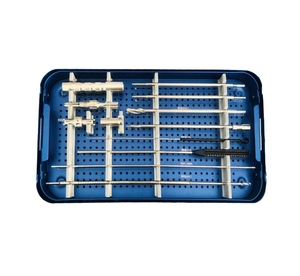
Orthopedic Plate Titanium Orthopedic Implant Bone Implant Orthopedic Instrument for Femoral Neck Surgery
Get a Quote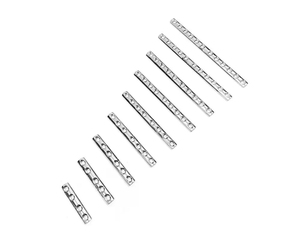
Veterinary 3.5mm One Third Tubular Plate Cortical Screw Orthopedic Implants Bone Fixation Set SureMed Instruments
Get a Quote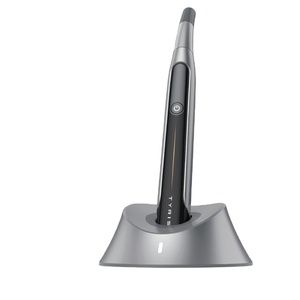
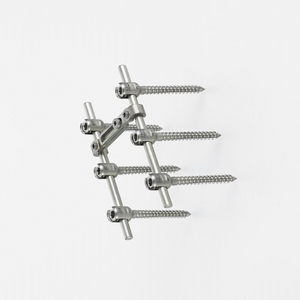
Top Ranking Orthopedic Equipments JMT EDEN Pedicle Screw Spinal Fixation System Implantable Artificial Organs Class II Back
Get a Quote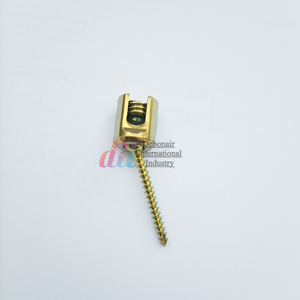
Veterinary Manual Pedicle Screw Spine Fixation System | Titanium Spinal Implant CE Certified Animal Surgery Orthopedic Implant
Get a Quote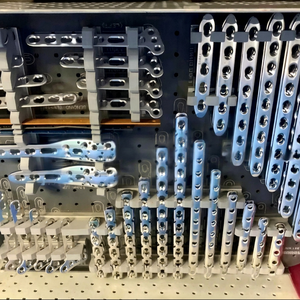
Small Fragment LCP Locking Plate Set Orthopedic Trauma Surgery Instrument Kit Premium Quality Implants
Get a Quote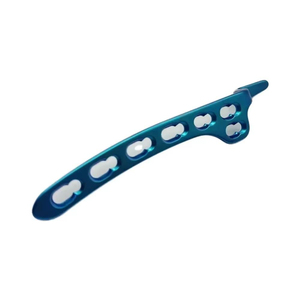
Orthopedic Bone Implant Components for Surgical Fracture Stabilization Surgical Fixation Hardware Collection with Orthopedic
Get a Quote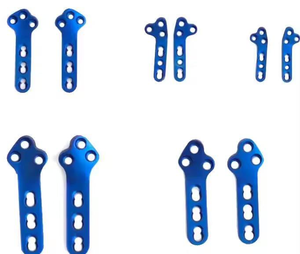
Veterinary Orthopedic Implant Plate System for Animal Bone Fracture Repair Stabilization Reconstruction and Surgical Management
Get a QuoteThe Regulatory & Technological Imperative: Full Traceability in Orthopedic Manufacturing
In the modern medical device ecosystem, orthopedic implants represent a category where precision engineering directly governs patient recovery outcomes and hospital liability risk.
Global healthcare procurement has undergone a fundamental structural transition. The implementation of the European Union Medical Device Regulation (EU MDR 2017/745), FDA 21 CFR Part 830 Unique Device Identification (UDI) mandatory rules, and stringent ISO 13485:2016 quality management frameworks have elevated device supply requirements from simple commercial sourcing to rigorous regulatory risk management.
For hospital procurement directors, international distributors, and private-label OEM brand managers, choosing a CE-certified orthopedic implant factory with end-to-end traceability is no longer a mere preference—it is a mandatory legal compliance threshold. Traceability establishes an unbreakable chain of custody from the raw titanium bar stock melt furnace to the sterile operating field.
Regulatory Safety & UDI Serialization
Each plate, pedicle screw, and intramedullary nail receives high-precision laser-ablated Direct Part Marking (DPM) containing 2D DataMatrix codes, lot identifiers, and dimensional codes. This structural serialization allows instantaneous product history retrieval during clinical audits or adverse event monitoring.
Metallurgical Integrity & Certification
Raw materials are sourced exclusively from accredited aerospace and medical-grade titanium suppliers. Every production batch is backed by physical chemical test reports (Cert 3.1) guaranteeing compliance with ASTM F136 (Ti-6Al-4V ELI) and ASTM F67 (Commercially Pure Titanium Grade 1-4).
State-of-the-Art Production & Quality Infrastructure
Our advanced manufacturing site integrates high-speed Swiss-type multi-axis CNC machines, cleanroom automated packaging, and total quality control systems.
Sub-Micron CNC Machining
Utilizing Japanese Citizen and Tsugami multi-axis CNC lathe turning-milling centers, we achieve anatomical contour tolerances under ±0.005mm. Locking thread profiles are cut with precision tools to ensure non-stripping engagement between locking screws and plate holes during surgical insertion.
PEEK & Biomaterial Mastery
For spinal interbody fusion cages (TLIF, PLIF, Cervical), we utilize implant-grade PEEK (Polyetheretherketone) per ASTM F2026. Featuring an elastic modulus (~3.6 GPa) matching human cortical bone, our implants minimize stress shielding while incorporating radiopaque Tantalum markers for exact intra-operative imaging positioning.
Type II Electrochemical Anodization
Plates and screws undergo controlled Type II anodic oxidation. This process enhances surface fatigue resistance by up to 25%, mitigates cold-welding tendencies between titanium components, and provides distinct biocompatible color-coding for intuitive size identification in operating theatres.
Future Procurement Trends Shaping the Global Orthopedic Market
Analysis of shifting buyer priorities across hospital networks, government health tenders, and private medical distributors globally.
1. Supply Chain Resilience & OEM Risk Diversification
Global hospital networks are reducing dependence on single-source suppliers due to rising costs and supply chain disruptions. Procurement officers are actively building direct relationships with verified contract manufacturers qualified under ISO 13485.
By establishing dual-sourcing partnerships with certified factories capable of delivering custom laser-marked OEM solutions, medical distributors maintain steady inventory while protecting operating margins against inflation.
2. Turnkey Surgical Instrument Set Integration
Implants cannot be evaluated separately from their delivery instruments. Modern buyers demand matched implant-instrument ecosystems supplied in modular, anodized aluminum sterilization trays.
Supplying surgery-ready kits with calibrated torque limiters, drill bits, color-coded depth gauges, and ergonomic drivers reduces hospital set-up time and eliminates intra-operative compatibility failures.
3. Convergence of Human & Veterinary Orthopedic Technologies
The veterinary surgical market is experiencing rapid technological evolution, mirroring human trauma protocols with 1.5mm to 3.5mm LCP systems and TPLO (Tibial Plateau Leveling Osteotomy) locking plates.
Factories that can leverage human-grade titanium alloys (Ti-6Al-4V ELI) and precision Swiss machining for animal orthopedics offer distributors a distinct competitive advantage in high-growth veterinary sectors.
4. Data-Driven Osseointegration & Stability Monitoring
Surgeons increasingly seek quantitative diagnostic tools to monitor bone healing and implant stability post-fixation.
Next-generation monitors (such as the Tyris MD-100 system) utilize resonance frequency analysis to provide non-invasive, objective measurements of osseointegration, enabling data-backed weight-bearing decisions for trauma patients.
Technological & Material Trends in Implants
The future of orthopedic hardware focuses on bio-functional surfaces, additive manufacturing integration, and optimized structural biomechanics.
Variable Angle Locking (VA-LCP)
Traditional locking plates restrict screw trajectory to a single axis. Variable-angle locking technology allows surgeons to direct screws up to 15° off-axis in any direction, optimizing purchase in complex periarticular fractures and osteoporotic bone structures.
3D Printed Porous Trabecular Structures
Selective Laser Melting (SLM) additive manufacturing enables titanium implants with 60-70% interconnecting porosity matching natural cancellous bone, encouraging rapid bone ingrowth and long-term biological secondary fixation.
Antibacterial Surface Coatings
To combat implant-associated surgical site infections (SSI), advanced plasma deposition coatings containing silver ions or zinc oxide nanostructures actively inhibit bacterial biofilm formation without compromising osteoblast viability.
Orthopedic Material & Regulatory Technical Matrix
Engineering parameters and compliance benchmarks across primary product lines.
| System Category | Material Standard | Surface Treatment | Traceability Standard | Key Clinical Application |
|---|---|---|---|---|
| Trauma Locking Plates | Ti-6Al-4V ELI (ASTM F136) / CP Ti (ASTM F67) | Type II Anodization (Color Coded) | Laser DPM / GS1 DataMatrix | Femoral, Tibial & Humeral fracture stabilization |
| Spinal Fixation (Pedicle Screws) | Titanium Alloy Ti-6Al-4V ELI | Micro-blasted Passivated finish | Lot-level UDI Serialization | Thoracolumbar fusion, deformity correction |
| Interbody Fusion Cages | Implant PEEK (ASTM F2026) + Tantalum | Cleanroom Ultrasonic Washed | Batch Melt & Inspection Certificate | Cervical & Lumbar degenerative disc repair (TLIF/PLIF) |
| CMF Maxillofacial System | Pure Titanium Grade 2 & 4 (ASTM F67) | Electropolished Anodized | Micro Laser Marked Code | Mandibular, orbital & orthognathic reconstruction |
| Veterinary Implants | Medical Titanium / 316L Stainless Steel | Passivated & Polished | Full Certificate 3.1 Traceable | Small animal trauma & TPLO corrective osteotomy |
Frequently Asked Questions for International Procurement Officers
Clear, definitive answers addressing compliance, quality documentation, OEM capabilities, and batch logistics.
What specific certifications accompany your orthopedic implants for hospital tenders?
Every shipment includes ISO 13485:2016 quality system compliance certificates, CE conformity mark documentation, raw material mill test reports (Cert 3.1 verifying chemical composition and tensile strength), dimensional inspection reports, sterilisation validation certificates (ISO 11137 for gamma irradiation or ISO 11135 for EO), and complete instructions for use (IFU).
How does your factory handle complete lot-level traceability?
Traceability begins at raw material receipt. Each titanium rod or PEEK block is logged into our ERP system with its unique furnace heat number. During CNC machining, every batch maintains a digital traveler. Finished parts are laser-marked with GS1 DataMatrix codes or human-readable lot numbers, allowing instant correlation to raw material, CNC machine operator, surface treatment batch, and final CMM quality audit.
Do you offer OEM private-label manufacturing and custom packaging for distributors?
Yes. We provide complete OEM/ODM solutions including customized laser-etched logo branding, unique part numbering, specialized color anodization, custom surgical kit tray design, and cleanroom blister sealing with your brand's regulatory-compliant labeling for local market registration.
What mechanical testing is performed to ensure structural fatigue resistance?
Implants undergo rigorous dynamic fatigue testing per ASTM F382 (metallic bone plates) and ASTM F543 (metallic medical bone screws). Plates are tested under 4-point bending fatigue cycles exceeding 5,000,000 cycles without structural failure to guarantee survival under clinical weight-bearing loads.
Can you supply matched instrument sets for operating room deployment?
Absolutely. We manufacture complete matching surgical instrument sets packed in hard-anodized aluminum sterilization cases. Instruments feature ergonomic silicone handles, quick-coupling drives, AO connection drill bits, and depth gauges engineered specifically for our screw thread pitches.
What are the standard production lead times for bulk international orders?
Standard catalog configurations are typically processed within 2 to 3 weeks. Custom OEM projects requiring specialized tooling or custom tray layout design typically take 4 to 6 weeks from technical drawing sign-off to final cleanroom packaging release.
Partner with a Certified Orthopedic Implant Supplier
Streamline your procurement process with CE-certified, zero-defect titanium plates, spinal systems, and PEEK cages backed by complete lot-level traceability documentation.
Get a Quote